Grow Light Color Rendering: Seeing True Plant Color Under LEDs
The short answer
Grow light color rendering describes how true colors look under a light compared with a reference light. Some grow lights, especially purple and red ones, make leaves hard to judge. Inspect plants under white light or daylight to spot yellowing, spots or pests. A high CRI white light makes those checks much easier.
Growers rely on leaf color to read plant health. When the light distorts color, problems hide in plain sight.
What is color rendering?
Color rendering is a light’s ability to show colors accurately. Daylight and incandescent lamps show colors well because they emit a smooth, full spectrum.
The Color Rendering Index, or CRI, rates how closely a light renders a set of sample colors compared with a reference source. The scale runs to 100. Higher numbers mean truer color.
The US Department of Energy page on color and spectrum explains CRI and newer metrics, such as fidelity and gamut measures, developed because CRI doesn’t fully capture how LEDs render color.
| Term | Meaning | Source |
|---|---|---|
| Color rendering | How true colors look under a light | US Department of Energy |
| CRI | Index rating color accuracy up to 100 | US Department of Energy |
| Color temperature | Warm to cool look of white light | US Department of Energy |
| Spectrum | Mix of wavelengths a light emits | US Department of Energy |
| White LED | Blue LED with phosphor coating | US Department of Energy |
Sources: US Department of Energy, Resource Innovation Institute.
Why do some grow lights make plants look odd?
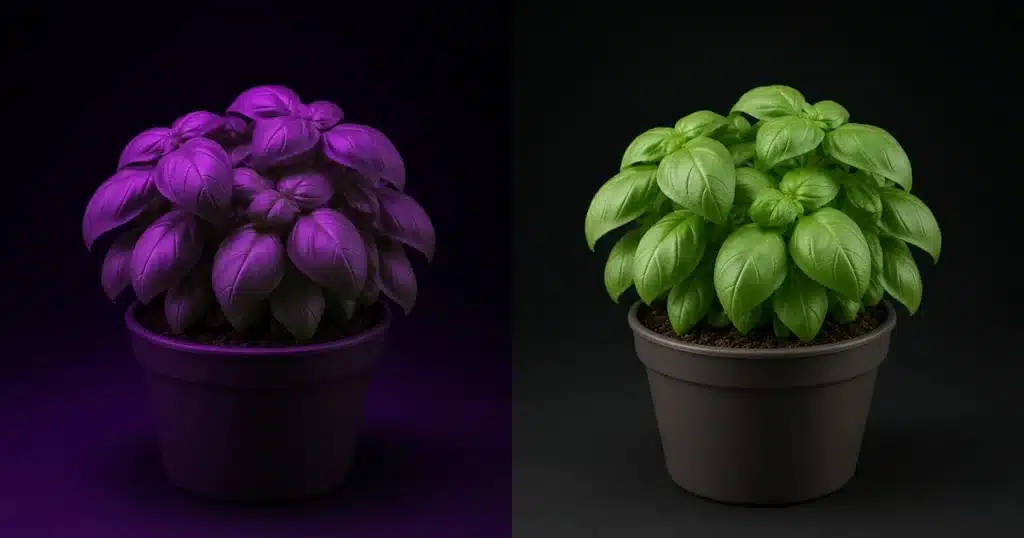
Many grow lights focus on red and blue wavelengths because plants use them efficiently for photosynthesis. Those lights look purple or pink to our eyes.
Under purple light, green leaves look gray or dark, and yellowing, spots and pests hide.
White LEDs use blue diodes coated with phosphor that converts some light to other colors. That gives a broader spectrum. The US Department of Energy page on LED basics explains how white LEDs work.
The Resource Innovation Institute lighting guide for controlled environment agriculture notes that broad spectrum white fixtures make it easier for workers to inspect crops.
Our post on choosing the right LED lights for your cannabis grow covers spectrum choices.
How can you see true plant color?
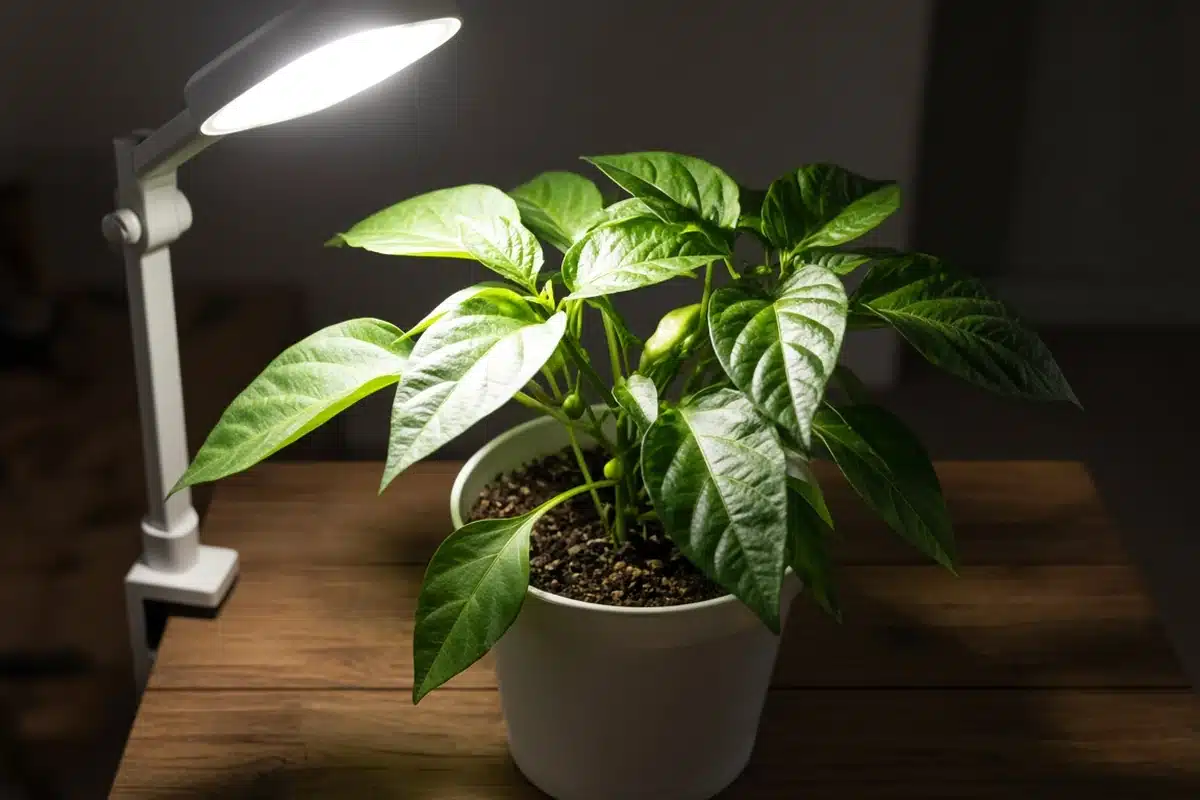
Inspect under a white work light. A bright, high CRI flashlight or headlamp shows true color.
Turn off or dim the grow light during checks if possible. Mixed light still distorts color.
Check plants in daylight when you can. Carry a leaf to a window if needed.
Compare new leaves with older leaves, and many deficiencies show first on one or the other. Our post on how to spot 8 common cannabis plant deficiencies by leaf symptoms shows how symptoms appear on different leaves.
What is a good CRI?
For inspection lights, aim for a CRI of 90 or higher, and many quality LED flashlights list it.
For grow lights, CRI matters less for plant growth than spectrum and intensity. It matters for how well you see plants.
Does CRI affect plant growth?
Not directly. Plants respond to wavelengths and light intensity, not to how colors look to people. A low CRI light can grow plants well.
Our post on grow lights for cannabis covers what matters most for growth.

How do photos help?
Photograph plants under the same white light each time. Consistent photos make changes easy to spot.
Avoid photos under purple grow light. Phone cameras struggle with it, and colors look wrong.
Can I use a phone light for checks?
Yes, for quick looks. Phone lights are often cool white. A dedicated high CRI light shows more detail.
How does color temperature differ from CRI?
Color temperature describes whether white light looks warm or cool. It is measured in kelvins. Warm white looks yellow and cool white looks blue.
CRI is separate. Two lights with the same color temperature can render colors differently. For inspections, check both numbers. A neutral white near 4000 to 5000 K with high CRI works well.
Where should inspection lights go?
Store a handheld light near the grow space. Hold it at an angle to leaves to show texture, spots and pests on both sides.
How to: step by step
- Note the light’s color and CRI if listed.
- Use a white work light for inspections.
- Check plants in daylight when possible.
- Compare new leaves with older leaves.
- Photograph plants under the same light each time.
- Use high CRI white light for close checks.
Store the inspection light close so checks become a habit.
Troubleshooting
Leaves look gray. The light is purple. Inspect under white light.
Missed pests. Rendering is poor. Use a bright white light.
Photos look off. Light is mixed. Use one light source.
Yellowing missed. Checks were under grow light. Use daylight.
Colors vary by fixture. Spectra differ. Use one inspection light.
Good color rendering can make leaf issues easier to spot sooner. Kind Seed Co carries cannabis seeds for growers setting up their next indoor garden.
Sources
- Color and spectrum, US Department of Energy, Color and spectrum
- LED basics, US Department of Energy, LED basics
- Lighting for controlled environment agriculture, best practices guide, Resource Innovation Institute, Lighting for controlled environment agriculture
FAQ
What is a good CRI?
90 or higher for inspection lights.
Does CRI affect plant growth?
Not directly. Spectrum and intensity matter more.
Why are some grow lights purple?
They focus on red and blue light that plants use efficiently.
Can I use a phone light for checks?
Yes, for quick looks. A high CRI light shows more.
What is color temperature?
How warm or cool white light looks.