Pump Maintenance Hydroponics Basics: A Simple Routine for Clean Impellers
The short answer
Pump maintenance hydroponics growers can rely on means cleaning the intake, impeller and lines so water continues moving. Pumps lose flow as debris and slime build up. Lift the pump out, rinse the impeller, clear the intake screen and check flow after every restart. A little routine work leaves roots fed and oxygenated.
In most hydroponic systems, the pump is the heart. When it slows or stops, roots can suffer within hours.
Why does pump maintenance matter?
Pumps move nutrient solution to roots and back. In drip, ebb and flow, nutrient film and recirculating systems, steady flow moves nutrient solution through the system.
Over time, root bits, mineral deposits, algae and biofilm collect in pumps and lines, and each layer adds resistance. Flow drops even when the pump still runs.
The LSU AgCenter publication on pump curves explains how a pump’s flow falls as the resistance it pushes against rises. Clogged screens, narrowed tubing and dirty fittings all add resistance.
Our post on caring for your hydroponic system covers routine upkeep beyond the pump.
How do you clean a pump impeller?
Start by lifting the pump out of the reservoir.
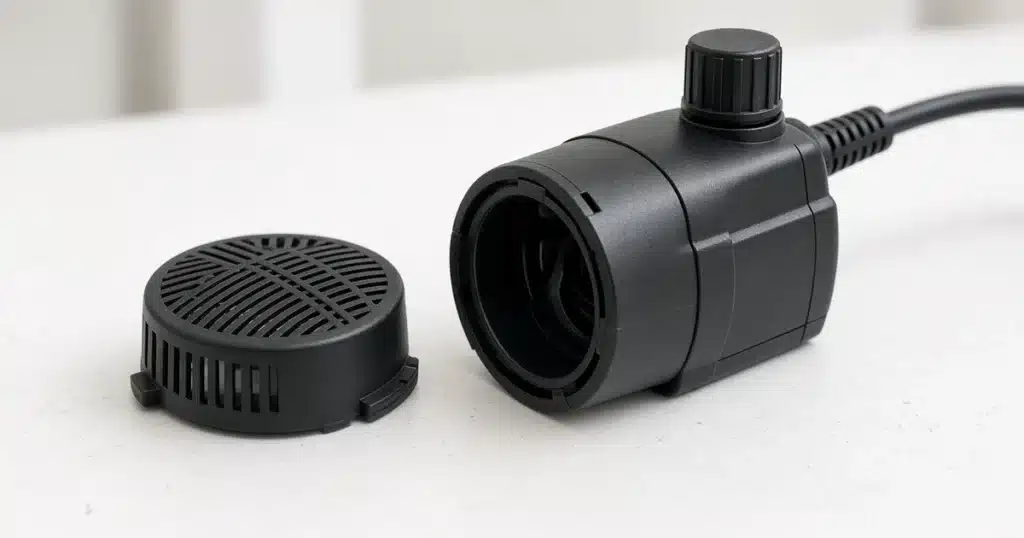
Take off the intake cover and screen. Most small submersible pumps have a front cover that snaps or twists off.
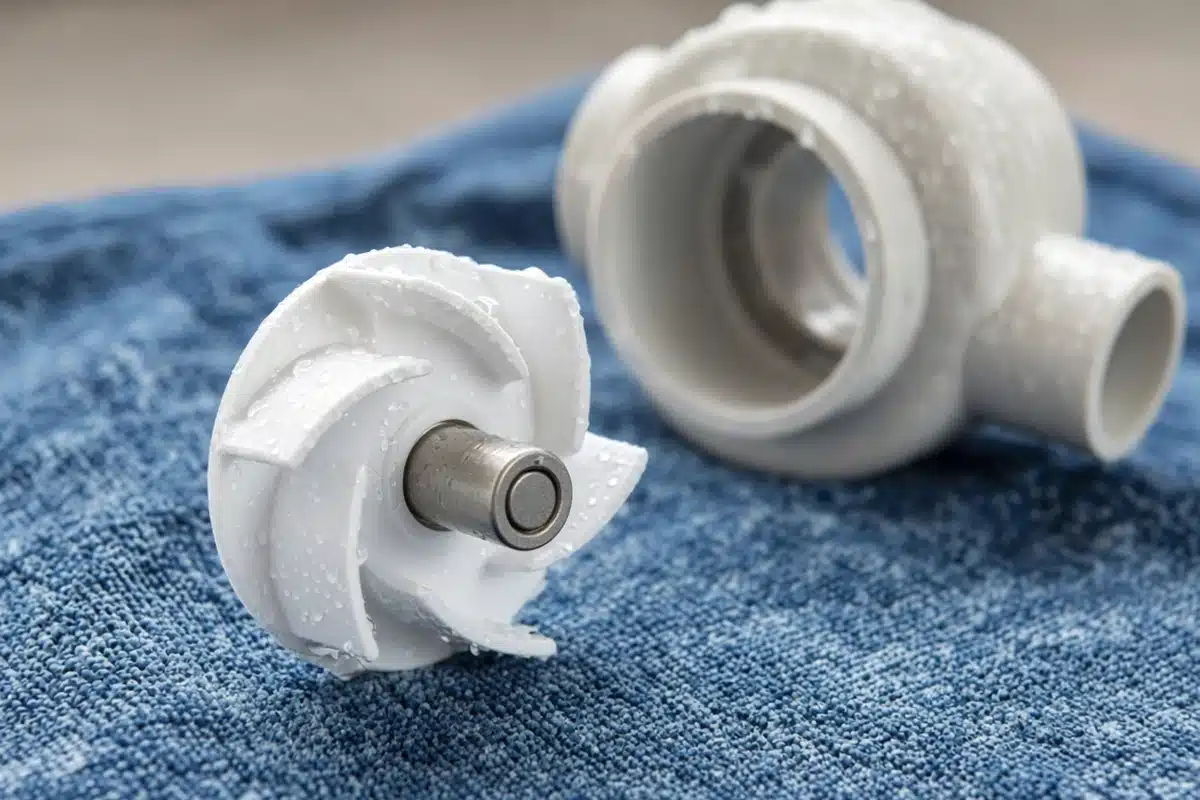
Pull out the impeller. It is the small spinning part, often held by a magnet. Rinse it with clean water and wipe away slime with a soft brush. An old toothbrush works well.
Clean the housing where the impeller sits. Biofilm and mineral crust build up there.
Check the impeller for chips or wear. A worn impeller rattles and pumps poorly.
Reassemble the pump, return it to the reservoir and restart it. Watch flow at the outlet.
The University of Vermont Extension guide to cleaning and sanitizing hydroponic and aquaponic operations explains that cleaning removes debris and biofilm before any sanitizing step, since sanitizers work poorly on dirty surfaces.
How do you prevent clogs?
Fit the intake with a screen or filter bag, then check it regularly.
Block roots from the pump area. Roots growing into the reservoir can wrap around intakes.
Block light from the reservoir. Light feeds algae, which clogs pumps and lines.
Flush tubing and fittings between crops. Mineral deposits build up over time, mainly with hard water.
The University of Hawaii CTAHR publication on greenhouse and nursery sanitation of irrigation water and equipment covers cleaning irrigation lines and equipment to remove buildup.
| Task | How often | Notes |
|---|---|---|
| Check flow | Daily | Look at outlets and drippers |
| Clean intake screen | Every week or two | More often with heavy root growth |
| Clean impeller and housing | Monthly or between crops | Rinse with clean water |
| Flush tubing | Between crops | Removes deposits and biofilm |
| Replace worn impeller | When it rattles or chips | Have a spare |
Sources: LSU AgCenter, University of Vermont Extension, University of Hawaii CTAHR.
Can vinegar clean a pump?
A mild vinegar soak can loosen mineral deposits on the impeller and housing. Rinse well before reuse. Check the maker’s guidance for materials.
How long do pumps last?
It varies. Many small submersible pumps last a few years with care. Running dry, debris and heat shorten their life.
Should I have a spare pump?
Yes. A spare lets you swap fast if a pump fails. In many systems, long pump downtime can stress plants within hours.
Our post on a power outage during flowering covers what happens when pumps stop and how to plan ahead.
How does the environment affect pumps?
Warm reservoirs speed biofilm and algae growth. Cooler solution slows buildup. Our post on setting up a good environment for your hydro system covers temperature and light control.
What kind of pump do you have?
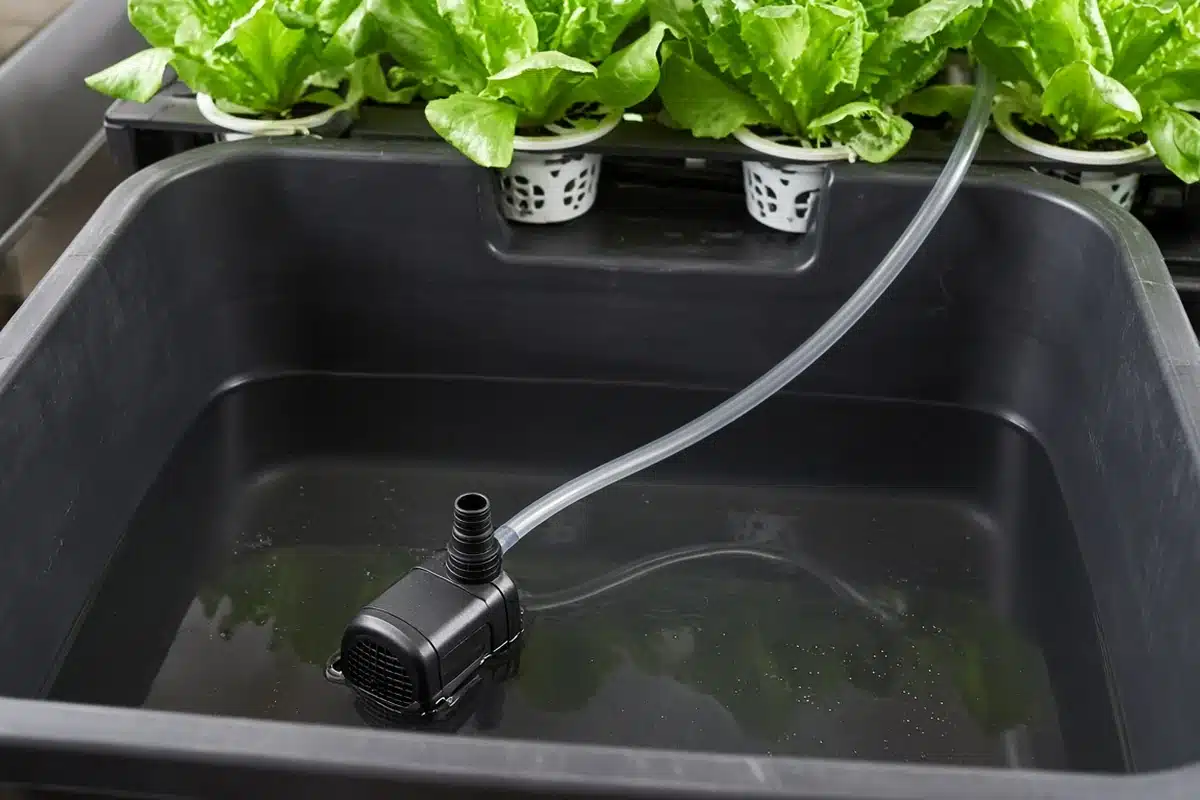
Most home systems use small submersible pumps that sit in the reservoir. Bigger systems may use inline pumps outside the tank. Both have an impeller and an intake, and both need the same basic cleaning.
Check the pump’s rated flow and maximum head height. A pump sized close to its limit loses flow fast when it gets dirty. A slightly bigger pump gives you room.
How do you measure flow?
Time how long the pump takes to fill a measuring jug at the outlet. Write it down after each cleaning. When the time grows, the pump or lines need attention.
How to: step by step
- Lift the pump from the reservoir.
- Remove the intake cover and screen.
- Pull out and rinse the impeller.
- Clear debris and slime from the housing.
- Flush tubing and fittings.
- Reassemble and check flow.
Maintain a log of cleanings and flow checks to spot slow declines.
Troubleshooting
Weak flow. The intake is clogged. Clean the screen.
Rattling noise. The impeller is worn. Replace it.
Pump runs hot. It ran dry. Hold it submerged.
No flow but pump hums. The impeller is stuck. Clean and reseat it.
Drippers clog. Lines have deposits. Flush between crops.
Steady pump care means moving solution and thriving roots. Kind Seed Co shares more garden projects in outdoor growing.
Sources
- Pump curves (Pub. 3241-H), LSU AgCenter, Pump curves (Pub. 3241-H)
- Produce safety in hydroponic and aquaponic operations: cleaning and sanitizing, University of Vermont Extension (NECAFS), Produce safety in hydroponic and aquaponic operations
- Greenhouse and nursery sanitation: irrigation water and equipment (PD-119), University of Hawaii CTAHR, Greenhouse and nursery sanitation
FAQ
How often should pumps be cleaned?
Clean screens every week or two and the impeller monthly or between crops.
Can vinegar clean a pump?
A mild soak can loosen deposits. Rinse well after.
How long do pumps last?
Often a few years with care.
Should I have a spare pump?
Yes. A quick swap prevents root damage.
Why does flow drop over time?
Debris and deposits add resistance.