Grow Light Reflector Types: Wing, Parabolic and Hood Reflectors
The short answer
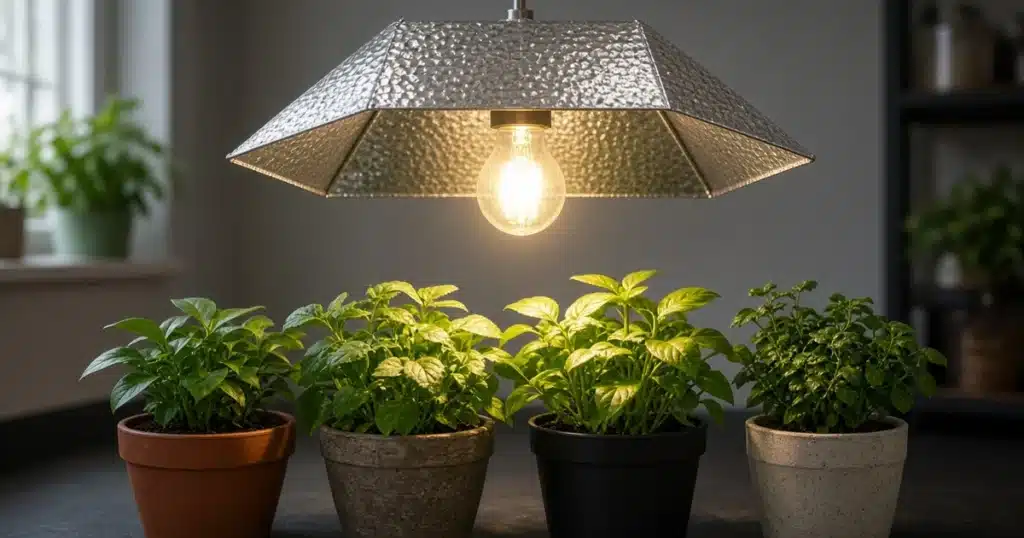
A grow light reflector redirects lamp light down toward plants. Wing reflectors are simple and spread light wide. Parabolic reflectors give round, even coverage for taller spaces. Enclosed hoods offer more control and can connect to ducting. Coverage, spacing and hanging height decide which shape lights a canopy most evenly.
Reflectors were a big part of HID growing. They still matter for anyone running bulbs that shine in all directions.
What do grow light reflectors do?
A bare bulb shines light all around it. Much of that light goes up and to the sides, away from plants.
A reflector catches that stray light and bounces it down onto the canopy. The result is more light where you want it from the same lamp.
The University of Missouri Extension guide to understanding grow lights explains that plants respond to the light that reaches their leaves. How much of a lamp’s output reaches the canopy depends on distance, angle and reflectors.
The shape of the reflector sets the shape of the light pattern. Some shapes spread light wide. Others focus it in a tighter circle.
How do wing, parabolic and hood reflectors differ?
Wing reflectors are the simplest. A sheet of metal bends into two wings over the bulb, and they’re cheap and light. They spread light in a wide rectangle, but much of it can be uneven.
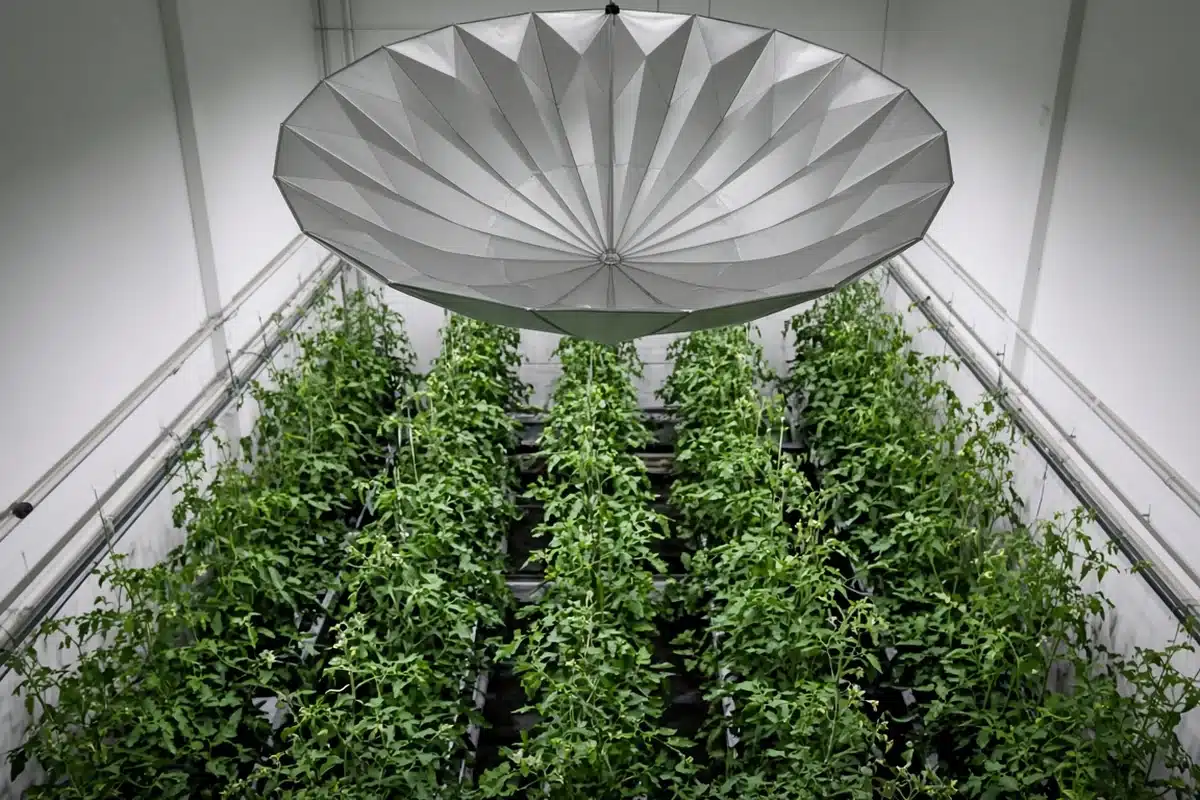
Parabolic reflectors are round, umbrella shaped domes. The lamp hangs in the center pointing down. They spread light in a large, round pattern and suit higher ceilings.
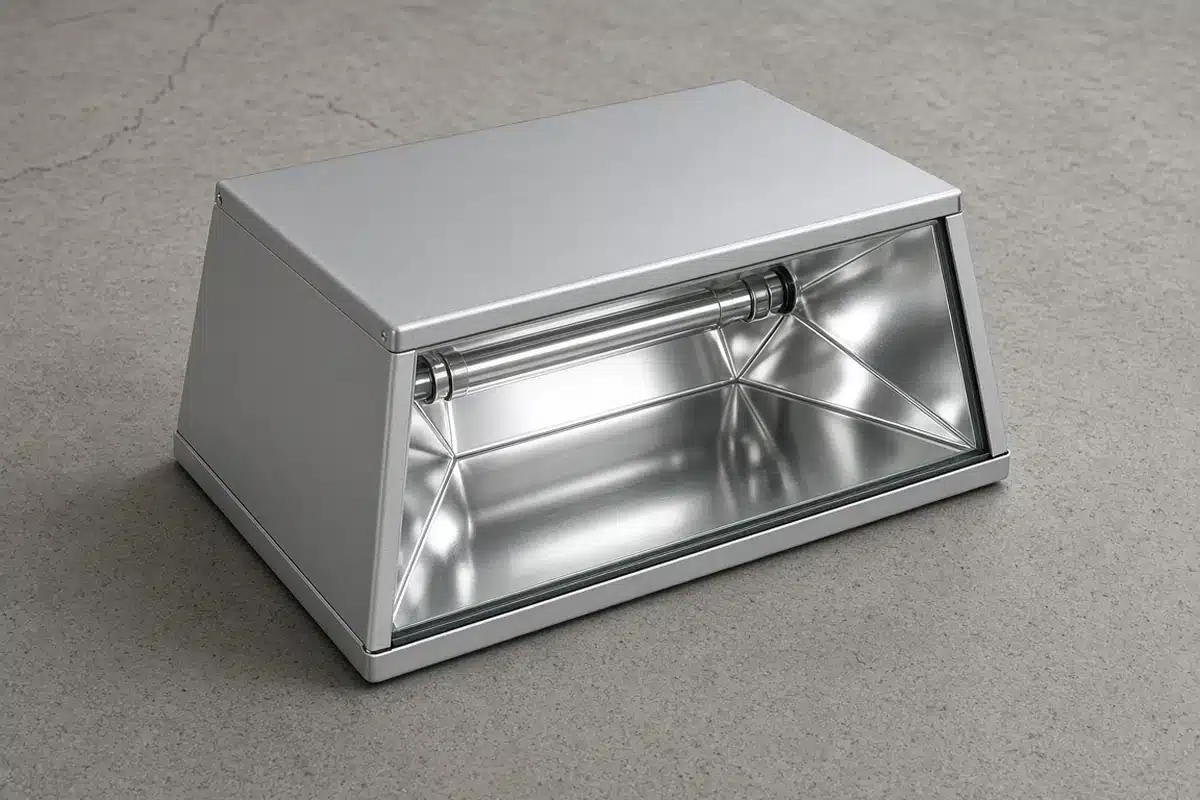
Hood reflectors are enclosed boxes with straight or angled sides. Many have a glass panel on the bottom and ports for ducting. They give a square pattern and more control over light spread.
| Type | Coverage | Ideal fit |
|---|---|---|
| Wing | Wide, often uneven | Low budget, small spaces |
| Parabolic | Large, round pattern | Tall rooms with high ceilings |
| Hood | Square, controlled pattern | Rooms with ducting for heat |
| Wall reflective material | Bounces side light back in | Any enclosed space |
Sources: University of Missouri Extension, Resource Innovation Institute, University of Vermont Extension.
How do you choose a reflector?
Start with the canopy. Measure the area you need to cover.
Note your ceiling height. Parabolic reflectors need room above the plants. Wing and hood reflectors suit lower spaces.
Think about heat. If the room runs warm, a hood with ducting helps move heat out.
The Resource Innovation Institute lighting guide stresses even light across the canopy. It recommends checking light levels at many points, not only under the center. A reflector that throws a hot spot in the middle and dim edges wastes light.
The University of Vermont Extension tips for choosing grow lights suggest matching fixture coverage to your space. That applies to reflectors and LED fixtures alike.
Does the reflector surface matter?
Yes. Reflectors are made from polished aluminum, hammered aluminum or white painted metal.
Polished surfaces reflect plenty of light but can create hot spots. Hammered or textured surfaces scatter light more evenly.
Dust and grime dull any surface, so a dirty reflector sends less light to plants.
Walls matter too. White paint or reflective film on the walls bounces side light back toward plants. Our post on the top reflective materials for indoor growers compares options.
Do LEDs use reflectors?
Most LED fixtures don’t need large reflectors. Each diode already shines mostly in one direction, down toward the canopy.
Some LED fixtures use small lenses over the diodes to shape the beam. These act like tiny reflectors.
Reflective walls still help with LEDs, and they catch light that spills past the edge of the canopy.
Our post on optimal lighting for growing indoors covers how to light a space well with modern fixtures.
How to: step by step
- Measure the canopy you need to cover.
- Note your ceiling height.
- Compare the coverage shape of each reflector.
- Check whether you need ducting.
- Clean reflector surfaces regularly.
- Watch plants for even growth and adjust height.
How high should a reflector hang?
Height changes the pattern. A higher reflector spreads light wider but dimmer. A lower one concentrates light in a smaller area.
Start at the height the maker suggests. Watch the plants. If the center grows faster than the edges, raise the light or switch to a reflector with wider spread.
Adjust as plants grow. The top of the canopy rises, so the gap to the lamp shrinks.
Troubleshooting
Hot spot under the bulb. The reflector focuses light too tightly. Raise it or choose a wider shape.
Dim edges. Coverage is narrow. Add wall reflective material or a second light.
Room runs hot. The reflector is open. Switch to a ducted hood.
Dull reflector. Dust has built up. Wipe it clean.
Uneven growth. Light falls unevenly. Adjust height and check light levels across the canopy.
Our post on grow lights for cannabis compares lamp types that use reflectors.
The right reflector gets more light from every watt. Kind Seed Co carries cannabis seeds for growers planning a new indoor space.
Sources
- Controlled environment agriculture: understanding grow lights (G6987), University of Missouri Extension, Controlled environment agriculture
- Lighting for controlled environment agriculture, best practices guide, Resource Innovation Institute, Lighting for controlled environment agriculture
- Tips for choosing grow lights, University of Vermont Extension, Tips for choosing grow lights
FAQ
Do LEDs use reflectors?
Most do not need large reflectors because diodes already point down. Some use small lenses to shape the beam.
Which reflector covers the most area?
Large parabolic reflectors spread light over a wide, round area in tall rooms.
Does reflector finish matter?
Yes. Polished surfaces reflect more but can create hot spots, while textured finishes scatter light more evenly.
Can you add reflectors to walls?
Yes. White paint or reflective film on walls bounces side light back toward plants.
How often should you clean a reflector?
Wipe it between crops or whenever you see dust. Clean surfaces send more light down.