Air Cooled Hood Guide: Ducted Grow Light Hoods and Where They Still Fit
The short answer
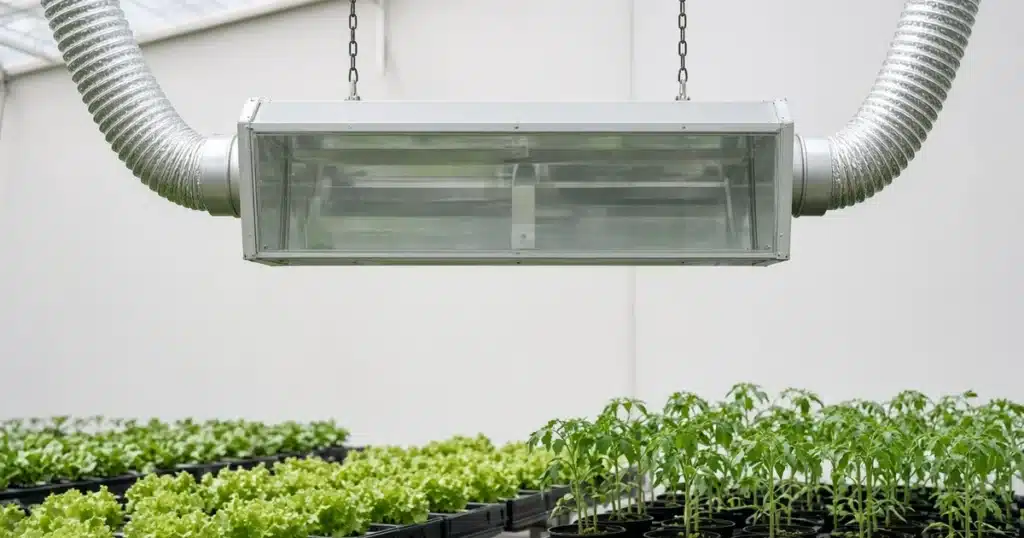
An air cooled hood encloses an HID lamp behind glass and connects to ducting so a fan can pull lamp heat out of the room. It was common with high pressure sodium and metal halide setups. Lighting guides now favor LEDs for most new rooms, but ducted hoods still fit growers who hold on to their HID gear.
If you have inherited an older grow room or bought used gear, you may have one of these hoods. Here is how they work and how to get the most from them.
How does an air cooled hood work?
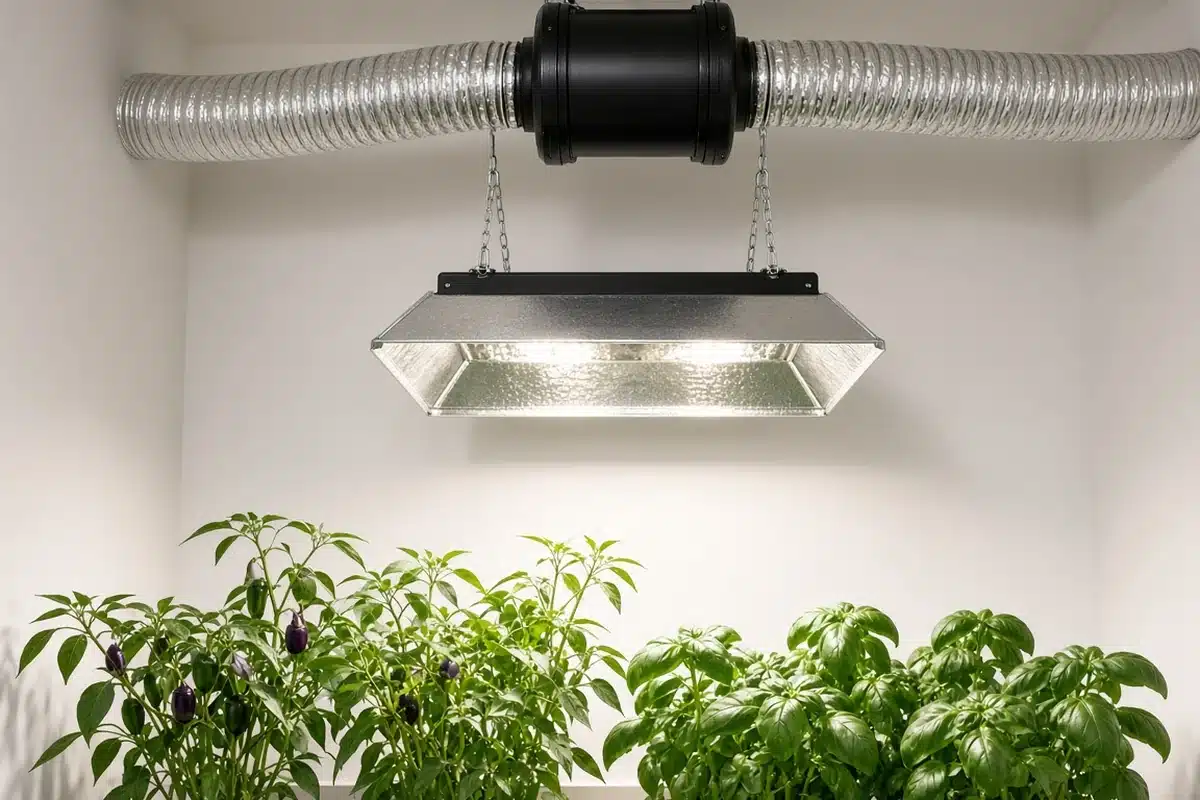
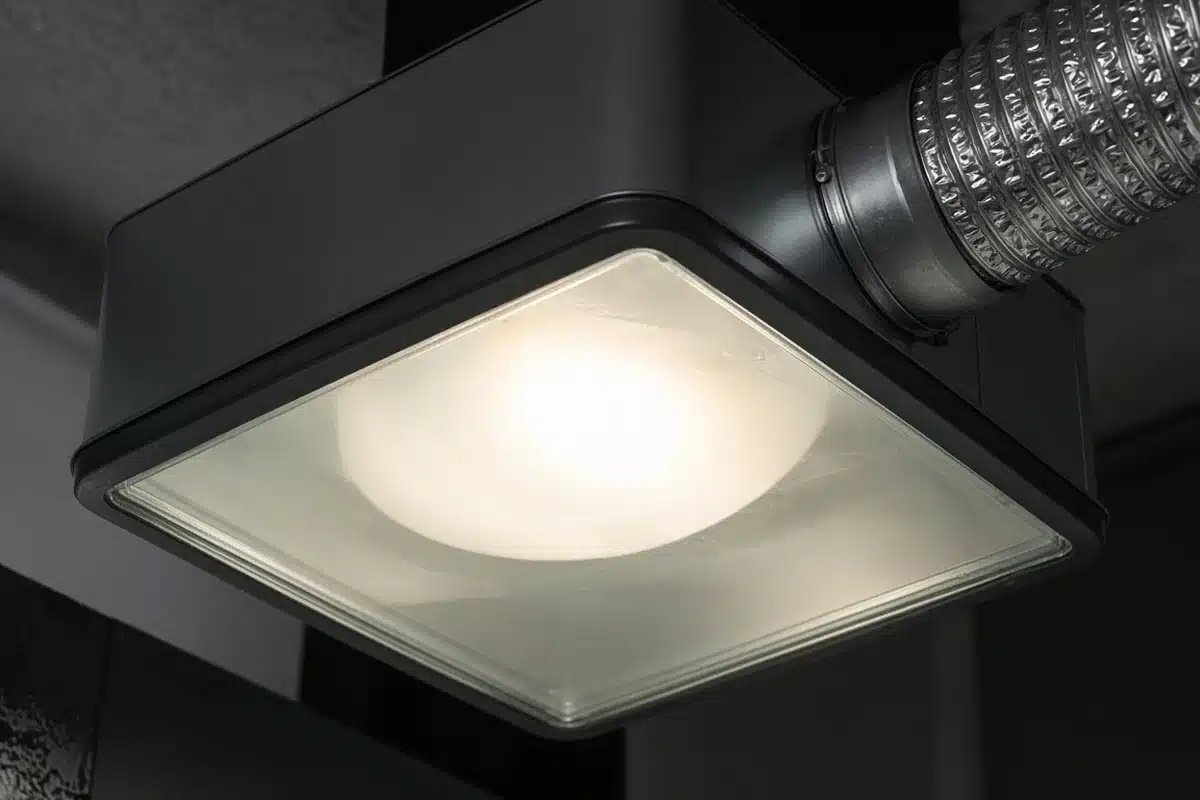
An air cooled hood is a closed reflector with a glass panel on the bottom. The lamp sits inside, sealed off from the room air. Two round ports on the ends connect to ducting.
An inline fan pulls air through the hood. Cool air enters one port, passes over the lamp and leaves through the other port, carrying heat with it. The ducting sends that warm air out of the grow space.
Because the lamp is sealed behind glass, the hot air around the bulb never mixes with the room air. The room stays cooler, and the light can hang closer to plants than an open reflector.
The University of Missouri Extension guide to understanding grow lights explains how high intensity discharge lamps make light. HID lamps are bright but turn a large share of their power into heat. Managing that heat was a constant job in HID grow rooms.
What hood types exist?
Several designs share one basic idea.
Cool tubes are glass cylinders around the lamp with no reflector, or with a small reflector on top. They’re light and compact but spread light less evenly.
Square hoods have a flat glass bottom and a box shaped reflector. They’re the most common style.
Larger reflector hoods add wider wings for broader coverage while retaining the sealed glass panel.
| Hood type | Cooling | Ideal fit |
|---|---|---|
| Cool tube | Air flows through a glass tube | Small spaces with low ceilings |
| Square glass hood | Air flows through a sealed box | Standard HID rooms |
| Wide reflector hood | Sealed box with wide wings | Wider canopies |
| Open reflector | No ducting, heat enters the room | Rooms with good room exhaust |
Sources: University of Missouri Extension, Resource Innovation Institute.
How do they compare with LEDs?
LEDs make far less heat at the fixture face for the same light. They don’t need sealed hoods. Room fans and exhaust handle their heat.
The Resource Innovation Institute lighting guide compares HID and LED fixtures in commercial grows. It shows how LEDs deliver more plant usable light per watt. That means less power and less heat for the same canopy light.
The University of Vermont Extension tips for choosing grow lights note that LED grow lights cost more but are more energy efficient.
So for a new room, an LED is usually the simpler choice. For a room already built around HID, hoods let that gear go on working well.
Where do ducted hoods still fit?
Growers who already own HID lamps and ballasts can go on using them. Swapping all gear to LED has an upfront cost.
Hot climates make heat a bigger issue. If you run HID in a warm room, an air cooled hood is close to essential.
Some growers prefer HID lamps for certain growing goals. Hoods let them use those lamps with less heat in the room.
Our post on grow light heat management covers more ways to handle heat from any light.
How do you set up the ducting?
Match the duct size to the hood ports. Common sizes are 4, 6 and 8 inches.
Make duct runs short and straight, since each bend slows airflow.
Use an inline fan rated for the length of duct and number of hoods. Place it to pull air through the hoods, not push.
Seal all joints with foil tape. Leaks let warm air escape into the room.
Our post on grow room ducting basics explains duct sizes, fans and layout.
How to: step by step
- Check that the hood matches your lamp type.
- Match duct size to the hood ports.
- Connect an inline fan to pull air through the hood.
- Make duct runs short and straight.
- Seal joints so air moves through the hood.
- Clean the glass so light is not blocked.
Troubleshooting
Room still hot. Air isn’t moving through the hood. Check the fan and seal leaks.
Glass is dusty. Light is blocked. Clean the glass between crops.
Weak airflow. Duct runs are long or bent. Shorten and straighten them.
Uneven light. The hood is too small for the canopy. Raise it or add another light.
Noisy fan. The fan is undersized and running hard. Choose a larger fan or add a speed controller.
Our post on grow lights for cannabis compares HID and LED setups in more detail.
Air cooled hoods give older lighting gear a longer useful life. Kind Seed Co carries cannabis seeds for growers planning their next indoor setup.
Sources
- Controlled environment agriculture: understanding grow lights (G6987), University of Missouri Extension, Controlled environment agriculture
- Lighting for controlled environment agriculture, best practices guide, Resource Innovation Institute, Lighting for controlled environment agriculture
- Tips for choosing grow lights, University of Vermont Extension, Tips for choosing grow lights
FAQ
Do LEDs need air cooled hoods?
No. LEDs make much less heat at the fixture face, and room airflow handles it.
Can one fan cool several hoods?
Yes. Many growers link hoods in a chain with one fan, as long as the fan is sized for the load.
Does the glass reduce light?
Slightly. Clean glass lets most light through, while dusty glass blocks more.
Are open reflectors brighter?
They lose no light to glass, but they send all lamp heat into the room.
Can you use a cool tube in a small tent?
Yes. Cool tubes are compact and suit tight spaces with low ceilings.