Waterproof Grow Lights: IP Ratings for Humid Rooms and Greenhouses
The short answer
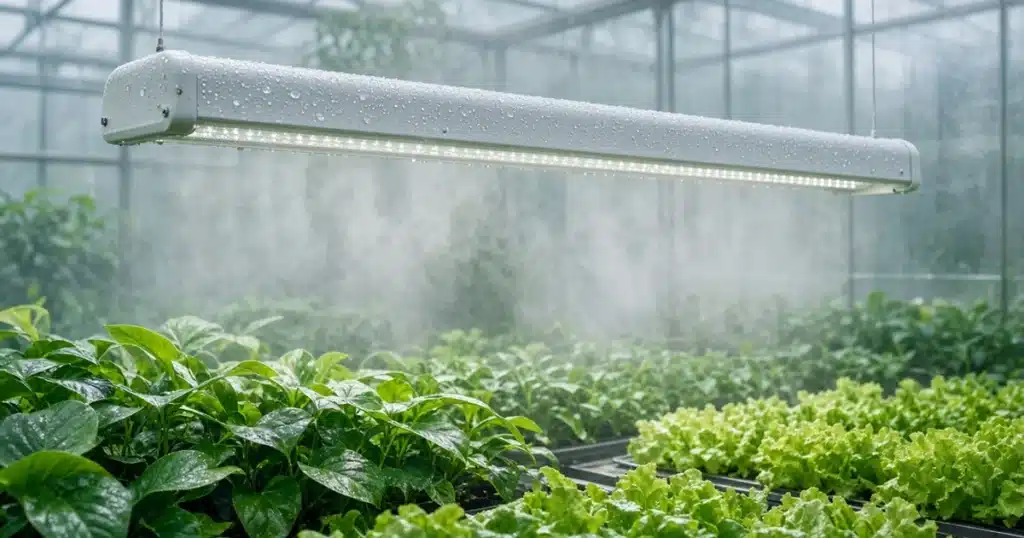
A waterproof grow light carries an IP rating, two digits that show how well the fixture blocks dust and water. Higher numbers mean more protection. Horticultural fixtures for wet or damp rooms should also carry the right listing for that location. Match the rating to how much humidity and spray the room sees.
Grow rooms and greenhouses are wet places. Plants release water vapor all day, and watering adds splash and spray. Lights built for those conditions last longer and need less fuss.
What does an IP rating mean?
IP stands for ingress protection. This standard code tells you how well an enclosure blocks solids and liquids.
The first digit covers solids such as dust, and it runs from 0 to 6. A 6 means the fixture is dust tight.
The second digit covers water, and it runs from 0 to 8 or 9. Low numbers mean protection against drips. Middle numbers mean protection against spray and jets. High numbers mean the fixture can sit under water for a time.
So an IP65 fixture is dust tight and handles water jets from any direction. An IP67 fixture can handle short dunks in water.
| Digit | Meaning | Example use |
|---|---|---|
| First digit 5 or 6 | Dust protected or dust tight | Dusty greenhouses |
| Second digit 4 | Splashing water | Damp rooms with light splash |
| Second digit 5 | Water jets | Rooms that get hosed down |
| Second digit 6 | Powerful water jets | Wash down areas |
| Second digit 7 | Short time under water | Places where water may pool |
Sources: UL Solutions, Resource Innovation Institute.
Which ratings suit humid rooms and greenhouses?
A dry tent with a dehumidifier needs less protection than a misty greenhouse. Think about the wettest moment in the space, not the average.
For humid rooms with no direct spray, a moderate rating may be enough. For greenhouses with misting or overhead watering, a higher water digit makes sense.
The UL Solutions horticultural lighting info sheet explains that grow lights are certified for specific locations. A fixture may be listed for dry, damp or wet locations. Damp means moisture in the air, and wet means direct water contact.
Look for both the IP rating and the location listing. They answer different questions.
The Resource Innovation Institute lighting guide notes that commercial growers choose fixtures rated for the conditions of their rooms. High humidity is normal in many grow spaces, so durable fixtures pay off.
What else should you check?
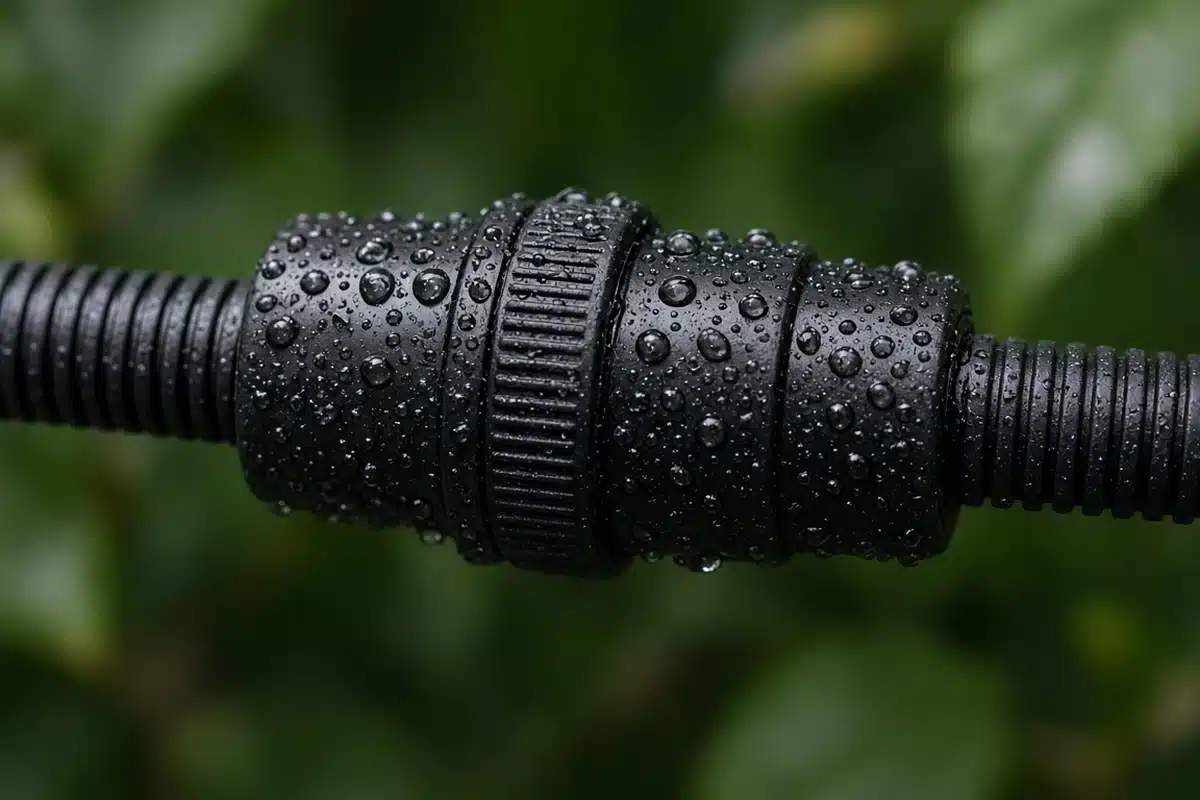
The fixture body is only part of the system. Cords, plugs and connectors need ratings that match the room.
The driver may sit inside the fixture or outside it. If it sits outside, check its rating too.
Seals and gaskets wear over time. Heat, cleaning sprays and age can make them crack.
Look at the cooling design. Passive fins with no fan handle humidity better than fixtures with small built in fans.
The University of Missouri Extension guide to understanding grow lights explains how LED fixtures produce light and heat. Sealed LED designs shed heat through the housing, which suits damp spaces.
Our guide to choosing the right LED lights for your grow covers more spec sheet details.
How does humidity affect fixtures?
Moisture in the air can condense on cool surfaces. When lights turn off at night, the fixture cools and water can form on and inside it.
Condensation inside a fixture can corrode circuits over time. Sealed fixtures block that moisture.
Controlling room humidity helps every piece of equipment last longer. Our post on grow tent condensation explains why water forms on tent walls and how to reduce it.
How do greenhouse and indoor needs differ?
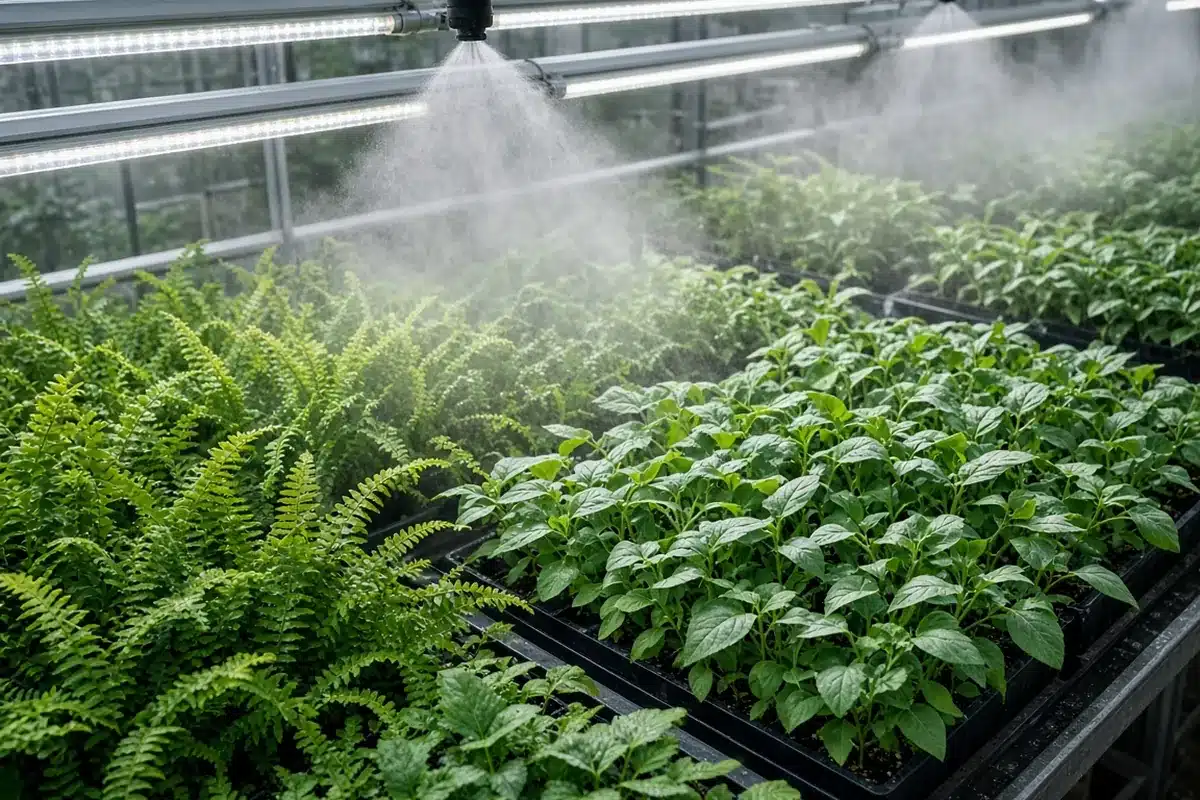
Greenhouses swing between hot, dry days and cool, damp nights. Dew can form on every surface at dawn. Overhead irrigation and misting add direct water.
Indoor rooms are steadier. Humidity often stays in a set range, and water rarely sprays upward. A moderate rating may cover most indoor tents.
Greenhouses bring dust from soil, potting mix and open vents. A dust tight first digit helps fixtures stay clean inside.
How to: step by step
- Note how wet the space gets, from humidity to spray.
- Read the IP rating on the fixture spec sheet.
- Check for a wet or damp location listing.
- Confirm cords and connectors are rated too.
- Follow the maker’s cleaning guidance.
- Inspect seals and connectors regularly.
Before each new crop, walk through your tent and gear. Our post on grow tent setup checks lists what to look over.
Troubleshooting
Water inside the fixture. The rating is too low or a seal failed. Replace the seal or the fixture.
Corroded connectors. Connectors aren’t rated for damp rooms. Use rated connectors.
Fixture flickers in humid weather. Moisture is reaching the driver. Move the driver outside the wet zone.
Cracked gaskets. Seals have aged. Replace them as the maker suggests.
Condensation on the housing. Temperature swings at lights off. Lower humidity before lights go out.
A rated fixture goes on working in wet rooms for many seasons. Kind Seed Co carries cannabis seeds for growers setting up a humid greenhouse or grow room.
Sources
- Horticultural (grow) lighting info sheet, UL Solutions, Horticultural (grow) lighting info sheet
- Lighting for controlled environment agriculture, best practices guide, Resource Innovation Institute, Lighting for controlled environment agriculture
- Controlled environment agriculture: understanding grow lights (G6987), University of Missouri Extension, Controlled environment agriculture
FAQ
Is IP65 waterproof?
IP65 means dust tight and protected against water jets. It is not rated for sitting under water.
Do I need a waterproof light in a tent?
Many tents run humid. A rated fixture helps, especially if you mist or water overhead.
Does an IP rating cover chemicals?
No. IP ratings cover dust and water only. Check the maker's guidance for cleaning products.
Can I hose down a rated fixture?
Only if the rating covers water jets and the maker allows it. Read the manual first.
Do cords need ratings too?
Yes. Cords, plugs and connectors should suit the same conditions as the fixture.