
How many plants a first cannabis grow should have
One of the first questions new growers ask is how many plants they should start with. It is tempting to plant every seed in the pack, but more plants do not always mean a better first harvest. This guide helps you choose a number that fits your space, your time, your budget and your state’s rules. It is for adults 21 and older in places where home cultivation is legal.
Start with the law
Your state sets the upper limit. Many legal states allow a small number of plants per adult and cap the total per household. Some count only flowering plants, while others count every plant, including seedlings. Check our guide to the legal requirements for growing weed plants in your state before you buy seeds. Your first number should always sit within that limit.
Why fewer plants is often better
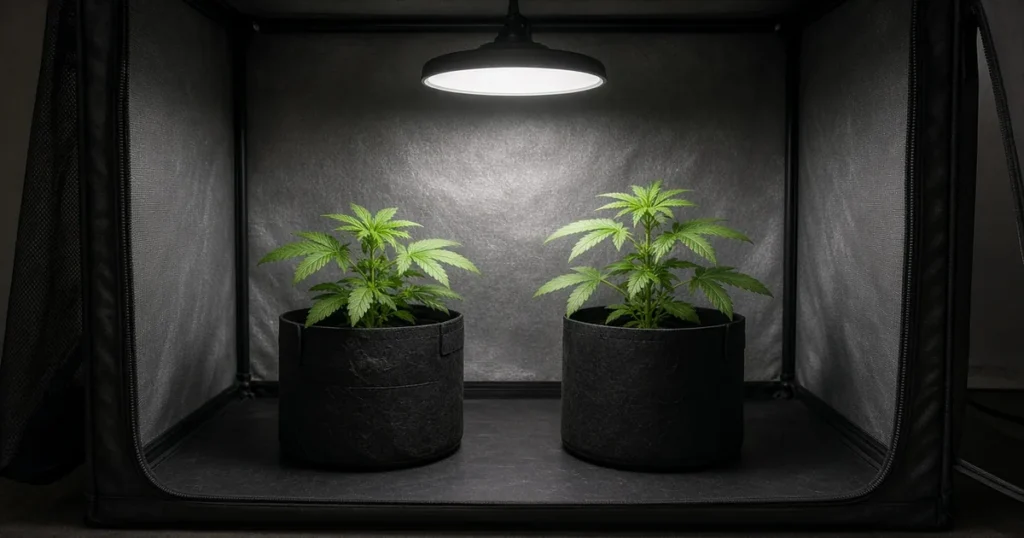
A small number of plants is easier to care for. You can check each one closely, notice problems early and learn how plants respond to water, light and food. Fewer plants also means less money on pots, soil and nutrients, and less work at harvest time. Many experienced growers suggest two to four plants for a first indoor grow.
Match plants to your space
| Space | Suggested first grow |
|---|---|
| 2 by 2 foot tent | 1 plant |
| 2 by 4 foot tent | 2 plants |
| 3 by 3 foot tent | 1 to 3 plants |
| 4 by 4 foot tent | 2 to 4 plants |
| Outdoor garden bed | 2 to 4 plants, spaced well |
These are starting points. Larger plants need more room, while small autoflowers can fit tighter.
Indoors versus outdoors
Indoors. Your light sets the practical limit. A single light can only cover so much area well. Crowding plants under it leads to small, airy buds on the lower branches. Fewer, well trained plants often fill the space better.
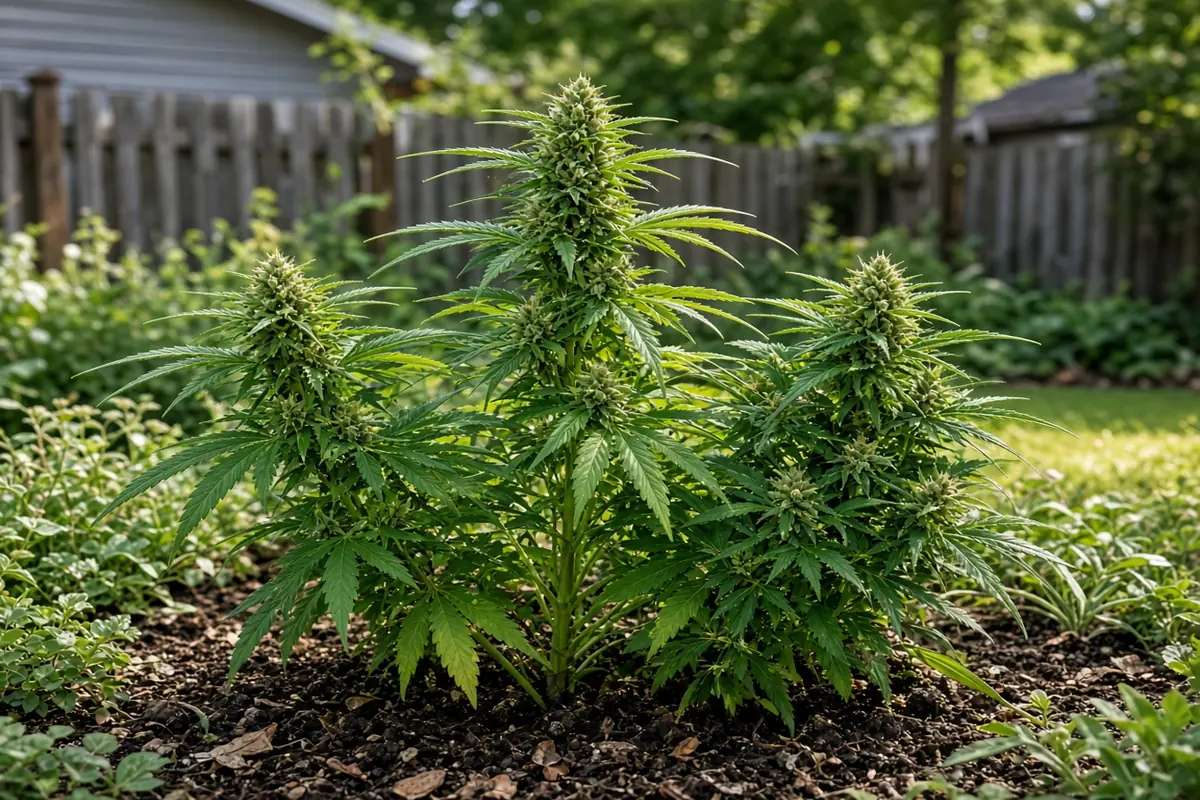
Outdoors. Sun is free, but outdoor plants can grow large. Give each plant room for airflow, which helps prevent mold late in the season. Two to four plants is plenty for a first outdoor garden. See our guide on when to plant outdoors for timing.
Autoflowers or photoperiods
Autoflowers stay small, finish fast and are forgiving, which makes them popular for first grows. You might fit a few more autos in a space than photoperiod plants. Photoperiod plants get bigger and allow more training, so one or two can fill a tent. Pick one type for your first run so you can learn one schedule well.
Plan for losses
Not every seed sprouts and not every seedling thrives. Some growers germinate one extra seed in case of a failure, as long as the extra plant stays within the legal limit. If all sprout, you may need to remove one to stay legal. Our guide on how to germinate cannabis seeds helps improve your success rate.
Time and attention
Each plant needs watering, checking and some training. In flowering, you will be inspecting buds for pests and mold. A few plants might take ten or fifteen minutes a day. A larger garden takes much more. Choose a number you can care for even during a busy week.
Budget
More plants means more pots, more soil, more nutrients and often a bigger light and more electricity. A small first grow keeps costs low while you learn. You can always expand later once you know what works.
Harvest and drying space
Plan for the end of the grow, too. Each harvested plant needs space to hang and dry in a dark, cool room with good airflow. A small closet can handle two or three plants. Larger harvests need more room. Our guide on when to harvest outdoor cannabis covers timing.
A simple plan for a first grow
- Check your state limit.
- Pick a space and measure it.
- Choose autoflowers or photoperiods.
- Plant two to four seeds, within the limit.
- Keep notes on what you do each week.
- Harvest, dry and cure, then plan your next grow.
Light coverage and plant count
Indoor lights list a coverage area on the box, often called the flowering footprint. That is the area where light stays strong enough for good bud growth. If a light covers a 3 by 3 foot area, filling that area with one or two well trained plants usually works better than squeezing in five small ones. Training methods such as topping and low stress training spread the canopy so a few plants fill the space. Low stress training is a gentle way to start, and it is easy to learn on a small number of plants.
Common first grow mistakes with too many plants
- Crowding plants so lower branches get little light.
- Missing pests on one plant until they spread to the rest.
- Running out of space when plants stretch in early flowering.
- Overwatering, since it is easy to water every pot on the same schedule even when some are still wet.
- Running out of drying space at harvest.
Each of these is easier to avoid with fewer plants.
Keeping notes
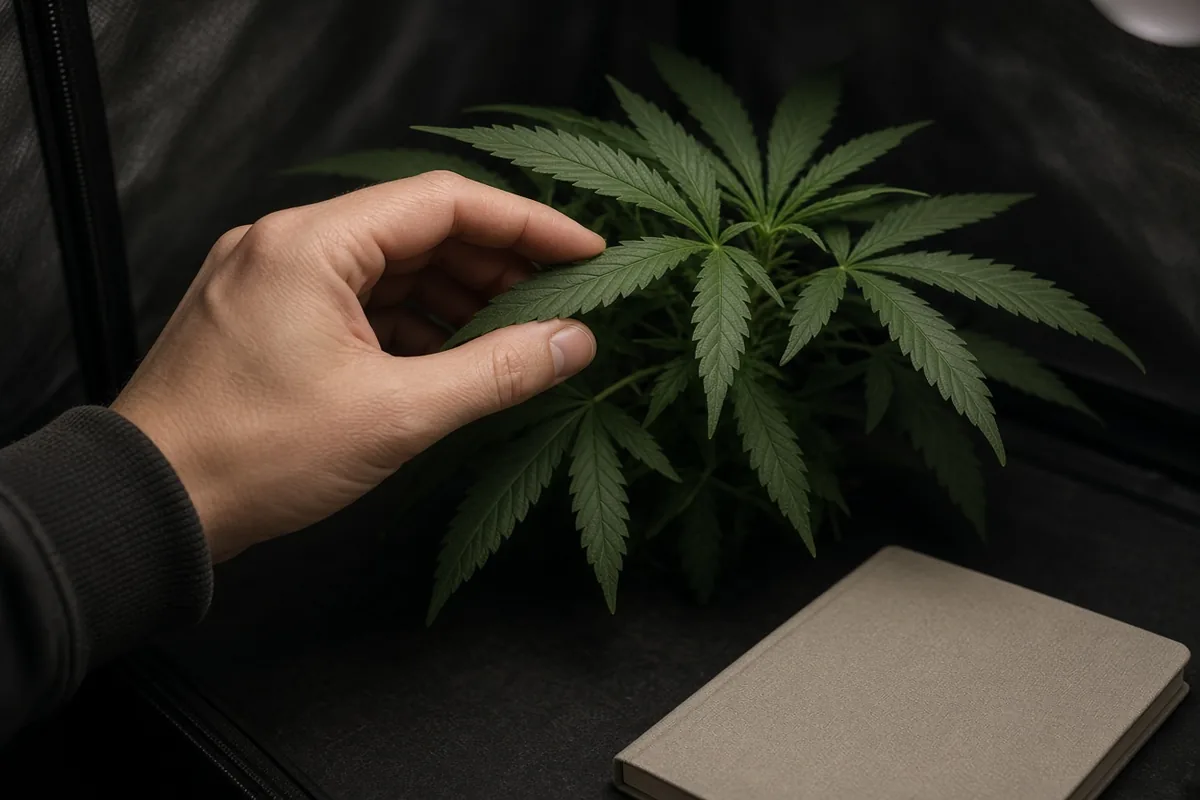
Write down the date you sprouted each seed, when you watered and fed, any training you did and how each plant looked each week. These notes help you see cause and effect. On your second grow you will know whether to add a plant, change your light or adjust feeding.
Growing more next time
After one harvest, you will know how much space each plant really needs, how much time you can give and how much flower your setup tends to produce. That is the best basis for deciding whether to grow more next time. Many growers find a small, well run garden suits them better than a large one, even after years of experience.
Security and privacy
Keep plants out of view from the street and neighbors, and away from children and pets. Some states require plants to be in an enclosed, locked space. A small grow is easier to keep private and secure, which is another reason to start with only a few plants.
Thinking about seeds per pack
Seed packs often come in sets of three, five or ten. You do not have to plant them all at once. Store extra seeds in a sealed container with a desiccant packet in a cool, dark place, such as the refrigerator. Stored well, they can last for years, giving you material for a second or third grow.
Grow legally and responsibly
Home cultivation is only legal in some states, and each state sets its own plant limits, locking rules and rules about whether plants can be visible from a public place. You must be 21 or older to buy seeds from Kind Seed Co, and you should grow only where your state and city allow it. Check your state rules in our guide to the legal requirements for growing weed plants in your state before you plant. Federal treatment of cannabis seeds is also changing, so read our December 11 2026 seed rule explainer before you order. Keep plants and harvested flower locked away from children, pets and visitors, and never drive after using cannabis. This article is general information. It is not legal advice and it is not medical advice.
Frequently asked questions
How many plants should a beginner grow?
Two to four plants is a common starting point, always within your state’s legal limit.
Do seedlings count toward the plant limit?
In some states, yes. Check your state’s rules before you start.
Is one plant enough for a first grow?
Yes. One plant in a small tent is a great way to learn.
Should I start with autoflowers?
Many beginners do, since autos are small, fast and forgiving.
Final thoughts
For a first grow, fewer plants usually means better results. Stay within your state’s limit, match plants to your space and light, plan for drying space and choose a number you can care for every day.
Ready to start
Browse the full range in the Kind Seed Co shop or go straight to beginner seeds. Kind Seed Co sells only to adults 21 and older. Always follow the cannabis laws where you live.