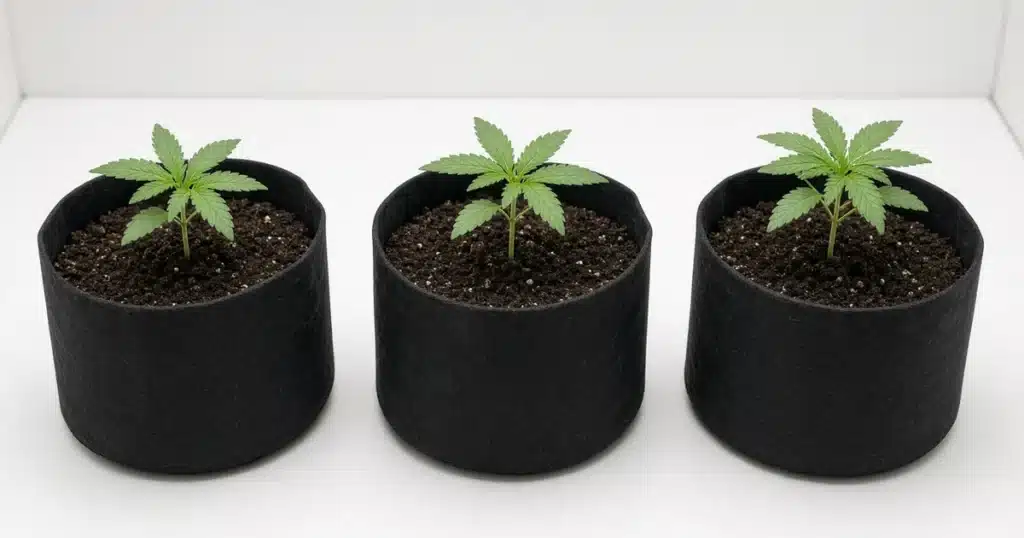
Hydroponic Net Pot Lids: Collars That Hold Plants and Block Light
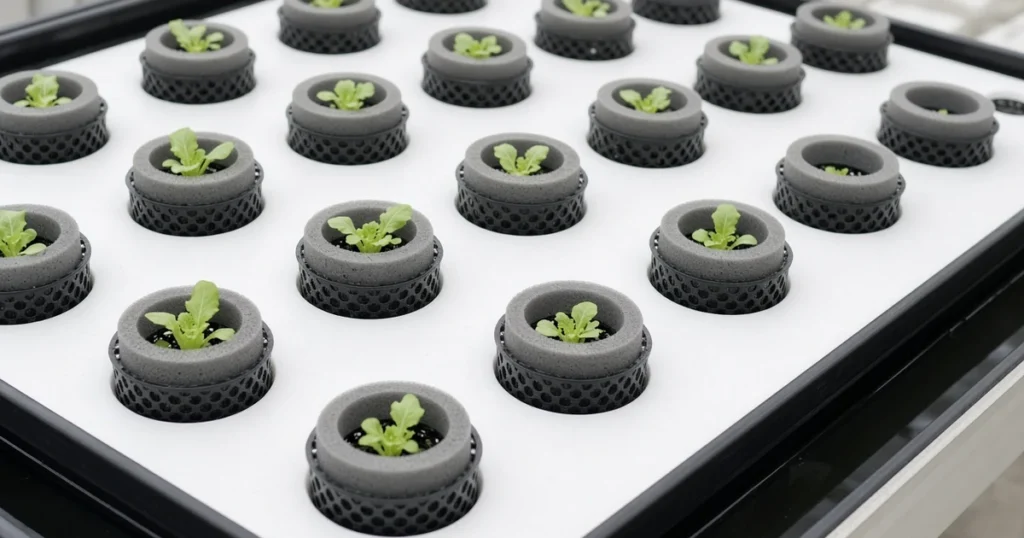
Hydroponic net pot lids are the covers that hold net cups above a reservoir, and collars are the inserts that grip each plant inside the cup. Together they hold plants upright, set how deep the roots sit and stop light from reaching the nutrient solution. Extension guides describe foam lids, rafts and plug media for these jobs.
The short answer
Use an opaque foam lid or raft with holes sized so each net cup hangs by its rim. Hold the plant with a starter cube or plug, leave only part of the roots in the solution and close any gaps where light gets in. Wash and reuse parts between crops.
What do net pot lids and collars do?
The University of Minnesota Extension says net pots sit in a styrofoam lid on a bucket or bin and should be only partly submerged. Drill holes just large enough that each pot lip rests on the lid. Minnesota also describes floating XPS foam board on the solution and propping it up with PVC tubes when the level drops.
Oregon State University Extension advises covering the water with opaque material to reduce algae and sizing rafts so gaps between them are small. Virginia Cooperative Extension notes that commercial rafts are heat sealed polystyrene, often 2 feet by 4 feet. See caring for your hydroponic system for checks.
Which collar type should you use?
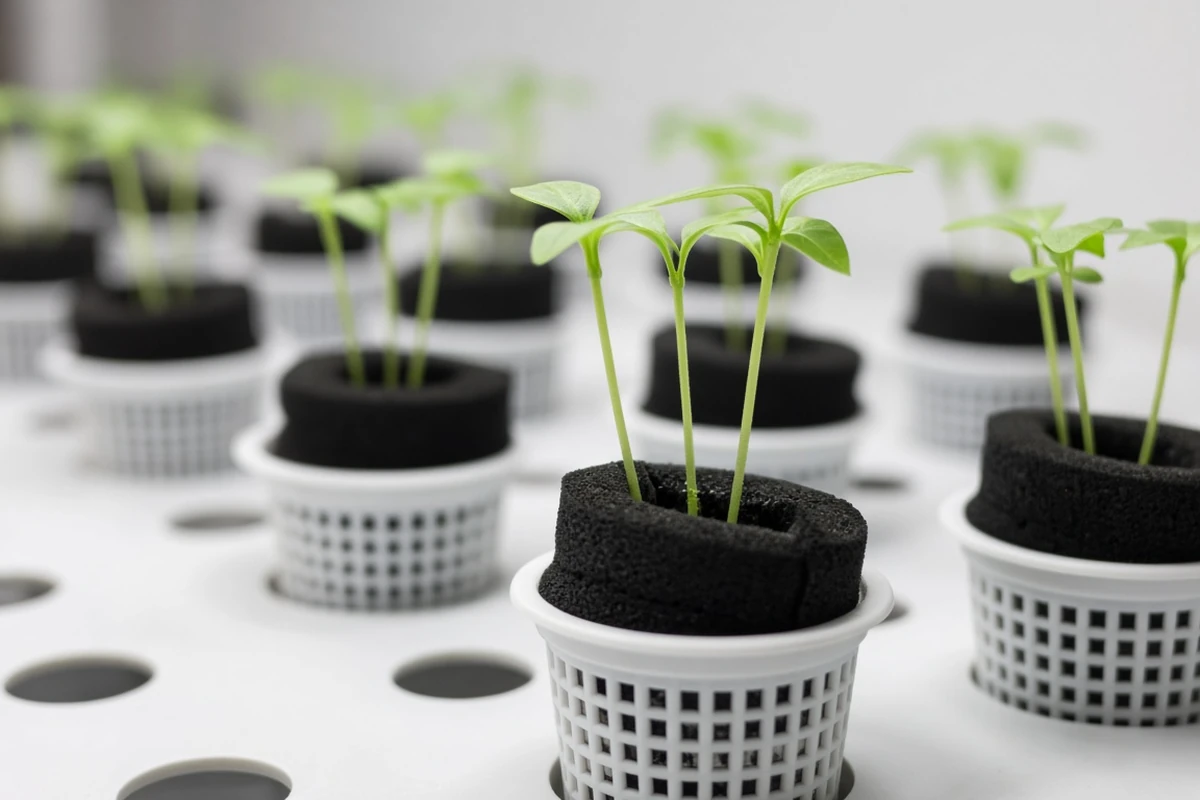
Virginia Extension says DWC seedlings are often started in cubes of rockwool, foam or compressed peat or coir that fit straight into rafts. Minnesota lists perlite, expanded clay, pumice, gravel, coconut coir and rockwool as net pot substrates and suggests soaking any substrate in water for 24 hours first. A cube or plug can act as the collar alone, while loose media fills the cup around the stem. Compare options in hydroponic in different mediums and rockwool for cannabis.
How do you clean and reuse them?
UC Master Gardeners of Orange County note that many hydroponic parts, such as containers and plumbing, can be cleaned and reused. Rinse lids and net cups after harvest, scrub off roots and algae and dry them before the next crop.
Net pot lid basics
| Part | Job | Notes |
|---|---|---|
| Foam lid | Holds net cups over a bucket | Holes sized so the rim rests on top |
| Foam board raft | Floats on the solution | Prop with PVC tubes as the level drops |
| Net cup | Holds roots and media | Only partly submerged |
| Cube or plug | Grips the stem | Rockwool, foam, peat or coir |
| Opaque cover | Blocks light | Cuts algae growth |
Sources: University of Minnesota Extension, Oregon State University Extension, Virginia Cooperative Extension.
How to: step by step
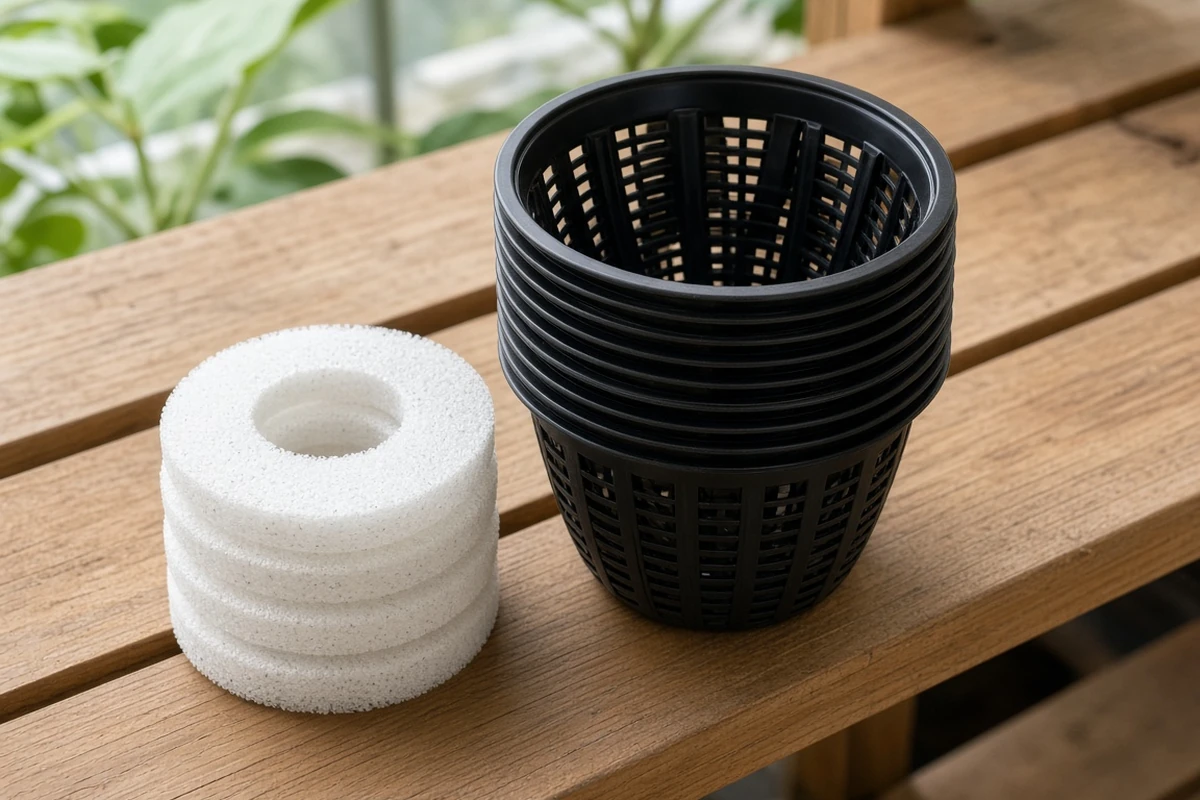
- Choose an opaque foam lid or board that fits your reservoir.
- Trace each net cup and cut holes just small enough to catch the rim.
- Start seedlings in cubes of rockwool, foam, peat or coir.
- Set each cube in a net cup and add loose media if needed.
- Fill the reservoir so only the lower part of each cup sits in the solution.
- Close any gaps around the lid edges.
- Wash and dry the lids and cups after each crop.
Troubleshooting
Cups drop through: the holes are too large. Cut a new lid with smaller holes.
Green film on the water: light is getting in. Cover gaps and use opaque material.
Plants tip over: add media around the stem or use a larger cube.
Fit lids that last
A well cut lid and snug plug do most of the work in a small system. Plan crops with growing schedule for your hydroponics and browse more growing guides from Kind Seed Co.
Sources
- Hydroponic production of edible crops: deep water culture (DWC) systems (SPES-464), Virginia Cooperative Extension
- Hydro hints: deep water culture (EM 9455), Oregon State University Extension
- Small-scale hydroponics, University of Minnesota Extension
- Hydroponics for the home gardener, UC Master Gardeners of Orange County
FAQ
Do I need collars in every net cup?
Each plant needs something to grip the stem. A starter cube or plug often does the job without a separate collar.
Are neoprene collars reusable?
The cited sources do not cover neoprene. UC Master Gardeners note that many hydroponic parts can be cleaned and reused.
Can I use rockwool instead of a collar?
Yes. Virginia Extension says rockwool cubes are sized to fit straight into rafts.
Why does light cause algae?
Algae grows where light meets the nutrient solution. Oregon State Extension advises covering the water with opaque material.
How big should the lid holes be?
Minnesota Extension says to drill holes so the lip of each net pot rests on top of the lid.