Hydroponic Reservoir Thermometer: Placement plus Reading
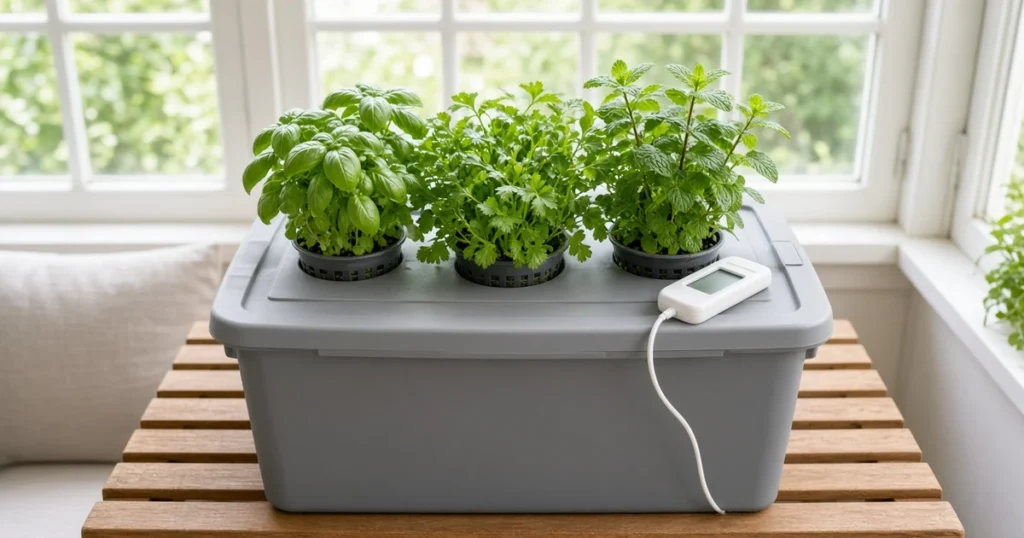
A hydroponic reservoir thermometer shows the temperature of the nutrient solution, which affects dissolved oxygen plus root growth. University of Missouri Extension notes warmer water holds less oxygen, while Colorado State University Extension notes a root zone of 68 to 72F is optimal.
The short answer
A hydroponic reservoir thermometer helps hold the solution near the 68 to 72F root zone Colorado State calls optimal. Missouri notes warmer water holds less oxygen plus advises deep water growers to monitor dissolved oxygen plus temperature. Place the probe in the solution away from pumps plus heaters. Read it daily.
How does water temperature affect hydroponic roots?
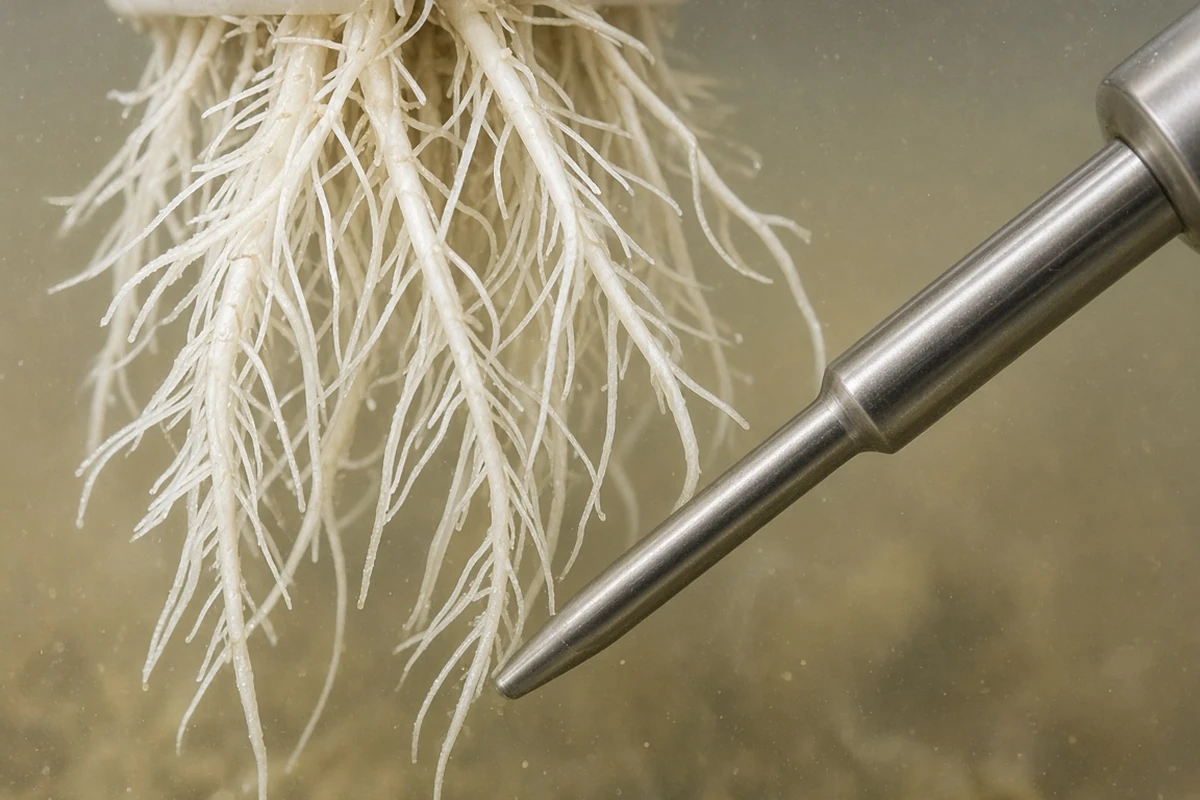
Missouri notes warmer water holds less dissolved oxygen plus dissolved oxygen above 6 ppm is optimal. Colorado State notes low oxygen favors Pythium root rot.
| Factor | Target | Source |
|---|---|---|
| Root zone | 68 to 72F | Colorado State |
| Dissolved oxygen | Above 6 ppm | Missouri |
| Warm water | Holds less oxygen | Missouri |
| Large volume | Buffers temperature swings | Oregon State |
| Hot reservoir | Water chiller | Missouri |
Source: Missouri, Colorado State plus Oregon State Extension.
Which reservoir thermometer type works?
Any waterproof thermometer that reads the solution itself can work. Missouri notes a combination pH, temperature plus EC meter offers more monitoring options plus that meters need calibrating.
Where should the probe go?
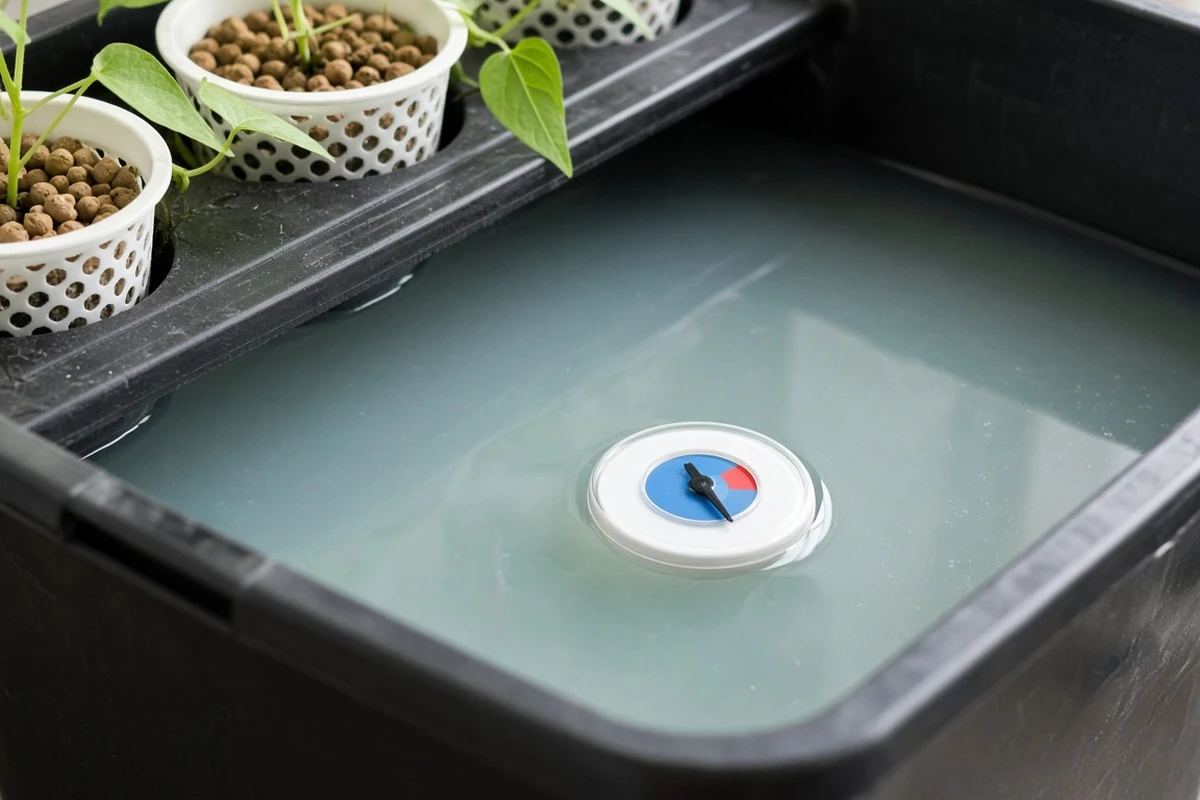
Set the probe in the solution near the roots, away from pumps, heaters plus air stones. Oregon State notes large water volumes buffer temperature, while Virginia Tech notes insulation under a tank buffers swings.
How to: step by step
- Pick a thermometer or probe to suit the tank.
- Calibrate digital meters as the maker advises.
- Place the probe in the solution near the roots.
- Read the temperature at the same time daily.
- Cool or insulate if it runs above 72F.
- Note readings to spot trends.
Troubleshooting
Readings jump around: probe near a pump or heater. Relocate it.
Warm water plus slimy roots: Colorado State links low oxygen to Pythium root rot. Chill plus aerate the tank.
Reading never changes: dead battery or failed probe. Check against a second thermometer plus replace it.
For reservoir care see caring for your hydroponic system, ideal environment for your hydro setup plus hydroponic in different mediums. Kind Seed Co also stocks cannabis seeds.
Sources
- Hydroponic nutrient solutions (G6984), University of Missouri Extension
- Root disease problems and management in hydroponic systems (PlantTalk 2043), Colorado State University Extension
- Hydroponic production of edible crops: deep water culture (DWC) systems (SPES-464), Virginia Cooperative Extension
- Hydro hints: deep water culture (EM 9455), Oregon State University Extension
FAQ
Can a kitchen thermometer be used in a reservoir?
Yes, for a quick check. Rinse it well plus read it in the solution near the roots. A dedicated probe makes daily checks easier. Missouri notes meters need calibrating, so compare any thermometer against a second one now and then to confirm it reads true.
Do digital probes need calibration?
Missouri notes meters need calibrating for accurate readings. Follow the maker's steps for your probe plus check it against a second thermometer now and then. A probe that reads a few degrees off can hide a warm reservoir that holds less dissolved oxygen than the roots need.
What temperature should a hydroponic reservoir be?
Colorado State notes a root zone of 68 to 72F is optimal. Missouri notes warmer water holds less dissolved oxygen plus advises above 6 ppm dissolved oxygen. Above that range, cool the solution or add aeration. Below it, roots slow plus growth lags.
How can I cool a warm reservoir?
Missouri notes water chillers can cool the nutrient solution. Oregon State notes a large water volume buffers temperature changes plus opaque covers cut algae. Virginia Tech notes insulation under a tank buffers swings. Move the reservoir away from lights plus heaters too.
Is a combination meter worth it?
Missouri notes a combination pH, temperature plus EC meter gives more monitoring options in one tool. That helps deep water growers who track dissolved oxygen plus temperature together. Calibrate each sensor as Missouri advises plus record readings at the same time each day.