Minor cannabinoids explained for cannabis growers
Minor cannabinoids are the less abundant compounds cannabis makes besides THC and CBD, such as CBG, CBC, CBN and THCV. For growers, the key points are simple. Genetics decide which cannabinoids a plant can make, CBGA is the starting point for most of them, and harvest timing and storage affect a few, especially CBN. If you want to grow a plant built around a minor cannabinoid, CBG strains like CBG Origin and CBG Cookies are the clearest option today. Browse our most popular seeds to compare. This guide covers plant chemistry only, for adults 21 and older growing where home cultivation is legal.
What counts as a minor cannabinoid?
Cannabis produces a large family of related compounds called cannabinoids. In most modern strains, THC or CBD, or both, make up the large majority. The rest are present in small amounts and are called minor cannabinoids.
“Minor” describes how much is usually present, not how interesting they are. Breeders and researchers are paying more attention to them every year, and some strains have been bred to make a minor cannabinoid the main one.
Acid forms come first
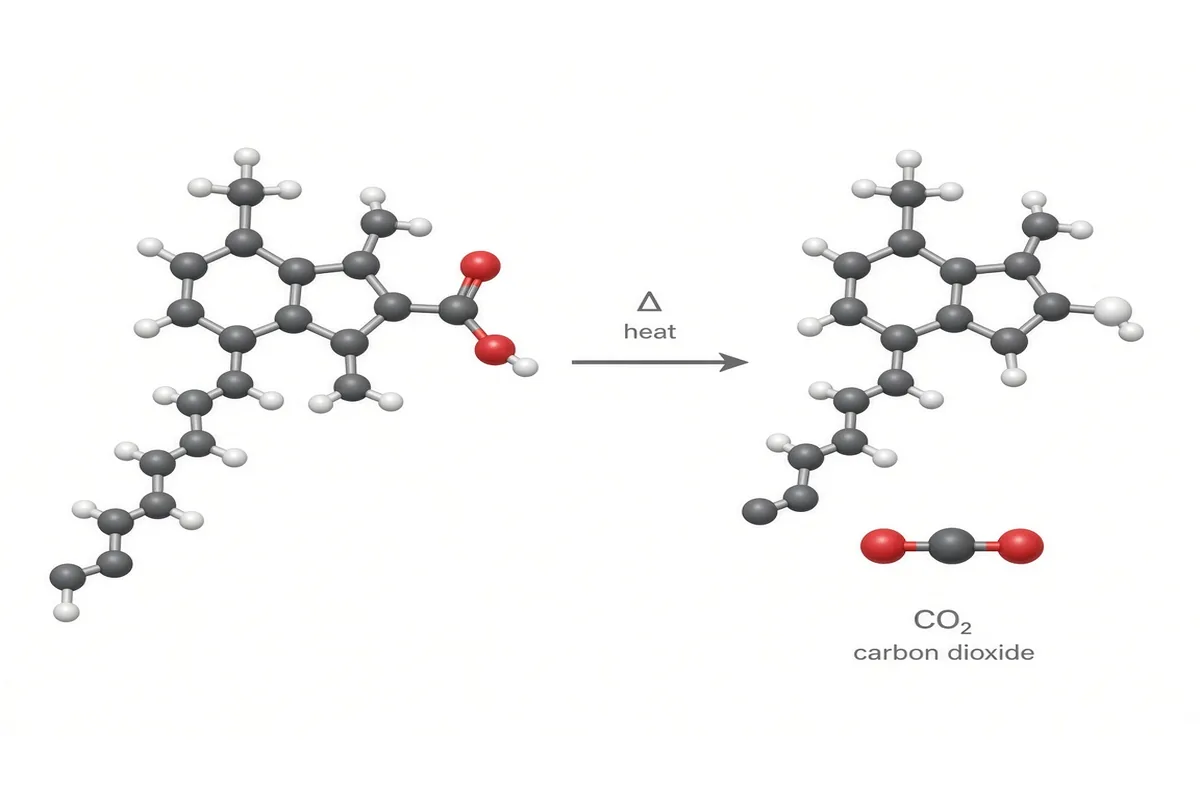
Living cannabis plants do not make THC or CBD directly. They make acid forms such as THCA, CBDA, CBGA and CBCA. These acids turn into the neutral forms like THC, CBD, CBG and CBC when they lose a carbon dioxide group, a process called decarboxylation. Heat speeds it up a lot, and it also happens slowly over time.
That is why lab reports often show both forms, and why fresh flower is mostly acids.
How the plant builds cannabinoids
Here is the simplified pathway inside the trichomes:
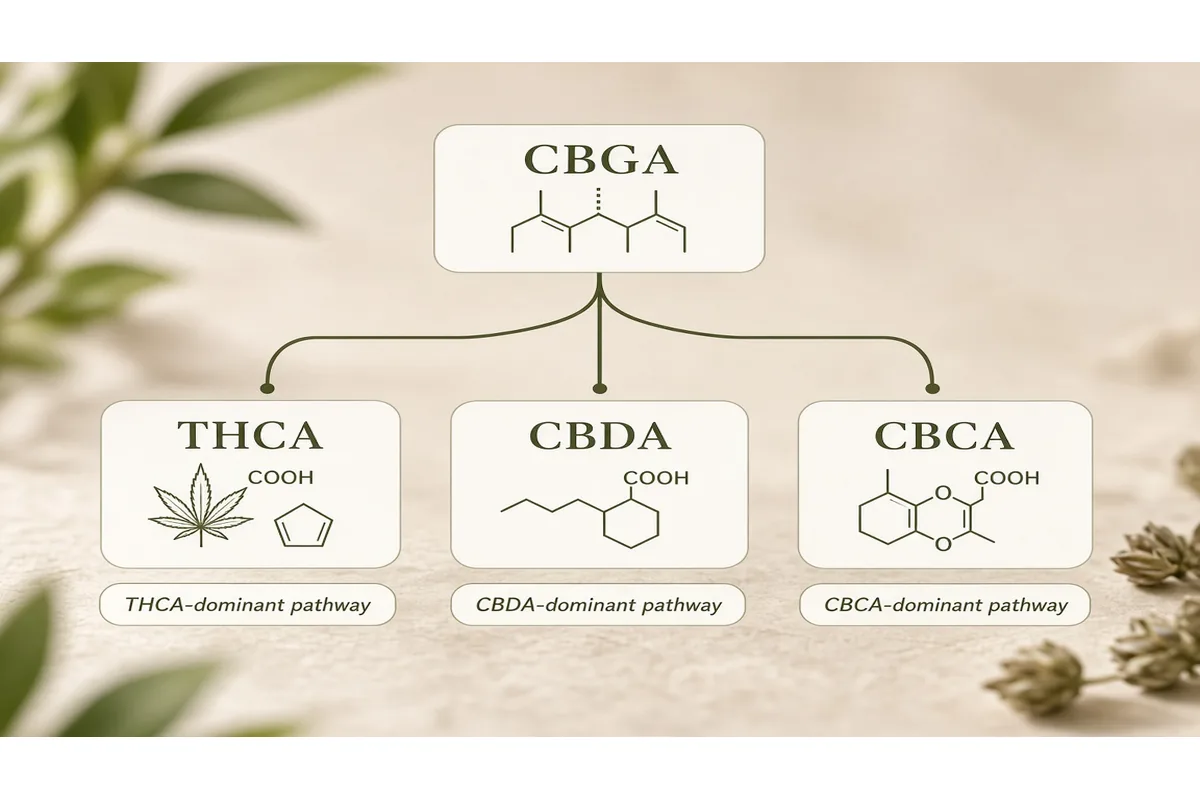
- The plant combines two building blocks, olivetolic acid and geranyl pyrophosphate, to make CBGA.
- Enzymes called synthases then convert CBGA into other acids:
- THCA synthase makes THCA.
- CBDA synthase makes CBDA.
- CBCA synthase makes CBCA.
- Whatever CBGA is not converted stays as CBGA.
The genes a plant carries for these synthases decide its chemotype, the balance of THC, CBD and CBG it tends to produce. Our guide to cannabis chemotypes explains how breeders read and select those types, and our post on THC and CBD differences covers the two major cannabinoids.
CBG, the mother cannabinoid
CBG is often called the mother cannabinoid because CBGA is the starting material for THCA, CBDA and CBCA. In most plants, nearly all of it gets converted, so mature flower shows only small amounts.
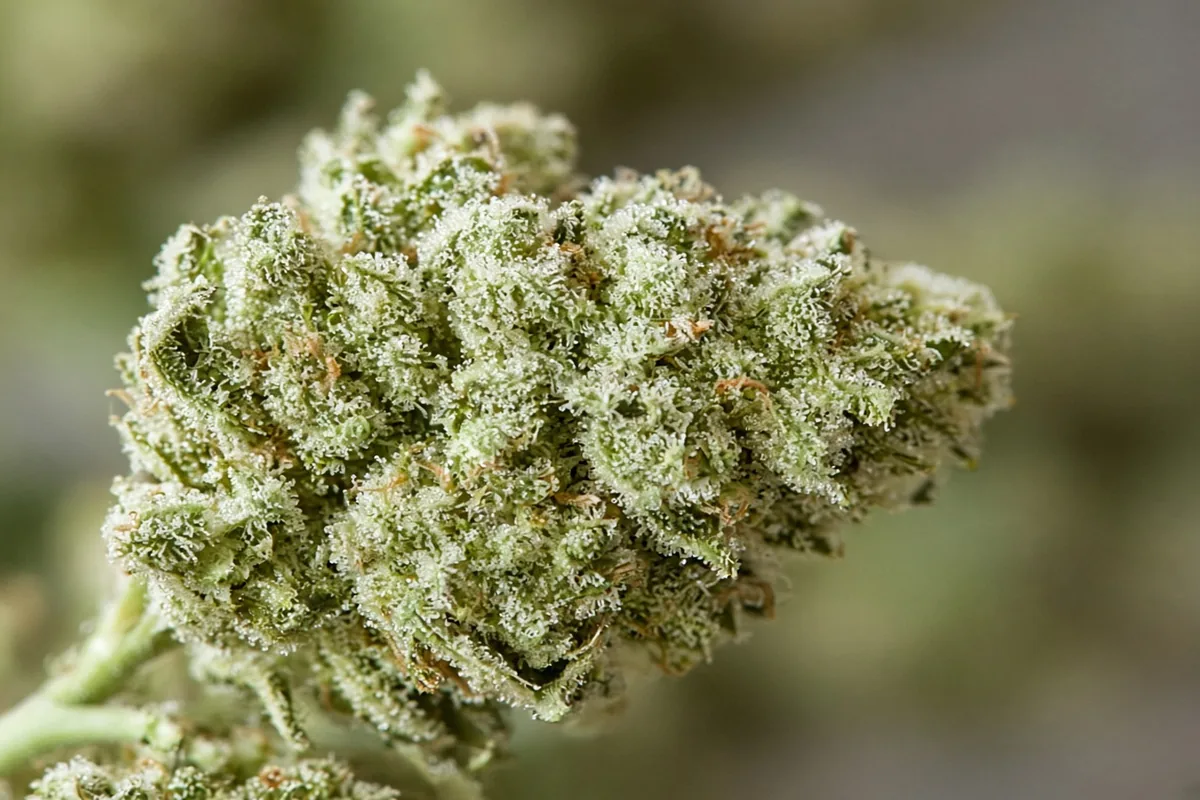
Breeders have developed CBG dominant strains whose synthase enzymes do not convert CBGA efficiently. The result is a plant that keeps much of its CBGA. These strains look and grow like other cannabis plants, often with light, frosty buds.
Kind Seed Co CBG options include:
For background, read what CBG is and our page on CBG seeds.
CBC, the quiet one
CBCA is made by CBCA synthase from the same CBGA starting point. CBC is usually present in small amounts and has historically shown up more in younger plants and some landrace lines. There are few strains bred specifically for CBC, so for most home growers it is simply part of the overall profile.
CBN, the aging cannabinoid
CBN is different. The plant does not build it with an enzyme. Instead, CBN forms mainly when THC breaks down through oxidation, a process sped up by heat, light, air and time. That is why older, poorly stored cannabis tends to show more CBN on lab tests.
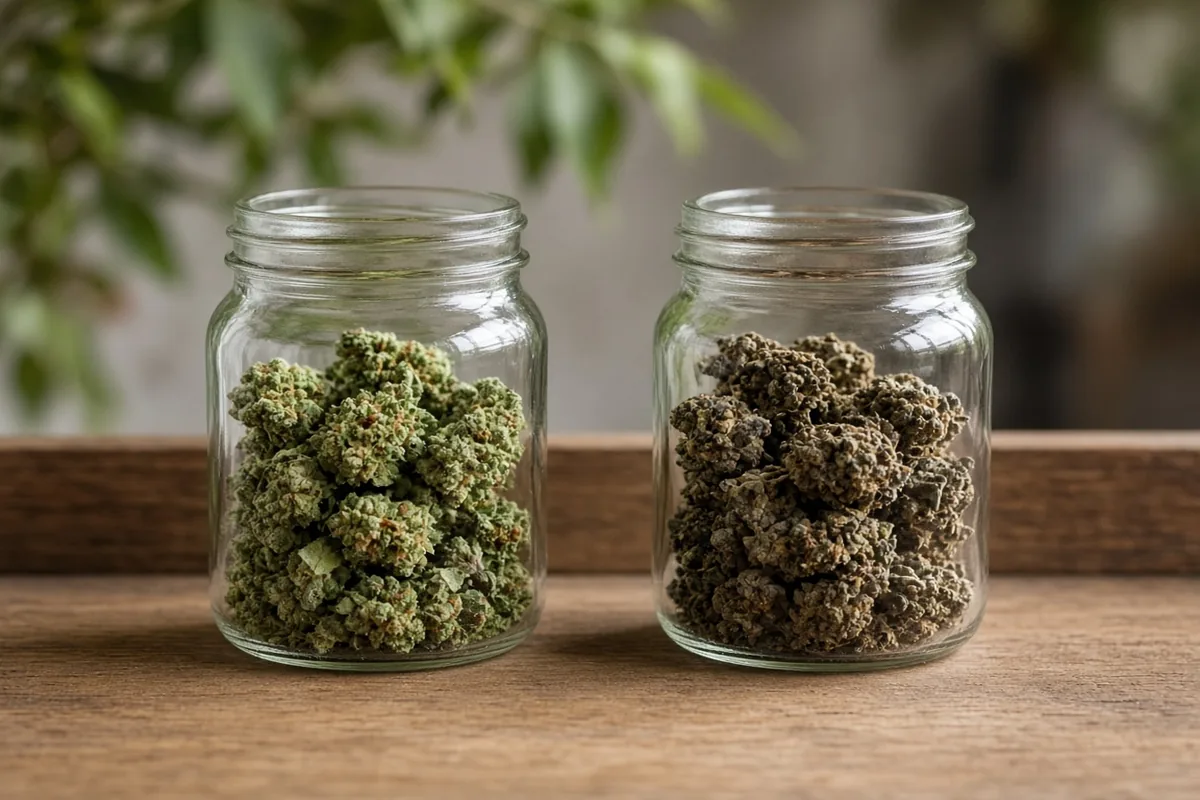
For growers, this has practical meaning:
- Late harvests and long exposure to heat and light can raise CBN at the expense of THC.
- Dark, cool, airtight storage slows the change.
- No seed is a CBN seed. CBN content depends on handling after harvest more than genetics.
Read more in our post on what CBN is.
THCV and the varin family
THCV belongs to a related group called varins. Instead of olivetolic acid, the plant uses a slightly shorter building block called divarinolic acid, which leads to CBGVA. Synthases then turn CBGVA into THCVA, CBDVA and other varin acids.
Whether a plant makes varins depends on its genetics. Some African landrace lines are often discussed in THCV conversations, and Durban Poison Photo Fem comes from South African heritage, but levels vary widely and are not guaranteed in any home grown plant.
Can growers change minor cannabinoid levels?
Mostly through genetics. Growing practices matter less than many people think, but a few factors help:
- Choose the right seed. A CBG dominant strain will make far more CBG than a THC strain, no matter how it is grown.
- Grow healthy plants. Strong light and balanced nutrition support resin production overall.
- Harvest on time. Use a loupe to read trichomes. Overly late harvests and long exposure to heat and light favor THC breakdown into CBN.
- Dry and store well. Cool, dark, slow drying and airtight jars protect cannabinoids and terpenes.
Reading a lab report
If you test your harvest, you may see a long list of cannabinoids. Look for:
- Acid and neutral forms listed separately, such as THCA and THC.
- Total values that combine the acid and neutral forms using a standard formula.
- Non detect results for compounds below the lab’s detection limit.
Results vary between labs and samples, so treat one test as a snapshot, not a final verdict.
CBD strains and the broader picture
CBD dominant plants come from strains carrying active CBDA synthase genes. If you want to explore non THC dominant chemistry, options include CBD Zenergy Photo Fem, CBD Cookies Auto Fem and CBD Northern Lights Auto Fem. These still contain some THC, and cannabinoid balance can vary from plant to plant.
Frequently asked questions
What are minor cannabinoids?
They are the cannabinoids cannabis makes in smaller amounts than THC and CBD, including CBG, CBC, CBN and THCV.
Why is CBG called the mother cannabinoid?
Because CBGA is the starting material the plant converts into THCA, CBDA and CBCA.
Can I buy CBN seeds?
No seed is bred to make CBN directly. CBN forms mainly as THC breaks down with heat, light, air and time.
How do CBG strains work?
They carry synthase genes that do not efficiently convert CBGA, so the plant keeps much of its CBGA instead of turning it into THCA or CBDA.
Can I increase THCV by changing how I grow?
Not much. THCV depends on varin genetics. Growing conditions affect overall resin but do not create THCV in a plant that lacks the genetics.
Do minor cannabinoids change aroma?
Aroma comes mainly from terpenes, not cannabinoids. A CBG strain can smell sweet, earthy or citrus depending on its terpene profile.
Explore cannabinoid chemistry in your own garden
Minor cannabinoids are mostly a story of genetics, with harvest timing and storage playing a supporting role. Start with the right seed, harvest on time and store your buds well. Browse our most popular seeds or explore the full Kind Seed Co shop. Kind Seed Co sells only to adults 21 and older. Always follow the home grow laws where you live.