
Caliche Soil: How to Find and Work Around It for Cannabis
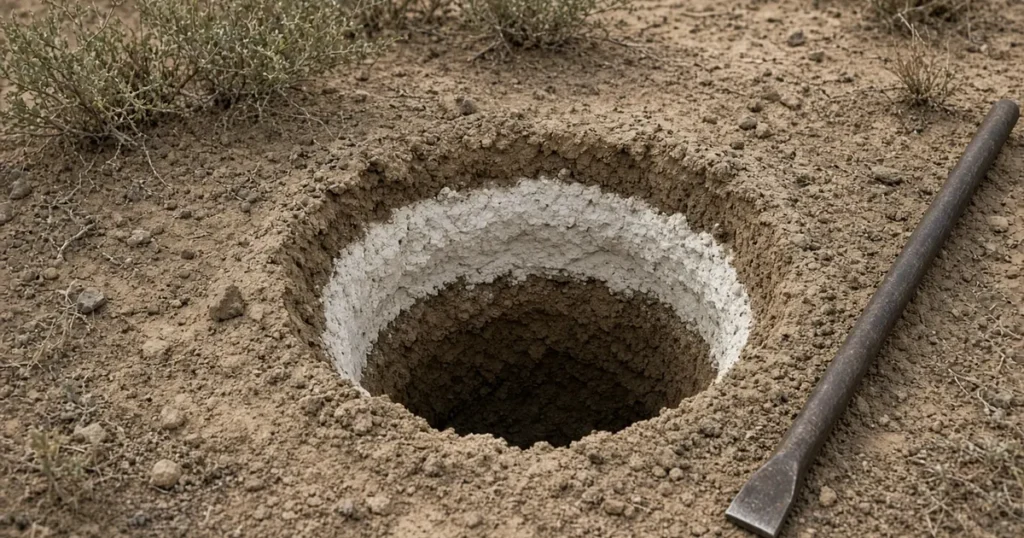
In some desert yards, a hard, pale layer sits below the surface. That layer is often caliche. University of Arizona Cooperative Extension describes caliche as a layer of soil in which the particles are cemented together by calcium carbonate. New Mexico State University Extension notes that many soils of arid and semiarid regions have caliche layers below the surface. For an outdoor cannabis grower, caliche can restrict roots and trap water. Here you will learn what caliche is, how to find it with a shovel, how to break through it, how to test drainage before planting and what to do when the layer is too thick to dig.
What caliche is
NMSU Extension describes caliche as a whitish-gray or cream-colored soil layer cemented by carbonates of calcium and magnesium. It can occur as a soft, thin layer, as a hard, thick bed or as a layer exposed at the surface by erosion.
The two universities describe how it forms in slightly different words:
- University of Arizona Extension explains that calcium is continually added to the soil, mainly dissolved in rain water. It combines with carbon dioxide in soil water to form insoluble calcium carbonate deposits, which build up and consolidate over time.
- NMSU Extension explains that carbonates in the soil are dissolved and leached by rainwater. The water then evaporates quickly or is taken up by plants, leaving the carbonates behind to bind with sand, silt or clay and harden.
University of Arizona notes that not all desert soils have caliche. Whether it forms depends on factors such as rainfall, water infiltration and soil drainage.
What caliche looks like
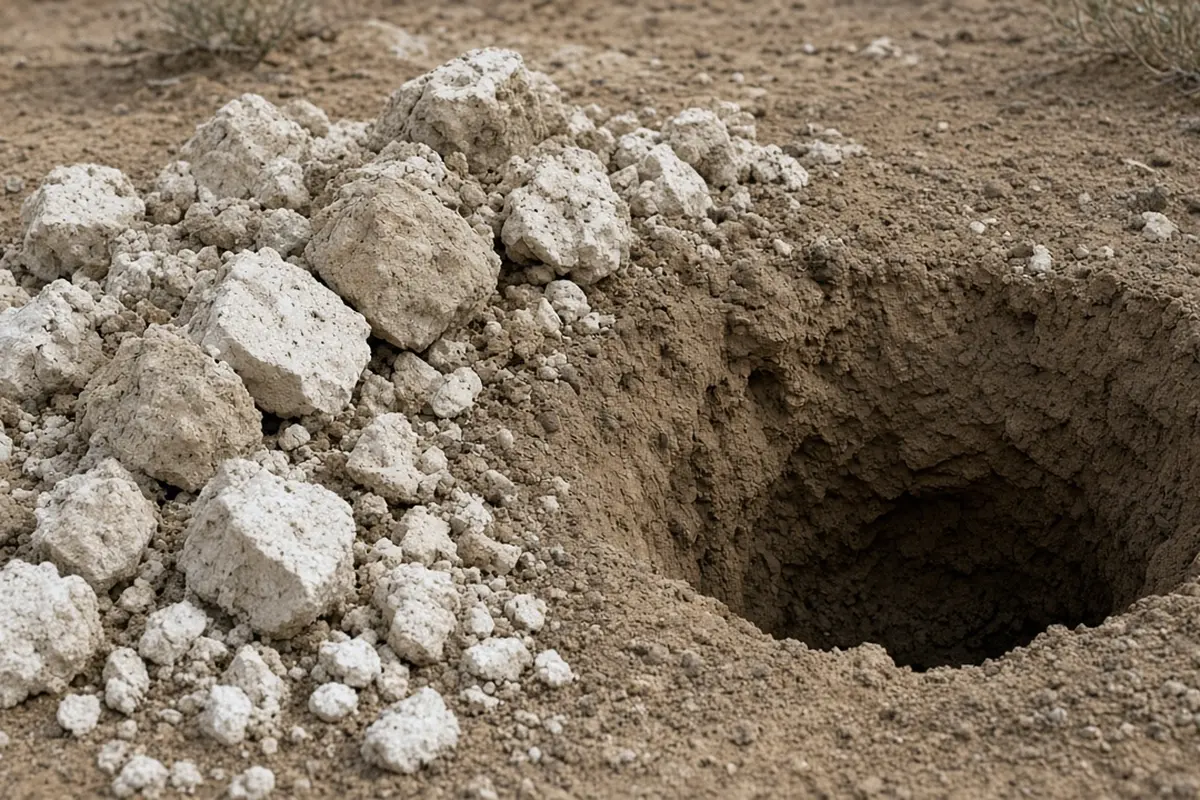
Caliche comes in more than one form. University of Arizona Extension says it may appear as light-colored lumps that range from less than an inch to several inches across. It may also form a solid layer from a few inches to several feet thick. Caliche layers range from fairly loose to highly consolidated, rock-like masses.
NMSU Extension adds that hardness varies a great deal, and that different types of caliche can be found in the same field. Some caliche is very hard to break, while some breaks fairly easily. NMSU also describes non-indurated, or soft, caliche, which it says can show up during soil sampling as white accretions, usually below the first foot of soil in some locations.
Finding caliche with a shovel
The surest way to know what is under a bed is to dig. As you dig a test hole, watch for:
- Light-colored lumps mixed into the soil, which University of Arizona describes as one form of caliche.
- A whitish-gray or cream-colored layer, as NMSU describes.
- A layer that is hard to break or that stops the shovel, which NMSU calls indurated caliche.
NMSU Extension also notes that the Web Soil Survey from the USDA Natural Resources Conservation Service can be used to estimate where the depth to caliche may limit plant growth.
Why caliche causes problems
University of Arizona Extension says caliche can cause plant growth problems by restricting root development, restricting water drainage and making iron unavailable to plants.
Root restriction is the biggest issue with hard caliche. NMSU Extension says the greatest hindrance comes when caliche occurs as a thick, very hard layer. Like other hardpans, it limits growth mainly by restricting roots. NMSU explains that any hard layer limits the downward growth of roots and forces them to grow sideways, so the plant cannot reach deeper soil. University of Arizona adds that when roots are confined to a small amount of soil, plants are subject to drought stress and may be poorly anchored and prone to uprooting in strong winds.
Water is the second issue. University of Arizona says water cannot move into or through soil with a tight caliche layer. Water perched on top of the caliche can lead to poor root aeration. It also notes that soils with poor drainage from caliche tend to become saline, because salts cannot leach out and build up in the root zone. NMSU adds that caliche rocks can absorb water, as much as 13 percent by weight in one study, but that this water is not easily released to the surrounding soil.
Soft caliche is a smaller worry. NMSU says non-indurated caliche does not cause a problem for root growth, although it can bring nutrient issues because of high pH. University of Arizona notes that where caliche is present, the pH may be high enough to make iron unavailable, with symptoms showing first on the youngest leaves as pale yellow or white areas between the veins. University of Arizona suggests contacting county Extension agents for advice on correcting iron problems.
Breaking through caliche
For a small area, digging is the practical fix. University of Arizona Extension says physical problems from caliche can be reduced or eliminated by breaking apart and removing as much caliche as practical when making planting holes. It says holes should penetrate completely through the caliche layer so water can drain quickly.
NMSU Extension agrees. For establishing plants over a small area, it says you can dig holes into the caliche and backfill with soil after removing the caliche fragments. The best option is to dig through the entire caliche layer before backfilling to make sure the soil drains.
When the layer is too thick to dig through across the whole hole, both universities describe a drainage hole:
- University of Arizona says a smaller drainage hole can be made that pierces through the caliche to provide drainage.
- NMSU says that if caliche continues below the planting depth, dig a small drainage hole through the rest of the caliche into the normal soil beneath.
University of Arizona adds one caution. Do not place drain holes directly under the root ball, as this forces excess water through the root system and may encourage root suffocation and disease.
Both sources also say to remove solid chunks of caliche from the soil you dig out. NMSU recommends using good-quality soil that is neither too sandy nor too clayey to backfill the hole.
Test drainage before you plant
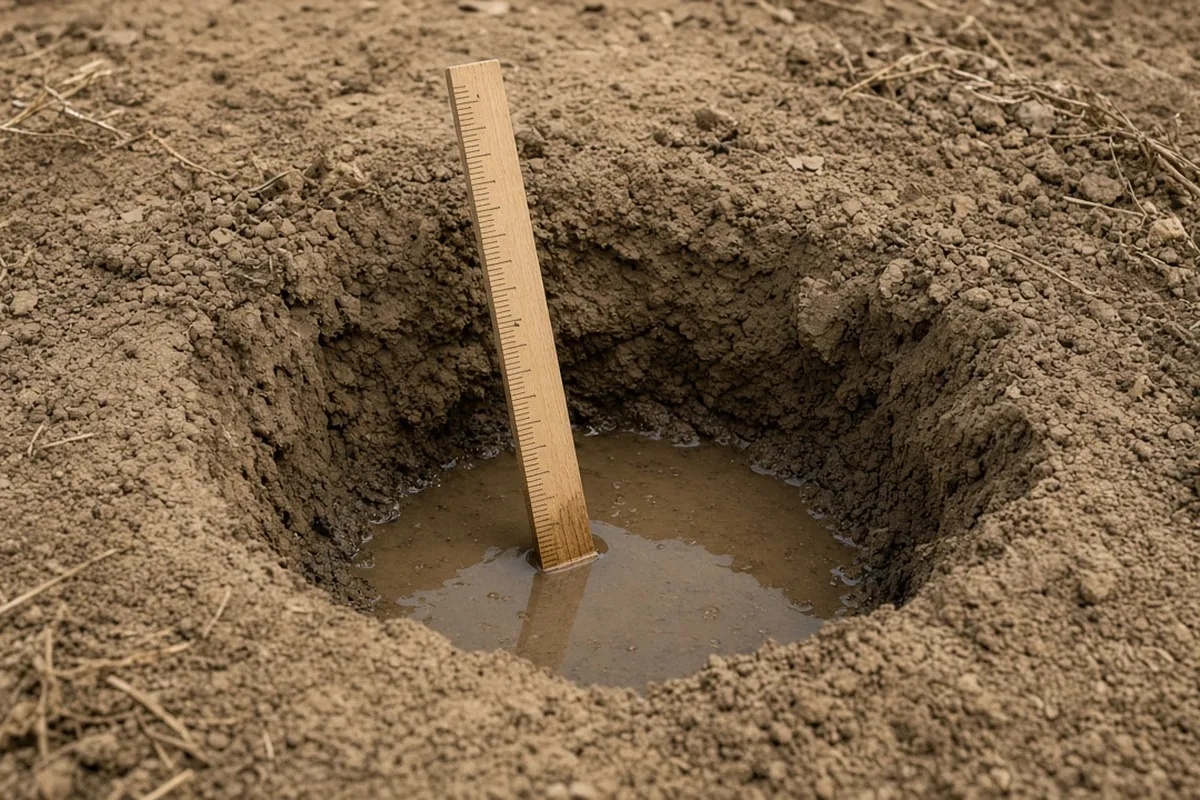
Before you fill the hole or plant, check that water drains. Both universities describe a simple test:
- University of Arizona Extension says to partly fill the hole with water. If the water level drops at least four inches in four hours, drainage should be adequate.
- NMSU Extension says the hole should drain water at a rate of at least 1 inch per hour. Check by pouring water into the hole after digging but before backfilling, and see how fast the level drops each hour.
If the water sits, keep working on the caliche or consider building up soil instead. Drainage testing in any bed is explained step by step in the soil drainage test for cannabis beds.
When the layer is too thick to dig
Sometimes caliche is simply too thick. NMSU Extension says breaking the layer is only possible if it is not too thick, and that if it is very thick, breaking it becomes impracticable. For land use, NMSU advises that it is best to avoid land with caliche shallower than about one meter for commercial crop production.
Building soil up above the caliche is the alternative. University of Arizona Extension says that if good drainage cannot be reached by penetrating the caliche, soil can be added to increase the depth available for rooting. It recommends enough added soil to give two feet of total depth over the whole rooting zone, using soil similar in texture. University of Arizona also mentions mounding soil to give roots enough room as an option when drainage will not be adequate. NMSU adds that when a dense caliche layer prevents good drainage, a larger hole with more soil may be needed.
Usually that means a raised bed or mound of soil sitting on top of the caliche. If the native soil you are building on is heavy as well, Kind Seed Co’s post on clay soil for cannabis deals with that situation.
Protect the soil you have
NMSU Extension gives one more caution for any site with caliche. Keep the soil surface well protected. Without vegetation on the surface, wind and water erosion can slowly reduce the soil depth and bring the caliche closer to the surface. Once caliche is exposed, NMSU says, the land becomes unsuitable for crop production. Keeping beds planted or covered helps hold the soil you have.
Troubleshooting
The shovel stops a few inches down. You may have hit an indurated caliche layer. NMSU says hardness varies, so try breaking it apart before deciding it is too thick.
Water stands in the hole for hours. Drainage is too slow. University of Arizona says the level should drop at least four inches in four hours, and NMSU says at least 1 inch per hour.
Plants wilt fast in hot weather. Roots may be confined above caliche. University of Arizona says roots restricted to a small amount of soil leave plants subject to drought stress.
Plants lean or blow over in wind. University of Arizona notes that shallow-rooted plants over caliche may be poorly anchored and prone to uprooting.
New leaves turn pale between the veins. University of Arizona links this to high pH from caliche making iron unavailable. Contact your county Extension office for advice.
Sources
- University of Arizona Cooperative Extension. Managing caliche in the home yard (AZ1281). https://extension.arizona.edu/publication/managing-caliche-home-yard
- New Mexico State University Extension. Growing plants in caliche soils (Guide A-151). https://pubs.nmsu.edu/_a/A151/
FAQ
What is caliche soil?
University of Arizona Cooperative Extension describes caliche as a layer of soil cemented together by calcium carbonate. New Mexico State University Extension describes it as a whitish-gray or cream-colored layer cemented by carbonates of calcium and magnesium. It can appear as lumps, a thin soft layer or a hard bed several feet thick.
How do I dig through caliche?
University of Arizona Extension says to break apart and remove as much caliche as practical, with holes going completely through the layer so water drains. If the layer is too thick, both universities describe digging a smaller drainage hole through it. University of Arizona says not to place that hole directly under the root ball.
How do I test drainage in caliche?
University of Arizona Extension says to partly fill the planting hole with water before planting. If the level drops at least four inches in four hours, drainage should be adequate. New Mexico State University Extension recommends a drainage rate of at least 1 inch per hour, checked before backfilling.
What if the caliche is too thick to break?
New Mexico State University Extension says breaking a very thick layer becomes impracticable. University of Arizona Extension suggests adding soil instead, enough for two feet of total depth over the rooting zone, using soil similar in texture. That means building a raised bed or mound above the caliche.


