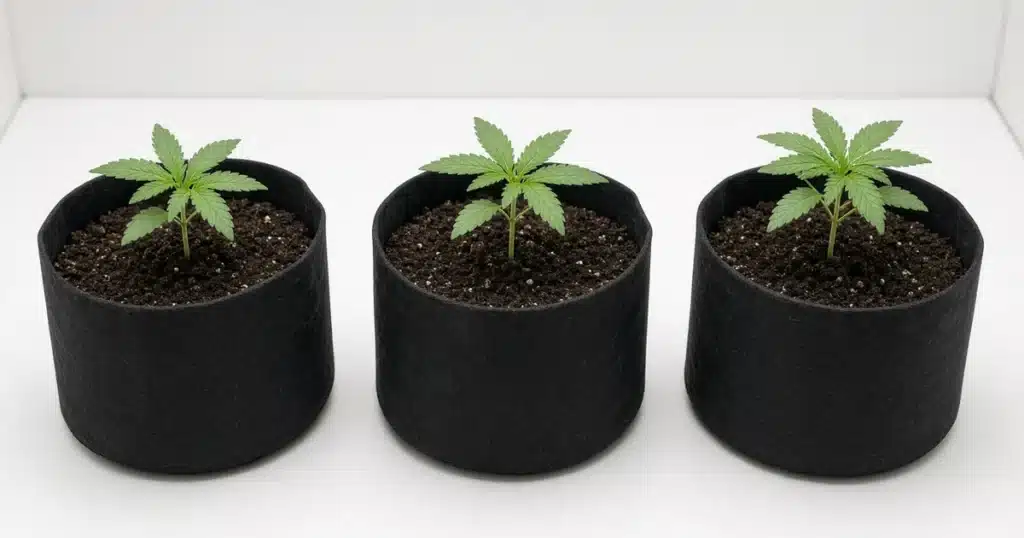
Perpetual Harvest Cannabis: Staggered Grows for Steady Harvests
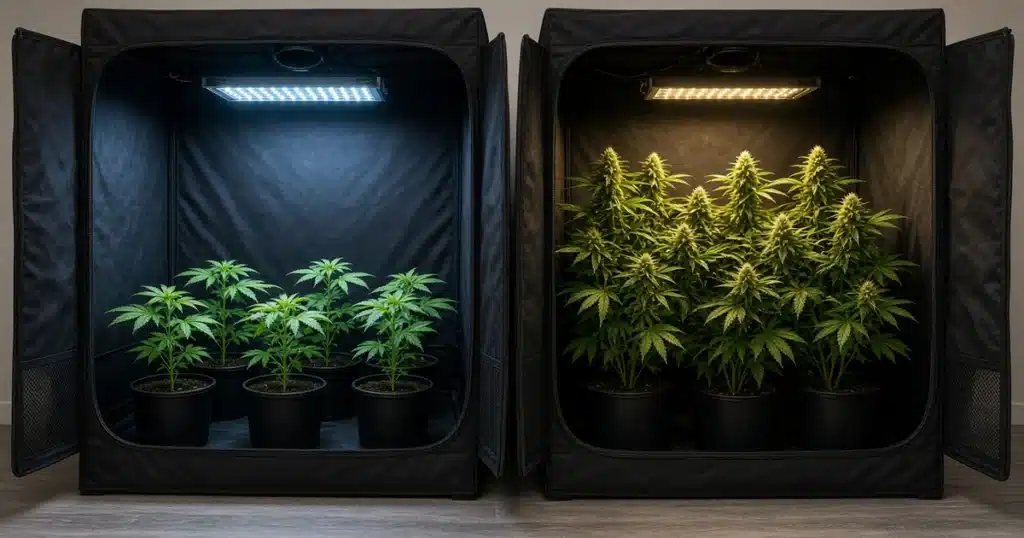
Quick answer: A perpetual harvest means starting small batches of cannabis on a fixed interval instead of growing everything at once, so plants move into flowering and come down on a steady rotation. The method borrows from succession planting, which Extension vegetable guides describe as planting part of your space every two weeks for a continuous harvest. For photoperiod cannabis, the key extra rule is separating plants by light schedule. Purdue Extension explains that uninterrupted darkness controls photoperiod responses, so vegetative and flowering plants need separate spaces with no light leaking between them.
What Is a Perpetual Harvest?
Think of it as a scheduling method rather than a special technique. Instead of filling a space, growing it out and harvesting everything on one day, you keep plants at several stages at once. As one batch finishes, the next moves up to take its place.
Vegetable gardeners have done this for generations under the name succession planting. The UMD Extension succession planting guide describes it as filling the gaps left by finished plants with new seeds or transplants. It says a continuous harvest of crops like greens, beans and cucumbers depends on planting several small groups over time, as overlapping generations.
Cannabis fits the same pattern. Each plant is harvested once, and the space it leaves can be filled by the next plant in line.
Why Stagger Cannabis Grows?
To spread the harvest and the workload. The MU Extension article on two week planting schedules quotes horticulturist Marlin Bates warning that too many gardeners plant the entire garden at once. He explains that planting every other week lets gardeners make the most of their beds and avoid having to use the whole harvest in a short window.
Bates singles out crops that are harvested whole or give a limited number of fruits at maturity as easy picks for succession planting, because they offer nothing more after that first harvest. He names radish, carrot, beet and sweet corn. A cannabis plant falls into the same group. Once it is cut, that plant has nothing more to give, so staggering the plants is the only way to keep harvests coming.
Staggering also smooths the work, which is just as valuable as the steady supply for most home growers. Drying space, trimming time and storage are all easier to manage when each harvest is smaller.
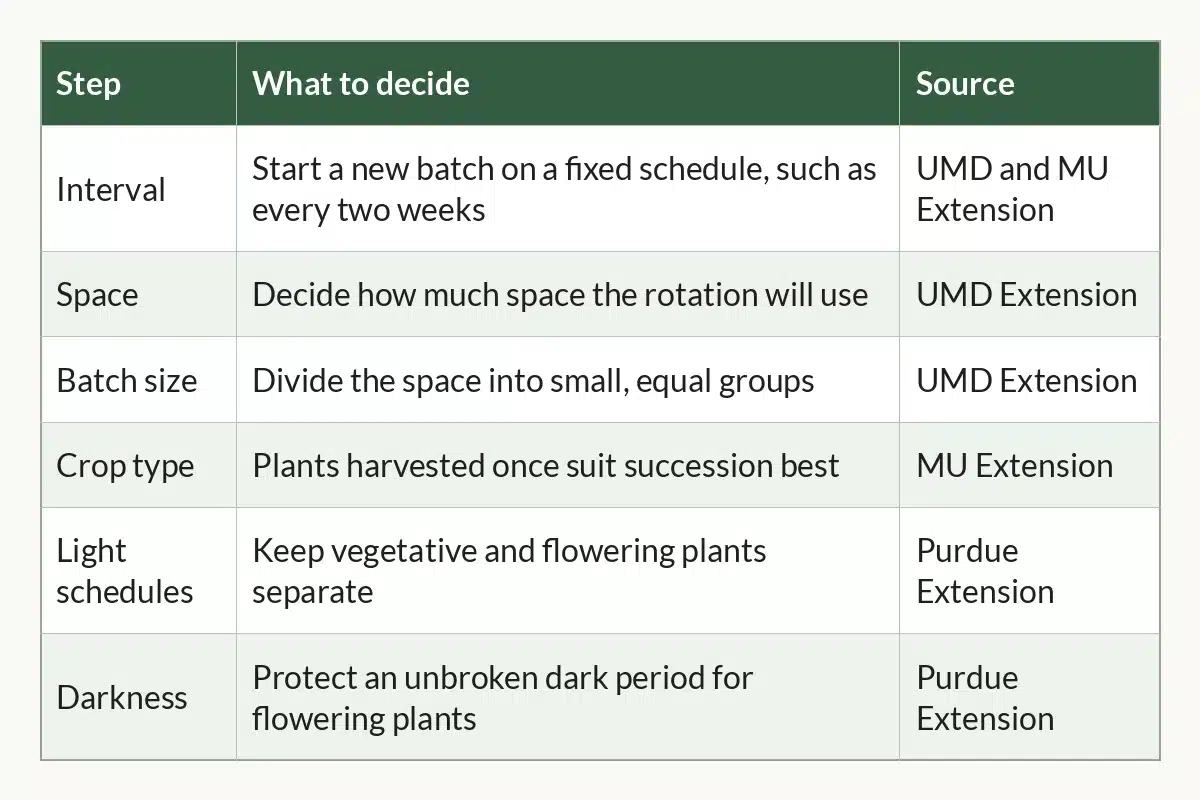
Perpetual Harvest Planning at a Glance
| Step | What to decide | Source |
|---|---|---|
| Interval | Start a new batch on a fixed schedule, such as every two weeks | UMD and MU Extension |
| Space | Decide how much space the rotation will use | UMD Extension |
| Batch size | Divide the space into small, equal groups | UMD Extension |
| Crop type | Plants harvested once suit succession best | MU Extension |
| Light schedules | Keep vegetative and flowering plants separate | Purdue Extension |
| Darkness | Protect an unbroken dark period for flowering plants | Purdue Extension |
How Do You Plan a Perpetual Harvest Schedule?
Work backward from the space you have. UMD Extension advises planning ahead to decide the total space you want to dedicate to a crop, then planting a portion of it every two weeks. It also says that the key to planning is knowing how long a plant will keep producing.
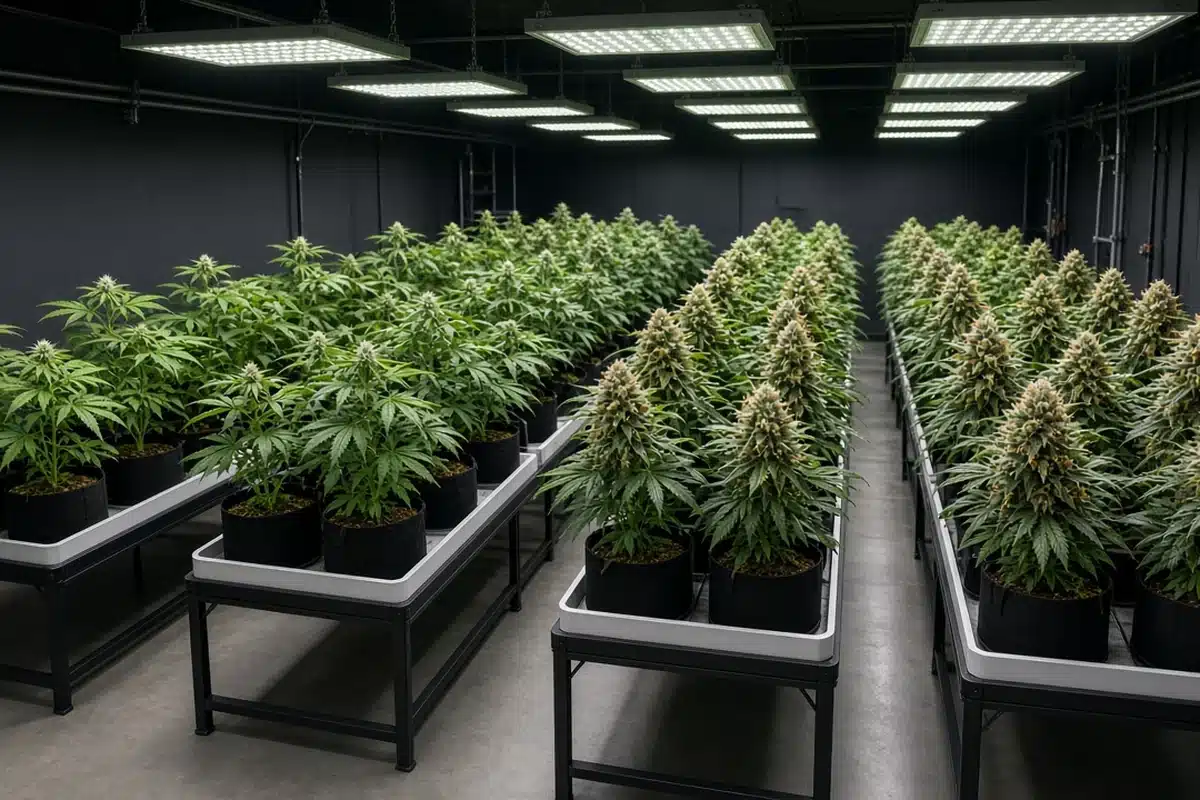
For cannabis, the length of flowering decides the math. As an example, suppose your strain flowers for about eight weeks and you choose a two week interval. Your flowering space then needs room for four batches at once, each at a different stage. Every two weeks, the oldest batch is harvested and a new batch moves in from the vegetative space.
The vegetative space works the same way. It holds the batches that are waiting their turn, plus any mothers or seedlings you keep. MU Extension suggests planting many vegetables in 14 day intervals, and the same rhythm is easy to adapt to a cannabis calendar.
- Measure your flowering space. Decide how many plants it can hold comfortably.
- Pick an interval. Two weeks is a common choice, following the UMD and MU vegetable schedules.
- Divide flowering time by the interval. That gives the number of batches flowering at once.
- Split the flowering space into that many groups. Each group is one batch.
- Size the vegetative space to feed the rotation. It needs at least one batch ready every interval.
- Write the calendar down. UMD suggests listing crops on paper and drawing a map of each round.
- Start the first batches in steps. Fill the rotation over several intervals rather than all at once.
How Are Light Schedules Kept Separate?
Use two spaces. Photoperiod cannabis needs long, unbroken nights to flower and shorter nights to stay vegetative. Our guide to the cannabis light cycle explains the schedules.
The Purdue Extension guide to managing photoperiod makes clear why separation matters. It says the uninterrupted period of darkness is what controls plant responses, and that the dark period can be interrupted with light to create a long day. The same publication says night interruption lighting needs only about 10 foot candles at plant level to work.
That is not much light at all. A vegetative space next to a flowering space can easily leak that much through a gap, a door or a shared wall. Purdue writes for floriculture crops, but the principle applies to any photoperiod plant. Keep the flowering space fully dark during its night, and check for leaks with the lights off in both spaces.
How Do You Fill the Rotation the First Time?
Gradually. The first cycle is the slowest part, because the flowering space starts empty and has to fill one batch at a time. On a two week interval with four flowering batches, it takes about eight weeks before every slot is full and the first harvest comes down.
During that ramp up, the flowering space runs partly empty. Some growers use the spare room for larger plants in the first batches and shrink later batches to their regular size once the rotation is running. Either way, keep the start dates on your written calendar so each batch keeps its place in line.
MU Extension notes that planting everything at once forces gardeners to deal with the whole harvest in a short window. The ramp up is the price of avoiding that. Once the rotation is full, the work settles into the same rhythm every interval.
What Happens at Each Interval?
Each interval brings the same short list of jobs. Harvest the oldest flowering batch. Clean the space it leaves. Move the next vegetative batch into flowering. Start a new batch of seeds or clones in the vegetative space. Then record the date and the batch number.
Keeping each step on the same day makes the system easy to run. It also means drying, trimming and storage happen in smaller, regular amounts, which suits a home setup with limited drying space.
Seeds or Clones for a Perpetual Harvest?
Either can work, but consistency helps. A steady rotation depends on batches that finish on schedule. Plants from the same genetics tend to flower on a similar timeline, which makes the calendar easier to keep.
Our guide to growing cannabis from seeds or clones compares the two starting points, and our cannabis cloning guide covers the cloning side.
Troubleshooting a Perpetual Harvest
Batches finish at different times. Mixed start dates may be the cause. Keep a written schedule with one start date per batch, as UMD suggests when it recommends mapping out each round of planting.
Flowering plants reveg or stall. Light may be leaking from the vegetative space. Purdue notes that interrupted darkness changes photoperiod responses.
The vegetative space runs out of room. It is holding more batches than it can fit. Start fewer plants per interval.
Harvests pile up. The interval may be too short for your drying and trimming capacity. Try lengthening it.
The schedule slips. Write it down and plan every round ahead, mapping each one out the way UMD suggests.
Sources
- University of Maryland Extension, Vegetable Succession and Companion Planting: https://extension.umd.edu/resource/vegetable-succession-and-companion-planting
- University of Missouri Extension, Get Into a Two Week Planting Schedule: https://extension.missouri.edu/news/get-into-a-two-week-planting-schedule
- Purdue Extension, Managing Photoperiod in the Greenhouse (HO-253-W): https://www.extension.purdue.edu/extmedia/HO/HO-253-W.pdf
FAQ
How often should I start a new batch?
A two week interval is a simple place to start. It matches the spacing UMD and MU Extension suggest for succession planting vegetables.
Do I need two grow spaces?
For photoperiod plants, yes. Purdue explains that uninterrupted darkness controls flowering responses, so flowering plants need their own dark space.
How many batches flower at once?
Divide your flowering time by your interval. An eight week flower on a two week interval means four batches.
Can I do a perpetual harvest in one tent?
Only with plants that do not depend on day length, since a single light schedule cannot serve both stages.
Why not just grow one big batch?
MU Extension notes that planting everything at once compresses the harvest into a short window.