Quantum Sensors Explained: Why PAR Sensors Beat Lux Meters for Plants
The short answer
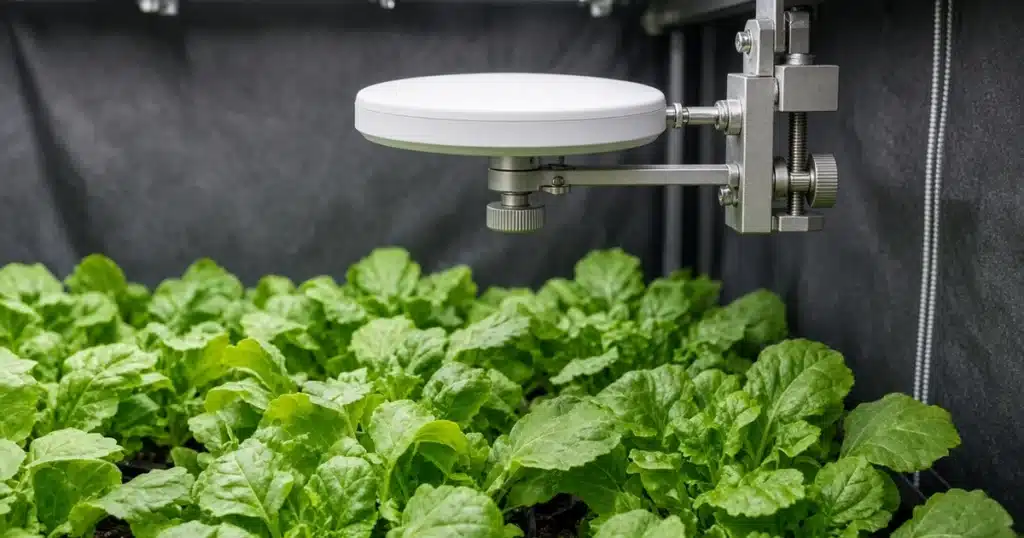
A quantum sensor measures photosynthetically active radiation, the light plants use, and reports it as PPFD. Lux meters are built around human vision, so they misjudge grow lights, especially LEDs with narrow color peaks. For plant light, a quantum sensor gives a number that tracks what leaves can use. Hold it level at canopy height for each reading.
Knowing your real light levels helps you set fixture height, choose dimming and plan daily light.
What does a quantum sensor measure?
Plants use light between about 400 and 700 nanometers for photosynthesis. That band is called PAR, short for photosynthetically active radiation.
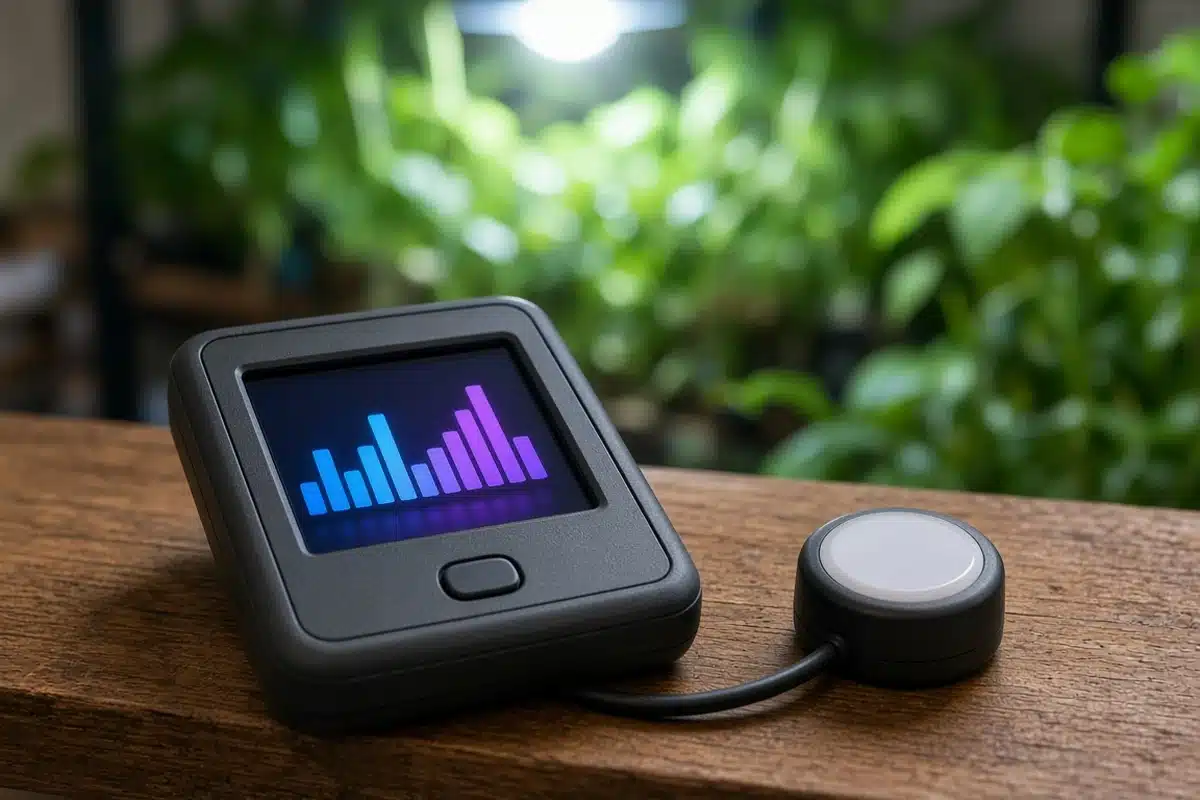
A quantum sensor counts the photons in that band that land on its surface each second. The result is PPFD, or photosynthetic photon flux density, given in micromoles per square meter per second.
The Purdue Extension guide to measuring daily light integral explains PAR, PPFD and how growers add up light across a day. Daily light integral, or DLI, is the total amount of PAR a plant receives in one day. A quantum sensor is the basic tool for both.
Why are PAR sensors better than lux meters for plants?
A lux meter weights light by how bright it looks to people. Human eyes are most sensitive to green and yellow, and they are much less sensitive to deep red and blue.
Plants use red and blue light well, and green helps too. So a lux meter undercounts the light from many grow LEDs, which emit sharp peaks of red and blue. Two lights with the same lux reading can deliver different PAR.
The University of Hawaii CTAHR publication on low cost light sensors compares sensor types for indoor agriculture. It explains why lux readings need careful conversion and why those conversions change with the light source.
| Tool | Measures | Ideal for |
|---|---|---|
| Quantum sensor | PPFD in the PAR band | Plant light under any source |
| Lux meter | Brightness to the human eye | Room lighting for people |
| Phone light app | Lux through the phone camera or sensor | Rough checks only |
Sources: Purdue Extension, University of Hawaii CTAHR.
Which quantum sensor should you choose?
Older quantum sensors were designed for sunlight and high pressure sodium lamps. Some read low under LEDs, mainly deep red and far red heavy fixtures.
Full spectrum sensors track the 400 to 700 band more evenly. The Apogee Instruments quantum sensor page explains how its full spectrum models differ from older designs and how each responds to different light sources.
For a home grower, a handheld meter with a full spectrum sensor is the most useful choice. Look for a level indicator or a flat base, and a cosine corrected head, which reads light from angles correctly.
How do you use a quantum sensor?
Hold the sensor level at the top of the canopy. Tilting it changes the reading, since light arrives at a new angle.
Block your hand and body from the light path. Your shadow can drop a reading sharply.
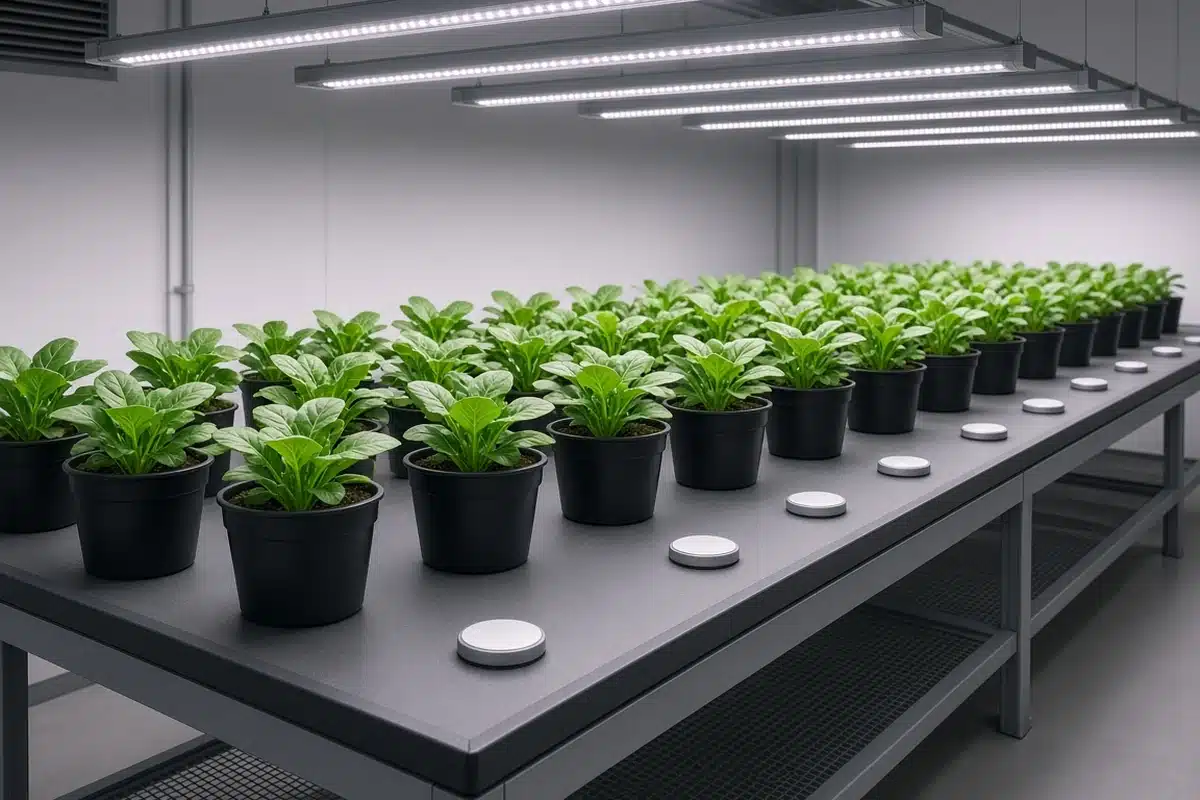
Take readings across the grow area in a simple grid, holding the sensor at the same leaf height each time. Write each number down. The pattern shows hot spots and dim edges.
Repeat after any change in light height, dimming or fixture. Our post on optimal lighting for growing indoors covers target ranges for different stages.
How do you turn PPFD into DLI?
DLI adds up PPFD over the hours the lights are on. A simple version multiplies average PPFD by the number of hours, then by 0.0036.
For example, a canopy averaging 500 PPFD for 18 hours gets about 32 moles per square meter per day. Purdue’s guide shows the math.
DLI helps compare schedules. A longer day at lower intensity can deliver the same total light as a shorter day at higher intensity. Our post on understanding DLI for autoflowers explains how this applies to plants on a long light cycle.
When should you raise intensity?
Plants handle more light as they mature. Seedlings need gentle light. Vegetative plants handle more. Flowering plants can use the most, within limits.
A quantum sensor lets you raise intensity in steps and see the actual change. Our post on when to increase light intensity in flowering covers timing.
Where should you take readings?
Read at the top of the canopy, where the upper leaves sit. That is the light the plant gets. A floor reading tells you little.
As plants grow taller, the canopy moves closer to the light. Take new readings every week or two in vegetative growth and after any stretch in flowering. The numbers can climb fast as tops get closer to the fixture.
How to: step by step
- Choose a full spectrum quantum sensor.
- Hold it level at canopy height.
- Avoid shading the sensor with your hand.
- Take readings across the grow area.
- Record PPFD at each spot.
- Clean and calibrate the sensor often.
Wipe the sensor head with a soft cloth. Dust lowers readings.
Makers suggest recalibration on a schedule. Follow their guidance.
Troubleshooting
Readings jump. The sensor is tilted. Hold it level.
Low readings under LEDs. The sensor misses LED peaks. Use a full spectrum model.
Uneven numbers. There are real hot spots. Adjust light height.
Readings drop over time. The sensor head is dirty. Clean it.
Numbers differ from the fixture chart. Charts use ideal conditions. Trust your own canopy readings.
A quantum sensor turns guesswork about light into numbers you can act on. Kind Seed Co carries cannabis seeds for growers planning light by the numbers.
Sources
- Measuring daily light integral in a greenhouse (HO-238), Purdue Extension, Measuring daily light integral in a greenhouse (HO-238)
- Low cost light sensors for indoor agriculture (FST-68), University of Hawaii CTAHR, Low cost light sensors for indoor agriculture (FST-68)
- Quantum sensors, PAR meters, Apogee Instruments (sensor maker), Quantum sensors
FAQ
What is PPFD?
It is the number of PAR photons that hit a square meter each second, given in micromoles. It is the standard measure of plant light.
Can a phone app replace a quantum sensor?
Not fully. Phone apps estimate from lux and vary by phone and light source. They work for rough checks only.
How often should sensors be calibrated?
Follow the maker's schedule. Many suggest every year or two.
Do quantum sensors work in sunlight?
Yes. They read PAR from any source, including the sun and greenhouse light.
What is a good PPFD for seedlings?
Seedlings need gentle light. Start low and raise it as plants grow, checking leaves for light stress.