
Salt Spray Damage: Protecting Coastal Cannabis Gardens
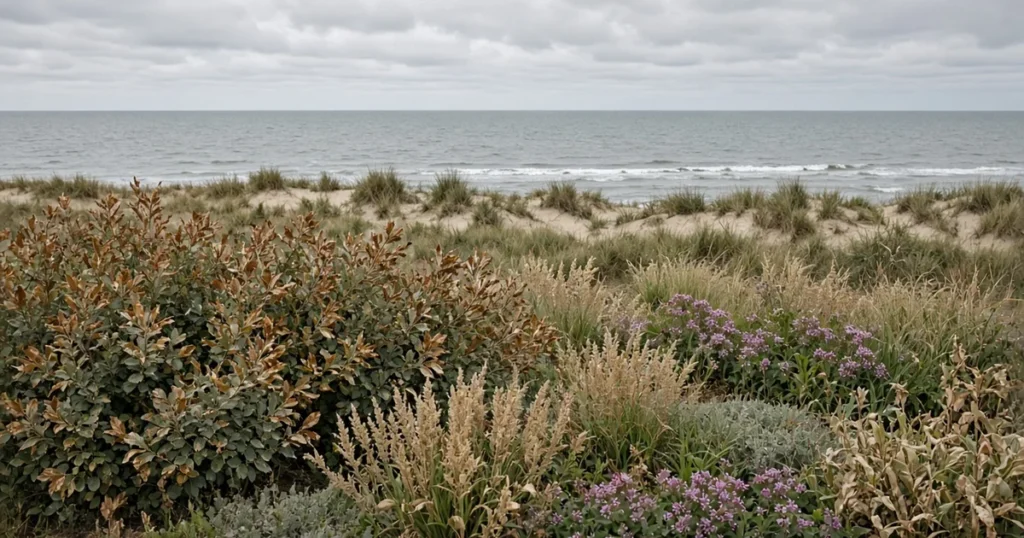
Coastal cannabis gardens face a hazard that comes on the wind. Strong onshore winds can carry salt from the sea and coat leaves with it. NC State Extension describes trees and shrubs browning after a coastal storm, with salt spray as the likely cause. The UC Statewide IPM Program at the University of California includes ocean spray among the sources of salt that can injure foliage. University of Wisconsin-Madison Extension, writing about salt spray thrown up from roads, explains how airborne salt damages plants and how to shield them. The focus here is airborne salt spray only: what it does to leaves, how to recognize it, how to rinse plants and water afterward and how to use siting and screens.
What salt spray does to leaves
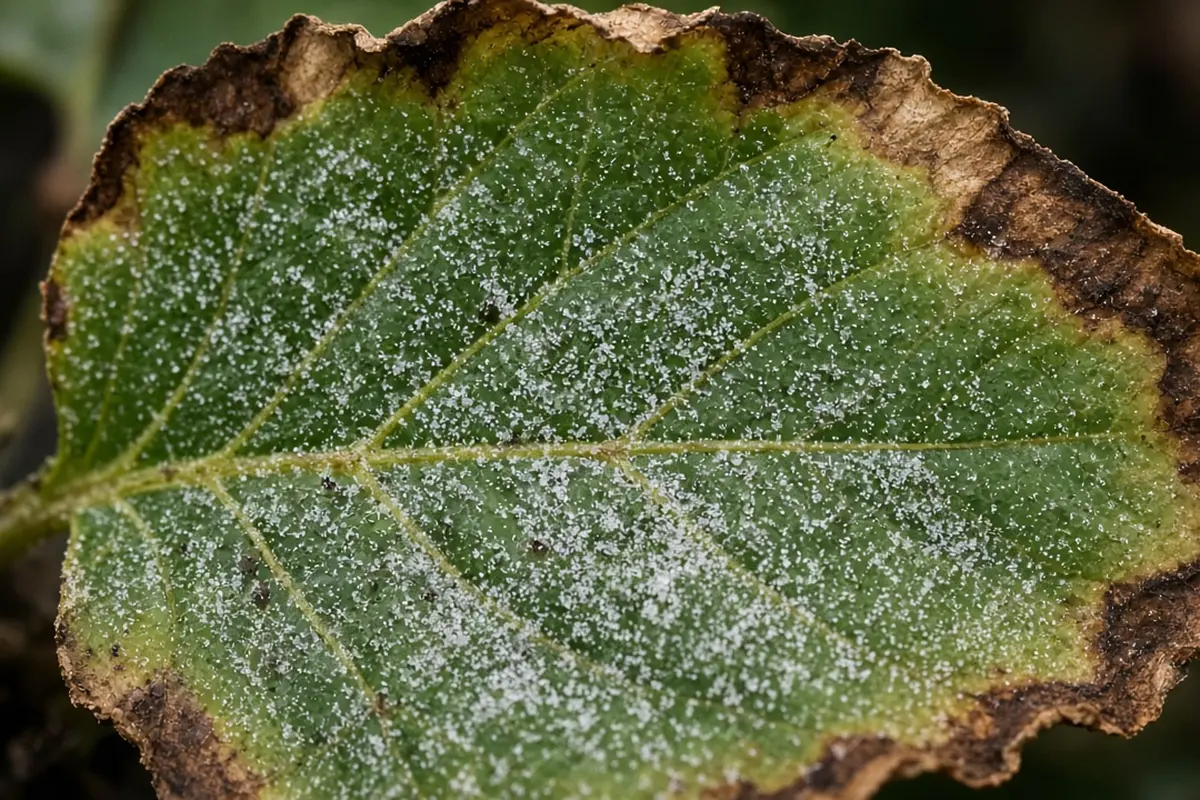
UC IPM explains that foliage exposed directly to excess sodium from sea spray discolors, beginning at the tips and, in broadleaved plants, along the leaf margins. Leaves may drop early. Buds, twigs and whole branches can be killed, which UC IPM says can lead to a cluster of new shoots, called witches’ broom, the next season. Severely affected plants may die.
UC IPM also points out that symptoms are more severe in sensitive plant species and as salt concentrations increase, and that foliage is more sensitive to salts than roots.
NC State Extension describes the same pattern in its storm report. Strong winds push salty air from the ocean onto plants, causing the leaves to burn on the edges. UW-Madison Extension explains how this happens. Salt spray enters plants through buds, bud and leaf scars and young shoots, and salt deposited on plants draws moisture out of the tissues, causing drying and burn. UW-Madison adds that some plants have features that physically keep salt spray out, such as hidden buds, thick surface wax, tightly arranged bud scales or fuzzy or resin-coated buds, while plants with naked buds are very susceptible.
Why some storms are worse than others
Weather makes a big difference. NC State Extension reports that damage after one coastal storm was worse than in past storms because a dry spring was followed by five days of sustained winds over 20 mph with relatively low rainfall.
NC State notes that similar storm conditions have been documented before, with damage most severe on evergreens.
Wind can carry salt a long way. UW-Madison Extension notes that salt spray from roads can travel hundreds and even thousands of feet, and that plants downwind of the salt show more damage than plants upwind.
How to tell it is salt spray
Leaf browning has many causes, so it helps to look for the pattern. NC State Extension gives three signs:
- Timing. Salt damage is usually noticed one to two weeks after a major storm.
- Many kinds of plants affected. NC State explains that diseases and pests normally damage one type of plant, and their damage is rarely seen across many plant families. Salt spray browns a wide variety of plants at once.
- Damage on the windward side. The most obvious sign is browning on the side of the plant that faced the storm winds. If you check the opposite side, you should see less browning.
UC IPM agrees that foliar salt exposure produces a distinct pattern, such as damage on the windward side of plants facing an ocean breeze. UW-Madison Extension describes the same one-sided pattern with road salt, with damage more severe on the side of the plant facing the salt and on the outer parts of dense plants.
Put together, browning on the side of your cannabis plants that faced the sea, showing up a week or two after a windy storm and appearing on other plants in the yard as well, points strongly to salt spray.
Rinse leaves with fresh water
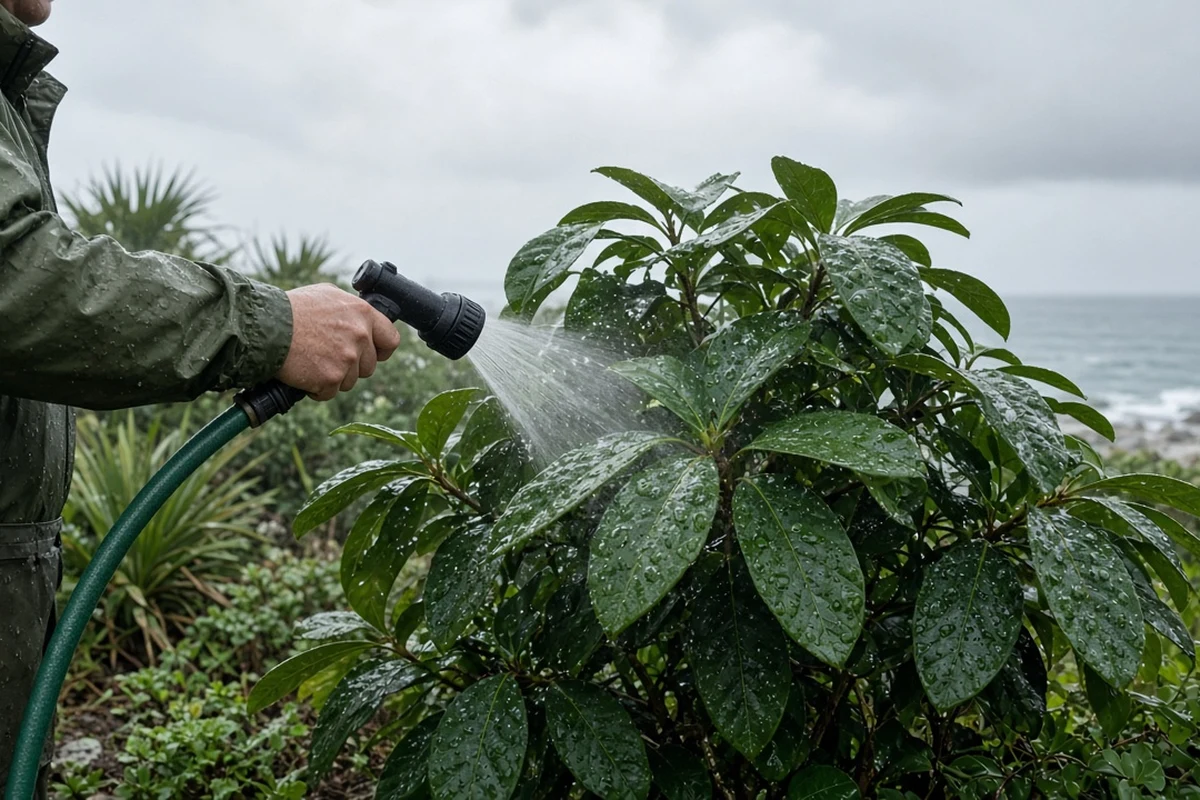
The first fix is simple. UC IPM says that if foliage is exposed to salts, rinse the leaves with good-quality water if possible. UW-Madison Extension also recommends rinsing plants to remove residual salt, in its case during a winter warm spell before buds break.
A few practical points follow from the sources:
- Use fresh, good-quality water. UC IPM specifies good-quality water and warns against sprinklers when the irrigation water itself is salty.
- Rinse the side that faced the wind. That is where NC State and UC IPM say damage concentrates.
- Act soon after the storm. UW-Madison Extension explains that salt deposited on plants draws moisture out of the tissues.
Water deeply afterward
Rinsing the leaves is only part of recovery. NC State Extension says damaged plants can be stressed by salt spray, making them more susceptible to disease and pests while they recover.
To help, NC State says to water your plants, especially when it is hot and dry.
If salt has also reached the soil, UW-Madison Extension advises watering the soil heavily, to a depth of at least 6 inches, to flush salt out of the root zone.
Skip fertilizer while plants recover
NC State Extension gives a clear warning. It says to avoid fertilizing the affected plants or the area around them, because most fertilizers are salt formulations that can add to salt spray damage.
UW-Madison Extension also says that anti-transpirant and dormant oil sprays are ineffective at preventing salt spray injury and are not recommended.
Will the plants recover?
NC State Extension says plants usually do not die from salt spray, although it depends on the species and how long the plant was exposed. It notes that most trees and shrubs outgrow the damage within a year.
Salt that reaches the soil is a different problem. UC IPM explains that high sodium in the root zone causes wilted foliage and stunted growth, because salts in soil impede water uptake. UW-Madison Extension adds that soil salt injury, unlike spray injury, is slow to develop and progresses over several years. Those soil problems are a separate subject from airborne spray. Salts that build up in the root zone are explained in salt buildup in cannabis soil.
Siting and wind protection
The sources focus on the side of the plant facing the wind. NC State Extension notes that strong winds from the sea push salty air onto plants, and that the side away from the wind shows less browning. UW-Madison Extension notes that branches sheltered from the salt, or growing above the spray drift zone, show no damage. It recommends protecting plants from salt spray with physical barriers such as plastic, burlap or snow fencing placed around or near them.
UC IPM recommends avoiding plant species with low salt tolerance where salinity may be a problem. UW-Madison Extension calls planting salt-tolerant species one of the best ways to prevent damage in areas subject to salt spray.
How to plan and build wind shelter for a garden is explained in detail in Kind Seed Co’s post on windbreaks for outdoor cannabis.
Troubleshooting
Leaves browned a week or two after a storm. That timing matches NC State’s description of salt spray damage. Check whether the browning is worse on the windward side.
Only one kind of plant is affected. Salt spray is less likely. NC State notes that pests and diseases usually affect one plant type, while salt spray affects many.
Damage shows only on the side facing the sea. That is the classic salt spray pattern. NC State, UC IPM and UW-Madison Extension all describe damage concentrated on the side facing the salt source.
You see salt on leaves after a storm. Rinse them with good-quality water, as UC IPM recommends.
Plants wilt even after rinsing. Water them, especially in hot, dry weather. NC State names watering as a key step while stressed plants recover.
Sources
- NC State Extension, Currituck County Center. Salt spray damage. https://currituck.ces.ncsu.edu/news/salt-spray-damage/
- University of Wisconsin-Madison Extension, Wisconsin Horticulture. Winter salt injury and salt-tolerant landscape plants. https://hort.extension.wisc.edu/articles/winter-salt-injury-and-salt-tolerant-landscape-plants/
- University of California Statewide IPM Program. Nutrient and mineral excesses, salinity and salt toxicity. https://ipm.ucanr.edu/home-and-landscape/nutrient-and-mineral-excesses-salinity-and-salt-toxicity/
FAQ
What does salt spray damage look like?
The UC Statewide IPM Program says foliage hit by sea spray discolors from the tips and leaf margins, and leaves may drop early. NC State Extension says the damage shows up as burned leaf edges, mainly on the side facing the storm winds, usually one to two weeks after a major storm.
Should I rinse salt off plants after a storm?
Yes. The UC Statewide IPM Program says that if foliage is exposed to salts, rinse the leaves with good-quality water if possible. University of Wisconsin-Madison Extension also recommends rinsing residual salt off plants, explaining that salt deposited on plants draws moisture out of the tissues and causes drying and burn.
Will plants recover from salt spray?
Usually. NC State Extension says plants usually do not die from salt spray, depending on species and length of exposure, and most trees and shrubs outgrow the damage within a year. It recommends watering stressed plants, especially when hot and dry, and avoiding fertilizer around them while they recover.
Can I protect plants from salt spray?
University of Wisconsin-Madison Extension recommends physical barriers such as plastic, burlap or snow fencing placed around or near plants, and calls planting salt-tolerant species one of the best preventive steps. NC State Extension notes that damage is worst on the side of the plant that faces the storm winds.


