Terpenes in Food: How to Pair Cannabis Aromas with Food and Drink
Quick answer: Terpenes in food are aroma compounds found in many plants, from lemons and herbs to flowers. Cannabis carries aroma notes that overlap with them, such as citrus, pine, earth and lavender. Pairing is simple: smell the flower, pick a food or non-alcoholic drink with a matching or contrasting aroma and enjoy them side by side. It is about aroma and flavor only. Nothing is added to the food.
What Terpenes in Food Are
Terpenes are aromatic compounds made by plants. University of Wisconsin Extension explains that lemon scented plants owe their smell to d-limonene, citral, citronellal and various other terpenes, and that “different combinations and ratios” of these chemicals produce a range of fragrances. That is why lemon verbena, lemongrass, lemon balm, lemon basil and lemon thyme all smell of lemon but each in its own way.
Cannabis works the same way. Each cultivar has its own mix of terpenes, which is why one smells like citrus peel and another like a pine forest. A University of Colorado Boulder study of nearly 90,000 samples found that products tend to fall into three terpene groups: high in caryophyllene and limonene, high in myrcene and pinene, or high in terpinolene and myrcene. Those groups did not match the indica, sativa and hybrid labels, so the nose is a better pairing guide than the label. For a deeper overview, see our ultimate terpenes guide.
How Aroma Pairing Works

Much of what we call flavor comes from smell, so pairing happens on the nose and palate. Three simple ideas tend to guide most pairings.
- Complement. Match like with like, such as a citrus aroma with a lemon dessert.
- Contrast. Set opposite notes side by side, such as a sharp pine aroma with a sweet berry compote.
- Match intensity. Delicate floral notes get lost next to heavy spice, while earthy notes stand up to rich food.
Our guide to the role of terpenes in cannabis flavor covers how aroma shapes flavor.
Pairing by Aroma Family
Citrus and Peel Aromas
Limonene is linked with bright citrus peel notes. Wisconsin Extension describes lemon scented herbs being used for teas, salads, pasta dishes, cookies, vinegars and marinades, which gives you plenty to work with.
- Food: lemon tart, citrus glazed chicken, fruit salad, lemon basil pesto
- Drinks: lemonade, citrus sparkling water, lemon verbena tea
Pine and Herb Aromas
Pinene is described as having a pine aroma with herbal edges such as rosemary and basil. Herb heavy cooking is the natural match. Our page on pinene facts has more on this aroma.
- Food: rosemary or thyme roast, grilled vegetables, pesto pasta
- Drinks: herbal teas, rosemary lemonade
- Contrast: a sweet berry compote
Earthy and Musky Aromas
Myrcene is described as earthy and musky, with a hint of clove. Earthy notes hold up to rich, savory, slow cooked food.
- Food: mushroom risotto, beef stew, roasted root vegetables
- Drinks: let the food lead, or try a plain black tea
Floral and Lavender Aromas
Linalool is described as floral and lavender like. Keep the food gentle so the floral notes are not lost. See our page on linalool for more about this aroma.
- Food: lavender shortbread, vanilla panna cotta, honey glazed pastries
- Drinks: floral teas, jasmine tea, lavender lemonade
Pairing by Terpene Profile
Most cannabis does not smell of just one note. The three CU Boulder terpene groups make a handy starting point for pairing by profile, using aroma notes only.
| Terpene group | Aroma notes | Food ideas | Drink ideas |
|---|---|---|---|
| Caryophyllene and limonene | Peppery spice with citrus | Lemon pepper chicken, citrus salad with cracked pepper | Ginger lemonade |
| Myrcene and pinene | Earthy with pine and herbs | Mushroom and rosemary flatbread, herb roasted potatoes | Herbal tea |
| Terpinolene and myrcene | Fresh, fruity and herbal with an earthy base | Fruit and herb salad, grilled peaches | Sparkling water with fruit |
Seasonal Pairing Ideas
Seasonal food makes aroma pairing easier, because the produce already carries strong notes.
- Spring. Fresh herbs such as lemon balm, mint and basil suit citrus and herbal aromas. Try a pea and herb salad with lemon dressing.
- Summer. Stone fruit, berries and grilled vegetables suit fruity and pine aromas. Grilled peaches with basil work as a match or a contrast.
- Fall. Mushrooms, squash and root vegetables suit earthy and musky aromas. A mushroom risotto or roasted squash with thyme is an easy start.
- Winter. Citrus is at its best in winter, so oranges, grapefruit and lemon desserts suit bright peel aromas. Warm herbal tea rounds out the table.
Lemon thyme is a particularly handy year round herb here. Wisconsin Extension notes it can be used in almost any recipe that calls for regular thyme, which makes it a simple bridge between citrus and herb aromas.
How to Plan a Terpene Pairing
- Smell the flower first. Note the main aroma in plain words, such as lemon, pine, earth or lavender.
- Check the product notes. If a terpene panel or aroma notes are listed, compare them with what you smell.
- Pick an aroma family. Choose citrus, pine and herb, earthy or floral.
- Choose match or contrast. Decide whether the food should echo the aroma or set it off.
- Match the intensity. Pair delicate aromas with light food and bold aromas with richer dishes.
- Prepare small plates. Tasting size portions make it easy to try several pairings.
- Add a non-alcoholic drink. Lemonade, sparkling water or herbal and floral teas keep the focus on aroma.
- Smell, then taste. Smell the flower, then taste the food and notice what changes.
- Take notes. Write down which pairings worked so you can repeat them.
Troubleshooting
The aromas clash. Two strong notes are competing. Switch to a simpler dish or pick a pairing from the same aroma family.
The food masks the aroma. Heavy spice, smoke or garlic can drown out delicate notes. Choose lighter food for floral and citrus aromas.
Everything tastes the same. Too many pairings at once tire the nose. Limit the menu to three or four and sip water between them.
The flower has little aroma. Old or poorly stored flower loses aroma. Pair with fresher flower or let the food lead.
The label and the smell do not match. The CU Boulder study found labels and terpene groups often differ. Trust your nose.
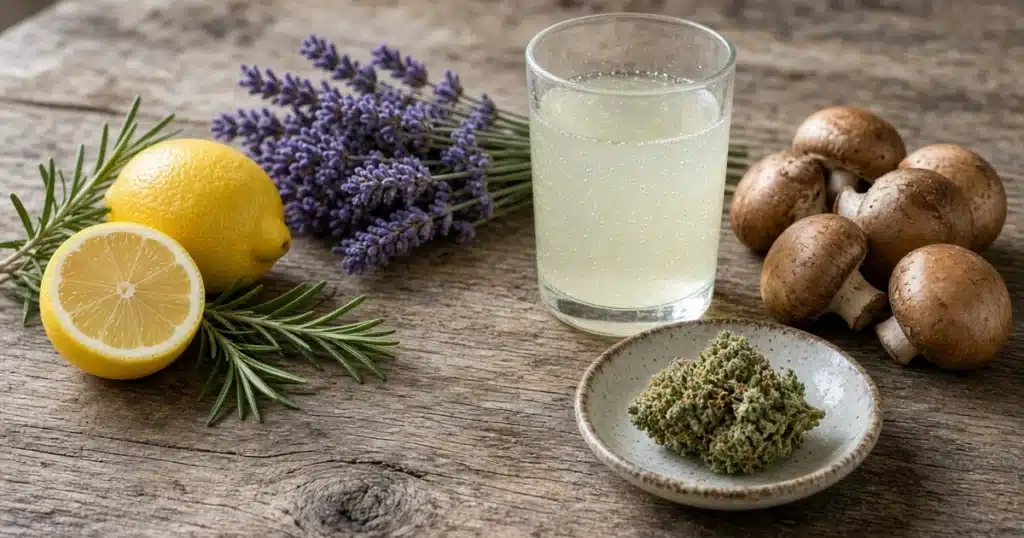
Guests cannot name the aroma. Put a lemon, a sprig of rosemary and some lavender on the table as reference smells.

Sources
- University of Wisconsin Extension, Lemon Scented Plants: https://hort.extension.wisc.edu/articles/lemon-scented-plants/
- University of Colorado Boulder, What’s in your weed? The label doesn’t tell you much, study suggests: https://www.colorado.edu/today/2022/05/19/whats-your-weed-label-doesnt-tell-you-much-study-suggests
FAQ
What foods contain terpenes?
Many herbs, fruits and flowers contain terpenes. University of Wisconsin Extension notes that lemon scented plants such as lemon verbena, lemongrass, lemon balm, lemon basil and lemon thyme get their scent from d-limonene, citral, citronellal and other terpenes.
Which foods have limonene?
Wisconsin Extension lists d-limonene among the compounds behind the scent of lemon scented plants such as lemon verbena, lemon balm and lemon basil. These herbs are used in teas, salads, pesto, marinades and desserts, which makes them easy partners for citrus aromas.
Which foods share the aroma of myrcene?
Myrcene is described as earthy and musky with a hint of clove. Foods with a similar aroma include mushrooms, slow cooked stews and roasted root vegetables, which echo those notes on the plate.
Which drinks match citrus or herbal terpene aromas?
For citrus aromas, try lemonade, citrus sparkling water or lemon verbena tea. For pine and herbal aromas, try herbal teas or rosemary lemonade. For floral aromas, try jasmine or other floral teas.
Are terpenes in food the same as cannabis terpenes?
Some of the same terpenes occur in both. Limonene, for example, is found in lemon scented herbs and is also one of the terpenes measured in cannabis samples in a University of Colorado Boulder study. Pairing uses those shared aroma notes and adds nothing to the food.