Soft Plant Ties for Cannabis: Types and How to Tie Without Damage
The short answer
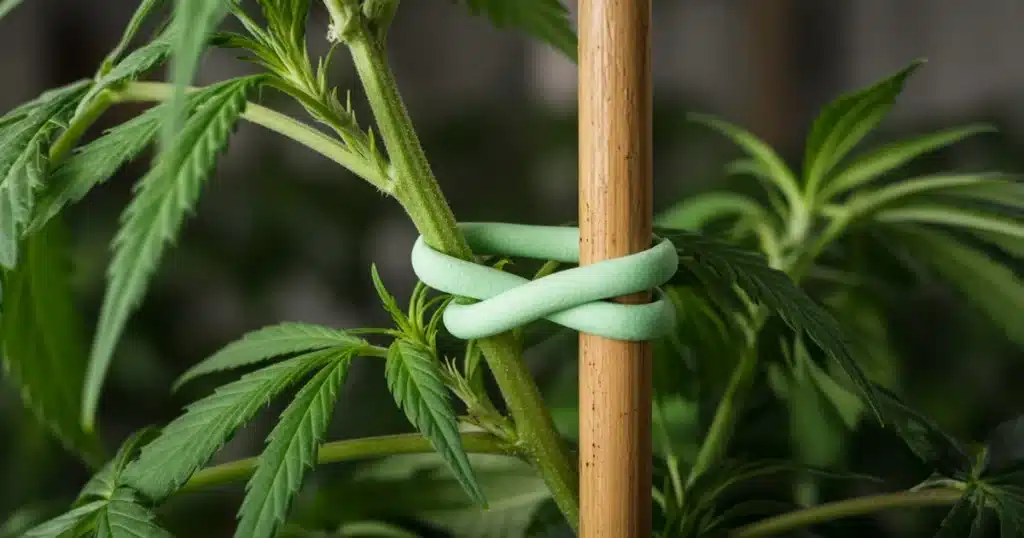
Plant ties hold stems to a stake, cage or trellis so branches stay upright as they grow. For cannabis, pick ties that are wide, soft and flexible. Tie them in a loose figure eight with room for the stem to thicken.
Check ties every week or two and loosen or move them as plants grow. A tie that starts out snug can cut into a stem within weeks. This damage is called girdling. It chokes the flow of water and sugars and can snap a branch.
Why soft ties matter
Cannabis stems grow fast and thicken quickly in late veg and early flower. A thin, hard tie does not stretch, so as the stem swells it presses into the bark. In time the tie can sink into the tissue.
The University of Minnesota Extension guide Staking and guying trees says stem attachment materials should be wide and flexible to prevent damage. It also warns that materials left on too long can damage or girdle a stem. The same idea applies to a cannabis plant on a stake, just on a faster timeline.
Types of plant ties
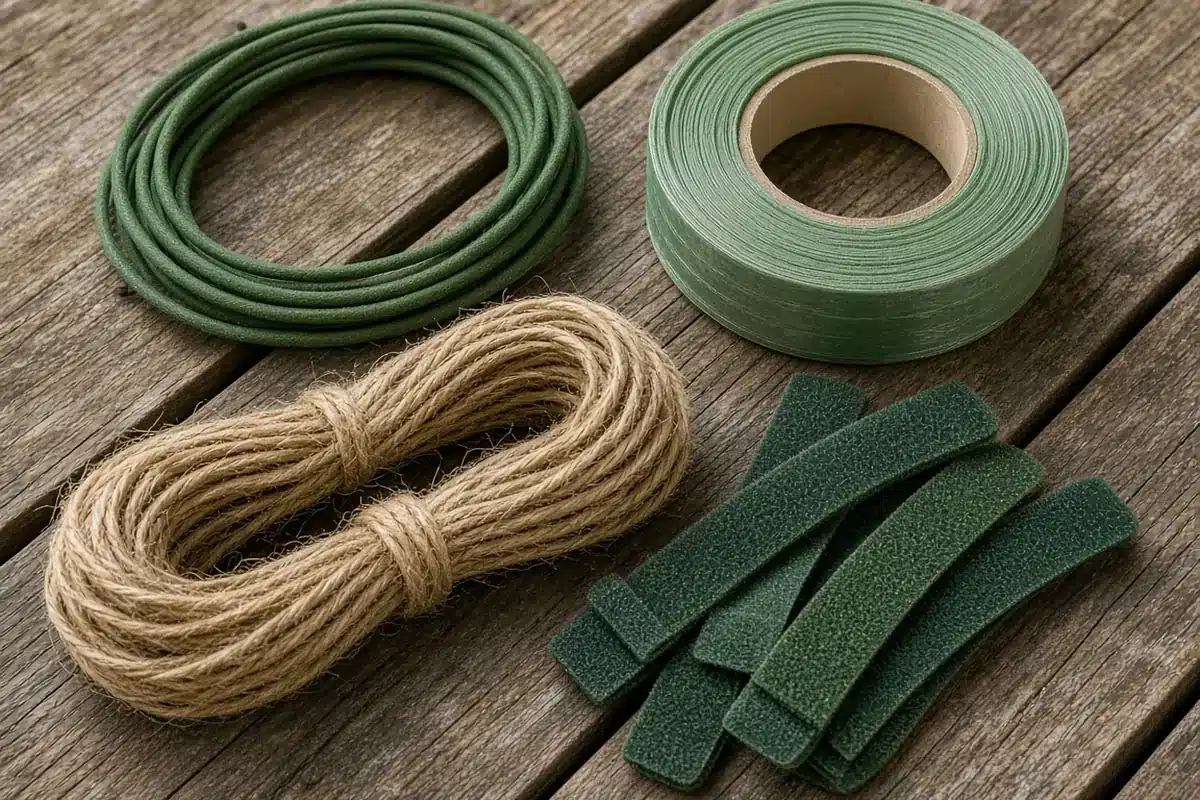
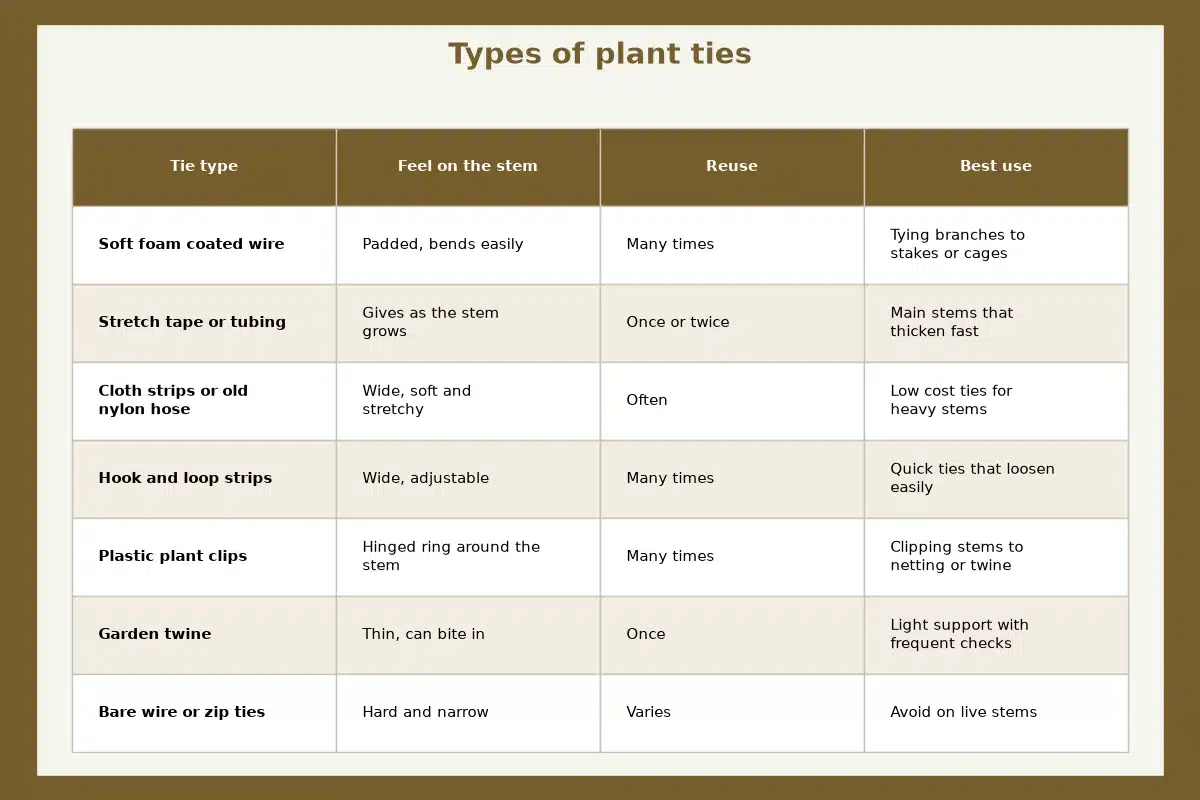
Each type has a place. The table compares the common choices.
| Tie type | Feel on the stem | Reuse | Best use |
|---|---|---|---|
| Soft foam coated wire | Padded, bends easily | Many times | Tying branches to stakes or cages |
| Stretch tape or tubing | Gives as the stem grows | Once or twice | Main stems that thicken fast |
| Cloth strips or old nylon hose | Wide, soft and stretchy | Often | Low cost ties for heavy stems |
| Hook and loop strips | Wide, adjustable | Many times | Quick ties that loosen easily |
| Plastic plant clips | Hinged ring around the stem | Many times | Clipping stems to netting or twine |
| Garden twine | Thin, can bite in | Once | Light support with frequent checks |
| Bare wire or zip ties | Hard and narrow | Varies | Avoid on live stems |
Source: How to Train Tomatoes in the Home Garden, Iowa State University Extension and Outreach, stretch ties, nylon hose, cloth and figure eight method.
How to tie a figure eight
The Iowa State guide describes the classic method for staking plants. Tie the plant to the stake with stretch ties or strips of nylon hose or cloth about every 12 inches up the stem. Make a loose figure eight. Put the stake in one loop and the stem in the other.
The crossing point of the eight sits between the stake and the stem. That keeps the stem from rubbing on the stake and gives it room to move and thicken.
- Place the stake a few inches from the main stem, outside the root ball if you can.
- Wrap the tie once around the stake.
- Cross the tie between the stake and the stem.
- Loop it loosely around the stem, leaving space for a finger to slide in.
- Bring the end back to the stake and secure it there, not on the stem.
- Repeat about every 12 inches as the plant grows.
Where to tie on the plant
Place the tie just below a node, where a branch or leaf meets the stem. The node acts like a small shelf and keeps the tie from sliding down. Avoid tying right at a bud site or on soft new growth near the tip.
Support side branches from below. Do not pull them in tight to the stake. A branch that is pulled hard sideways can split at the joint where it meets the main stem.
Ties for training and trellis
Ties also help with training. In low stress training, growers gently bend branches outward and hold them in place so more of the plant gets light. Soft wire and padded ties are popular here. They hold a shape and come off easily. Our guide to low stress training for cannabis covers the full method.
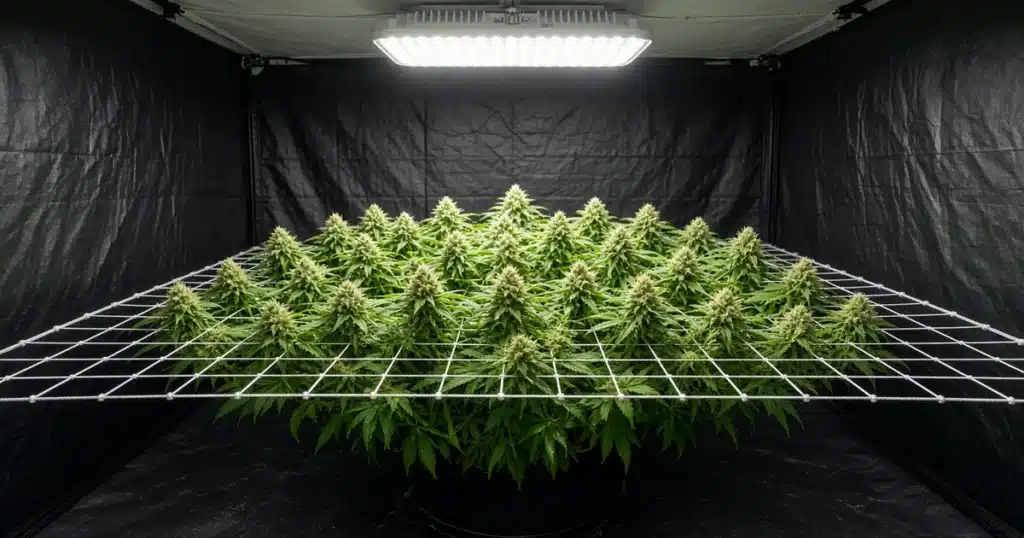
With a trellis net, you often do not need ties at all. Branches grow through the squares and the net holds them. A plastic clip can pin a stray branch to the net. When you do use ties on a trellis, the same rules apply. Keep them loose and check them often.
Check and loosen ties
The biggest risk with any tie is forgetting about it. Check every tie each time you water. Look for a tie that has become tight, has left a dent in the stem or is hidden by new growth.
Loosen tight ties right away, or replace them higher up. The UMN guide recommends removing staking materials once they are no longer needed, since they can damage a stem if left on too long. Before you hang branches at harvest, take off every tie.
Signs of girdling
- A dent or groove where the tie sits.
- Swelling just above the tie.
- Leaves above the tie wilting while the rest of the plant looks fine.
- A branch that snaps at the tie in wind.
If you find damage, remove the tie and support the branch from a new spot. Minor dents often grow over as the stem thickens. A deep cut may leave the branch weak. Give it extra support.
Tying in a grow tent
Space is tight in a tent. So ties often attach to the tent poles, a floor trellis or a net instead of a stake. Soft wire wrapped around a pole makes a quick anchor. Run a length of soft tie from the pole to the branch and keep the loop at the branch loose.
Be careful not to pull branches toward the light or into the walls. Light hot spots and rubbing on fabric can both damage leaves. Check tent ties when you raise the light, since a change in height can change how branches lean.
Reusing ties
Most soft ties can be used again. Rinse them in warm, soapy water after harvest and let them dry fully. Toss any that are cracked, frayed or stiff. Cloth strips can go in the wash. Store clean ties in a labeled bag with your other grow supplies so they are ready next season.
Stakes, cages and stretch
Ties are only as good as what they hold on to. A thin bamboo cane works for a young plant. A heavy plant in flower needs a sturdy stake or a cage. If your plants stretch a lot in early flower, our guide on how to control and prevent stretching in cannabis plants explains causes and fixes.
Troubleshooting
- The tie slips down the stem. Tie just below a node and use a wider, grippier material.
- A branch splits at the joint. Support it from below instead of pulling it in sideways.
- A tie has cut into the stem. Remove it and add a new, looser tie above the damage.
- Ties come undone in wind. Secure the knot on the stake and use stretch tape or hook and loop strips.
- Ties are hard to find in dense growth. Use bright colors so they stand out.
- Stakes lean. Push them deeper or tie them to a second stake for a tripod.
Final thoughts
Soft plant ties are a small detail that protects your plants. Pick wide, flexible ties, tie in a loose figure eight and check them often. A few minutes each week keeps stems healthy and upright through the season. Kind Seed Co has more guides on supporting and training cannabis plants.
Sources
- Iowa State University Extension and Outreach, How to Train Tomatoes in the Home Garden
- University of Minnesota Extension, Staking and guying trees
FAQ
What are the best plant ties for cannabis?
Wide, soft and flexible ties such as foam coated wire, stretch tape, cloth strips or hook and loop strips.
How tight should a plant tie be?
Loose enough that a finger fits between the tie and the stem.
What is a figure eight tie?
The tie loops the stake on one side and the stem on the other, crossing between them.
How often should I check plant ties?
Every week or two, or each time you water.
Can I use zip ties on cannabis stems?
Avoid them. Hard, narrow ties can cut into a stem as it thickens.