Bud Rot on Cannabis: How to Spot and Prevent Botrytis
The short answer
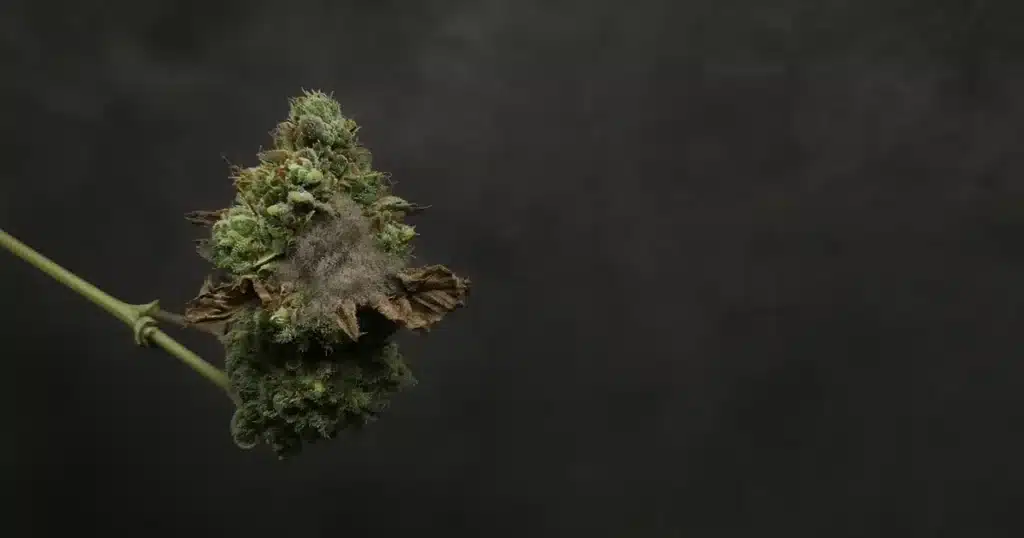
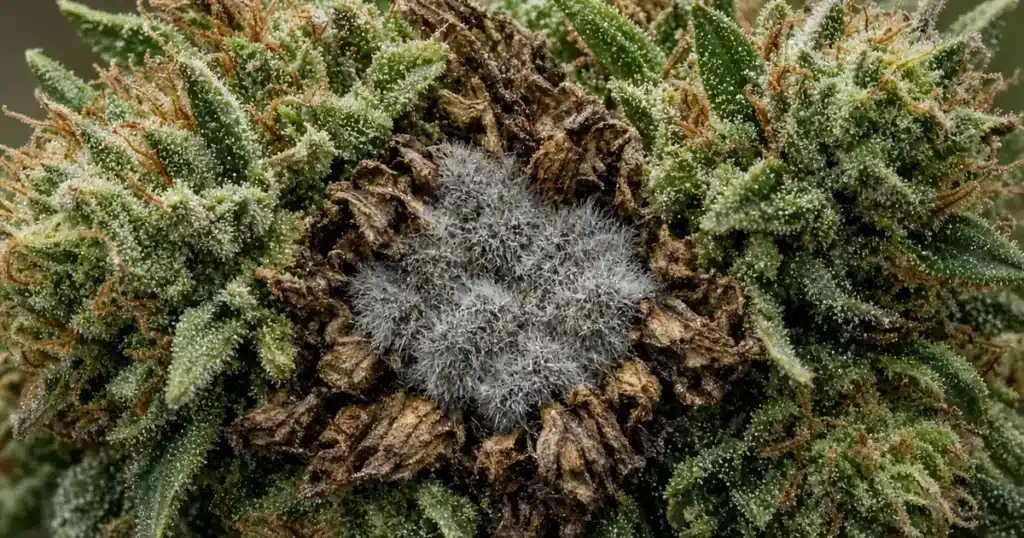
Bud rot is gray mold caused by the fungus Botrytis cinerea. In bud rot cannabis cases, the mold starts inside dense flowers, often as a yellowing leaf poking out of a bud. Then it turns the tissue brown and covers it in fuzzy gray growth.
Prevention is about moisture. Keep humidity in late flower low, keep air moving through the canopy, avoid wetting the buds and remove any infected flower the moment you find it. A bud cannot be saved once botrytis takes hold inside it.
What causes bud rot
Botrytis is a common fungus. It turns up almost everywhere. Utah State University Extension, in its fact sheet listed under the table below, says the fungus invades through wounds or dying plant parts. It lists cool temperatures of about 65 to 75 degrees F, humidity and moisture from rain or irrigation as the conditions for spread and infection.
Dense, heavy flowers are most at risk because they trap moisture in the center. A bud can look fine on the outside while rot spreads from the stem outward.
How to spot it early
The first sign is often subtle. Utah State notes that a yellowing leaf bract is an early symptom. Look for a single sugar leaf that turns yellow or brown and wilts while the leaves around it stay green.
Spread the bud gently near that leaf. Inside you may find brown, soft tissue. As the rot advances, the flower shows water soaked spots that die back, followed by a gray mat of fungal growth.
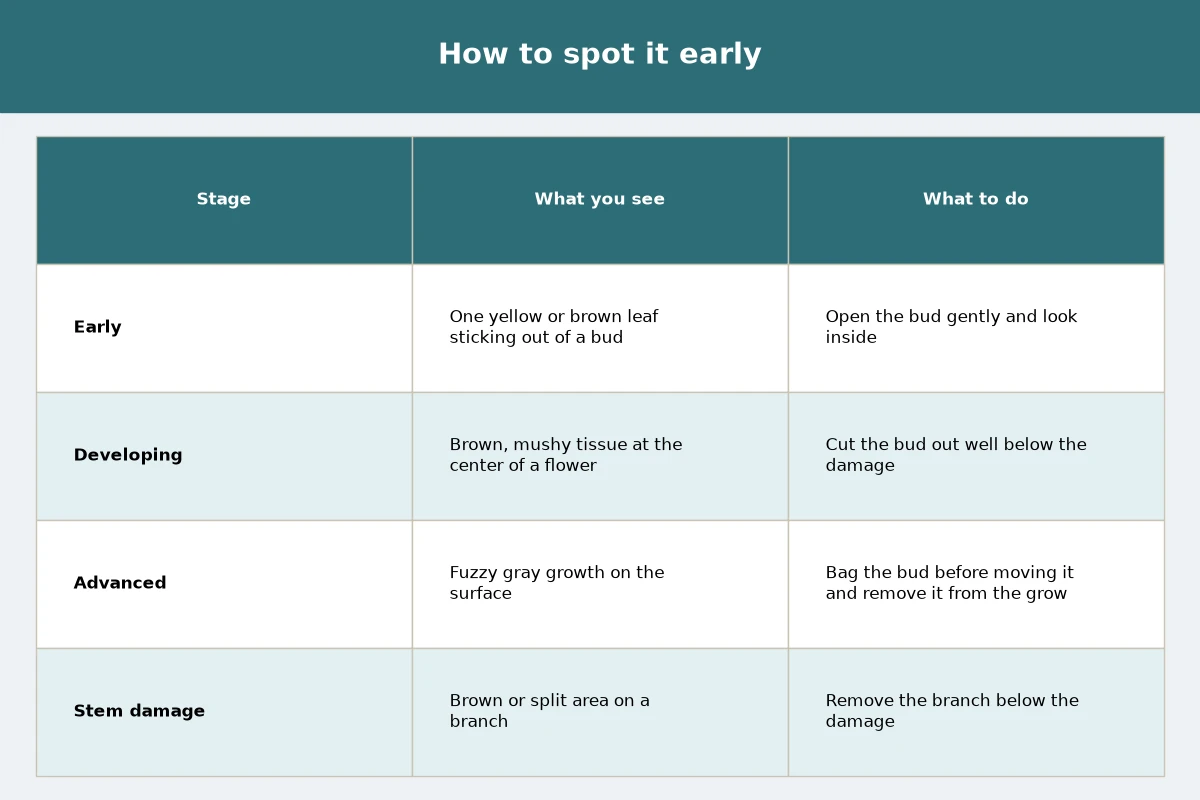
| Stage | What you see | What to do |
|---|---|---|
| Early | One yellow or brown leaf sticking out of a bud | Open the bud gently and look inside |
| Developing | Brown, mushy tissue at the center of a flower | Cut the bud out well below the damage |
| Advanced | Fuzzy gray growth on the surface | Bag the bud before moving it and remove it from the grow |
| Stem damage | Brown or split area on a branch | Remove the branch below the damage |
Source: Bud Rot, Utah State University Extension, symptoms, conditions and humidity guidance.
Check plants often
In the final weeks, bud rot can spread fast. Walk through your plants every day in late flower. Start with the biggest colas. They hold the most moisture. Check again after rain, a cold night or a spike in humidity.
Handle buds gently with clean hands or gloves. Bruising and broken stems create wounds the fungus can use.
Keep humidity down
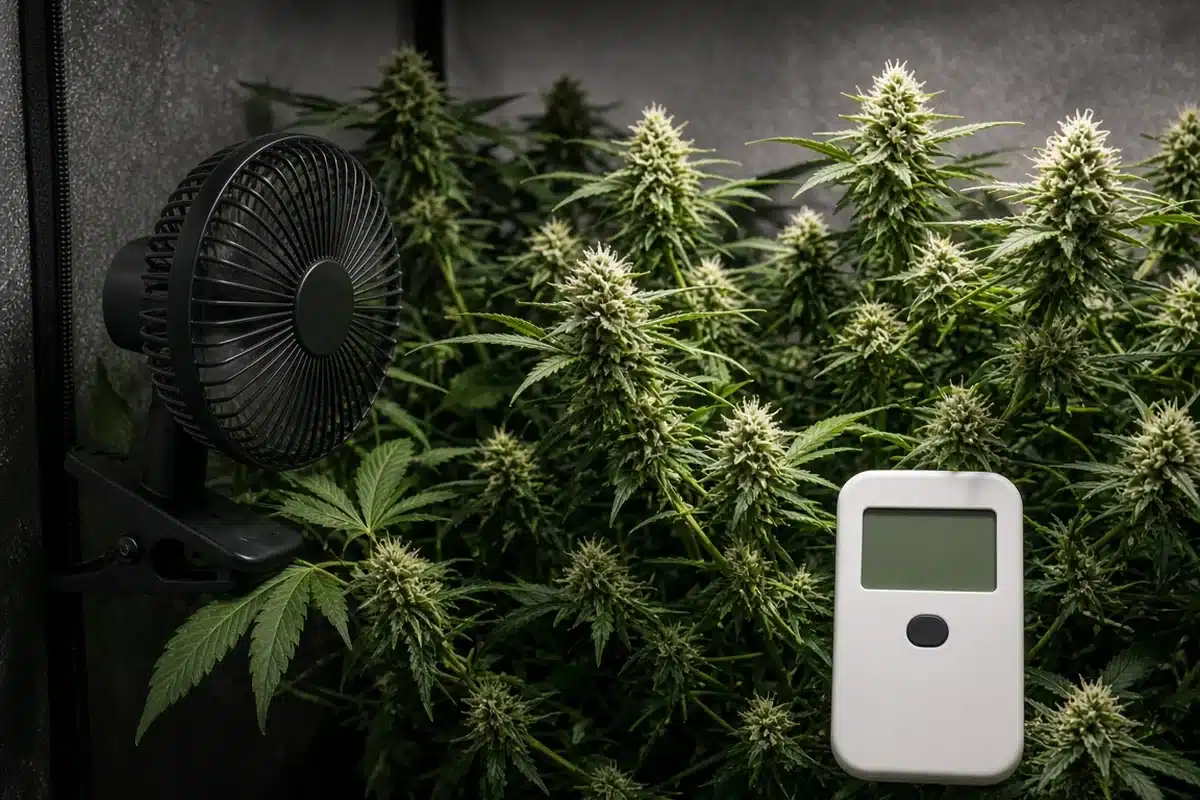
Utah State recommends keeping relative humidity in a greenhouse below 50 percent. That target is written for greenhouses, but it also works well in a tent or grow room during late flower. Put a hygrometer at canopy height to see what the buds are sitting in.
Our guide to relative humidity control for cannabis explains how temperature, airflow and plant count affect humidity. Watch the hours right after lights go off, when the room cools and humidity often rises.
Keep air moving
The University of Minnesota Extension guide Gray mold in the flower garden says gray mold is common in wet or very humid conditions. It recommends spacing plants so they have room to dry out after rain or watering and providing good air circulation.
Indoors, aim fans so leaves move gently through the whole canopy and not just the top. Thin out crowded inner growth so air can pass through. Outdoors, give plants space and avoid planting them in a low, damp corner where air settles.
Water with care
Water the soil, not the plant. Watering from above in late flower leaves water sitting in the buds. Water early in the day so any splashes dry before night. Avoid overwatering, which raises humidity around the plant and in the room.
Remove infected material right away
The UMN guide says to remove infected flowers, leaves and stems. For cannabis, cut the infected bud out well below any brown tissue. Slip a bag over the bud before you cut so spores do not shake loose onto other flowers. Clean your pruners with 70 percent alcohol after each cut.
Remove fallen leaves and debris from the floor of the grow space. Botrytis likes to start on dead and dying tissue. Our guide to identifying pathogenic mold covers other molds you may find in a grow.
Bud rot or something else
A few other problems can look like bud rot at first glance. Nutrient burn turns leaf tips brown but starts at the tips and works inward, not from inside the bud. With light burn, the tops closest to the fixture turn pale. Powdery mildew leaves a white, flour like coating on the surface of leaves rather than brown rot at the core.
The key sign of botrytis is damage that starts deep in the flower near the stem. If you open a bud and find brown, soft tissue in the center, handle it as bud rot and remove it.
Late flower risk factors
The last few weeks bring the highest risk. By then buds are at their largest. The canopy is thick and plants drink more water. Watch closely if several of these line up at once.
- Large, tight colas on the main stems.
- Cool nights with warm days.
- Humidity that climbs after lights off.
- Crowded plants that touch each other.
Outdoor grows
Outdoor plants face the most risk during cool, wet weather late in the season. Utah State notes that bud rot can be an issue under prolonged humidity or cool outdoor rains during flower formation.
If heavy rain is on the way, some growers shake water from branches after the storm and check every large cola the next day. Plants with looser flowers can handle damp weather better than very dense ones. In wet climates, choose plants that finish before fall rains set in.
Step by step prevention plan
- Space plants so air can move between and through them.
- Thin crowded inner growth before flowering gets far along.
- Keep humidity below 50 percent in late flower.
- Run fans so the whole canopy moves gently.
- Water the soil early in the day and avoid wetting buds.
- Inspect large colas daily in the final weeks.
- Cut out any infected bud well below the damage and bag it.
- Clean tools and remove plant debris from the floor.
Clean between grows
Spores can linger on surfaces, tools and old plant material. Between grows, wipe down the tent or room, wash trays and pots and replace old filters if they look dirty. Our guide to cleaning a grow tent walks through the process.
Troubleshooting
- A single leaf on a cola turns yellow and limp. Open the bud and check for brown tissue inside.
- Humidity spikes at lights off. Keep the exhaust running and add a dehumidifier if needed.
- Rot keeps showing up in the same spot. Look for poor airflow or a cold, damp corner.
- Outdoor buds rot after rain. Shake off water, check colas daily and consider earlier finishing plants.
- Rot spreads to nearby buds. Bag buds before cutting and clean tools between cuts.
- The floor has fallen leaves. Clear them away every few days.
Final thoughts
Bud rot is a moisture problem at heart. Keep humidity down, keep air moving, water the soil and check your biggest buds every day near the end. If you find botrytis, remove it fast and keep it away from healthy flowers. Those habits protect a grow far better than any fix after the fact. At Kind Seed Co, we check the biggest colas first on every walk through a late flower room.
Sources
- Utah State University Extension, Bud Rot
- University of Minnesota Extension, Gray mold in the flower garden
FAQ
What does bud rot look like on cannabis?
Often a single yellow or brown leaf sticking out of a bud, with brown mushy tissue inside and gray fuzz later.
What causes bud rot?
The fungus Botrytis cinerea, which spreads in cool, humid and wet conditions and enters through wounds or dying tissue.
What humidity helps prevent bud rot?
Keeping relative humidity below 50 percent in late flower helps.
Can a bud with rot be saved?
No. Cut it out well below the damage and remove it from the grow.
How do I prevent bud rot outdoors?
Space plants, check colas after rain and choose plants that finish before wet fall weather.