Under Cabinet Grow Lights: Strip Fixtures and Spacing for Counter Plants
The short answer
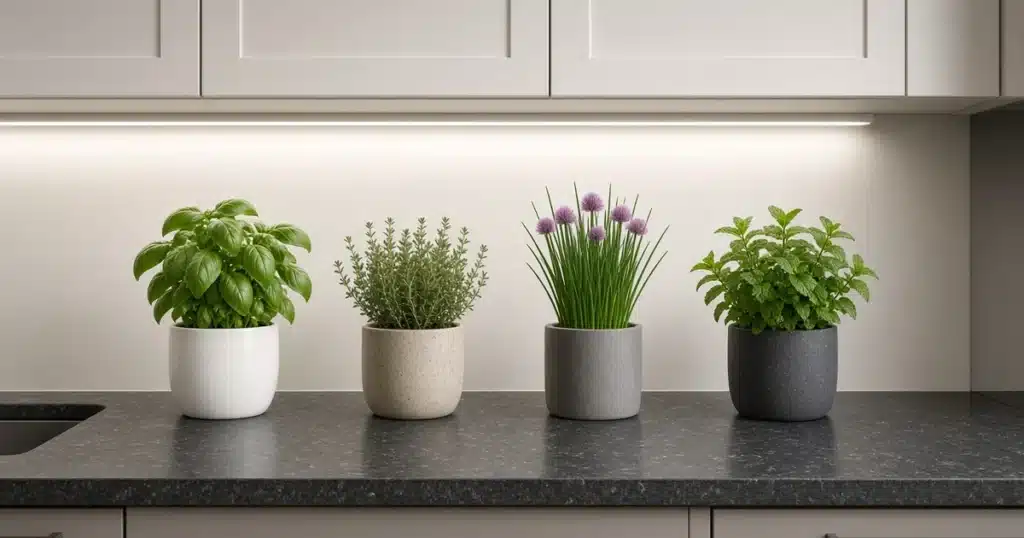
An under cabinet grow light turns a kitchen counter into a small growing space for herbs and greens. Slim LED strips mount under the cabinet and shine down on pots below. Close placement lets small strips do a lot. Space strips evenly, run them on a timer and hold pots within a foot or so.
It is one of the simplest ways to grow fresh herbs where you cook.
Why use under cabinet lights for plants?
Kitchen counters often sit far from windows. Herbs on a dim counter grow thin, pale and floppy. A light mounted right above them solves that.
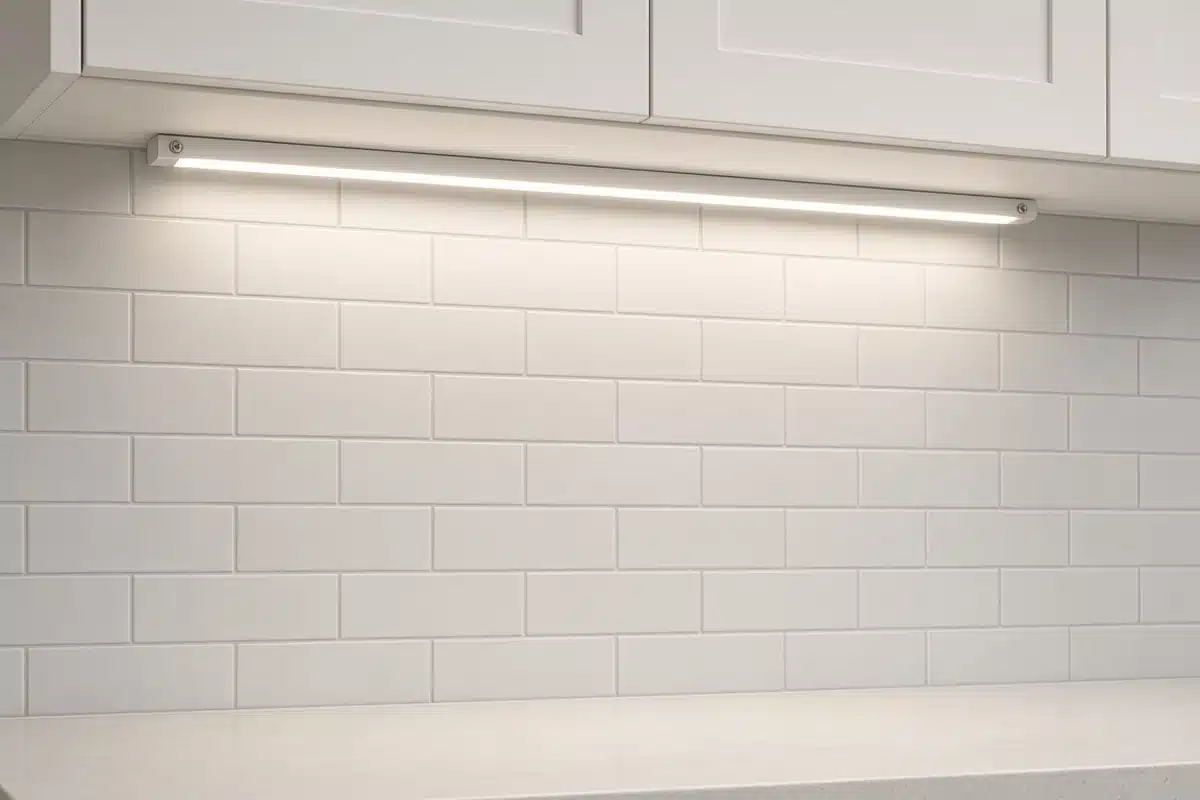
The University of Minnesota Extension page on lighting for indoor plants and starting seeds explains that light intensity drops fast as distance grows. Under cabinet lights sit close to the plants, so they make the most of a small fixture.
These lights stay out of the way. They tuck under the cabinet and leave the counter open for pots.
Which strip fixtures work well?
| Fixture | Good fit | Notes |
|---|---|---|
| LED strip bar | Most counters | Slim and easy to mount |
| LED tape on a channel | Long or custom spans | Use an aluminum channel for heat |
| Linked LED bars | Wide counters | Connect several end to end |
| Puck lights | Single pots | Small coverage area |
Sources: University of Minnesota Extension, University of Maryland Extension, Iowa State University Extension and Outreach.
White LED strips work well for herbs and greens. The University of Maryland Extension article on fine tuning your indoor plant lighting choices explains how white LEDs give plants a broad range of light colors that support growth.
Look for strips made for plants, and check the maker’s coverage and distance guidance. Standard decorative under cabinet lights are often too dim for plants.
Fluorescent tubes can work. The Iowa State University Extension and Outreach page on whether a fluorescent fixture gives enough light for seedlings covers how close tubes need to be. The same idea applies to herbs on a counter.
Our post on choose the right LED lights for your cannabis grow covers LED fixture types in more depth.
How should strips be spaced?
Spacing shapes how even the light is. One strip down the center may leave pots at the edges in shade. Two strips set a few inches apart cover a wider area.
Most cabinets sit 15 to 20 inches above the counter. Pots raise the plants closer. Many herbs end up 8 to 14 inches below the light, which works well.
If plants stretch toward the light, raise them on a stand or add a second strip. If leaves pale or curl, the light may be too close. Lower the pots.
Our post on grow lights for cannabis explains how light coverage works in a bigger space.
How long should under cabinet lights run?
Herbs and greens do well with 12 to 14 hours of light per day. A timer holds the schedule steady. Our post on grow light timers explains simple timer setups.
Many growers run lights from early morning to evening. That fits the kitchen day and leaves the room dark at night.
Which plants do well on a lit counter?
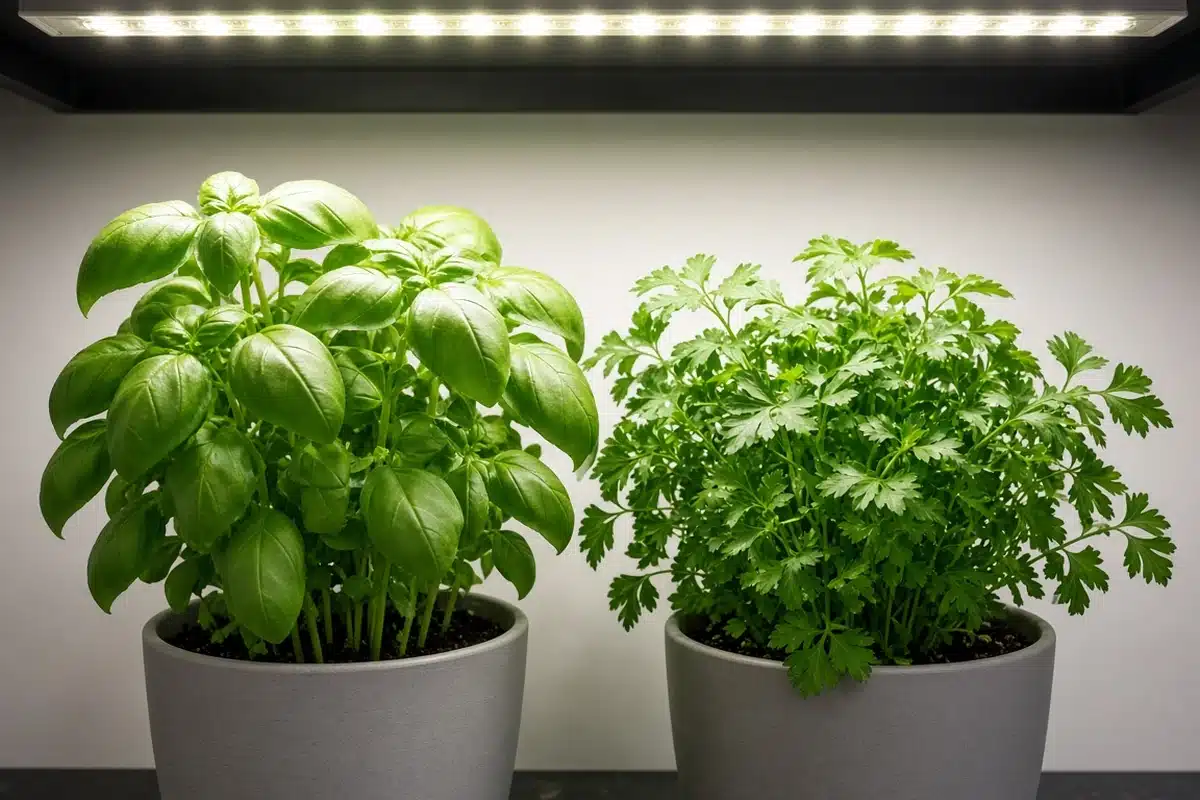
Basil, parsley, chives, mint and cilantro usually do well under lights. Lettuce and microgreens do too.
Pick compact plants that won’t outgrow the space. Tall plants may hit the cabinet or get too close to the strip.
Cut herbs often. Regular cutting holds them bushy and in bounds.
How do you mount the strips?
Most LED strip bars come with clips or small screws. Mount them toward the front edge of the cabinet so light falls on the pots rather than the wall. Some growers angle the strips slightly toward the counter for better reach.
Run the cord along the cabinet underside with adhesive cord clips. Set the plug end near an outlet so the timer is easy to reach.
If you rent or don’t want holes, look for strips with magnetic or adhesive mounts. Clean the surface first so they stay put.
How to: step by step
- Measure the space under the cabinet.
- Pick bright white LED strips made for plants.
- Mount one or two strips evenly across the space.
- Place pots so leaves sit 8 to 14 inches below the light.
- Plug the strips into a timer set for 12 to 14 hours.
- Raise or lower pots as plants grow.
Tidy cords along the cabinet.
Troubleshooting
Herbs stretching. Light is too weak or far. Raise pots or add a strip.
Pale leaves. Light may be too close or hours too long. Lower pots or cut hours.
Uneven growth. One strip leaves edges in shade. Add a second strip or rotate pots.
Strip feels warm. Ensure airflow around the fixture. Mount it on an aluminum channel.
Slow growth. Light may be too dim. Swap for a brighter strip.
A bright strip and a few pots can stock your kitchen with herbs. Kind Seed Co carries cannabis seeds for growers ready to try a small indoor setup.
Sources
- Lighting for indoor plants and starting seeds, University of Minnesota Extension, Lighting for indoor plants and starting seeds
- Fine tuning your indoor plant lighting choices, University of Maryland Extension, Maryland Grows, Fine tuning your indoor plant lighting choices
- Will a fluorescent light fixture provide sufficient light for seedlings?, Iowa State University Extension and Outreach, Will a fluorescent light fixture provide sufficient light for seedlings?
FAQ
Are under cabinet lights bright enough for herbs?
Many decorative ones are not. Bright white LED strips made for plants work better.
How far should herbs be from the light?
About 8 to 14 inches works for most herbs. Adjust based on how plants grow.
Do you need two strips?
For wide counters, two strips give more even light than one.
Can you grow lettuce under cabinet lights?
Yes. Lettuce and microgreens grow well under bright LED strips.
How many hours should the lights run?
About 12 to 14 hours a day suits most herbs and greens.