When to plant cannabis outdoors in Arizona
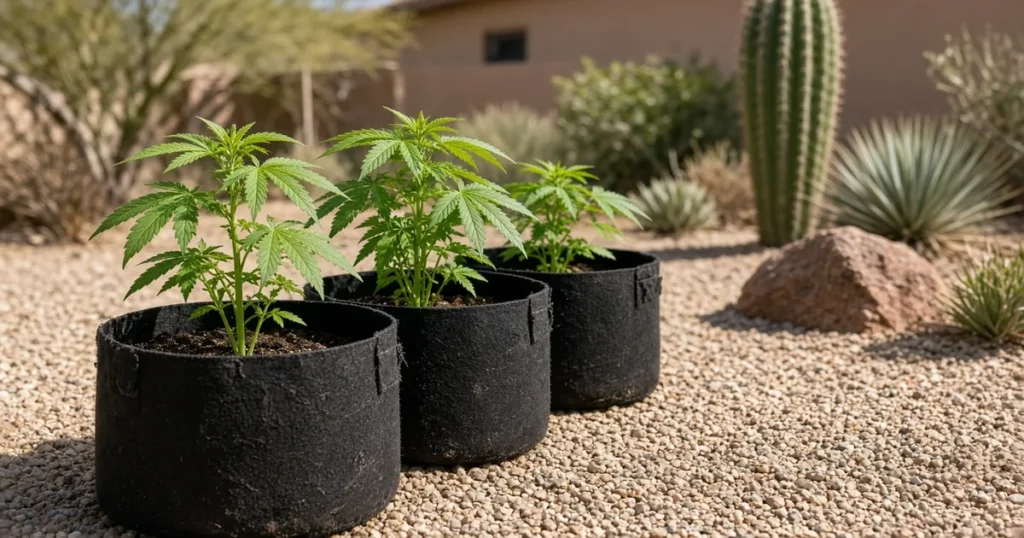
Most of the country asks when it is warm enough to plant. In much of Arizona, the better question is when it is cool enough. Phoenix and Tucson growers often avoid the summer altogether and grow in the mild shoulder seasons, while Flagstaff growers follow a short mountain calendar more like Colorado’s. This guide breaks down Arizona’s very different growing zones for adults 21 and older growing under state law.
Arizona’s two calendars
Arizona really has two outdoor seasons, depending on elevation.
| Zone | Example places | Main planting windows | Main challenge |
|---|---|---|---|
| Low desert, under 2,500 feet | Phoenix, Tucson, Yuma | February to March for a spring crop, or late July to August for a fall crop | Extreme heat from June to September |
| Mid elevation, 3,500 to 5,500 feet | Prescott, Sierra Vista, Payson | Late April to May | Late spring frost, monsoon wind |
| High country, over 6,500 feet | Flagstaff, White Mountains | Late May to early June | Short season, early fall frost |
University of Arizona Cooperative Extension publishes desert planting calendars that are worth checking for your own town.
Home grow rules in Arizona
Adults 21 and older may grow up to 6 plants each, with a cap of 12 plants per residence when two or more adults live there. Plants must be in an enclosed, locked area and not visible from public view. Local rules and HOA rules may add limits, so confirm the current rules with official state sources before you plant.
HOA rules are a real factor in Arizona’s planned communities. A block wall yard with a locking gate often handles both the enclosed and the public view rules, but check your HOA covenants before planting.
The low desert: two seasons, not one
The spring crop
In Phoenix and Tucson, the last frost often falls in late January or February. Autoflowers planted in late February or March can finish in May, before temperatures routinely pass 105 degrees. Photoperiods planted in spring tend to flower early because days are still short, so autoflowers are the more common spring choice.
The fall crop
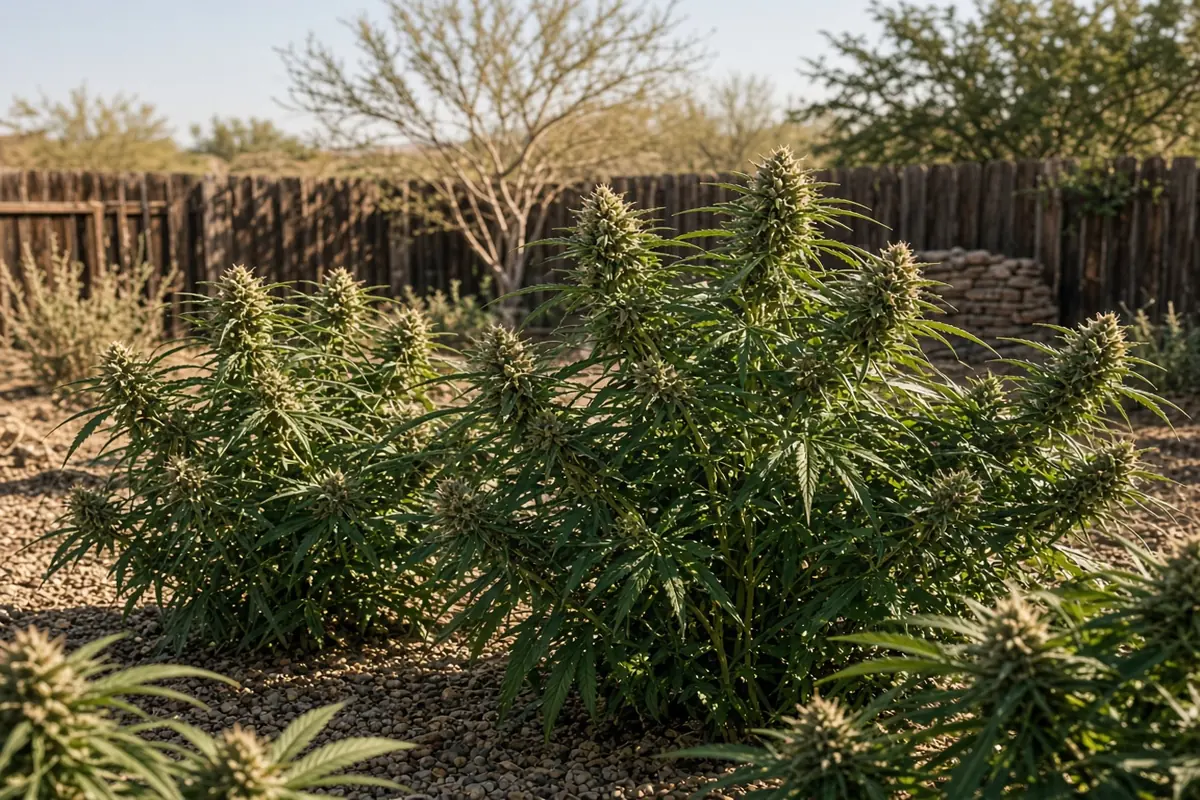
Many low desert growers plant photoperiods in late July or August, once the worst of the heat begins to ease. Days are already shortening, so plants flower fast and stay compact. Harvest usually falls in late October or November, when nights are mild and humidity is low. This fall crop is the closest thing Arizona has to a classic outdoor season.
Surviving summer
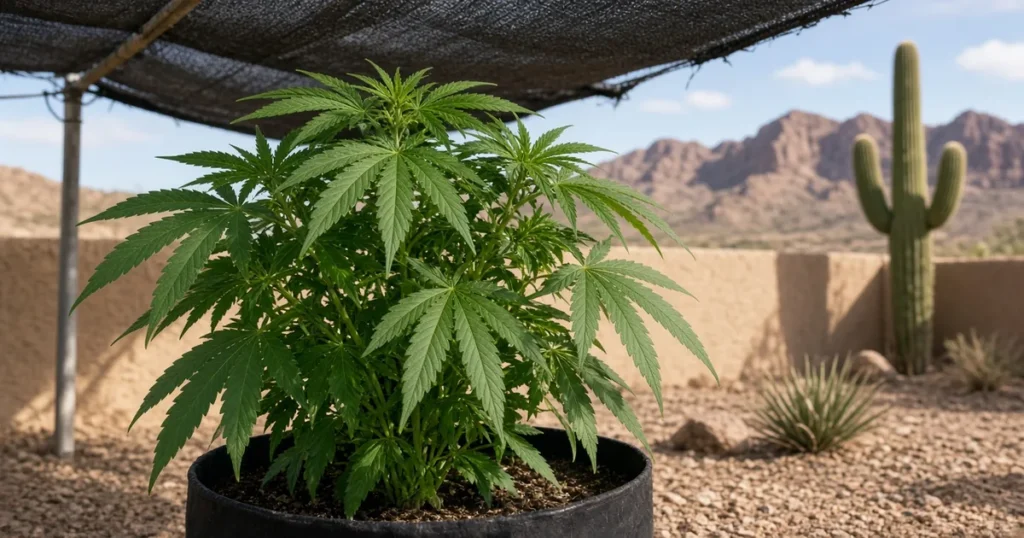
Plants left outside from June to August need heavy support. Use 40 to 50 percent shade cloth, water early in the morning, mulch thickly and keep pots off hot concrete. Many growers simply skip this window.
Monsoon season
From mid June through September, the North American monsoon brings sudden thunderstorms, dust storms, high winds and a spike in humidity. In the low desert, monsoon humidity can be the first time plants face mold pressure all year. At mid elevation, the monsoon lines up with the flowering period, so growers prune for airflow and stake plants before July.
Mid elevation Arizona
Prescott, Sedona, Payson and Sierra Vista have warm summers without the extreme heat of Phoenix. Last frost often comes in late April or early May, and first frost arrives in October. Photoperiods planted in May can grow large and finish in early to mid October. Rocky soils are common, so raised beds and large fabric pots help.
The high country
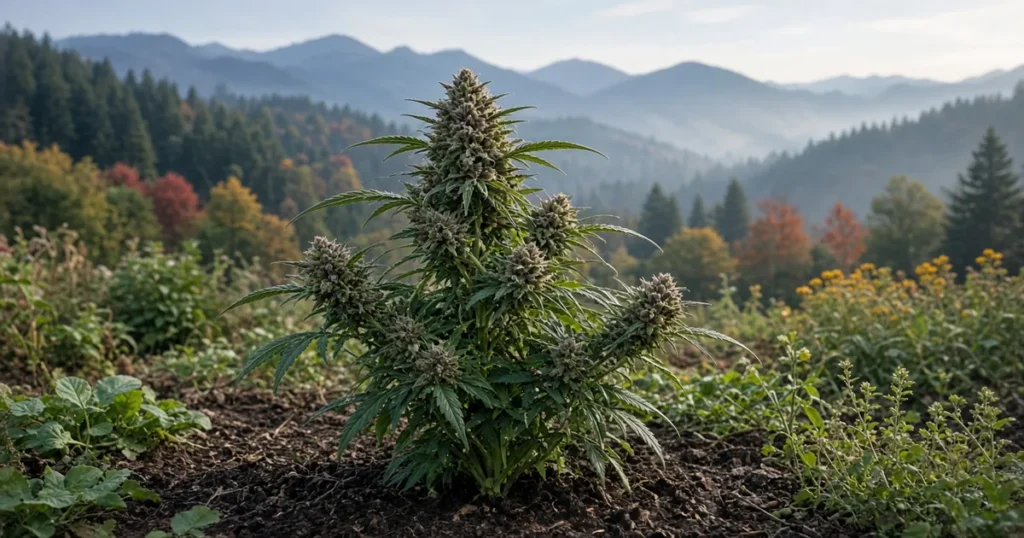
Flagstaff sits near 7,000 feet. Frost can come in early June and again in September. Strong sun at altitude helps growth, but the season is short. Autoflowers and fast photoperiods started indoors are the safest choices. Cold nights in late summer also slow flowering, so give plants a sheltered, south facing spot.
Arizona water and soil
Desert soils are often alkaline and low in organic matter, and caliche, a hard layer of calcium carbonate, can sit just under the surface. Many growers avoid native ground and use raised beds or pots filled with compost rich mix. Municipal water in Phoenix and Tucson is hard, so watch for nutrient lockout. Drip irrigation on a timer saves water and keeps soil moisture steady.
Desert pests and wildlife
Javelinas, rabbits and packrats can wipe out young plants overnight, so a fence or wire cage is worth the effort. Spider mites thrive in dry heat. Whiteflies and aphids are common in spring. Grasshoppers can show up in monsoon season. Check leaves often and spray only with products labeled for the plant and use.
Light and day length
Arizona is far enough south that days are shorter in summer than in northern states, and the state does not observe daylight saving time. Photoperiods here tend to flower earlier and stay smaller than the same strain grown in Oregon or Michigan. That is one reason the fall crop works well in the low desert.
Getting started
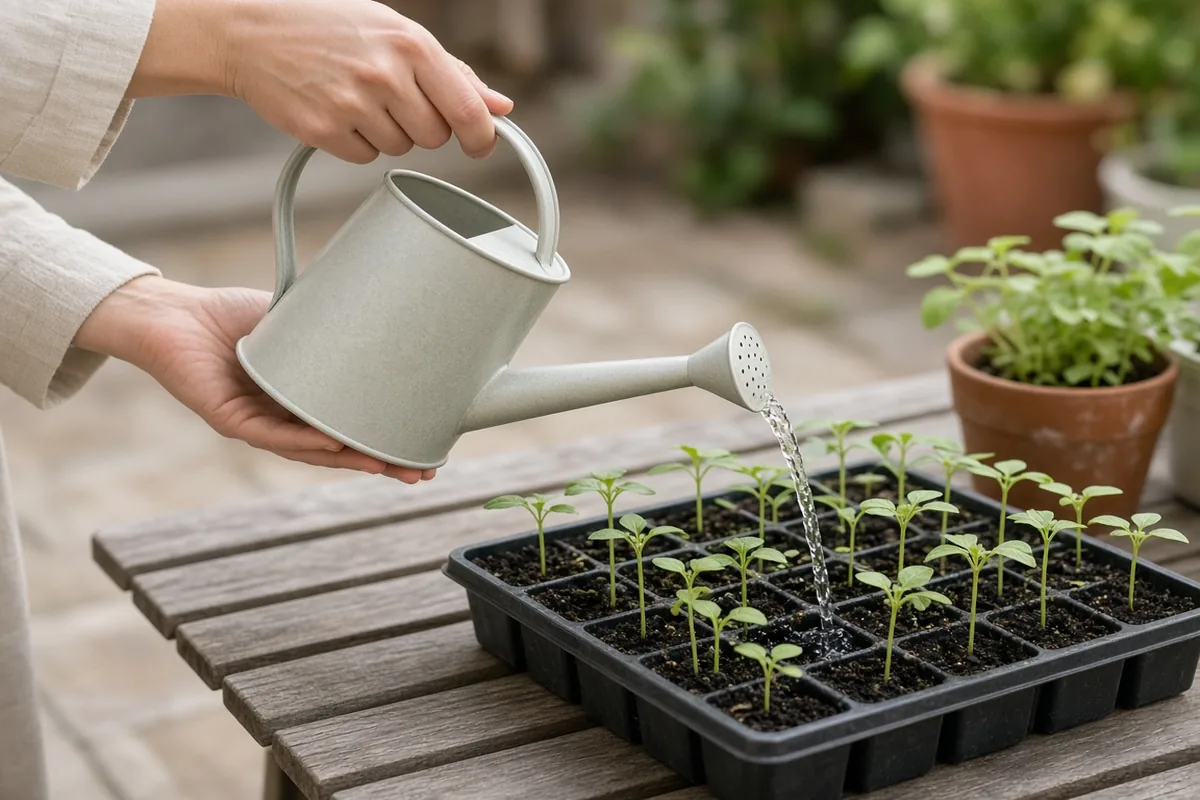
Start seeds indoors a few weeks before your planting window. Our guides on how to germinate cannabis seeds and when to plant cannabis seeds outdoors cover the basics.
Choosing genetics
Low desert growers favor heat tolerant strains and autoflowers. High country growers favor fast finishers. Browse the Arizona marijuana seeds page and our autoflower seeds for options.
Harvest in Arizona
Spring autoflowers usually finish in May. Fall photoperiods finish from late October into November in the low desert, and in early October at mid elevation. See our guide on when to harvest outdoor cannabis for the signs.
A low desert year at a glance
January is for planning and starting seeds indoors. February and March are the main planting months for the spring autoflower crop, with warm days, cool nights and few pests. April brings fast growth, and by May the first heat waves arrive and spring plants should be close to finished. June through mid July is the hardest stretch, with highs near or above 110 degrees and very low humidity. Many growers clean out beds, solarize soil under clear plastic and rest. Late July and August, during the monsoon, are when fall photoperiods go in. September and October are the main growth and flowering months, and November is harvest time in Phoenix, Tucson and Yuma.
Watering in a dry climate
Desert plants can lose water faster than roots can replace it. A large plant in July can drink several gallons a day. Water early in the morning so plants start the day hydrated, and water deeply so moisture reaches the bottom of the pot. Mulch slows evaporation. Drip lines or soaker hoses on a timer keep watering consistent when you travel. Avoid wetting leaves in full sun.
Final thoughts
The best time to plant cannabis outdoors in Arizona depends on elevation. In the low desert, plant autoflowers in late winter or photoperiods in late summer. At mid elevation, plant in May. In the high country, plant in late May or June and pick fast genetics.
Grow legally in Arizona
Stay within 6 plants per adult and 12 per residence, and keep plants enclosed, locked and out of public view. Kind Seed Co sells only to adults 21 and older. See our guide on legal requirements for growing weed plants in your state and our December 11 2026 seed rule explainer. This is gardening information, not legal or medical advice.
Frequently asked questions
Can I grow outdoors in Phoenix in summer?
Some growers do with shade cloth and steady watering, but many prefer a spring autoflower crop or a fall photoperiod crop.
When should I plant in Flagstaff?
Late May or early June, after the last frost, with fast finishing genetics.
Do HOA rules matter?
Yes. HOA covenants can add limits beyond state law.
How do I protect plants from javelinas?
Use a sturdy fence or wire cage around the plants.
Ready to start
Browse the marijuana seeds arizona page or the Kind Seed Co shop. Grow within Arizona law.