When to plant cannabis outdoors in Colorado
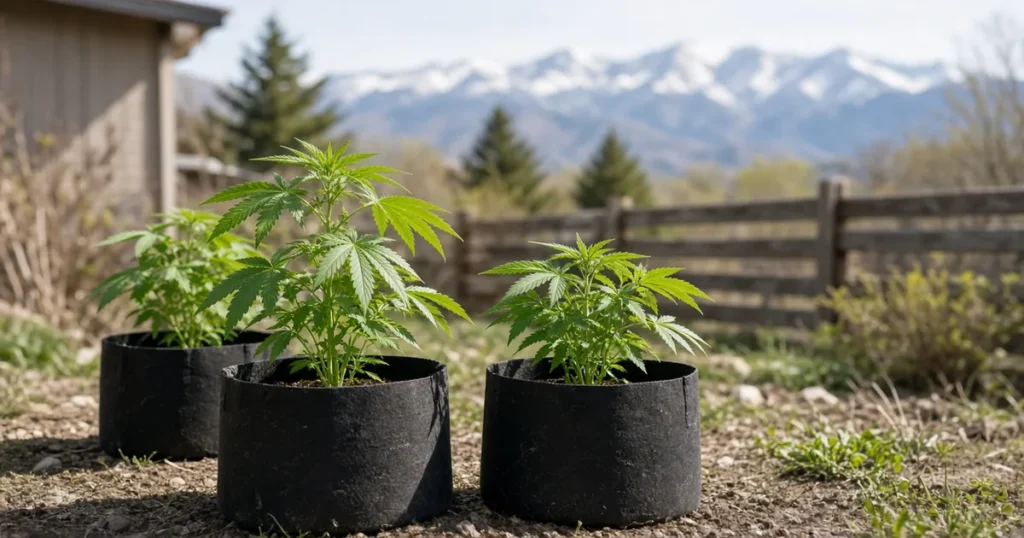
Colorado growers get more sunshine than almost anyone, and they also get hail, late snow and frost that can land in any month at elevation. A Denver gardener may still see snow on Mother’s Day, and a mountain grower in Leadville may never have a frost free month. Planting at the right time in Colorado is about elevation first, then hail protection. This guide covers it for adults 21 and older under state law.
Colorado’s home grow rules
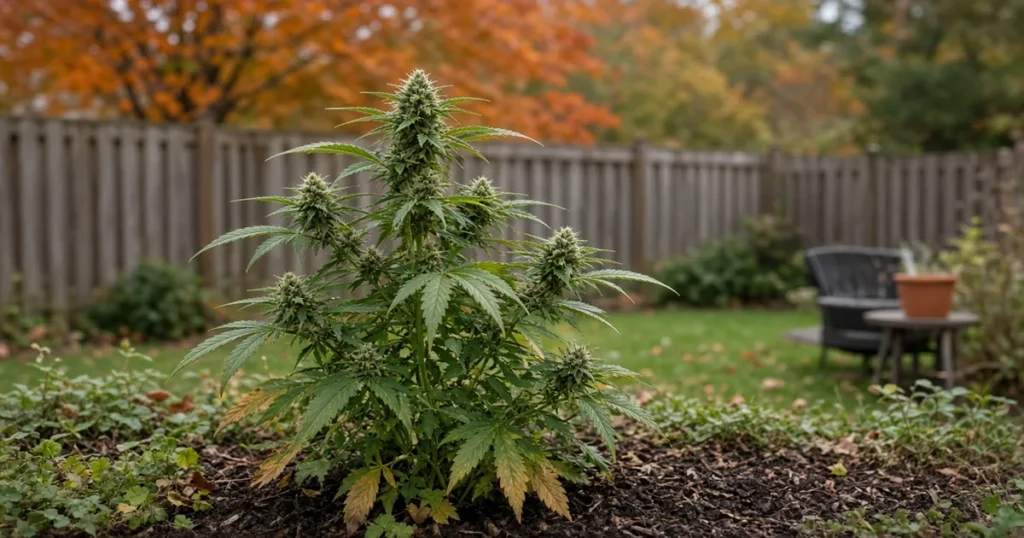
Adults 21 and older may grow up to 6 plants each, with no more than 3 flowering at one time. State law caps a residence at 12 plants unless a local rule allows more. Plants must be in an enclosed, locked space, and outdoor grows must not be open to public view. Cities and counties can add limits, so confirm the current rules with official state sources before you plant.
Several Colorado cities and counties restrict or ban outdoor grows. Check your local code before planning an outdoor garden.
Elevation sets your calendar
| Elevation band | Examples | Last frost | First frost | Plant out |
|---|---|---|---|---|
| Under 5,000 feet | Grand Junction, Eastern Plains towns | Late April | Mid October | Mid May |
| 5,000 to 6,500 feet | Denver, Boulder, Fort Collins, Colorado Springs, Pueblo | Early to mid May | Early October | Late May to early June |
| 6,500 to 8,000 feet | Durango, Evergreen, Steamboat | Late May to early June | Mid September | Early to mid June |
| Over 8,000 feet | Breckenridge, Leadville, Gunnison | Mid June or later | Late August | Greenhouse or autoflower only |
Colorado State University Extension publishes frost dates and high altitude gardening guides for each county.
The hail problem
Colorado’s Front Range sits in one of the most active hail zones in North America. Storms peak from May through August, often in the afternoon. A single storm can shred leaves and snap branches in minutes. Protecting plants is not optional for many growers.
- Hail netting on a frame over the plants.
- Movable pots that can roll into a garage.
- A greenhouse or hoop house with a sturdy cover.
- Planting near a wall or under a partial overhang for some shelter.
The Front Range
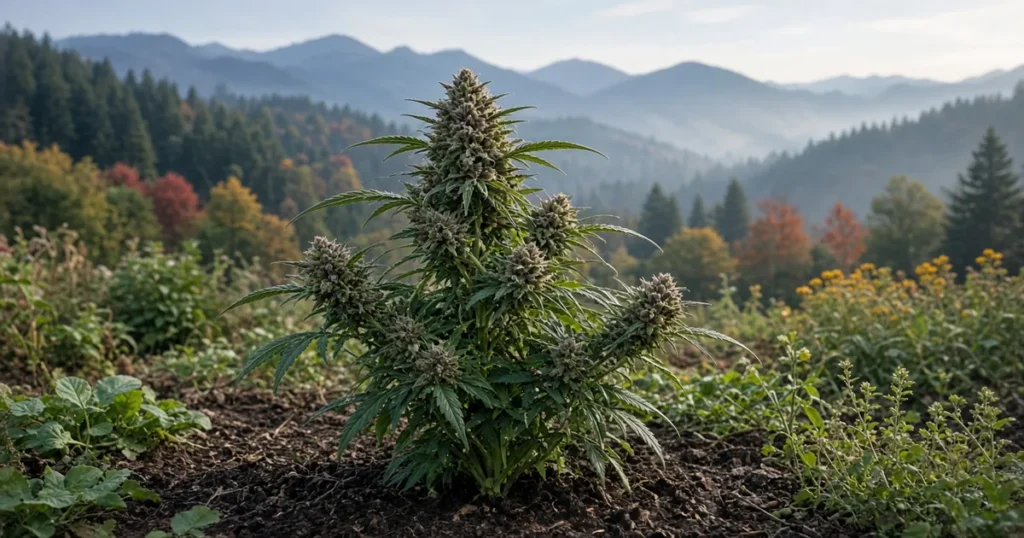
Denver, Boulder, Fort Collins and Colorado Springs share a similar season. Spring snow is common into May, so many growers wait until Memorial Day or later. First frost often comes in early October. Fast photoperiods that finish by late September are the safer choice, and autoflowers work well.
The Western Slope
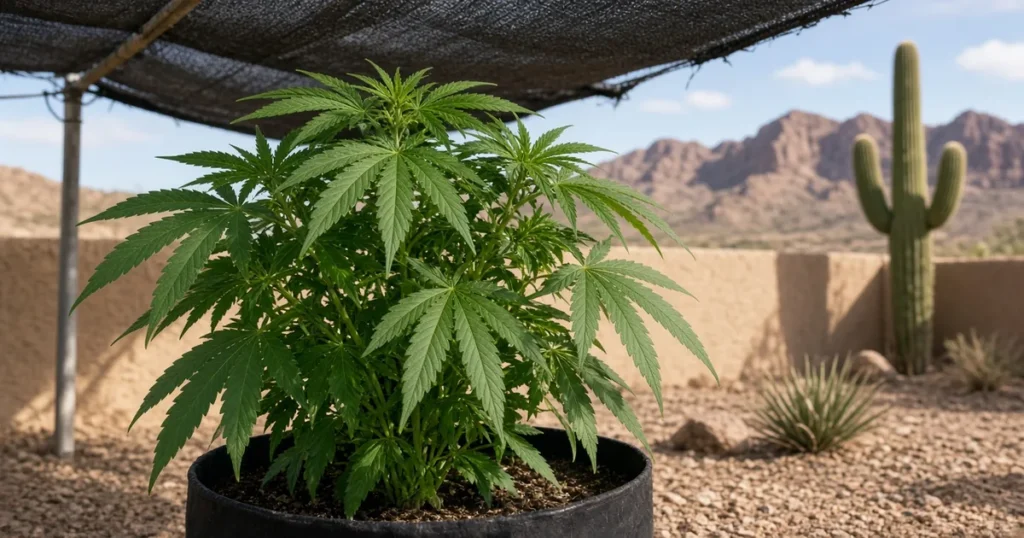
Grand Junction and the Grand Valley are lower and warmer, with a long season and very hot, dry summers. This is fruit country, and it suits larger photoperiods. Water needs are high, and irrigation is key.
The Eastern Plains
The plains are windy and dry with hot summers. Soils can be sandy or heavy clay. Windbreaks and deep watering help plants through summer.
Mountain towns
Above about 8,000 feet, outdoor photoperiods rarely finish. Greenhouses, autoflowers and indoor starts are the norm.
Sun and dry air
Strong high altitude sun can bleach the tops of plants, and dry air makes soil dry out fast. Mulch, drip irrigation and a bit of afternoon shade in July can help. Low humidity reduces mold risk, which is one advantage of growing in Colorado.
Colorado pests
Spider mites thrive in dry heat. Aphids and caterpillars show up in summer. Grasshoppers can be heavy on the plains. Deer and elk browse plants in foothill and mountain towns, so fencing matters.
Photoperiods and autoflowers
On the Front Range, photoperiods begin flowering in early August and need to finish by early October. Autoflowers fit the short mountain season and make it easy to stay within the 3 flowering plant cap, since you can stagger crops.
A Front Range season month by month
April is for starting seeds indoors and watching the weather. Spring snowstorms in April and early May are common in Denver, so plants stay inside. In mid May, harden seedlings off on warm days. Late May or early June is the main planting window. June and July are fast growth months with long, sunny days, and also the peak of hail season. Many growers check the forecast every afternoon. In early August, photoperiods begin to flower. September brings cool nights and the first frost risk in the foothills. Most harvests come in late September or the first week of October.
Soil and water in Colorado
Front Range soils are often heavy clay with high pH, and many yards have little organic matter. Raised beds or large fabric pots filled with a compost rich mix avoid both problems. CSU Extension’s soil testing lab can check pH and nutrients. Water is a constant concern in a semi arid state, so drip irrigation and thick mulch help. Some municipal water is hard and alkaline, so check pH if plants show nutrient issues.
Managing the flowering cap
Each adult may have up to 6 plants, but only 3 can be flowering at one time. Many Colorado growers run 3 photoperiods outdoors for the main season and keep 3 younger plants in vegetative growth indoors under long days. Others stagger autoflowers so only 3 are in flower at once.
Getting started
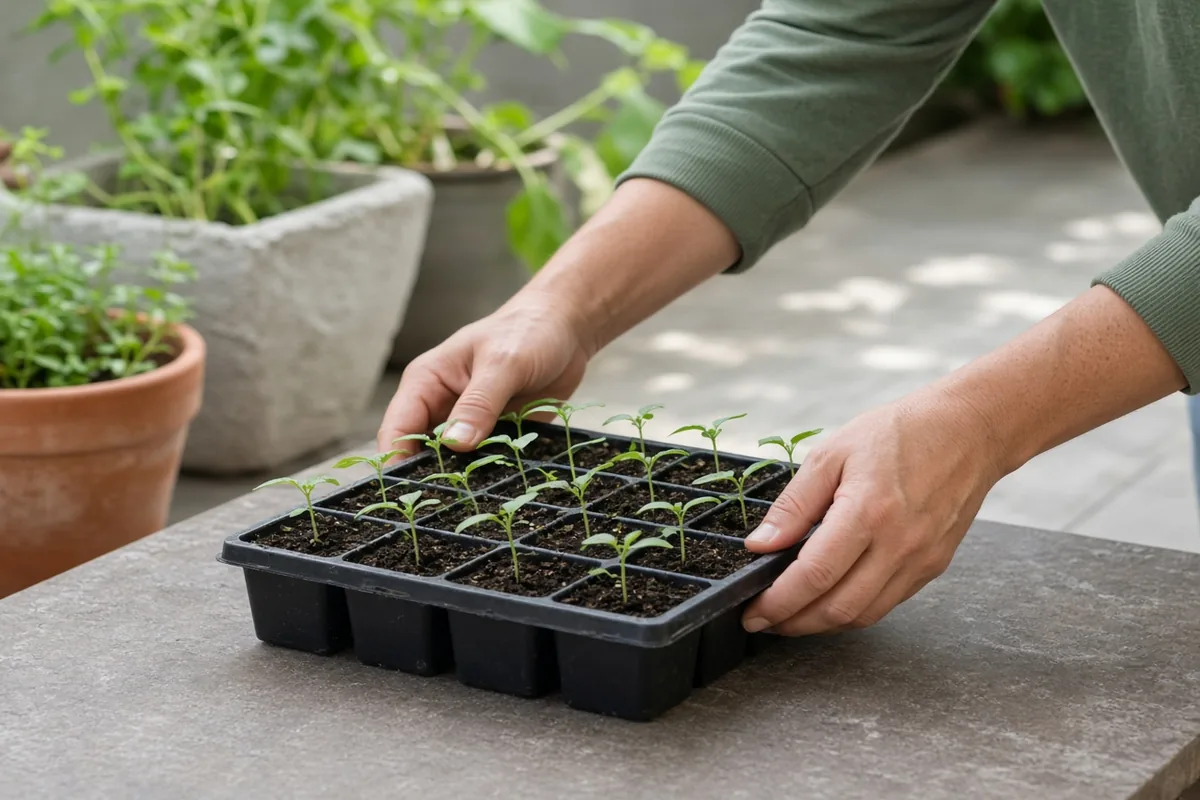
Start seeds indoors in April or early May. Our guides on how to germinate cannabis seeds and when to plant cannabis seeds outdoors cover germination and hardening off.
Choosing genetics
Pick fast finishing, sturdy strains. Browse the Colorado marijuana seeds page and our autoflower seeds.
Harvest
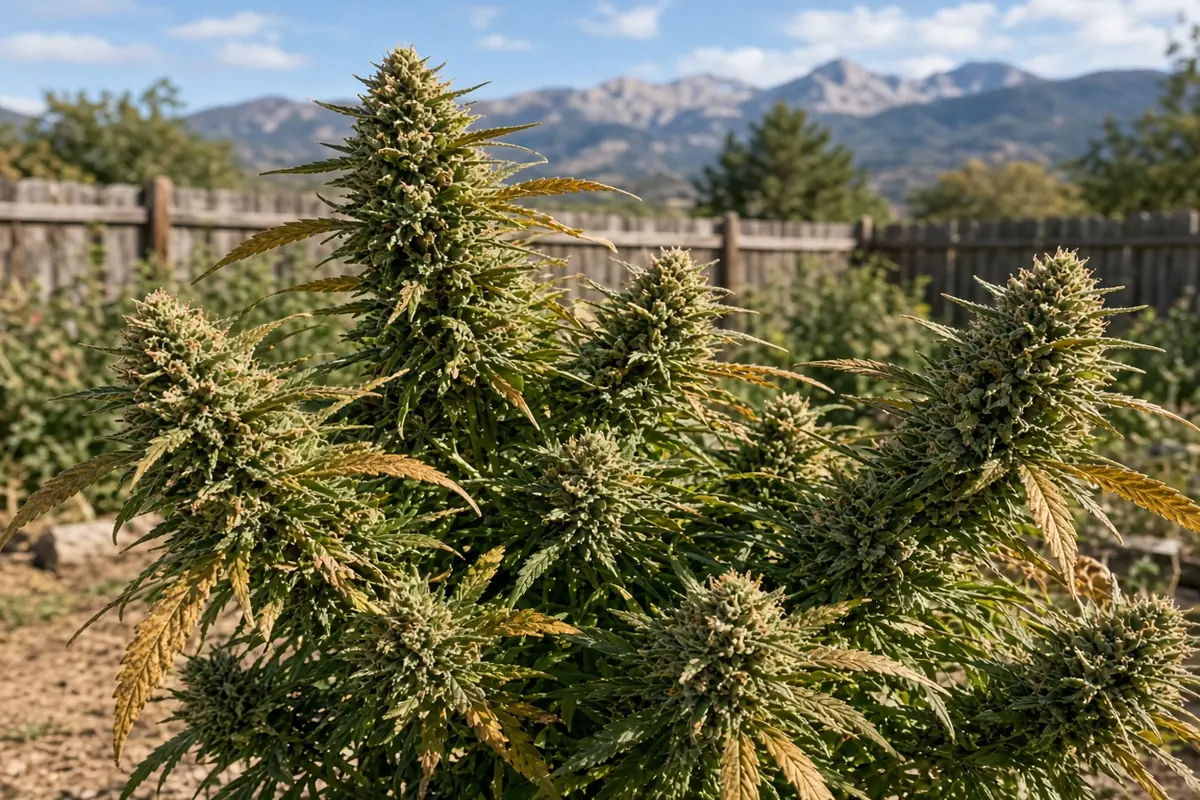
Most Front Range photoperiods finish in late September or early October. See our guide on when to harvest outdoor cannabis. Watch for early fall snow.
Light deprivation at altitude
Some Front Range and mountain growers use light deprivation to beat early fall frost. By covering photoperiod plants with blackout material each evening from early July, they push flowering to start several weeks early. The crop then finishes in late August or early September, ahead of the first frost and before fall snowstorms. It takes daily attention, but in a short Colorado season it can make the difference between a finished harvest and a frozen one.
Local rules matter more in Colorado
Colorado lets cities and counties add their own home grow rules, and many do. Some require grows to be indoors only, some restrict outdoor grows near property lines and some set lower limits. Denver, Colorado Springs and many county governments have their own codes. Check your local rules before you plan.
Final thoughts
The best time to plant cannabis outdoors in Colorado depends on elevation. Most Front Range growers plant in late May or early June. Protect plants from hail, choose fast genetics and keep no more than 3 plants flowering at a time per adult.
Grow legally in Colorado
Stay within 6 plants per adult with 3 flowering, the 12 plant residence cap and any local limits, and keep the grow enclosed, locked and out of public view. Kind Seed Co sells only to adults 21 and older. See our guide on legal requirements for growing weed plants in your state and our December 11 2026 seed rule explainer. This is gardening information, not legal or medical advice.
Frequently asked questions
Can I grow outdoors in Colorado?
Yes, if the space is enclosed, locked and not open to public view, and your local rules allow it.
When is the last frost in Denver?
Often early to mid May, though late snow is possible.
How do I protect plants from hail?
Use hail netting, movable pots or a greenhouse.
Can I grow outdoors in Breckenridge?
Usually only with a greenhouse or autoflowers.
Ready to start
Visit the marijuana seeds colorado page or the Kind Seed Co shop. Grow within Colorado law.