
White Mold on Cannabis: Signs of Sclerotinia and What to Do
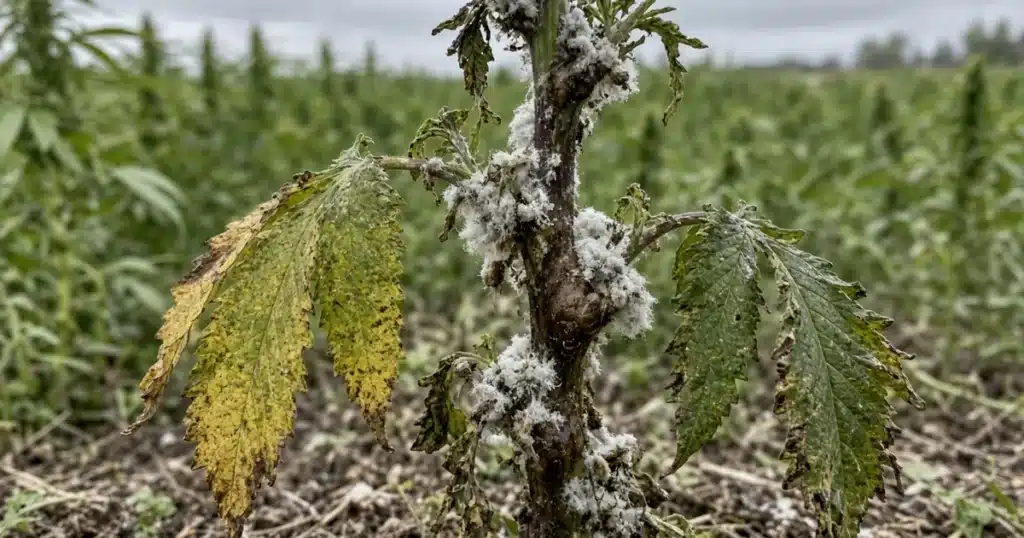
White mold on cannabis, or hemp canker, is caused by the fungus Sclerotinia sclerotiorum. It starts as water-soaked spots, then fluffy white growth on stems and buds, with hard black sclerotia that survive in soil. To limit it, growers improve air circulation, keep leaves drier, remove infected parts and rotate away from susceptible crops for years.
What Is White Mold?
The PNW Plant Disease Management Handbook lists white mold, also called hemp canker, as a disease of hemp caused by Sclerotinia sclerotiorum (PNW Handbooks). Cornell notes that this pathogen attacks over 360 plant species and that hemp is among the crops it infects in New York (Cornell). For other fungal problems, see our overview of pathogenic mold.
How Do You Recognize White Mold on Cannabis Stems?
PNW describes water-soaked lesions on leaves and buds as the first symptom. Stems and buds may look whitish from fluffy white mycelium, and infected buds often carry sclerotia that start white and turn black (PNW Handbooks). Purdue saw browning of leaves and flower tissue with fluffy white growth along stems in a hemp trial, where day-neutral cultivars with dense flowers were most affected (Purdue). Ontario specialists describe powdery mildew as a fungus that grows mostly on the leaf surface (OMAFRA), and our powdery mildew guide covers it.
Rotation away from susceptible crops for white mold
Sources: PNW Handbooks (hemp) and Cornell Vegetables (vegetables and hemp).
| Guidance | Years | Source |
|---|---|---|
| Reduce sclerotia population | At least 2 | PNW Handbooks |
| Recommended rotation | At least 3 | Cornell |
| Best control | 8 | PNW Handbooks |
Why Does White Mold Come Back in the Same Soil?
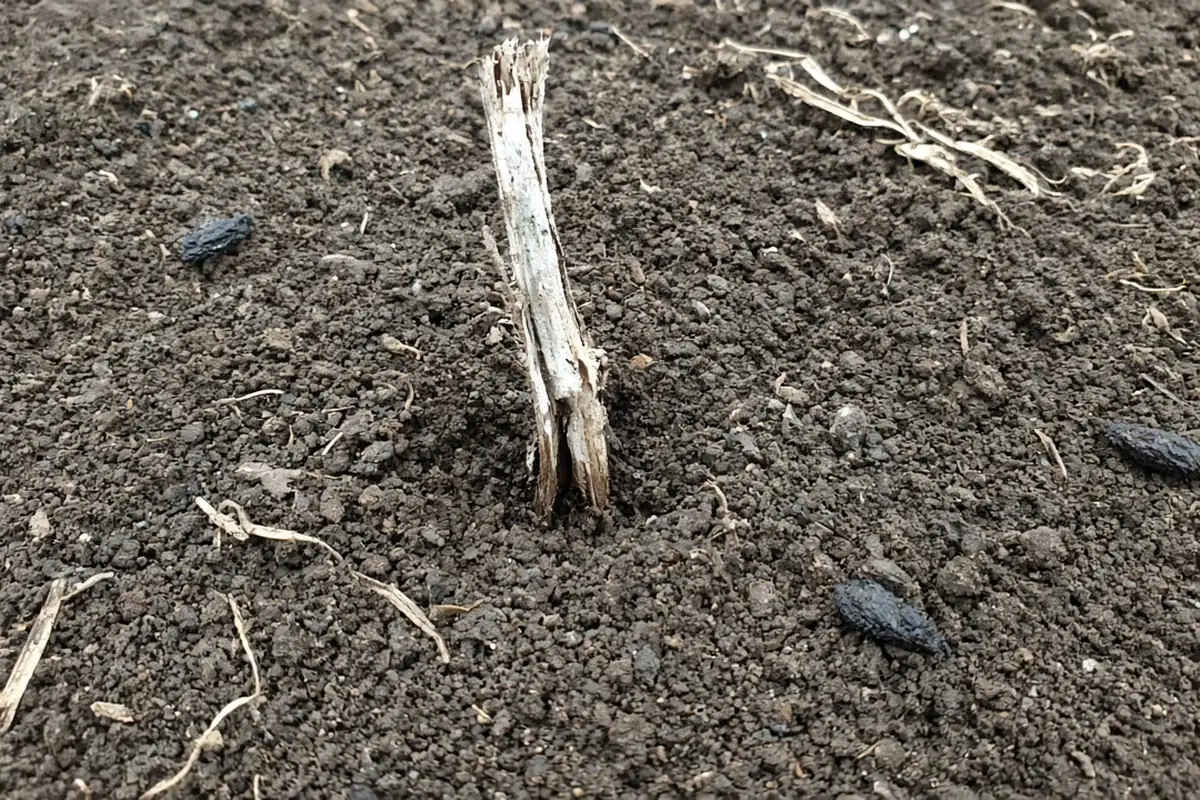
Cornell explains that sclerotia, about 2 to 20 mm long, survive dormant in or on the soil over winter. In wet conditions they form small trumpet-shaped structures that release spores (Cornell). Cornell recommends a rotation of at least three years out of susceptible crops, because sclerotia can stay dormant for long periods.
How Do Growers Limit White Mold?
PNW lists cultural steps for hemp: improve air circulation, minimize leaf wetness, remove and destroy infected parts, and rotate with non-hosts for at least two years, with eight years for best control. Grasses and cereals are not affected (PNW Handbooks). Cornell adds that excess nitrogen promotes dense canopies that hold moisture (Cornell). For outdoor site choice, see where to grow outdoors. Check the product label and local rules for your crop.
If you are planning next year’s outdoor plot, our outdoor seeds are a place to start.
Sources
Some sources below studied hemp or other crops rather than drug-type cannabis, and their findings are reported as results for those crops.
- PNW Handbooks: Hemp White Mold (Hemp Canker)
- Cornell Vegetables: White Mold Fact Sheet
- Purdue Pest&Crop: Multiple Diseases Found on Hemp
- OMAFRA ONspecialtycrops: Downy Mildew Identified on Hemp in Southwestern Ontario
Kind Seed Co shares this white mold guide as general growing information built on the sources above.
FAQ
What are sclerotia?
Sclerotia are hard survival structures made by the white mold fungus. Cornell describes them as large, black, seedlike bodies about 2 to 20 mm long that form on and inside diseased tissue. PNW notes they start white and turn black as they mature. Finding them on stems or buds helps confirm white mold.
Can white mold spread from vegetable crops to hemp?
The same fungus has a very wide host range. Cornell reports that Sclerotinia sclerotiorum attacks more than 360 plant species, including beans, cabbage, lettuce, tomato, soybean and hemp. Cornell adds that sclerotia survive in or on the soil over winter, so the fungus can carry over from one season to the next.
Does crop rotation help with white mold?
Yes, but it takes time. PNW advises rotating hemp with non-hosts for at least two years to reduce sclerotia and for eight years for best control, noting that grasses and cereals are not affected. Cornell recommends at least three years out of susceptible crops because sclerotia stay dormant for long periods.
Is white mold the same as powdery mildew?
No. White mold is caused by Sclerotinia sclerotiorum and shows as water-soaked lesions, fluffy white growth on stems and buds, and black sclerotia, according to PNW. Powdery mildew is a different fungus that grows mostly on the leaf surface, as Ontario specialists describe when comparing it with downy mildew.


