
Worm Castings for Cannabis: How to Use Them
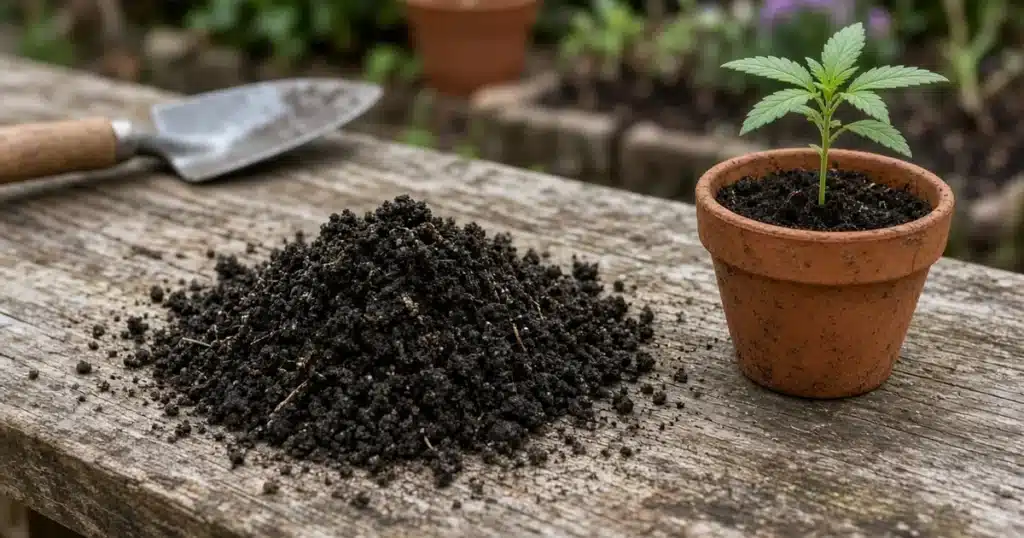
Worm castings, studied as vermicompost, are an organic fertilizer. There is not much cannabis research on them yet. Latvian field studies in ETR proceedings found better hemp growth and higher stem and seed yields with vermicompost, while a small US pilot study that used vermicompost only as a seed inoculation found no change in germination or plant height.
What Are Worm Castings?
Researchers usually call worm castings vermicompost. A Latvian team describes it as an organic fertilizer that has drawn particular attention in recent decades, and as a way to replace synthetic fertilizer with organic inputs (ETR proceedings). The vermicompost in their trials was made from composted cow manure with grass biomass added. Products differ, so what you buy may not match the material studied.
What Have Studies Found on Cannabis and Hemp?
In two field studies in 2017 and 2018, the Latvian team grew a local hemp cultivar with vermicompost. Hemp growth improved by 40 to 60% at 5 and 10 tonnes per hectare, stem yield rose by about 40% on average, and seed yield climbed from 1.00 t/ha without vermicompost to 1.56 t/ha at 20 t/ha (ETR proceedings). Leaf chlorophyll also increased. These are field hemp results. A US pilot study took a different approach. It coated CBD-rich hemp seed with vermicompost rather than adding it to the soil and found no significant differences in germination rate or plant height. The authors called their other results preliminary and said more study is needed (Boyer et al. 2023).

Source: ETR proceedings, Latvian field studies on a seed and fiber hemp cultivar, 2017 and 2018. A field hemp result, not a cannabis grow result.
Data for this chart:
| Treatment | Seed yield (t/ha) |
|---|---|
| No vermicompost | 1.00 |
| 20 t/ha vermicompost | 1.56 |
How Do Growers Use Worm Castings?
Mixing castings into potting soil or garden beds before planting, or spreading a thin layer on top of the soil later, is grower practice. None of the studies here tested those methods in cannabis. If you buy a bagged product, follow its directions. Follow the directions on the bag and any local rules for your garden. For other organic options, see our post on living soil, and if you want to build a rich mix, our guide to making super soil.
Worm Castings vs Compost: What Is the Difference?
The studies here do not compare worm castings with ordinary compost. The Latvian vermicompost started as composted cow manure, which shows how close the two can be (ETR proceedings). A 2025 review of growing media for indoor cannabis covers rockwool, coir, peat blends, perlite, vermiculite, expanded clay, foamed glass, phenolic foam and biochar, and points to research gaps (Agriculture 2025 review). For outdoor compost options, see our guide to the best fertilizer and compost for growing outdoors.
Building up a garden bed for this season? Our outdoor seeds suit that kind of plot.
Sources
Some sources below studied hemp or other crops rather than drug-type cannabis, and their findings are reported as results for those crops.
- Environment. Technology. Resources proceedings: Vermicompost Doses on Hemp in Two Field Studies (Latvia)
- Boyer, Wagner and Drewery 2023, Journal of Agricultural Hemp Research: Mycorrhizae and Vermicompost Seed Inoculation of CBD-Rich Hemp (pilot study)
- Agriculture 2025 Review: Soilless Growing Media for Cannabis Cultivation
The hemp studies and review above underpin this page, which Kind Seed Co means only as general growing information.
FAQ
What was the vermicompost in the Latvian hemp studies made from?
The Latvian researchers used a certified vermicompost made from composted cow manure with grass biomass added. They tested it on a local hemp cultivar in two field studies in 2017 and 2018. Bagged worm castings vary in what they start from, so a product you buy may differ from this one.
What did a pilot study find with vermicompost seed inoculation in hemp?
A small US pilot study coated CBD-rich hemp seed with vermicompost instead of mixing it into soil. It found no significant differences in germination rate or plant height compared with untreated seed. The authors described their other results as preliminary and said more research is needed before advising growers.
Can you use too much worm castings?
The studies here did not test rates above 20 tonnes per hectare, so they cannot say where harm starts. In the Latvian field trials, that highest dose gave the highest hemp seed yield, 1.56 t/ha. Those are field rates for hemp, not container rates, so they do not tell you how much to add to a pot.
Is there research on worm castings in indoor cannabis?
Very little. A 2025 review of soilless growing media for indoor cannabis covered rockwool, coir, peat blends, perlite, vermiculite, expanded clay, foamed glass, phenolic foam and biochar. Vermicompost was not among them, and the review called for more research on sustainable growing media.


