
Cal-Mag for Cannabis: When Growers Use It
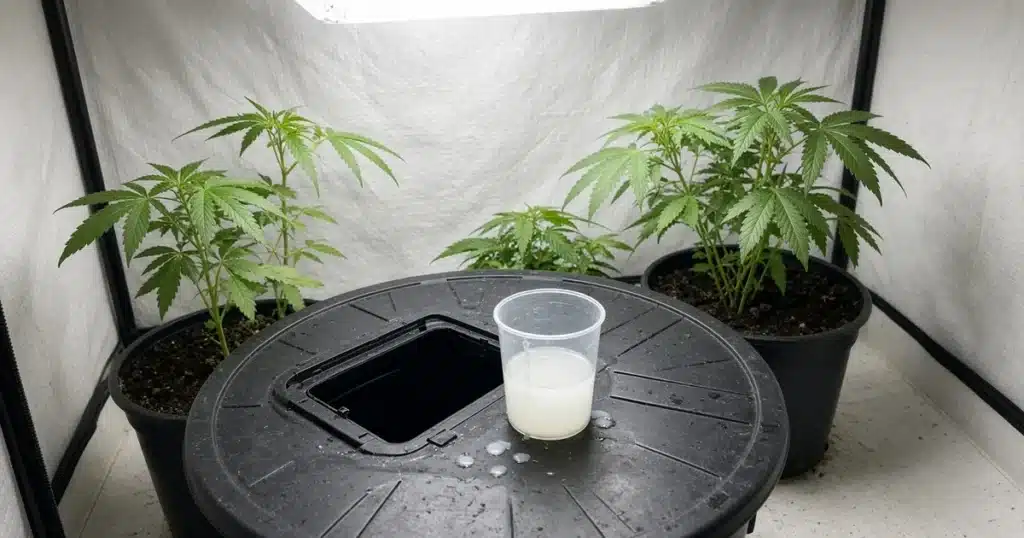
Cal-Mag is a supplement that adds calcium and magnesium to a feed. Growers often add it when growing in coco coir, which is grower practice rather than a tested rule. Magnesium research shows why the dose matters. In one study of vegetative plants, too little held cannabis back, while more of it cut calcium uptake.
What Is Cal-Mag?
Cal-Mag products supply calcium and magnesium, two positively charged nutrients. UGA Extension notes that calcium and magnesium are macronutrients, and that ions with the same charge can compete with each other (UGA). Magnesium is needed for major physiological and metabolic processes in plants, according to Morad and Bernstein (Morad and Bernstein 2023).
Why Do Coco Growers Use It?
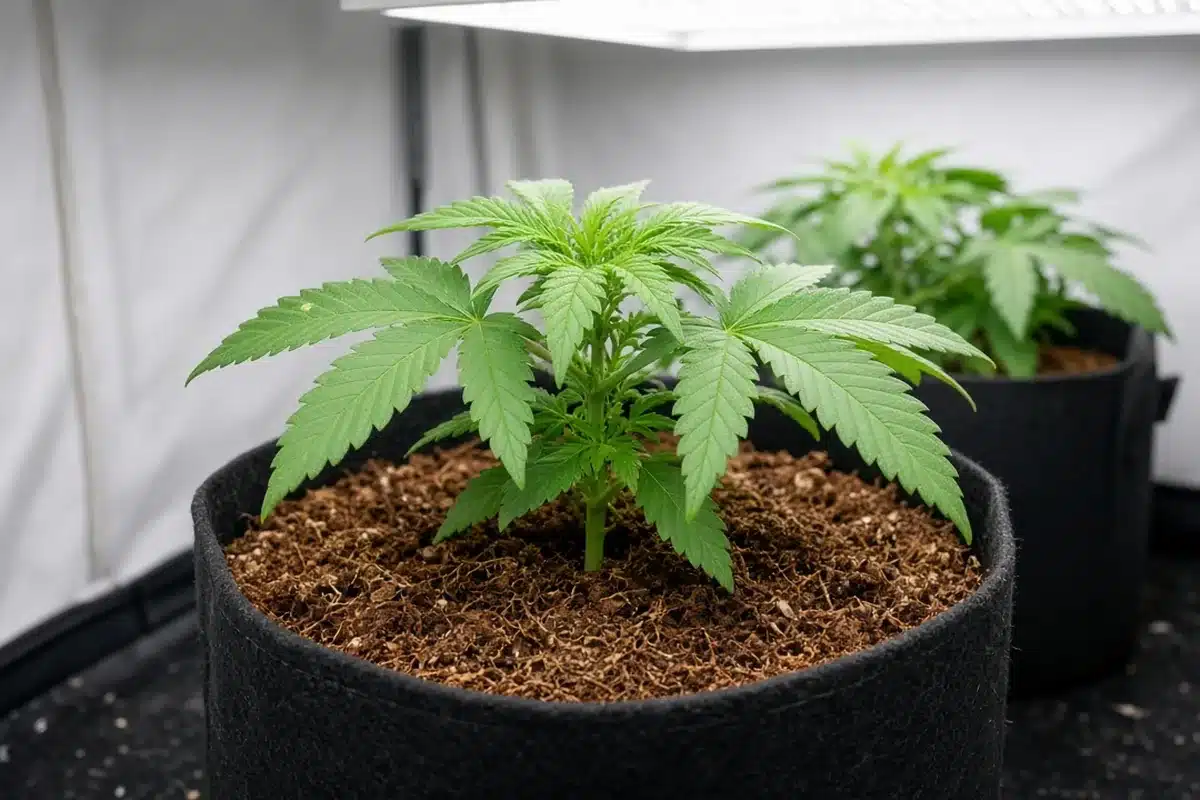
Adding Cal-Mag in coco coir is common grower practice, not a finding from a controlled cannabis trial. A 2025 review of soilless media for indoor cannabis lists coconut coir as a growing alternative to rockwool and says traits such as nutrient buffering influence growth and resource use (Agriculture 2025 review). In one cannabis study, cuttings were rooted in coconut fiber plugs and fed a complete solution that already contained calcium and magnesium (Saloner and Bernstein 2020). For more on the medium, see our guide to coco coir for cannabis.
Source: Morad and Bernstein 2023, medical cannabis in pots at the vegetative stage. Study conditions, not a feeding rate.
Cannabis growth response to magnesium supply (Morad and Bernstein 2023)
| Magnesium supply | Response in the study |
|---|---|
| 2 to 20 mg/L | Impaired development (2 mg/L: deficiency symptoms, 28% less biomass) |
| 35 to 70 mg/L | Optimal development |
| 140 mg/L | Small decrease in physiological function, no effect on biomass |
What Do Studies Say About Magnesium and Nitrogen Supply?
Morad and Bernstein grew medical cannabis in pots at five magnesium levels, from 2 to 140 mg/L. Growth was best at 35 to 70 mg/L. At 2 mg/L, plants showed deficiency symptoms and made 28% less biomass than at 35 mg/L. At 140 mg/L, function dipped slightly. Higher magnesium also reduced calcium and potassium uptake (Morad and Bernstein 2023). Saloner and Bernstein studied nitrogen, not Cal-Mag, and found calcium and magnesium built up most in the leaves (Saloner and Bernstein 2020). These are study conditions, not feeding advice.
What Should You Check Before Adding Cal-Mag?
Start by confirming the problem. Our guides to calcium deficiency and magnesium deficiency cover the symptoms. Next, check pH, because Purdue Extension says substrate pH affects nutrient availability and that all nutrients are readily available at pH 5.4 to 6.2 in soilless substrates (Purdue HO-237). Then follow the supplement’s directions. The label and your local rules come first with any feed product.
Sources
- Morad and Bernstein 2023, Plants: Response of Medical Cannabis to Magnesium Supply
- Saloner and Bernstein 2020, Frontiers in Plant Science: Response of Medical Cannabis to Nitrogen Supply
- Agriculture 2025 Review: Soilless Growing Media for Cannabis Cultivation
- UGA Extension B1256: Essential pH Management in Greenhouse Crops
- Purdue Extension HO-237: pH and EC Measurements in Soilless Substrates
Kind Seed Co keeps these Cal-Mag notes to general growing information, and the studies above are the ground they stand on.
FAQ
Can too much magnesium reduce calcium uptake?
Yes, in the cannabis study cited here. Morad and Bernstein found that raising magnesium supply impaired the uptake of calcium and potassium and their movement from roots to shoots. They describe this as competitive cation inhibition. Their best growth came at 35 to 70 mg/L magnesium.
Does nitrogen supply affect calcium in leaves?
Saloner and Bernstein studied nitrogen supply in medical cannabis, not Cal-Mag. They found calcium and magnesium responded in a similar way to nitrogen and built up mostly in the leaves, then the roots, then the stem. Their best growth came at 160 mg/L nitrogen during the vegetative phase.
Why does coco coir affect calcium and magnesium?
The research here does not measure it directly. A 2025 review of soilless media for cannabis says substrate traits such as nutrient buffering influence growth and resource use, and it lists coir among the main media. The review does not link this to Cal-Mag, so adding it in coco remains grower practice.
Should you check pH before adding Cal-Mag?
It helps. Purdue Extension says the pH of a growing substrate affects nutrient availability, and that all nutrients are readily available at pH 5.4 to 6.2 in soilless media. Checking pH first rules out one possible cause before you add more of anything to the feed.


