10 Interesting Facts About Growing Indica Cannabis

Many varieties sold as indica are linked to the Hindu Kush mountains of Afghanistan and Pakistan. As a grower term, indica usually means shorter, bushier plants with broad leaves and dense buds, which shapes how you train, feed and dry them.
Cannabis classification varies among taxonomists. This article uses indica as a common grower and market term, not a distinct effect category.
Where does indica grow naturally?
Some varieties commonly labeled indica are associated with the Hindu Kush region of Afghanistan and Pakistan, but the label does not prove a plant’s exact origin.
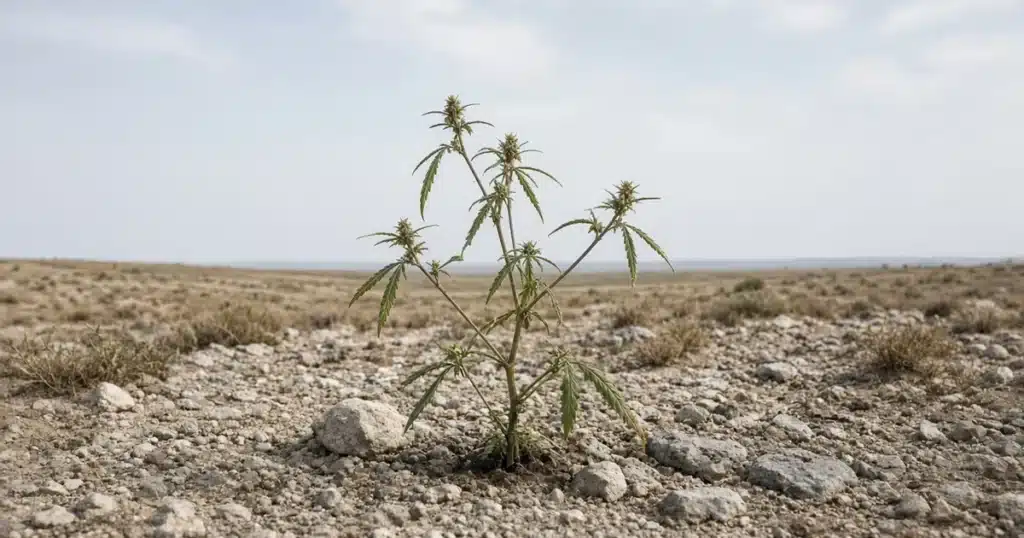
A peer reviewed review by McPartland and Small describes the wild relatives of these plants in the mountain ranges of Central and South Asia, including the Hindu Kush, Karakoram, Pamir and Himalaya. A common grower view is that plants from these regions adapted to cool nights, short summers and harsh mountain weather. That history helps explain the traits growers link with indica today: a compact frame, broad leaves and a quicker finish before cold weather arrives.
Keep in mind that most cannabis sold today is a hybrid of many lines. A seed labeled indica tells you which way it leans in shape and growth, not where every part of its family tree came from. Most current taxonomy treats these plants as one species, Cannabis sativa, with indica as a useful shorthand rather than a separate species.
Indica is also not the same thing as marijuana or hemp. UF/IFAS Extension explains that the difference between hemp and marijuana comes down to THC content, with hemp under federal law having 0.3 percent or less delta 9 THC on a dry weight basis.
10 facts about growing indica
Fact 1: Indicas tend to stay shorter and sturdier
Plants sold as indica leaning usually grow compact and sturdy instead of tall and stretchy. That is why many indoor growers start with them. Tents and closets handle bushy plants more easily than tall ones. Exact height depends on the strain, pot size and training, so check the listing.
Fact 2: Broad, dark leaves and tight buds are common signs
Wide, dark green fan leaves and tightly packed flowers are the classic indica look. These signs do not guarantee every trait on a seed label, but they are the shorthand most growers use.
Fact 3: Flowering often finishes sooner
Many indica leaning strains finish flowering sooner than long running sativas. A faster finish helps outdoor growers with short seasons and indoor growers who want more runs a year. Check each strain listing for its flowering time.
Fact 4: They handle cool nights well
A common grower view is that their mountain history helps many indica lines handle a gentle drop in night temperature. Steady swings are better than sharp cold shocks, so protect outdoor plants from harsh weather even when nights run cool.
Fact 5: Dense buds raise mold risk
Thick, resin heavy indica buds look great, but they can trap moisture. In damp rooms with poor airflow, mold risk goes up. Keep air moving, keep humidity in check and thin the canopy so thick buds can dry out.
Fact 6: Strain choice depends on your climate, space and goals
Not every indica grows the same. Match the strain to your climate and tent height. Two indica leaning Kind Seed Co options are Northern Lights 10 Photo Fem and Master Kush Photo Fem. Use the full strain name when you order, since similar versions exist.
Fact 7: Indoors suits them, outdoors works with protection
Indoor rooms play to indica strengths: limited height, steady climate and easy training. Outdoors, cooler climates can work when you shield plants from wind, cold snaps and late season rain.
Fact 8: Flowering plants need different feeding
Once buds set, many growers shift to feeds with lower nitrogen and more phosphorus and potassium. Heavy buds may need stakes or a trellis so branches do not bend or snap. Steady watering, not too much, still matters.
Fact 9: Harvest by trichomes
Many growers harvest when trichomes look mostly cloudy with some amber, though timing varies by strain and preference. Then dry slowly and cure in jars. See https://kindseed.com/top-10-tips-for-curing-and-storing-cannabis-flowers/.
Fact 10: Pests and quality checks still matter
Indica grows still face spider mites, mold, nutrient problems and pH drift. Check your plants often and keep humidity steady during the cure.
Putting the ten facts to work
Try using the list as a season checklist. In veg, lean on Facts 1, 2 and 7: keep height in check, give bushy plants room to breathe and decide early whether you will grow indoors or out. As the stretch after flipping ends, Facts 3, 4 and 8 matter most. Watch your flip timing, keep night temperatures gentle and shift feeding toward flower support, staking branches before buds get heavy.
Late flower is where Facts 5 and 9 save harvests: airflow, steady humidity, then a patient look at the trichomes. After harvest, the habits in Fact 10 turn one good run into something you can repeat.
A note on effects
Many growers say indica leaning strains feel relaxing, but effects vary by strain and by person. The indica label describes how a plant grows, not a promise of how it will feel, so read each strain’s own description.
How to grow an indica indoors, step by step
- Pick a strain sold as indica leaning and check its listed height and flowering time. Choose one that fits your space with room to grow.
- Keep plants short with topping or low stress training during veg.
- Flip a photoperiod plant to 12 hours of light when it fills about half the space. This is a grower rule of thumb, not a fixed rule.
- Keep the room from getting humid in late flower, because indica buds grow dense.
- Thin crowded inner leaves so air moves through the canopy. See https://kindseed.com/a-guide-to-cannabis-defoliation/.
- Harvest when trichomes look mostly cloudy, then dry slowly in a cool, dim room until small stems snap and move the buds to jars.
Indoors, a photoperiod plant stays in veg until you change the light. Utah State University Extension notes that cannabis is a short day plant, which means it needs longer periods of darkness than daylight to flower. Indica plants can stretch when you flip to 12 hours, which is why step 3 leaves room above the canopy.
Only female flowers are the crop you want. UC Davis Hemp explains that unpollinated female flowers are the target, so keep male plants and stray pollen away from your grow. Feminized seeds make this much easier.
Troubleshooting
| Sign | Likely cause | What to do |
|---|---|---|
| Gray fuzz inside a dense bud | Bud rot from high humidity | Remove the bud, lower humidity, add airflow |
| Plant outgrows the tent | Flipped too late | Flip earlier next run and top in veg |
| Yellow lower leaves in flower | Normal fade or low nitrogen | Check feed, a little fade late in flower is normal |
| Foxtailing buds | Heat or light too close | Raise the light and lower temperature |
Bud rot is the classic indica problem to watch for. It often starts deep inside a thick bud where you cannot see it, so gently check the biggest buds in late flower. If you find gray fuzz or brown, mushy spots, cut that bud away with clean scissors and remove it from the room. Do not consume moldy buds.
For more growing guides, see https://kindseed.com/seed-bank-blog/.
Sources: McPartland and Small, PMC7148385 (https://pmc.ncbi.nlm.nih.gov/articles/PMC7148385/). Utah State University Extension (https://extension.usu.edu/crops/research/ten-frequently-asked-questions-about-growing-cannabis). UC Davis Hemp, Hemp Sex Ed (https://hemp.ucdavis.edu/sites/g/files/dgvnsk12601/files/media/documents/Hemp%20Sex%20Ed.pdf). UF/IFAS Extension AG459 (https://ask.ifas.ufl.edu/publication/AG459/pdf). ILGM and Royal Queen Seeds grow guides.
FAQ
How tall do indica cannabis plants usually get?
Many indica leaning plants stay compact with a sturdy, bushy frame, which is one reason they suit indoor tents. Exact height depends on the strain, pot size and training, so check the strain listing.
How long do indica plants take to flower?
Many indica leaning strains finish flowering sooner than long running sativas. Always check the product page for the strain you planted.
Which indica strains does Kind Seed Co highlight here?
This guide highlights Northern Lights 10 Photo Fem and Master Kush Photo Fem. Other Northern Lights or Master Kush variants exist, so order the exact form you want.
Where does indica grow naturally?
Some varieties commonly labeled indica are associated with the Hindu Kush region of Afghanistan and Pakistan. Wild relatives grow in mountain ranges of Central and South Asia, but the label does not prove a plant's exact origin.
Is indica a separate species?
Not in most current taxonomy. Cannabis classification varies among taxonomists, and most treat indica plants as Cannabis sativa. Growers and shops use indica as a common term for shorter, bushier plants.
How do I prevent mold in dense indica buds?
Keep humidity from climbing in late flower, keep air moving through the canopy and thin crowded inner leaves. Check the biggest buds often, and remove any bud with gray fuzz right away.