Air Conditioning a Grow Room: Portable vs Mini Split
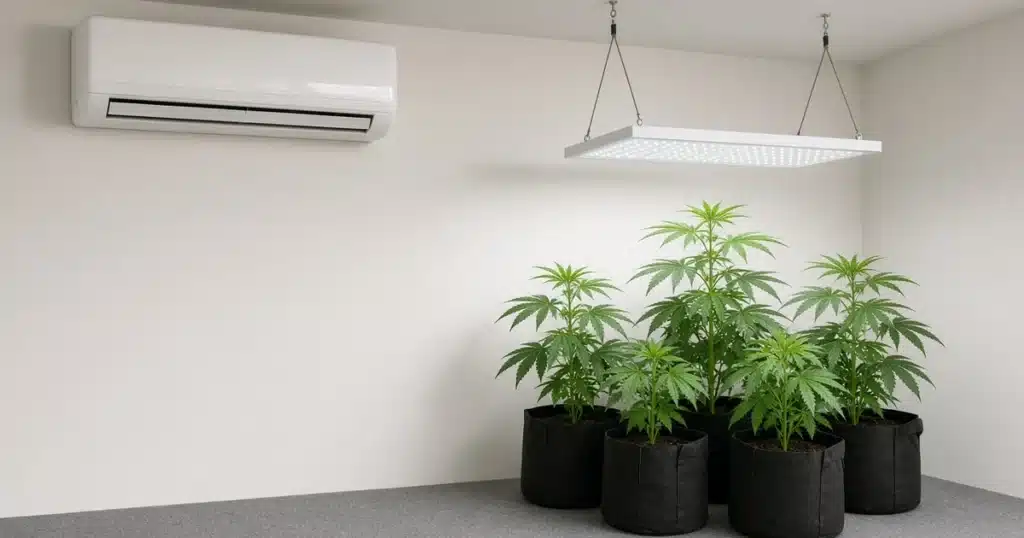
Quick answer: A room air conditioner, such as a portable or window unit, costs less up front and suits a small space or a short term fix. A ductless mini split costs more to install, runs quieter indoors and can both heat and cool. Either way, size the unit to the real cooling load, which includes the heat your grow lights give off. University of Florida Extension notes that a unit sized close to its load controls humidity better than an oversized one, and that matters as much as temperature in a grow room.
Does a Grow Room Need Air Conditioning?
Only when fans and room air cannot carry the heat away. Lights, fans, pumps and dehumidifiers all add heat. In a closed room during summer, exhaust air may already be as warm as the air you want to replace. That is the point where a cooling unit starts to make sense.
The University of Florida IFAS fact sheet on air conditioning says a proper load calculation counts the heat given off by lights, people and equipment inside the building, not just square footage. In a house, that heat barely registers. In a grow room, the lights are often the biggest single heat source in the space.
If you are still choosing targets, start with our grow room climate guide. Pick your numbers first and choose equipment that can hold them after.
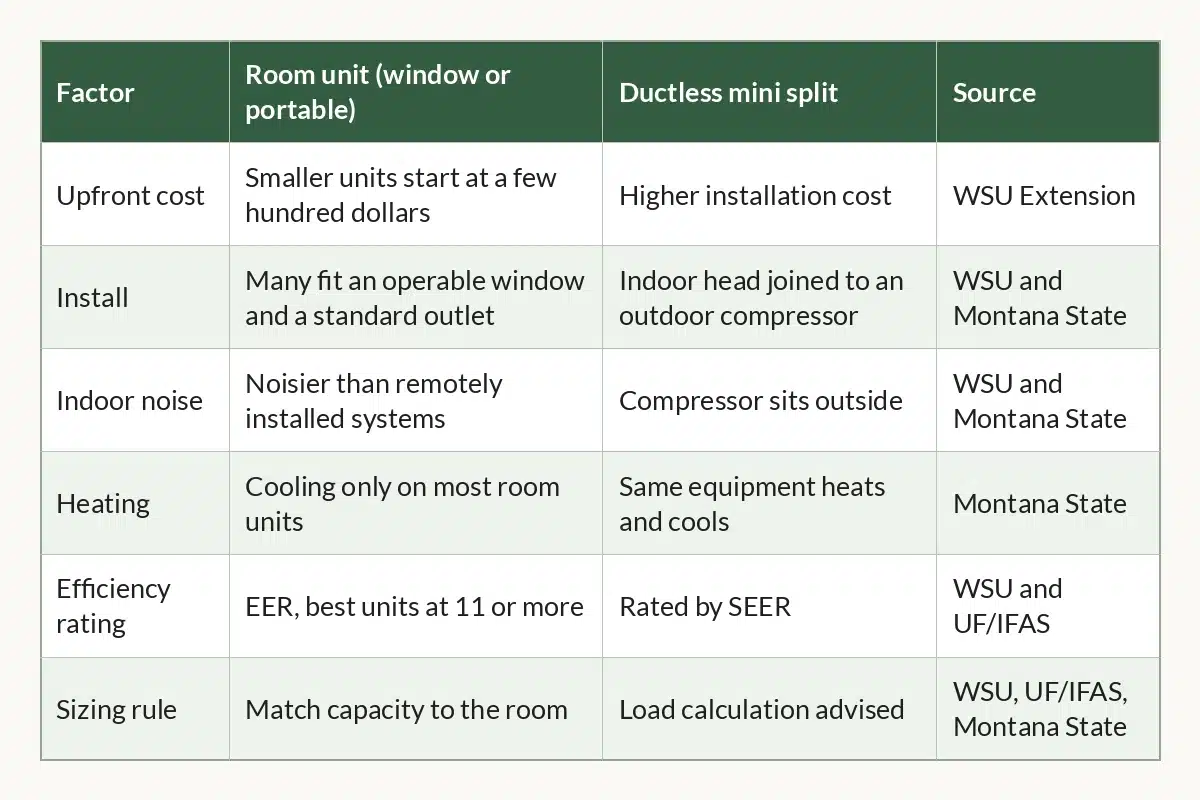
Room Unit or Mini Split at a Glance
| Factor | Room unit (window or portable) | Ductless mini split | Source |
|---|---|---|---|
| Upfront cost | Smaller units start at a few hundred dollars | Higher installation cost | WSU Extension |
| Install | Many fit an operable window and a standard outlet | Indoor head joined to an outdoor compressor | WSU and Montana State |
| Indoor noise | Noisier than remotely installed systems | Compressor sits outside | WSU and Montana State |
| Heating | Cooling only on most room units | Same equipment heats and cools | Montana State |
| Efficiency rating | EER, best units at 11 or more | Rated by SEER | WSU and UF/IFAS |
| Sizing rule | Match capacity to the room | Load calculation advised | WSU, UF/IFAS, Montana State |
How Do Portable and Window Units Compare?
They are the cheaper, faster option. The Washington State University Extension fact sheet on energy efficient home cooling says a room air conditioner may be the most economical choice when you only need to cool one to three rooms. It lists easy installation, no duct system and lower purchase cost among the pros. Smaller window units fit most operable windows and run on existing outlets, while larger models may need a dedicated 240 volt circuit.
The same fact sheet is frank about the downsides. Room units are noisier than systems with a remote compressor. Their average efficiency is lower than central units, and many lack programmable controls. Window units block light and views, which matters less in a sealed grow room than in a bedroom. A portable or window unit can also move with you, which suits renters and anyone testing whether a grow room will become permanent.
WSU rates room units by EER, the BTU per hour of cooling delivered for each watt of electricity. It reports that the best models reach an EER of 11 or more, and that an EER 11 unit uses 37 percent less energy than a new unit at EER 8. In a space where lights and fans run long hours, that gap adds up.
The WSU example is a window unit, and the fact sheet does not test portable floor models, so compare any portable unit by the EER or efficiency rating on its own label.
How Does a Ductless Mini Split Work?
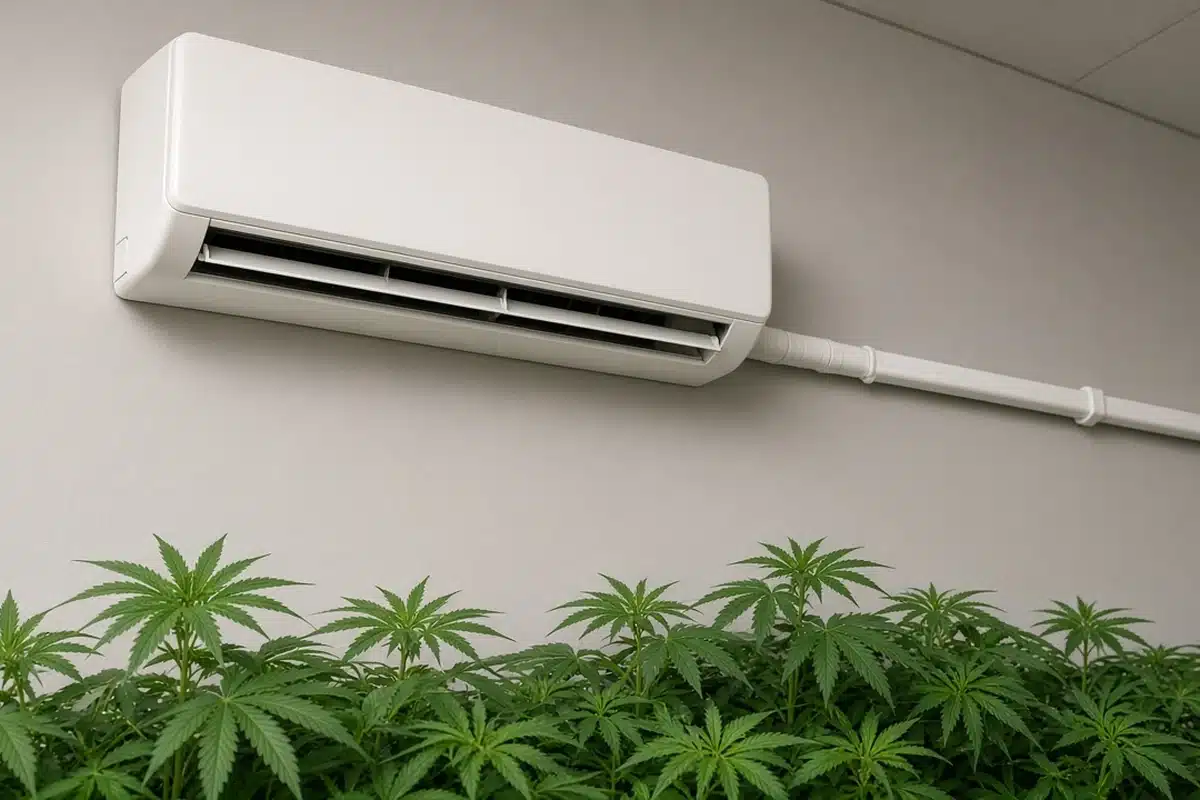
A mini split moves heat rather than making cold. The Montana State University Extension article on heat pumps and mini splits explains that a heat pump circulates refrigerant in a closed loop between inside and outside, and simply reverses direction to switch from heating to cooling.
Montana State describes the small systems as a wall mounted indoor unit with a fan, connected to a compressor outside, with no central air needed. That design suits one room or a small area that needs its own control. Growers mostly want it for a quieter indoor head and one machine that can heat in winter and cool in summer.
Installation is the catch. Montana State notes that do it yourself kits are growing more popular, but most rebates require a licensed contractor, and major repairs need special skills and tools. WSU adds that ductless systems cost more than ducted ones where ducts already exist. Many renters cannot mount an outdoor unit at all, which pushes them toward a room unit. Writing for Montana homeowners, Montana State also points out that older homes with air leaks and thin insulation may struggle to hold temperature with heat pumps alone, and that sealing and insulation can sharply cut how much heating and cooling a space needs. A grow room built inside a drafty garage faces the same problem on a smaller scale.
How Big Should a Grow Room Air Conditioner Be?
Big enough for the real load and no bigger. WSU puts it bluntly: bigger is not better. It explains that an oversized unit short cycles, turning on and off in short bursts, so the indoor coil never chills enough to draw much moisture out of the air. The room ends up cold and clammy.
UF/IFAS makes the same case from the other side. It says sizing close to the actual load gives better humidity control, because the coil spends more of its run time at its coldest point, letting more condensate form and drain away. It adds that fewer starts and stops may also extend equipment life.
- Add up every watt in the room. Lights, fans, pumps and dehumidifiers all count, because UF/IFAS lists equipment heat as part of a proper load.
- Note the room’s size and exposure. WSU’s sizing table starts at 5,000 BTU per hour for 100 to 150 square feet of living space.
- Adjust for sun and shade. WSU suggests 10 percent more capacity for a very sunny room and 10 percent less for a heavily shaded one.
- Remember the light load. A household sizing table assumes ordinary rooms. A room full of grow lights needs more than the table shows.
- Get a load calculation for a mini split. Montana State and UF/IFAS both recommend a professional estimate before you buy.
- Check the circuit. WSU notes that larger room units may need a dedicated 240 volt circuit.
Exhaust fans still matter once the air conditioner is in. If you run both, our guide to sizing an inline fan by CFM helps you avoid pulling cooled air straight outside.
Can an Air Conditioner Replace a Dehumidifier?
Partly, and only while it runs. UF/IFAS explains that moisture comes out of the air when the coil is at its coldest and condensate forms and drains away. A right sized unit that runs long cycles does real drying work.
That stops working when there is little cooling to do. At lights off, the room cools, the air conditioner rests and plants keep giving off water. That is when many grow rooms need separate moisture control. The same thing happens on mild days, when the room is only a little too warm and the unit runs in short bursts. In both cases plants keep adding water vapor while the coil sits idle. Our dehumidifier guide for grow rooms covers sizing and placement for that job.
Troubleshooting Grow Room Cooling Problems
The room feels cold and damp. The unit is likely oversized and short cycling, as WSU and UF/IFAS describe. Raise the setpoint slightly or consider a smaller unit next time.
The unit runs nonstop and the room stays hot. It is undersized for the true load. Recount your light and equipment watts, since UF/IFAS counts them in the load.
The bill jumped after you added cooling. Check the EER or SEER label. WSU notes that efficiency ratings vary widely between models.
The breaker trips when the unit starts. Larger room units may need a dedicated 240 volt circuit, WSU says. Have an electrician check the load before you add more equipment.
It is too loud to work near. WSU lists noise as a room unit drawback. A mini split puts its compressor outside, as Montana State describes.
Sources
- University of Florida IFAS Extension, Energy Efficient Homes, Air Conditioning (FCS3262): https://ask.ifas.ufl.edu/publication/FY1026
- Washington State University Extension, Energy Efficient Home Cooling: https://wpcdn.web.wsu.edu/cahnrs/uploads/sites/60/2026/04/ARCHIVE_AHT_Energy-Efficient-Home-Cooling.pdf
- Montana State University Extension, Heat Pumps and Mini Splits: https://www.montana.edu/extension/lila_extn/lila_fall_24/HeatPumpsAndMiniSplits.html
FAQ
Is a portable air conditioner enough to cool a tent?
It can be for a small tent with modest lights. The Extension fact sheets do not test portable models, so compare the efficiency label and size it to your heat load.
Is a mini split worth the cost?
For a permanent room that runs year round, it often makes sense. Montana State notes the same equipment both heats and cools.
Should I oversize my air conditioner to be safe?
No. WSU and UF/IFAS both warn that oversized units short cycle and remove less moisture.
Do I need an electrician?
For a mini split, Montana State says most rebates require a licensed contractor. Larger room units may need a dedicated 240 volt circuit.
What does EER mean?
WSU defines it as the BTU per hour of cooling delivered for each watt of electricity used. A higher number means a more efficient unit.