Heating a Grow Tent in Winter Safely
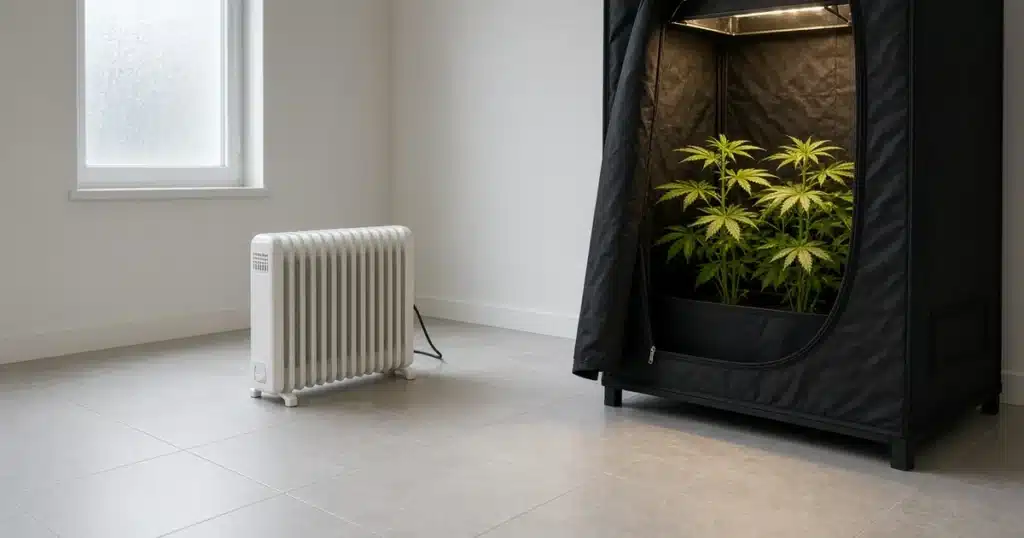
Quick answer: The safest way to heat a grow tent in winter is to warm the room around it with a small electric heater that has a thermostat, an automatic shutoff and a tip switch. Set it on a hard, level surface, keep it at least three feet from the tent and anything that can catch fire, and plug it straight into a wall outlet. Never run a heater that relies on combustion inside a tent. Space heater rules from West Virginia University Extension and University of Minnesota Morris facilities staff back each of these steps, and UMass Extension explains why unvented combustion heaters cause trouble in closed growing spaces.
Why Does a Grow Tent Get Too Cold in Winter?
A tent is a thin fabric box sitting in whatever room you put it in. When the lights are on, they add heat. When they switch off, that heat source disappears and the tent drifts toward the temperature of the room. In an unheated basement, garage or spare room, the drop can be sharp.
Exhaust fans make the drop worse because they keep pulling in cold room air. So the tent is often coldest in the hours before lights on, which is exactly when most growers are asleep. Check readings at that point first. Our grow room climate guide covers the day and night ranges to aim for, so you know how big the gap really is.
Small plants feel the cold most at the root zone. If only seedlings are struggling, a heat mat under the tray may be all you need, and our guide to seedling heat mats for cannabis explains how to use one with a thermostat.
What Kind of Heater Is Safe Near a Grow Tent?
A portable electric heater with built in safety controls. West Virginia University Extension notes that space heaters are a leading cause of home fires from December through February. Its space heater safety guide tells buyers to choose a model with no exposed heating element, plus thermostatic controls and an automatic shutoff. It adds that most new electric models include a tip switch that turns the unit off if it falls over.
The UMN Morris space heater best practices go further and say that space heaters must have tip over protection. The same page calls space heaters a temporary way to supplement heat, not a permanent solution. The lesson carries over to a grow space. If you need a heater every night all winter, a permanent fix such as better room heat may be safer in the long run.
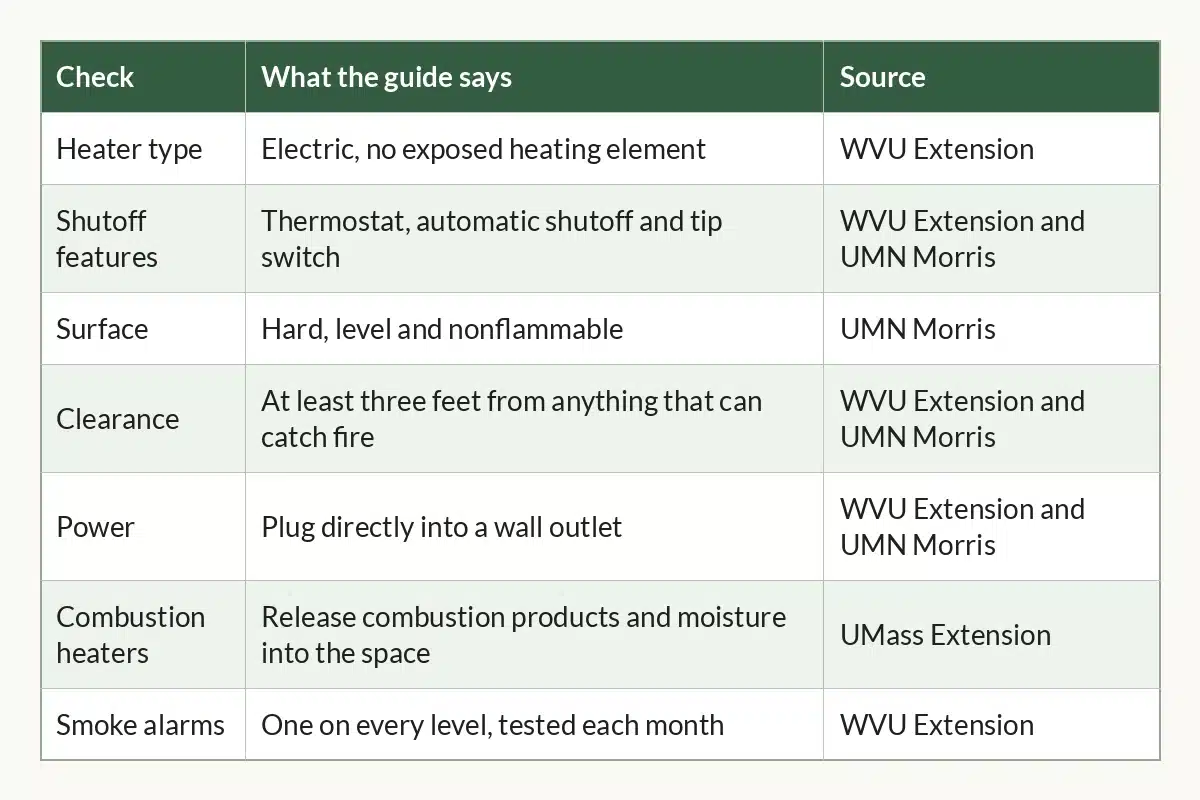
Heater Safety Checks at a Glance
| Check | What the guide says | Source |
|---|---|---|
| Heater type | Electric, no exposed heating element | WVU Extension |
| Shutoff features | Thermostat, automatic shutoff and tip switch | WVU Extension and UMN Morris |
| Surface | Hard, level and nonflammable | UMN Morris |
| Clearance | At least three feet from anything that can catch fire | WVU Extension and UMN Morris |
| Power | Plug directly into a wall outlet | WVU Extension and UMN Morris |
| Combustion heaters | Release combustion products and moisture into the space | UMass Extension |
| Smoke alarms | One on every level, tested each month | WVU Extension |
Heater Safety for Grow Tents
These are the rules that matter most. Every point comes from a university or Extension space heater guide written for homes and campus buildings, not from cannabis research.
Placement and clearance. UMN Morris says to set a heater on a hard, level and nonflammable surface and keep it at least three feet from anything that can catch fire, such as furniture, curtains, clothing and paper. WVU Extension calls the three foot rule the most important one and names objects that can catch fire sitting near the heater as the leading cause of these fires. Tent fabric, reflective film and grow bags all count. Set the heater outside the tent, in the room, with clear floor around it.
Tip over and overheat shutoff. Buy a unit with both. The features to look for, per WVU Extension, are thermostatic controls, automatic shutoff and a tip switch. Tents get bumped during watering, so a tip switch is not optional.
No combustion heaters in a tent. A UMass Extension greenhouse heater fact sheet explains that an unvented heater has no flue, so its combustion products go straight into the growing space along with added moisture. UMass warns that inefficient combustion can release pollutants that affect both plants and the people working with them. A tent is a tiny, closed version of that space. Use electric heat only.
Circuit load and cords. WVU Extension says never to plug a space heater into an extension cord or a multi outlet surge protector, because both are too weak for a high wattage appliance and can start a fire. UMN Morris says the same about power strips and adds that cords should never run under carpets, rugs or floor mats. Plug the heater into its own wall outlet. If lights, fans and a dehumidifier already share that circuit, move the heater to a different one.
Never unattended for long. Falling asleep with a space heater running, or leaving it alone in a room, is something WVU Extension says never to do. UMN Morris says to switch heaters off when you leave for an extended time. If you must heat overnight, do it in a room you can hear and check, with a working smoke alarm nearby.
Smoke alarm. The WVU Extension home fire safety page recommends smoke alarms on every level of the home and outside sleeping areas. It advises testing them monthly, changing batteries once a year and replacing each alarm every ten years. Put one in the room with the tent.
How Do You Set Up Heat Around a Grow Tent?
- Measure the low point first. Log temperatures through a full night so you know how far the tent falls before lights on.
- Warm the room, not the tent interior. A heater in the room keeps its clearance and lets the tent intake draw warmer air.
- Pick an electric model with safety controls. Look for a thermostat, automatic shutoff and tip switch, as WVU Extension advises.
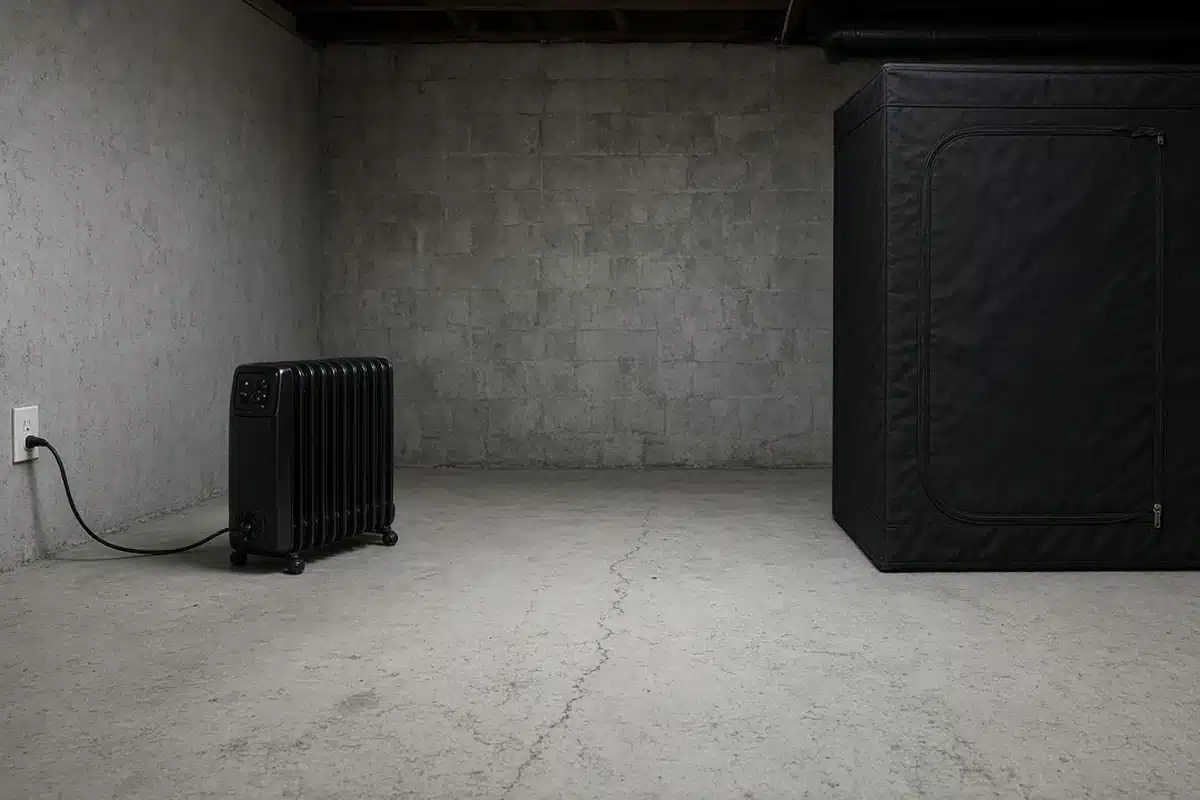
- Set it on a hard, level surface. UMN Morris names hard, level and nonflammable flooring. Use tile, concrete or a heater base made for the job.
- Leave three feet clear on every side. Measure from the tent wall, cords, bags and boxes.
- Run the cord straight to a wall outlet. Keep it out of walkways, as WVU Extension notes, so nobody trips and pulls the heater over.
- Mind the exhaust at night. Every bit of air the fan pulls out is replaced by room air, so a warmer room means warmer intake air.
- Check the readings and the heater daily. UMN Morris says heaters should be free of dust and cords should never be frayed.
For the fan, port and duct side of the tent, see our complete grow tent setup guide.
How Much Heat Does a Small Tent Need?
Less than most people expect. Lights supply heat for most of the day, so a heater usually only has to fill the dark period. A small electric heater with a thermostat, warming a modest room, is often enough. Let the thermostat hold the room steady rather than running the heater flat out.
Heating changes moisture too. Warm air holds more water, so the same tent will read drier once the heater runs. If humidity falls too low, adjust it separately rather than by turning the heat down. Keep the heater well away from any humidifier and its water.
Troubleshooting Winter Tent Heating
The tent is fine at lights on but cold by morning. The room cools overnight. Warm the room and slow the exhaust fan during the dark period.
The heater keeps shutting off. Its tip switch or overheat cutoff may be working as designed. Make sure it sits level, and clear anything blocking its vents.
The breaker trips at night. The heater shares a circuit with other gear. Heaters belong directly in a wall outlet, WVU Extension says, so move it to a separate circuit.
The cord or plug feels warm. Switch it off and unplug it. UMN Morris says cords must be in good condition and never frayed.
Someone suggested a fuel heater for more output. Do not use one in a closed tent or small grow room. UMass explains that unvented heaters send combustion products and moisture into the space.
Sources
- West Virginia University Extension, Space Heaters: https://extension.wvu.edu/community-business-safety/home-safety/space-heaters
- University of Minnesota Morris Facilities Management, Space Heater Best Practices: https://morris.umn.edu/facilities-management/space-heater-best-practices
- UMass Extension, Problems With Using Unvented Greenhouse Heaters: https://www.umass.edu/agriculture-food-environment/greenhouse-floriculture/fact-sheets/problems-with-using-unvented-greenhouse-heaters
- West Virginia University Extension, Home Fire Safety: https://extension.wvu.edu/community-business-safety/home-safety/home-fire-safety
FAQ
Can I put a space heater inside my grow tent?
It is safer to heat the room around the tent. Both university guides call for at least three feet of clearance, which a small tent cannot give.
Is an oil filled radiator safer than a fan heater?
WVU Extension stresses avoiding exposed heating elements and choosing a model with automatic shutoff. Check those features on any electric heater you consider.
Can I use a power strip for my heater?
No. WVU Extension and UMN Morris both say to plug a space heater directly into a wall outlet.
Should I leave the heater running while I sleep?
WVU Extension advises against sleeping with a space heater on. If you must heat overnight, keep a tested smoke alarm in the room.
Will a heat mat warm the whole tent?
No. A mat warms the root zone of trays sitting on it, so it suits seedlings rather than a full tent.