
Best jewelers loupe and scope for checking trichomes
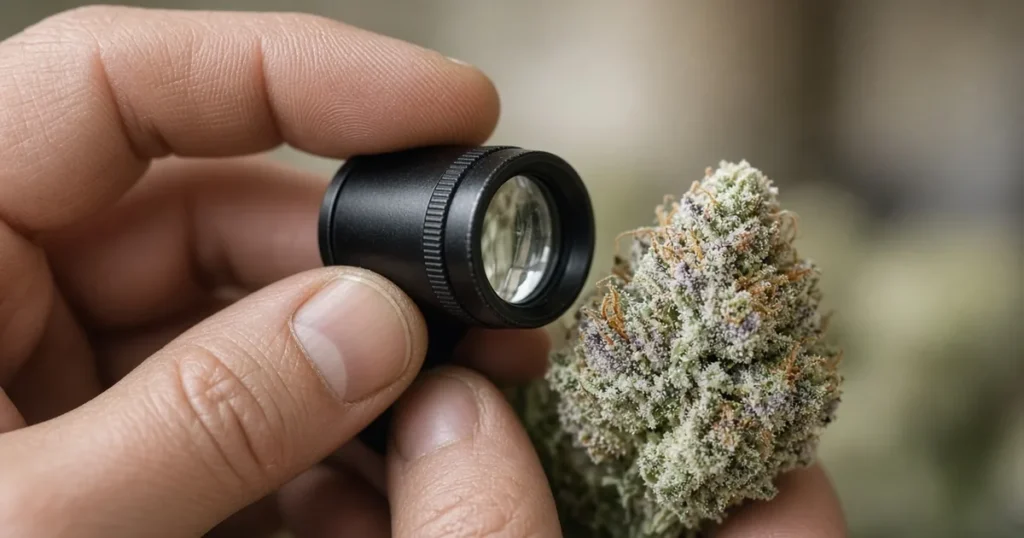
The best tool for checking trichomes is a 30x to 60x jeweler’s loupe or pocket microscope with a built in light. That range is strong enough to see whether trichome heads are clear, cloudy or amber, and still easy to hold steady. A simple jeweler’s loupe around 30x is a great budget starter, while a lighted 60x pocket scope or a clip on phone lens makes it easier to see detail and take photos. Whatever you choose, the tool only matters if the plant has great resin to look at, so start with strong genetics like our award winning seeds. This guide is for adults 21 and older growing where home cultivation is legal.
Why you need magnification at harvest
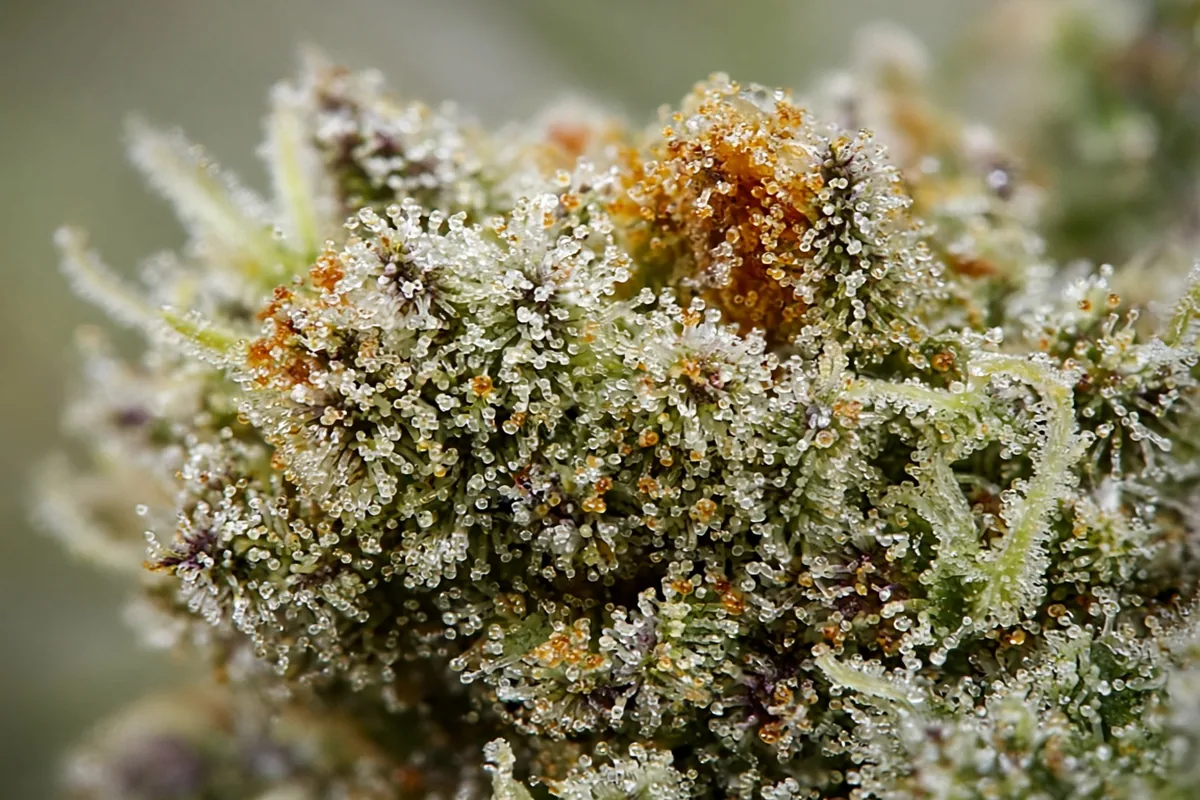
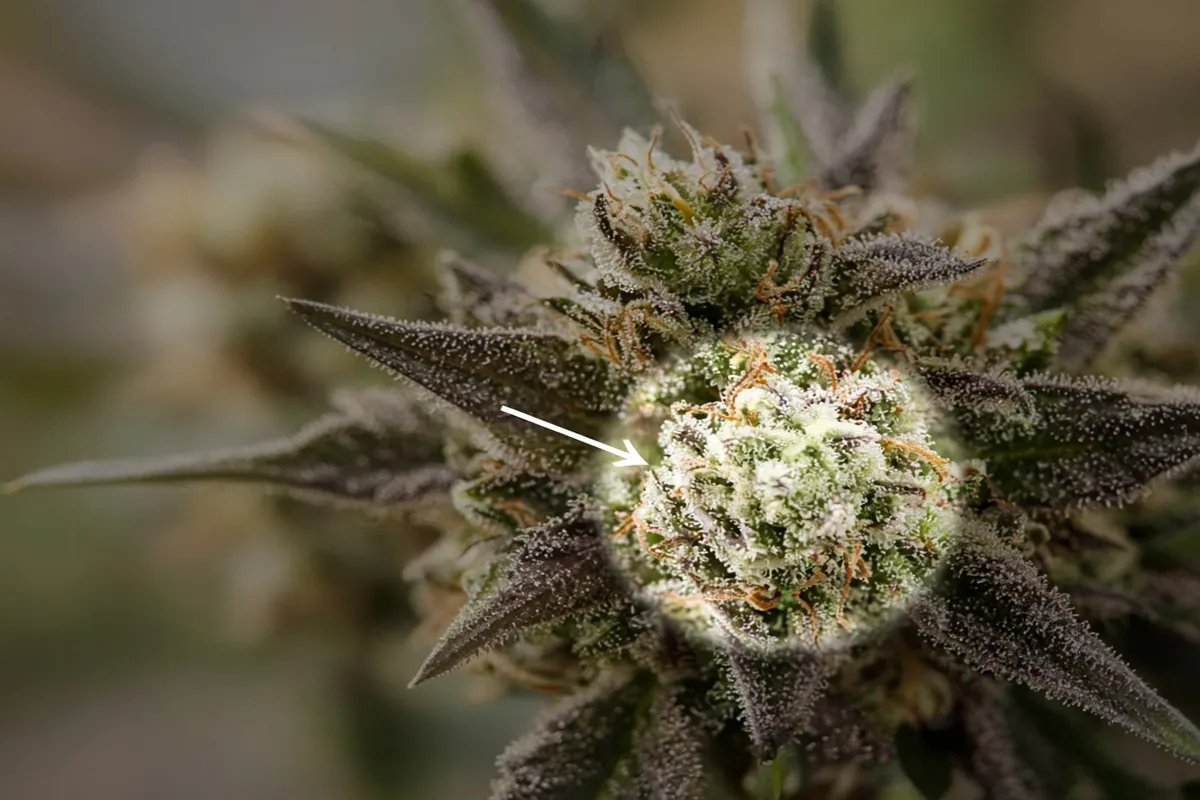
Trichomes are the tiny resin glands that cover cannabis flowers. Each one looks like a small mushroom with a stalk and a round head. The head is where most of the plant’s aroma compounds and cannabinoids are made.
As the plant ripens, trichome heads change color:
- Clear. The plant is still developing.
- Cloudy or milky. Many growers see this as peak ripeness.
- Amber. The plant is past peak and some compounds are breaking down.
You cannot see those changes reliably with the naked eye. That is why a loupe or scope is one of the most useful harvest tools you can own. It sits right alongside the gear in our list of 8 cannabis harvesting tools every home grower needs.
Your options compared
Jeweler’s loupe
A jeweler’s loupe is a small folding magnifier, often around 30x for trichome checks.
Pros. Cheap, pocket sized, no batteries.
Cons. Small field of view, needs steady hands and good light, and some growers find 30x a bit low to judge color.
Best for. Beginners and growers on a budget.
Lighted pocket microscope
A pocket microscope is a small tube shaped scope, commonly 60x to 100x, with a built in LED.
Pros. Higher magnification and its own light, so you can see clear detail even in a dim tent.
Cons. Very narrow view at high power, so it can be hard to find your target. Slight hand movement blurs the image.
Best for. Growers who want a clearer look without spending much more.
Clip on phone macro lens
A clip on lens turns your phone’s camera into a macro camera.
Pros. You can take photos and compare them over days. Easy to share with a grow buddy.
Cons. Quality varies a lot. Needs steady hands or a small stand.
Best for. Growers who like to document each harvest.
USB or digital microscope
A digital microscope connects to a phone, tablet or computer and shows a live, enlarged image on screen.
Pros. Big, clear view. Great for photos and learning.
Cons. Less portable. Usually needs you to cut a small sample or bring the plant to the scope.
Best for. Growers who want the clearest view and do not mind the setup.
Quick comparison table
| Tool | Typical magnification | Built in light | Photos | Ease of use |
|---|---|---|---|---|
| Jeweler’s loupe | About 30x | Sometimes | No | Easy |
| Pocket microscope | About 60x to 100x | Yes | No | Moderate |
| Phone macro lens | Varies | Uses phone light | Yes | Moderate |
| Digital microscope | High | Yes | Yes | Easy once set up |
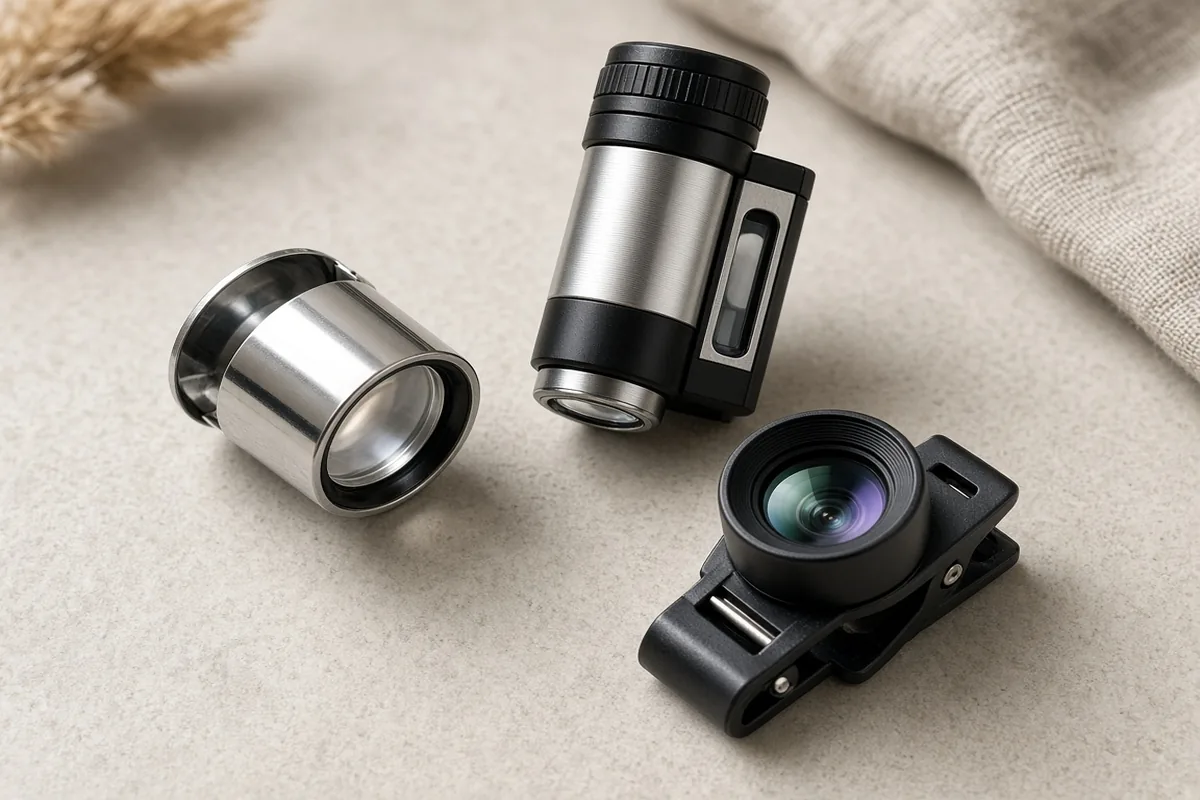
How much magnification do you need?
For most home growers, 30x to 60x is the sweet spot. At that range you can clearly see trichome heads and judge their color. Going much higher narrows the field of view so much that it becomes hard to find the trichomes you want to check. More power is not always better.
How to check trichomes the right way
- Turn off or dim harsh grow lights. Strong colored light can make trichomes look a different shade. Use the tool’s light or natural white light.
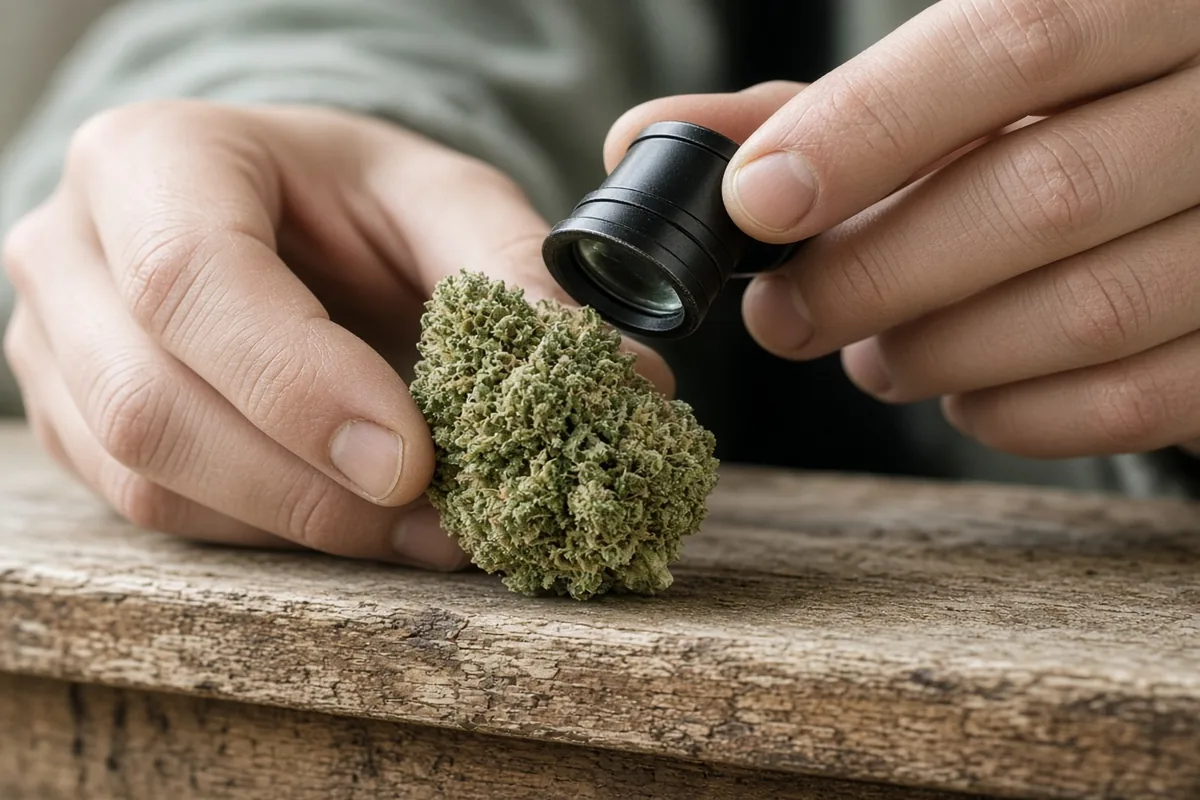
- Steady your hands. Rest your hand or the bud against something solid. Some growers cut a small sample to check under a scope.
- Look at the calyxes, not the sugar leaves. Trichomes on small leaves often ripen faster and can mislead you. Focus on the bud itself.
- Check several spots. Look at top colas and lower buds. They ripen at different speeds.
- Check every couple of days near the end. Trichome color changes over days, not hours.
- Take notes or photos. A simple record helps you time future harvests.
For a full walk through of ripeness signs, read our guide to telling if your marijuana is ready for harvest. Pistil color is a helpful second signal, which we cover in our post on cannabis pistils.
Reading what you see
Many growers time their harvest like this:
- Mostly clear. Wait.
- Mostly cloudy with a few amber. A common harvest window.
- More amber. Some growers prefer to wait for more amber for a different character.
There is no single right answer. Each strain and each grower is a little different. The important thing is to watch the trend and harvest on purpose, not by guesswork.
Caring for your tool
- Keep lenses clean with a soft, dry cloth. Resin is sticky.
- Store your loupe or scope in a case so it does not scratch.
- Check batteries in lighted scopes before harvest week.
- Keep it in your grow kit with your trimming scissors and gloves.
You can find more useful tools in our roundup of helpful gadgets to grow cannabis.
Great resin starts with great genetics
A loupe will show you exactly how well your plant built its resin. Strong genetics make that view more rewarding. These in stock award winning strains are known for heavy trichome coverage:
- Original Glue Photo Reg
- Amnesia Haze Photo Fem
- Sunset Sherbet Photo Fem
- Sweet Tooth Photo Fem
- Gold Leaf Auto Fem
For grow tips that support resin late in flower, see our guide to boosting trichome production before harvest.
Frequently asked questions
What magnification do I need to check trichomes?
Most growers do well with 30x to 60x. That is enough to see trichome color without making the view too small to find.
Is a jeweler’s loupe good enough for trichomes?
Yes, for most home growers. A loupe around 30x shows trichome heads clearly in good light. If you want more detail, step up to a lighted 60x pocket scope.
Can I use my phone to check trichomes?
Your phone camera alone usually is not enough. A clip on macro lens can work well and lets you take photos to compare over time.
Where on the plant should I check trichomes?
Check trichomes on the calyxes of the buds, not on sugar leaves. Look at several buds from the top and the bottom of the plant.
How often should I check trichomes?
Every few days as harvest approaches, and every day or two in the final week.
Why do trichomes look different under my grow light?
Colored grow light can change how trichomes look. Check them under white light or with your scope’s built in light for a true color read.
See your harvest clearly
A simple loupe or pocket scope turns harvest timing from a guess into a plan. Pick a 30x to 60x tool, check calyxes under white light, and track the trend over a few days. Then put it to work on strong resin genetics from our award winning seeds, or explore the full Kind Seed Co shop. Kind Seed Co sells only to adults 21 and older. Always follow the home grow laws where you live.