
Bokashi for Cannabis: Fermenting Kitchen Scraps for Garden Soil
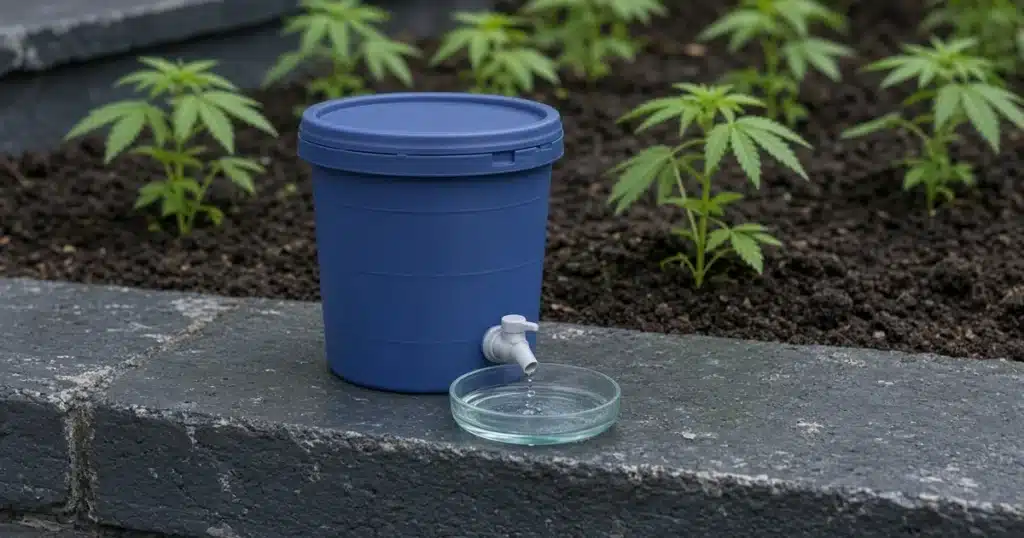
Bokashi is a sealed fermentation method that turns kitchen scraps into pre-compost, using bran inoculated with microbes. It is not finished compost. WSU Extension says to let a full bin ferment for about two weeks, bury it in garden soil, and then wait 3 to 4 weeks before planting cannabis in that spot.
What Is Bokashi?
WSU Kitsap County Extension describes bokashi as an anaerobic fermentation system for food waste. It uses a sealed container and bokashi bran, a mix of wheat bran or rice hulls carrying lactic acid bacteria, yeasts and phototrophic bacteria.
Those microbes ferment the scraps rather than letting them rot. The result is a nutrient-rich pre-compost that still has to finish breaking down in soil.
How Is Bokashi Different From Regular Compost?
WSU sets out the differences:
| Bokashi | Traditional compost | |
|---|---|---|
| Process | Sealed fermentation, without oxygen | Decomposition in a pile or bin |
| Food it accepts | Almost all food waste, including cooked food, dairy, meat and small bones | Excludes meat, dairy and cooked food |
| Output | Acidic, biologically active pre-compost | Finished compost |
| Next step | Bury it in soil or add it to a compost system | Spread or mix it in |
WSU also notes that the sealed bin keeps odor low, works year-round and suits small spaces. If you already run a compost pile, see our guide to best fertilizer and compost for outdoor cannabis. Bokashi can feed into that pile as well.
How Do You Make Bokashi at Home?
WSU’s steps are simple:
- Collect food scraps in a bokashi bin.
- Each time you add scraps, sprinkle a handful of bokashi bran on top.
- Press the layer down to push out air, then seal the lid tightly.
- Drain the liquid that collects every few days to prevent odors.
- Once the bin is full, let it ferment for about two weeks.
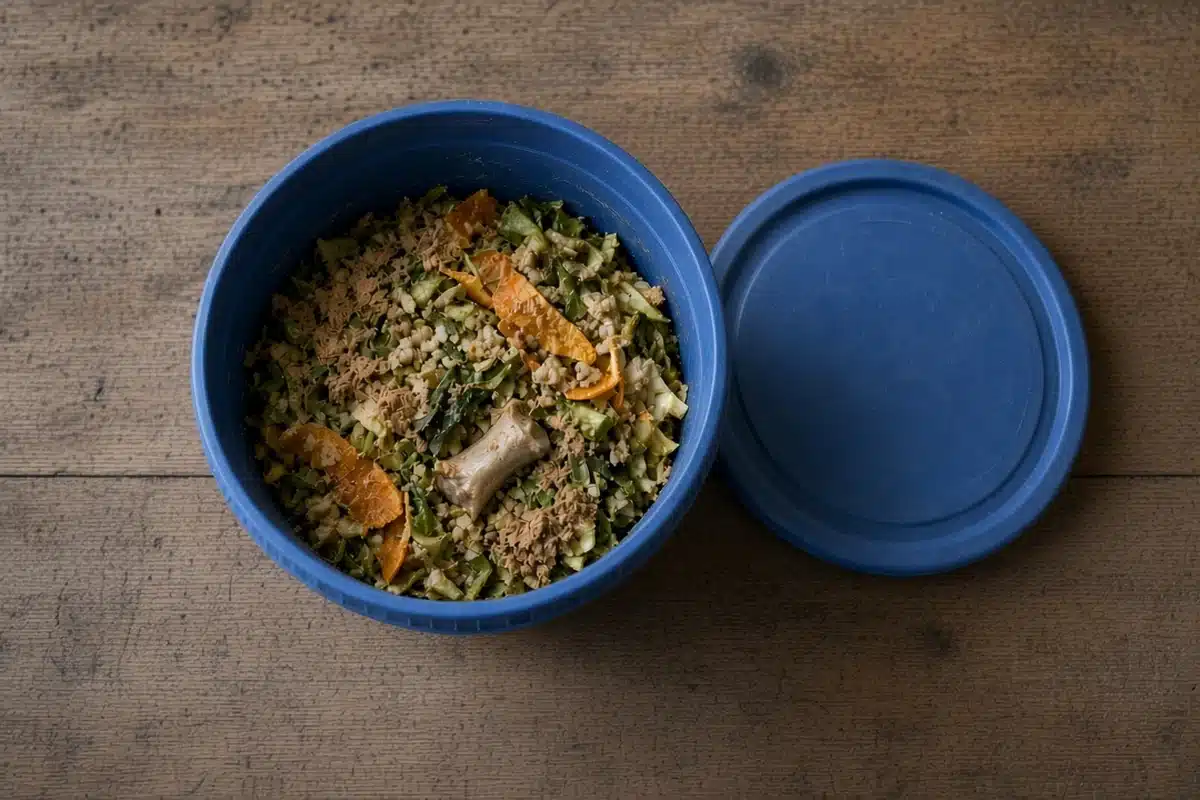
The scraps won’t look broken down when fermentation is done. WSU says a pickled smell is the sign that it worked.
How Do You Add Bokashi to a Cannabis Bed?
Bury it. WSU warns that bokashi is acidic, biologically active pre-compost. Do not leave it exposed or spread it like mulch. WSU’s direct burial method:
- Dig a trench or hole 8 to 12 inches deep.
- Add a layer of bokashi 1 to 2 inches thick.
- Mix it with at least 2 to 3 times its volume of soil, so it is not a solid layer.
- Cover it completely, and firm the soil lightly to remove air pockets.
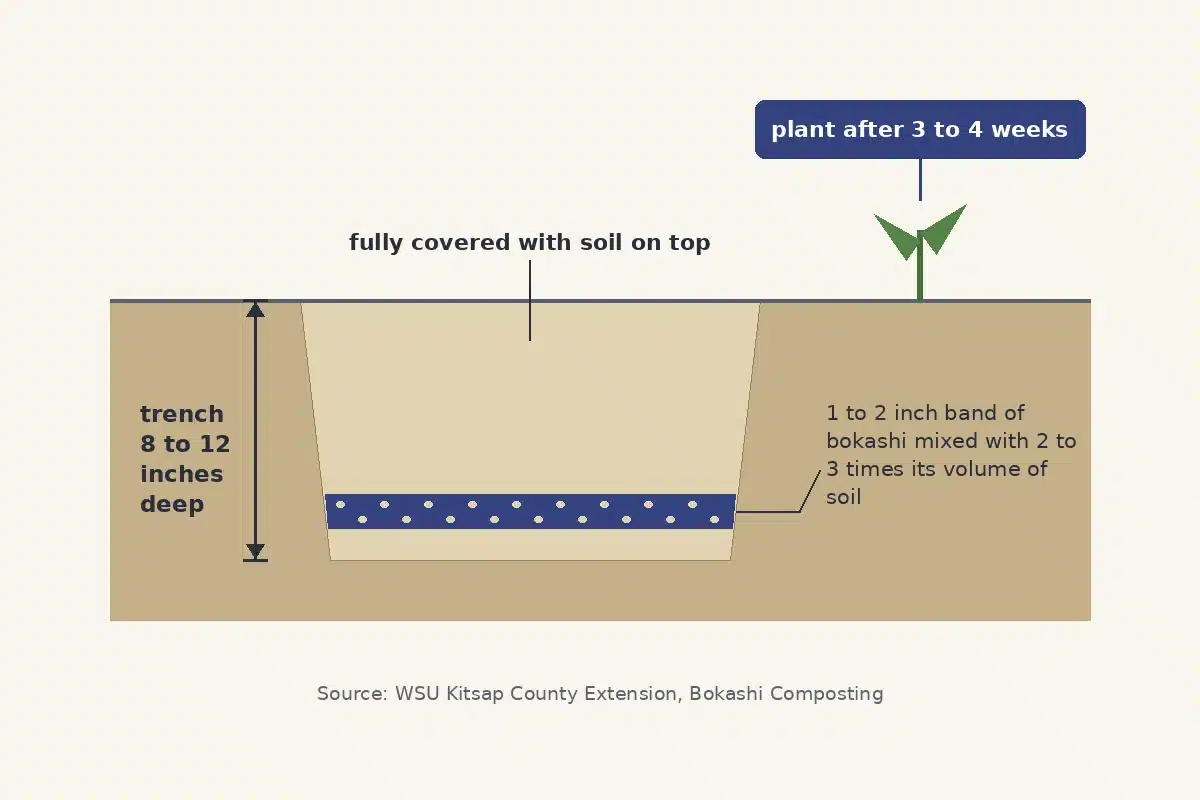
Soil microbes then neutralize the acidity and finish the breakdown. WSU says the buried material enriches the soil with nutrients and beneficial microbes, in the same spirit as living soil and super soil for cannabis.
How Long Should You Wait Before Planting Cannabis?
WSU’s ideal wait is 3 to 4 weeks after burial, and cooler soils may need longer. Plant your cannabis into that spot after the wait, not on top of fresh bokashi.
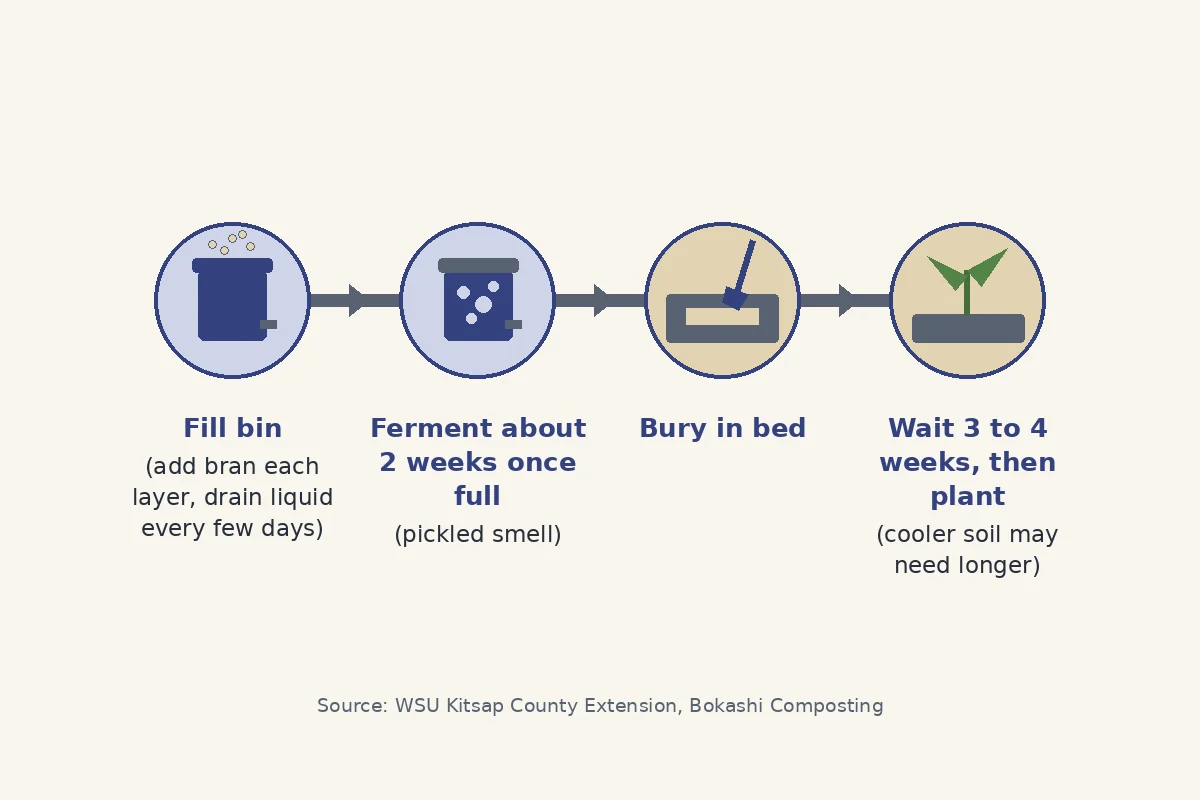
WSU’s guide covers gardens in general, not cannabis, so use the wait as your safety margin. If you are refreshing a used bed, read our guide to reusing old soil next.
What If Bokashi Doesn’t Break Down?
If the spot still smells sour or bad after burial, WSU points to a few causes: too much bokashi buried in one spot, not enough contact with soil, or cold, inactive soil. Its fixes:
- Bury it deeper.
- Mix it with more soil.
- Put less in each spot.
- Wait longer before planting.
Using a Winter Holding Bin
WSU also offers a holding-bin method for winter storage, apartments and gradual garden use. It is a separate method, not a troubleshooting fix:
- Fill a tote or bin with soil or finished compost.
- Mix in the bokashi at 1 part bokashi to 3 parts soil.
- Keep it moist but not wet.
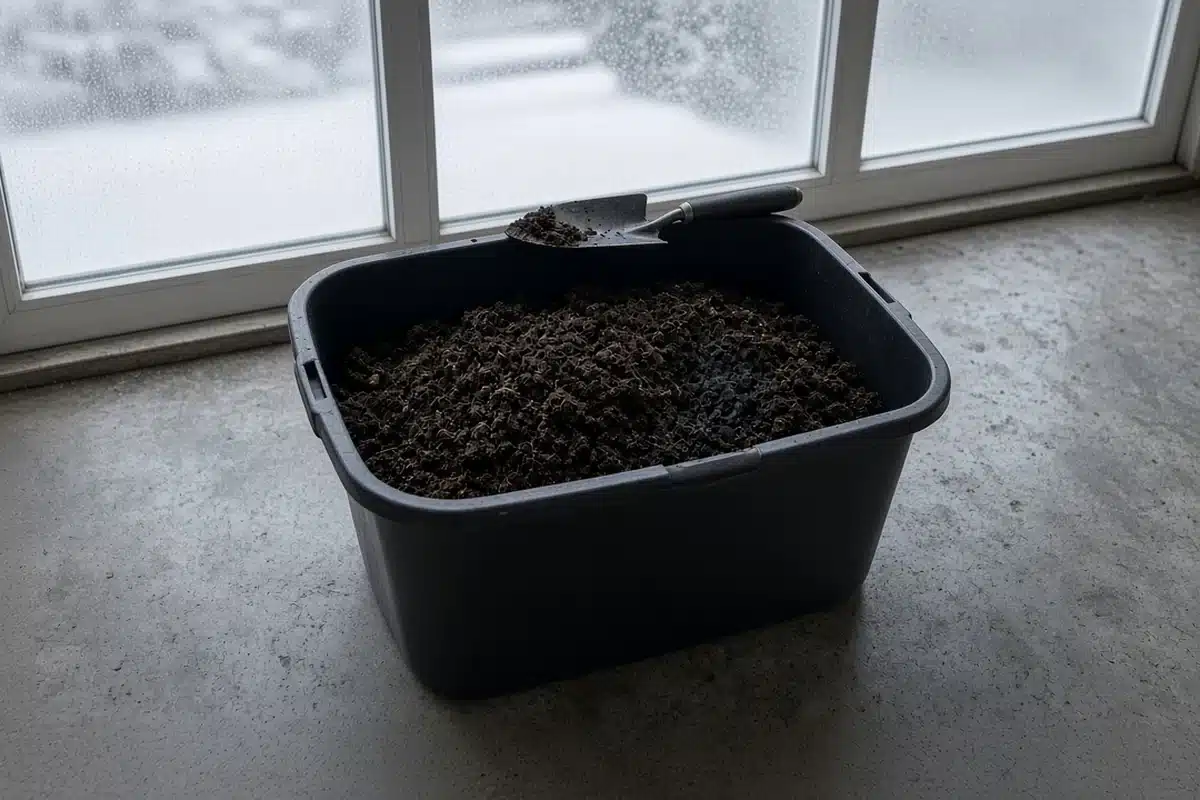
WSU’s signs of success are a sour smell that disappears and soil that becomes darker and crumbly. The blend can then go into beds or containers. For outdoor beds, see our guide to the best soil for outdoor cannabis.
FAQ
Can you put meat and dairy in bokashi?
Yes. WSU Extension says bokashi takes almost all food waste, including fruit and vegetable scraps, cooked food, dairy, meat and even small bones, which traditional compost systems exclude. Each time you add scraps, sprinkle a handful of bokashi bran on top, press the layer down and seal the lid.
Does a bokashi bin smell?
A working bin should smell pickled, not rotten. WSU Extension describes the sealed, airless process as low in odor and says a pickled smell means fermentation worked. It also says to drain the liquid that collects every few days, because leaving it in the bin causes unpleasant odors.
Can you spread bokashi on top of the soil like mulch?
No. WSU Extension says fermented bokashi is acidic, biologically active pre-compost, not finished compost, and it should not be left exposed or spread like mulch. Bury it 8 to 12 inches deep, mix it with at least 2 to 3 times its volume of soil, and cover it completely.
What can you do with bokashi in winter?
WSU Extension suggests a holding bin. Fill a tote or bin with soil or finished compost, mix in the bokashi at 1 part to 3 parts soil, and keep it moist but not wet. It has worked when the sour smell fades and the soil turns darker and crumbly.


