Banana Peels For Cannabis Plants: What They Really Add
Quick answer: Banana peels for cannabis plants are a small, slow source of nutrients, not a fertilizer. They contain potassium, but they break down slowly in soil and their nutrients are not in a form plants can use right away, according to NC State Extension. The best use is the compost pile. Banana water adds very little, and a soil test tells you far more about what your plants need.
What Banana Peels Contain
UC Agriculture and Natural Resources says bananas and their peels do contain potassium, which supports plant growth and flower production. That is where the popular idea of feeding plants with banana peels comes from.
The catch is how and when those nutrients become available. NC State Extension says that while banana peels contain nutrients, they decompose slowly in the soil and the nutrients are not in a readily available form that plants can use right away. A University of Maryland Extension expert answering a question on banana water added that very small amounts of nutrients, including potassium, are available from food scraps, and that food scraps alone are probably not enough to fertilize plants.
None of these sources tested banana peels on cannabis. It helps to think of peels as compost material, not as a feeding plan.
Banana Peel Myths vs Facts
| Common idea | What Extension says | Source |
|---|---|---|
| Bury a peel to feed the plant | Peels break down slowly, can attract pests and mold, and nutrients are not readily available | NC State Extension |
| Peels in soil add potassium | Peels contain potassium, but breaking them down uses nitrogen, and shallow peels can attract wildlife | UC ANR |
| Banana water is a fertilizer | No research supports it, and it gives very small amounts of nutrients | University of Maryland Extension |
| Banana water helps in a heat wave | The potassium will not make plants more drought tolerant | University of Maryland Extension |
| Compost the peels | Recommended by NC State and UC ANR | NC State Extension, UC ANR |
What Happens When Peels Rot in the Soil
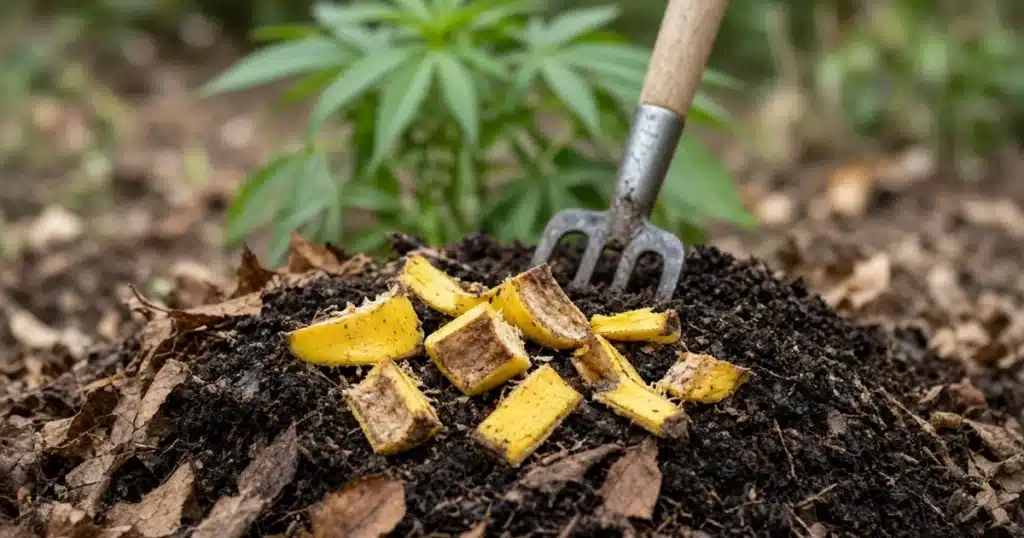
UC ANR says the nitrogen needed to break down a peel means less nitrogen is available for greening plants. It adds that peels in shallow soil may attract unwelcome wildlife. NC State Extension says buried peels decompose slowly while attracting pests and possibly harboring mold.
University of Maryland Extension takes a slightly different view. Its expert said composting food scraps, or chopping and burying them in empty spots or between widely spaced plants, would yield more nutrients more efficiently than soaking them in water. Putting these together, composting is the safest choice. If you do bury peels, chop them, keep them away from the stem and bury them in an empty spot rather than right against a plant.
Does Banana Water Work for Cannabis?
Banana water, sometimes called banana peel tea, is made by soaking peels in water. University of Maryland Extension says it is not aware of any research that supports banana water as a fertilizer, and that very small amounts of nutrients come out of food scraps. It also says the potassium in banana water will not make plants more drought tolerant. The key in hot, dry weather is to water plants regularly and deeply.
So banana water is not a meaningful feed for cannabis. Compost the peels instead of soaking them, and water deeply in hot weather.
How to Compost Banana Peels for a Cannabis Garden
- Collect the peels. Keep them in a covered kitchen container so they do not draw fruit flies.
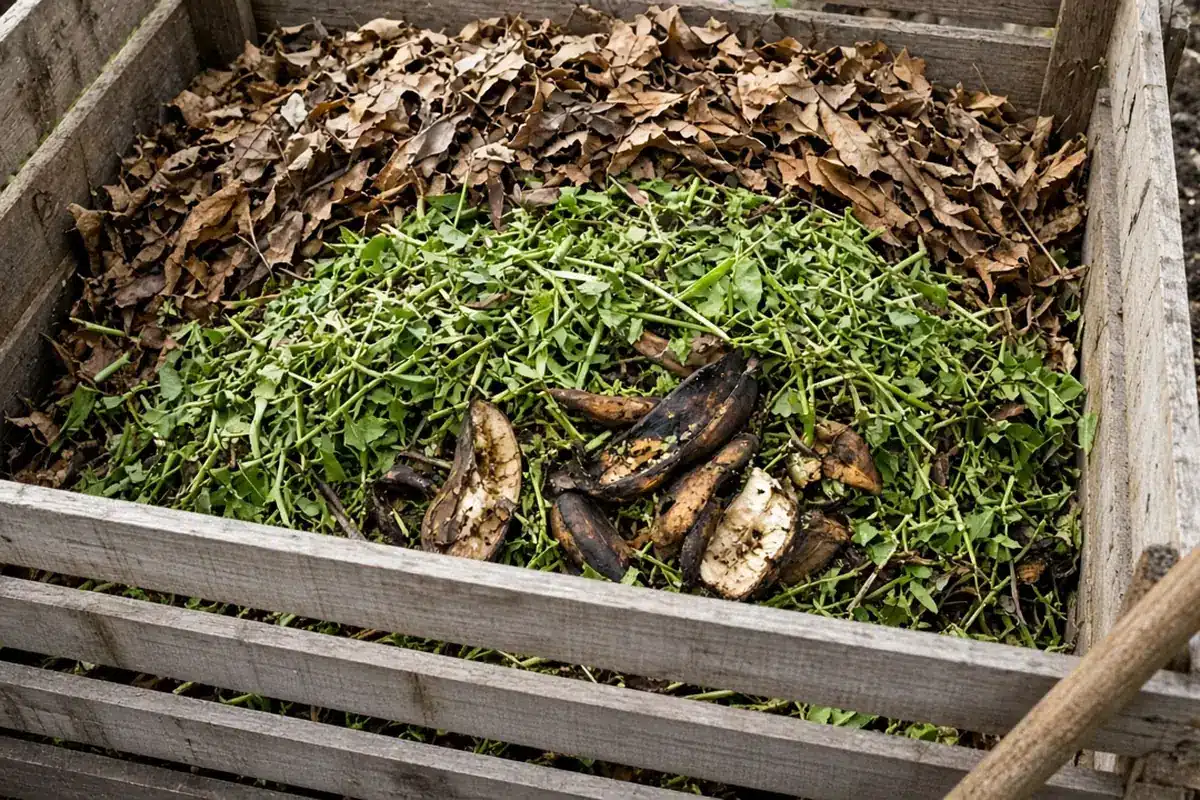
- Chop them up. Smaller pieces break down faster, which matters because NC State says peels decompose slowly.
- Add them to the compost bin. UC ANR and NC State both recommend composting banana peels rather than putting them straight in the soil.
- Mix them with your other scraps and garden waste. Bury fresh peels in the middle of the pile so they are not left on the surface.
- Let the compost finish. Wait until the peels are no longer recognizable before you use the compost.
- Spread finished compost on the bed. Work it into the soil before planting or use it as a top layer around established plants.
For the full method, including what to mix and how to turn a pile, see our guide to composting cannabis garden waste.
Test Your Soil First
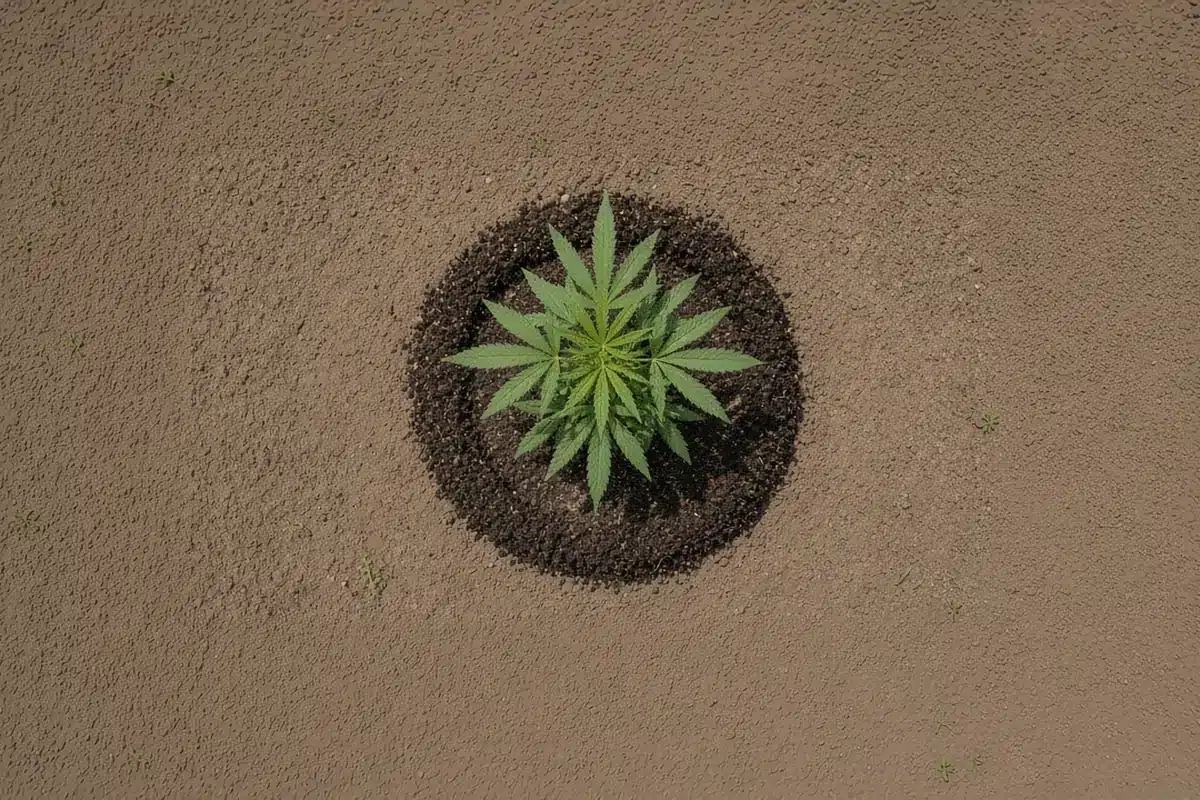
University of Maryland Extension suggests having your soil tested to get baseline information on soil pH and nutrient and organic matter levels, and basing your fertilizing on the results. A test shows whether potassium is even low before you add anything. Our guide to soil testing for cannabis explains how to take a sample and read the report.
If a test shows your bed needs feeding, our guide to the best fertilizer and compost for growing outdoors covers balanced options.
Troubleshooting
Fruit flies around the pot or compost bin. Fresh peels draw insects. NC State says buried peels can attract pests, so move peels to a covered compost bin and bury them in the pile.
Mold on the soil where peels went in. NC State says peels can harbor mold as they slowly break down. Remove the peels and compost them instead.
Animals digging in the bed. UC ANR says peels in shallow soil may attract unwelcome wildlife. Take them out and keep peels in a closed compost bin.
Leaves look pale after burying peels. UC ANR says breaking down peels uses nitrogen, leaving less for the plant. Stop burying peels and get a soil test.
The plant still looks unhealthy after banana water. Banana water gives very small amounts of nutrients, says University of Maryland Extension. Look at the leaves and the soil test instead. For potassium signs on leaves, see our guide to potassium deficiency in cannabis plants.
Sources
- NC State Extension, Beaufort County Center, Gardening Hacks or Hype: Debunking Viral Tips with Science and Common Sense: https://beaufort.ces.ncsu.edu/news/gardening-hacks-or-hype-debunking-viral-tips-with-science-and-common-sense/
- UC Agriculture and Natural Resources, Garden Myths Busted: https://ucanr.edu/node/128616/printable/print
- University of Maryland Extension, Home and Garden Information Center answer on banana peel water (Ask Extension): https://ask.extension.org/kb/faq.php?id=874919
FAQ
Is banana water from banana peels good for cannabis plants?
Not as a fertilizer. University of Maryland Extension says it is not aware of any research that supports banana water, and that very small amounts of nutrients come from food scraps. It adds that the potassium will not make plants more drought tolerant. Composting the peels gives more value than soaking them.
Can you bury banana peels next to cannabis plants?
It is better not to bury them right next to a plant. UC ANR says breaking down peels uses nitrogen and that shallow peels can attract wildlife, and NC State says they can draw pests and mold. University of Maryland Extension says chopped scraps buried in empty spots yield more nutrients than soaking, but composting is safest.
Do banana peels add potassium for cannabis plants?
A little, and slowly. UC ANR says bananas and their peels contain potassium, but the nitrogen needed to break the peel down leaves less nitrogen for the plant. NC State Extension says the nutrients in peels are not in a form plants can use right away. A soil test is the best way to know if potassium is low.
Can you use banana peels in indoor cannabis pots?
It is not a good idea. NC State Extension says peels decompose slowly in soil, attract pests and can harbor mold, and in a pot that happens right beside the plant. Put the peels in an outdoor compost bin instead, and use finished compost in your potting mix if you want the organic matter.
What is a better way to use banana peels in a cannabis garden?
Compost them. NC State Extension and UC ANR both recommend adding banana peels to the compost bin rather than putting them in the soil. Once the compost has fully broken down, spread it on your bed. Test your soil first, as University of Maryland Extension advises, so you know what your plants actually need.