Cannabis Drying Temperature and Humidity Targets
Quick answer: Aim for 64 to 70°F (18 to 21°C) and 50 to 55 percent relative humidity in a dark, ventilated room. That is the slow drying target from Oregon State University Extension. NC State Extension reports that growers have done well at 60 percent humidity or less, and it would not go above 100°F when adding heat. Hold those numbers and most buds dry in about a week.
What Temperature and Humidity Should a Drying Room Hold?
Hold the room at about 64 to 70°F with relative humidity at 50 to 55 percent. The clearest target comes from the Oregon State University Extension review of hemp post harvest work. It says that for slow drying, the room should be well ventilated, the temperature should sit at 18 to 21°C, and relative humidity should sit at 50 to 55 percent. In Fahrenheit, that temperature range is about 64 to 70°F.
The North Carolina A&T hemp program lands close to the same place. It dries hemp hung upside down in a shipping container and gives 60 to 70°F as its best temperature range. It also asks for one full air exchange per hour.
NC State Extension frames it as a limit rather than a target. It says growers have done well drying in buildings or barns when they keep good airflow and hold humidity at 60 percent or less. That makes 60 percent the line you don’t want to cross.
These figures come from hemp research. Hemp is Cannabis sativa, the same species home growers raise, so the drying basics apply. None of the sources tested a home spare room, so use the numbers as a starting point and adjust to what your gauges show.
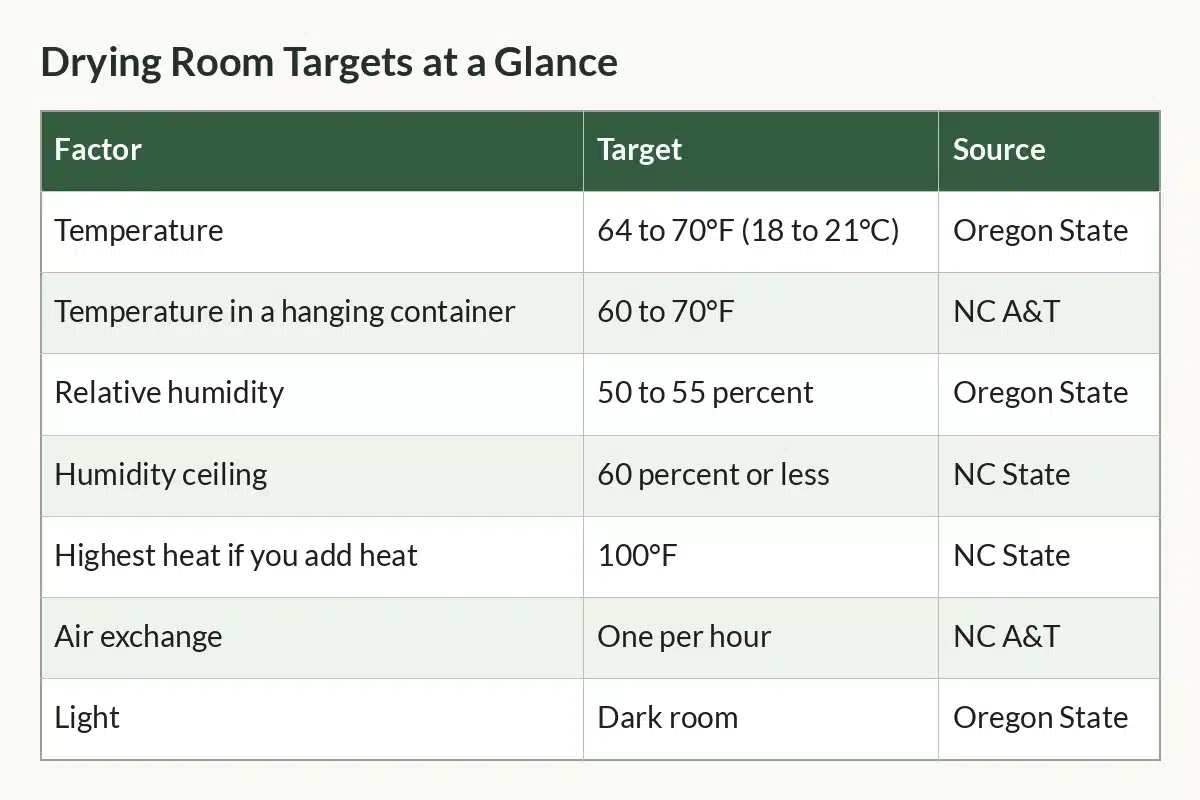
Drying Room Targets at a Glance
| Factor | Target | Source |
|---|---|---|
| Temperature | 64 to 70°F (18 to 21°C) | Oregon State |
| Temperature in a hanging container | 60 to 70°F | NC A&T |
| Relative humidity | 50 to 55 percent | Oregon State |
| Humidity ceiling | 60 percent or less | NC State |
| Highest heat if you add heat | 100°F | NC State |
| Air exchange | One per hour | NC A&T |
| Light | Dark room | Oregon State |
Why Humidity Matters More Than Heat
Humidity decides whether water can leave the buds at all. Oregon State explains that lowering the moisture content of flowers reduces unwanted microbial growth and makes them less likely to spoil in storage. The same review warns that poor control of humidity and temperature can lead to long drying times and lower quality flowers. Fresh hemp tissue holds 70 to 80 percent water, so a drying room has a lot of moisture to carry away. Damp air slows that process, and slow drying in damp air gives mold more time.
The University of Vermont drying trial shows the effect in numbers. At room temperature with a fan, buds dried with a dehumidifier came out on October 12, while buds dried without one came out on October 14. Across all the trial’s drying setups, buds dried with a dehumidifier also tested higher in total cannabinoids, at 20.7 percent against 18 percent. The team saw some slight molding on room temperature samples during the first few days.
Heat speeds drying, but it comes with a cost. Vermont found that higher dryer temperatures dried buds faster. It also pointed out that many terpenes are highly volatile, with the greatest losses starting at drying temperatures of 70°F. Oregon State’s slow drying range also tops out near 70°F, and NC State would not go above 100°F when adding heat.
So humidity is the setting to fix first. Get the room under 60 percent, then use temperature to fine tune the pace. Our post on what affects relative humidity control for cannabis goes deeper into how room air holds moisture.
How to Hold Drying Room Conditions
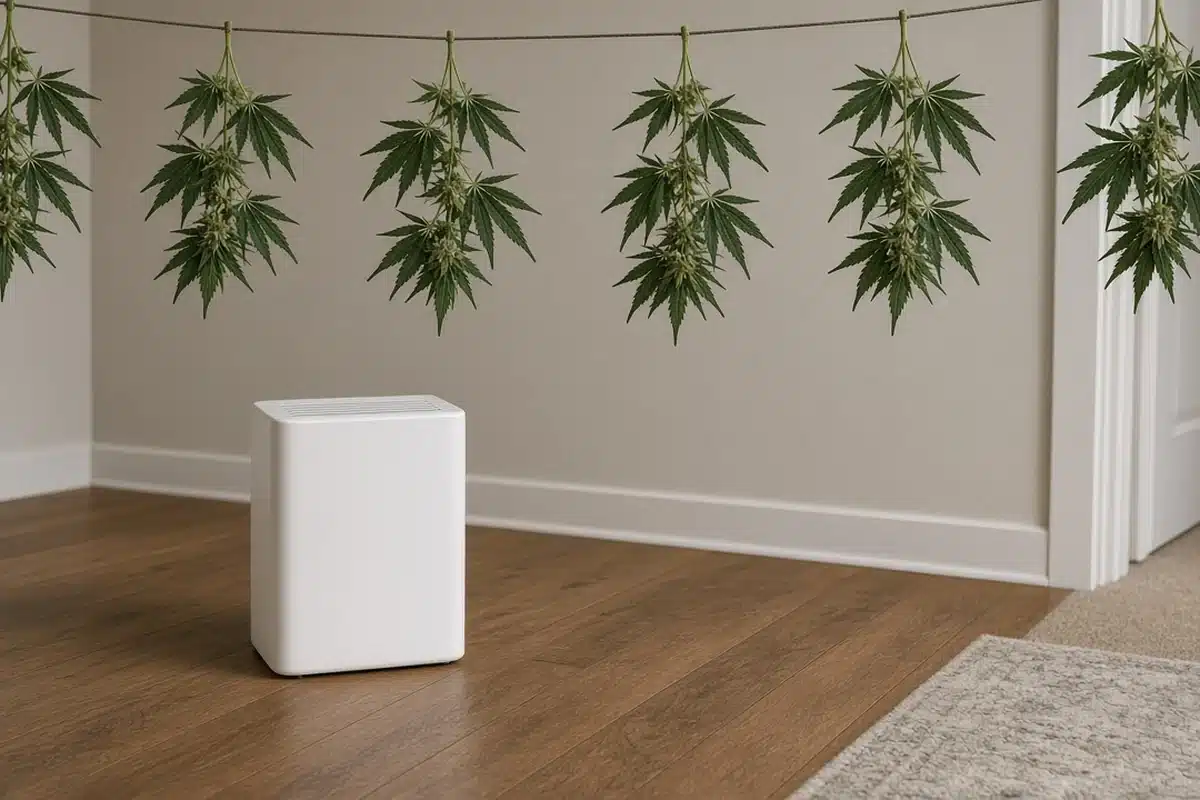
- Start with a dark room. Oregon State describes slow drying as a dark room job, helped along by fans, dehumidifiers or heaters.
- Run a fan the whole time. Every drying setup in the Vermont trial had airflow from a fan, and the fans stayed on until the buds were dry. Vermont also turned its room temperature trays by hand so air could get to every flower.
- Plan for air exchange. NC A&T calls for one air exchange per hour, so the damp air your buds give off has somewhere to go. NC A&T runs its own drying in a shipping container held between 60 and 70°F.
- Add a dehumidifier when humidity rises past 60 percent. NC State sets 60 percent as the upper limit, and the Vermont results favor drying with one. Our guide to choosing a dehumidifier for a grow room covers sizing and placement.
- Add heat only when the room runs cold. Oregon State lists heaters as a normal drying tool. NC State says some growers add heat and some don’t, and it would stay at or below 100°F until research says otherwise.
- Keep the load sensible. NC A&T notes that field plants take 3 to 5 square feet each unless they are bucked from the stalk. A packed room holds more water than a small dehumidifier can pull. NC A&T also notes that drying can last between 1 and 12 days for buds, based on how wet, large and dense they are.
How to Measure Temperature and Humidity
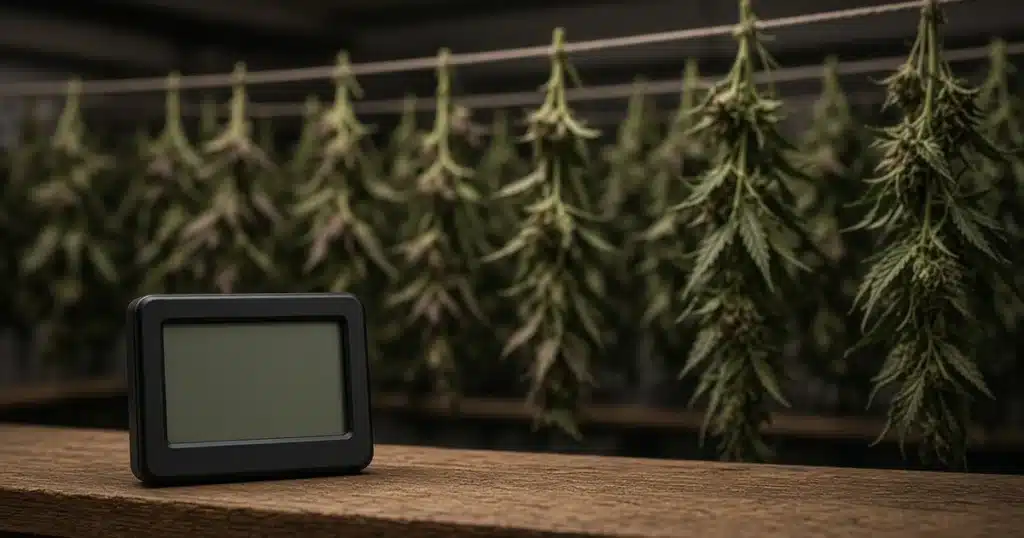
Use a digital hygrometer that shows both readings, and put it where the buds hang. A reading near the floor or ceiling can differ from the air around the branches. The Vermont team pointed to humidity gauges as a tool to monitor and control drying time, and that is exactly the job here.
Keep a record, not just a glance. The Vermont trial lost its temperature and humidity data through technical errors, which left a gap in the results. A notebook with a morning and evening reading protects you from the same problem and shows whether the room drifts at night. Vermont also suggested that gauges help growers find their ideal drying time, which matters most when drying space is limited.
Check the readings against the targets twice a day. If humidity climbs above 60 percent, add moisture removal. If the room sits well above 70°F, expect faster drying and more terpene loss, based on the Vermont discussion. Once buds are dry, the same gauge helps in storage. Our guide to curing and storing cannabis flowers picks up from there.
Troubleshooting Drying Room Conditions
Humidity won’t drop below 60 percent. Add a dehumidifier or take some branches out. NC State links drying success to holding humidity at 60 percent or less.
The room runs cold at night. A small heater can hold the temperature, as Oregon State notes. Watch the top end. NC State would not go above 100°F. It also mentions a common suggestion of heating to 20 degrees above the outside air, while noting that research is still limited.
Buds dry in two days and feel brittle. The room is too warm or too dry. Vermont noted that over dried flowers lose leaf and trichome material when handled. Move closer to the Oregon State range.
Buds smell musty or show gray fuzz. Remove the affected material at once and lower the humidity. Vermont saw slight molding early on in its room temperature samples, so watch the opening days closely.
The room has no vent or window. NC A&T asks for one air exchange per hour. Without it, the water leaving the buds stays in the room and the humidity climbs.
Dry buds pick up moisture again. NC State cautions that hemp has to be kept dry after drying, since it can pick moisture back up and mold. Jar the buds once they finish. Oregon State suggests keeping stored buds in a cold, dry place at about 64°F (18°C) with humidity between 45 and 55 percent.
Sources
- Oregon State University Extension, Post harvest processing of hemp flowers: https://extension.oregonstate.edu/catalog/post-harvest-processing-hemp-flowers
- NC State Extension, Hemp Harvest Timing and Drying: https://hemp.ces.ncsu.edu/hemp-harvest-timing-and-drying/
- University of Vermont, 2021 Hemp Cannabidiol Drying Trial: https://www.uvm.edu/d10-files/documents/2024-08/2021_Hemp_Cannabidiol_Drying_Trial.pdf
- North Carolina A&T, Hemp harvest and post harvest considerations: https://ncat.edu/caes/agricultural-research/industrial-hemp-program/hemp-conference/files/ivey.pdf
FAQ
What is the best humidity for drying weed?
Oregon State gives 50 to 55 percent. NC State says to keep it at 60 percent or less.
What temperature should a drying room be?
About 64 to 70°F, which is the 18 to 21°C range Oregon State gives for slow drying.
Is it okay to dry buds in a warm room?
It speeds drying but can cost aroma. Vermont notes that terpene losses are greatest starting at drying temperatures of 70°F.
Do I need a dehumidifier?
If humidity stays above 60 percent, yes. In the Vermont trial, buds dried with a dehumidifier finished sooner and tested higher in total cannabinoids.
Can a drying room be too dry?
Yes. Oregon State sets the low end at 50 percent, and Vermont notes that over dried flowers lose leaf and trichome material when they are handled.
Should the drying room be dark?
Yes. Oregon State describes slow drying in a dark room.