
Cannabis Mutations: What You Need to Know
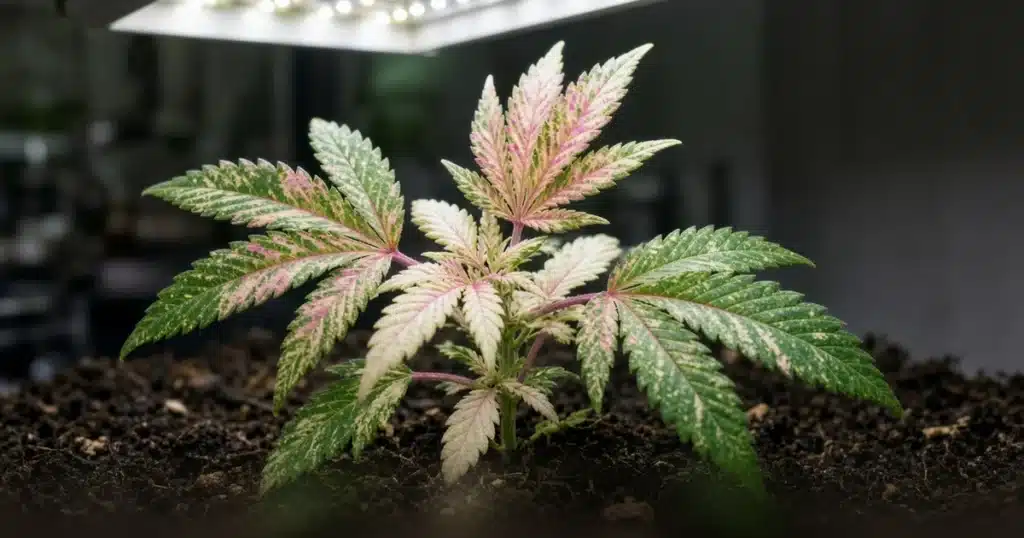
A cannabis mutation is a change in a plant’s DNA. Most mutations are neutral or harmful, but a few give plants useful new traits, such as unusual leaf shapes, denser buds or extra main colas. Kind Seed Co explains what causes mutations, the types you are most likely to see, how to spot them and how breeders hold on to the good ones.
What a cannabis mutation is
A mutation is a change in an organism’s DNA sequence. In plants, mutations can happen during reproduction when DNA is copied or shuffled with errors. They can also come from outside factors such as radiation, chemicals, viruses or mistakes in DNA repair. A mutation can affect a single gene or an entire chromosome.
For growers and breeders, mutations matter because they add genetic variety. They can be a mixed bag:
- Possible upsides. Higher THC or CBD production, unique terpene profiles, better pest and disease resistance, higher yields or faster growth, and new flavors, colors or aromas.
- Possible downsides. Stunted growth, more trouble with pests and disease, nutrient deficiencies, lower potency and poor flavor or aroma.
To brush up on how the plant works in the first place, read our guide on what a cannabis plant is.
Common types of cannabis mutations
Variegation
Variegated plants have leaves in several colors, such as yellow, white, pink, red or purple against the normal green. It happens when a genetic change stops parts of the plant from making chlorophyll. With less chlorophyll, leaves cannot photosynthesize properly, so heavy variegation can cut vigor and yield. The pattern may also fade in later generations. Mild variegation can still grow well and looks striking.
Fasciation
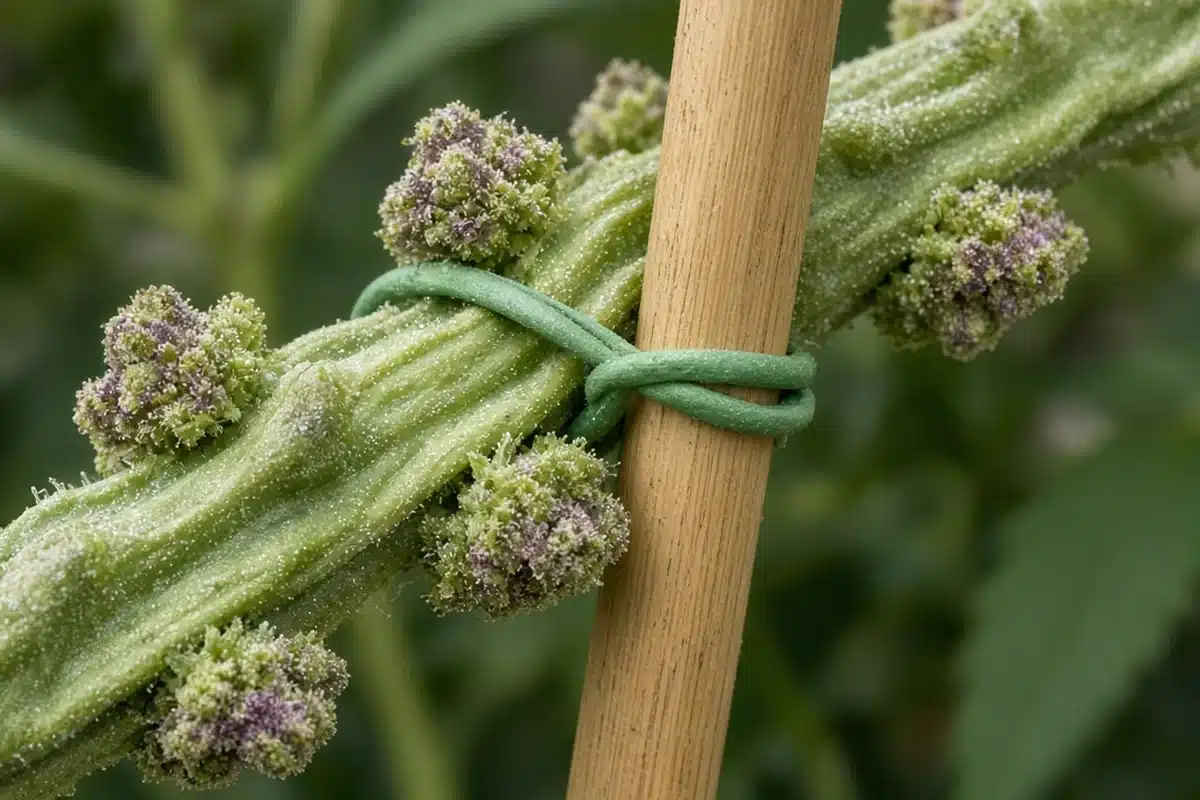
Fasciation makes stems grow flat, like a ribbon, instead of round. It can add more cola sites along the stem, which may mean more flower clusters and a bigger yield. The flat stems can split or break under heavy buds, though, so they need staking and support. Fasciated stems can also be more vulnerable to pests.
Cauliflower buds
Instead of the classic cone shape, this mutation produces very dense, round flower clusters that look like cauliflower. The heavier buds can boost yield. Their tight structure also traps moisture inside, raising the risk of mold and bud rot, so good airflow and humidity control are a must.
Twinning
With twinning, extra stems grow from the same node, so the plant develops two or even three main colas instead of one. Crowded branches may need thinning. Given room to mature, twinned stems can raise total yield. This trait needs careful stabilizing, since heavy branching often comes with intersex traits.
Duckfoot leaves
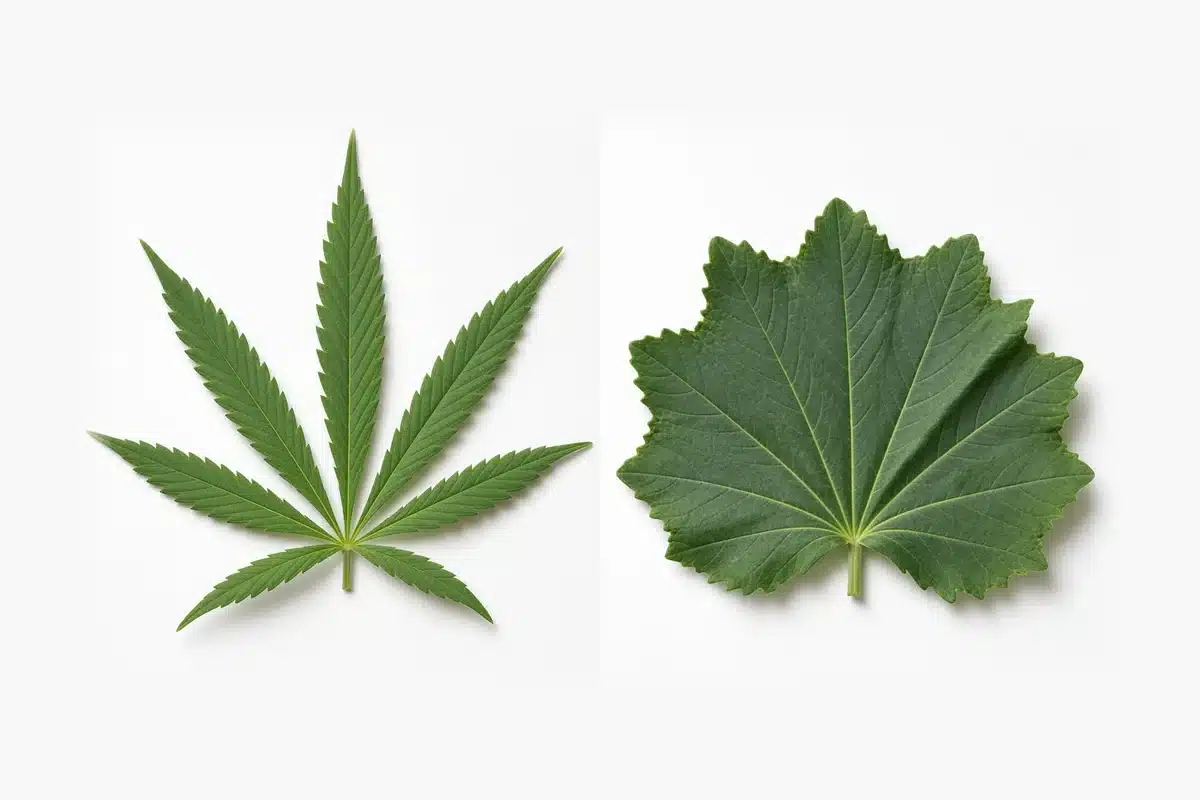
Duckfoot leaves are webbed, like a duck’s foot, instead of split into separate leaflets. The look is great camouflage for guerrilla growers. Heavy webbing can lower photosynthetic efficiency, and the trait often needs stabilizing to show up reliably. Milder duckfoot plants tend to balance a unique look with good vigor.
Foxtailing
Foxtailing produces long, pointy calyx stacks that look like a fox’s tail rather than rounded buds. Too much light or heat stress during flowering can trigger it. Foxtailing does not raise potency, and stressed plants can produce airy, seedy buds. Good conditions help keep buds dense.
Thicker stems
Some mutations produce noticeably thicker stalks, which support heavy flowers and help plants stay upright. Width alone does not guarantee strength, though. A thick stem with a hollow, weak core is not as sturdy as a truly solid, woody one.
Early flowering
This mutation changes how the plant senses day length, so it starts to flower sooner and can be harvested earlier. A shorter cycle can also mean smaller yields and fewer terpenes.
Delayed senescence
Here, leaves and pistils fade and die off later, stretching out the ripening window. A long ripening window can let THC degrade as it ages, and long periods of yellowing leaves can trap moisture and invite mold. Timing the harvest well becomes harder.
How to spot a mutation
- Seedlings. Multiple embryos, taproots or cotyledons.
- Vegetative stage. Unusual leaf shapes, variegation or twinning.
- Flowering. Fasciated stems, cauliflower buds or foxtailing.
Not every odd plant is a true mutant. It can be hard to tell a real mutation from normal variation between phenotypes. Breeders can test seedlings or clones from a suspected mutant for markers tied to key traits, which helps them decide which plants to keep working with.
How breeders keep a useful mutation
- Cloning. Taking cuttings gives genetically identical copies of the mutant plant. Our guide on how to make cannabis clones shows how.
- Crossbreeding. Crossing the mutant with other strains passes the mutation to some offspring, which can then be selectively bred.
- Backcrossing. Breeding the mutant back to its parent strain over several generations concentrates the mutation while keeping more of the original genetics.
- Selfing. Pollinating the mutant with its own pollen can also strengthen how the mutation shows up.
Keep careful records and test as you go. Turning a single mutation into a line that breeds true takes several generations of work, so patience is part of the process.
Unique traits are not always better
Some mutations, like variegation, offer little beyond looks. Others, such as higher cannabinoid levels or better pest and disease resistance, can make a real difference. Unstable genetics can disappoint, so choose and stabilize traits with care. If you want to explore the range of traits cannabis can offer, browse our feminized cannabis seeds or read our ultimate terpenes guide.
FAQ
What causes mutations in cannabis plants?
Mutations can come from errors when DNA is copied or shuffled during reproduction, or from outside factors such as radiation, chemicals, viruses and mistakes in DNA repair.
Are cannabis mutations good or bad?
Most are neutral or harmful. A few add useful traits, such as unique terpene profiles, higher yields or better pest resistance, but unstable genetics can disappoint.
What is a duckfoot cannabis plant?
A plant whose leaves grow webbed instead of split into leaflets. It is good camouflage, but heavy webbing can lower photosynthetic efficiency.
How do breeders keep a mutation in a strain?
They use cloning, crossbreeding, backcrossing and selfing, with careful records and testing. Getting a line to breed true takes several generations of work.


