
Hermaphrodite Cannabis: How to Spot and Handle It
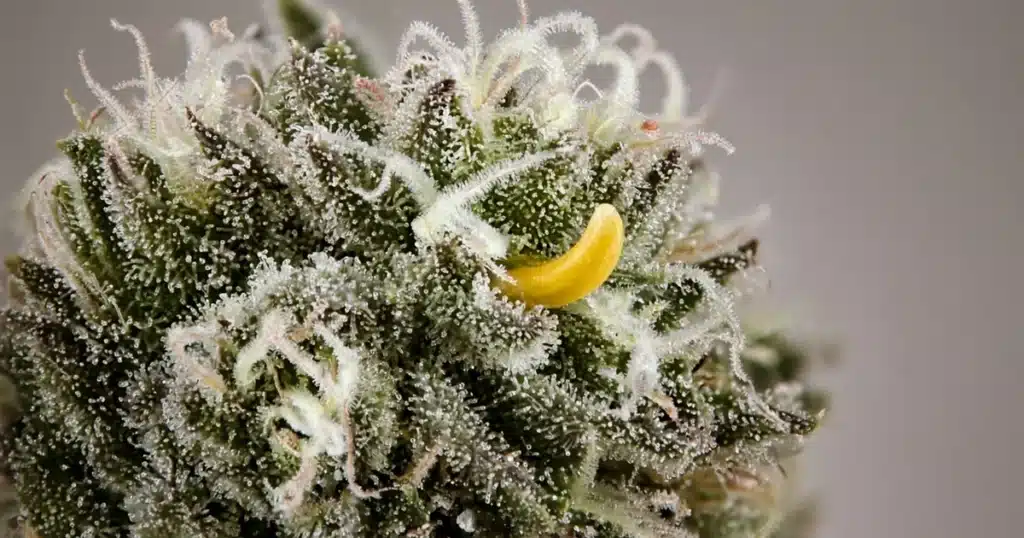
A hermaphrodite cannabis plant is a female plant that also grows male flower parts, usually yellow anthers (often called nanners) inside or beside its buds. Those anthers can release pollen and seed the plant. Research found the pollen and anthers look and work much like those on male plants, so a hermaphrodite needs quick attention.
What does a hermaphrodite cannabis plant look like?
Look for parts that do not belong in a female flower.
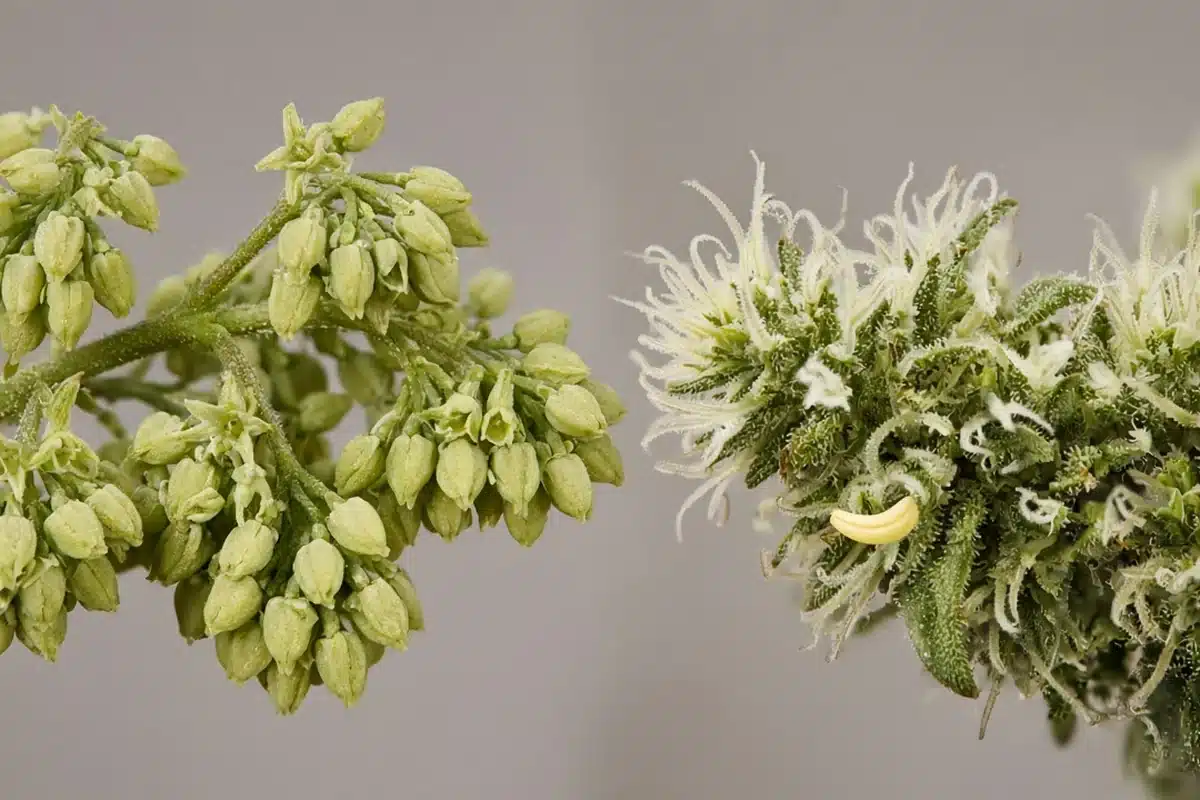
- Small yellow or green banana shapes poking out of buds, often called nanners.
- Round pollen sacs in branch joints, like those on a male plant.
- Seeds forming in buds that were never near a male plant.
The single anther type shows up most often late in flowering. Pollen sac clusters can show earlier. To compare with normal sexing, Kind Seed Co explains how to determine the sex of cannabis plants.
How common are hermaphrodites, and when do they appear?
In the Punja and Holmes study, plants were checked every week through a 6 to 7 week flowering period. Starting around week 4 of flowering, single anthers or clusters of anthers appeared next to the pistils in 5 to 10 percent of the plants examined. The anthers stayed visible from week 4 to week 7 and were still there at harvest. In rare cases, a whole female bud turned into male flowers.
| Finding (Punja and Holmes, 2020) | Value |
|---|---|
| Share of plants with anthers in buds | 5 to 10% |
| First seen | About week 4 of flowering |
| Visible | Weeks 4 to 7, until harvest |
| Seeds from three seeded buds | 34, 48 and 22 |
| Germination of those seeds | 90 to 95% within 10 to 14 days |
Source: Punja and Holmes, Frontiers in Plant Science, 2020. Plants were grown under commercial indoor conditions.
Those seed counts show why a few anthers matter. One seeded bud gave 48 seeds, and almost all of them sprouted.
What does research say about hermaphrodite seeds?
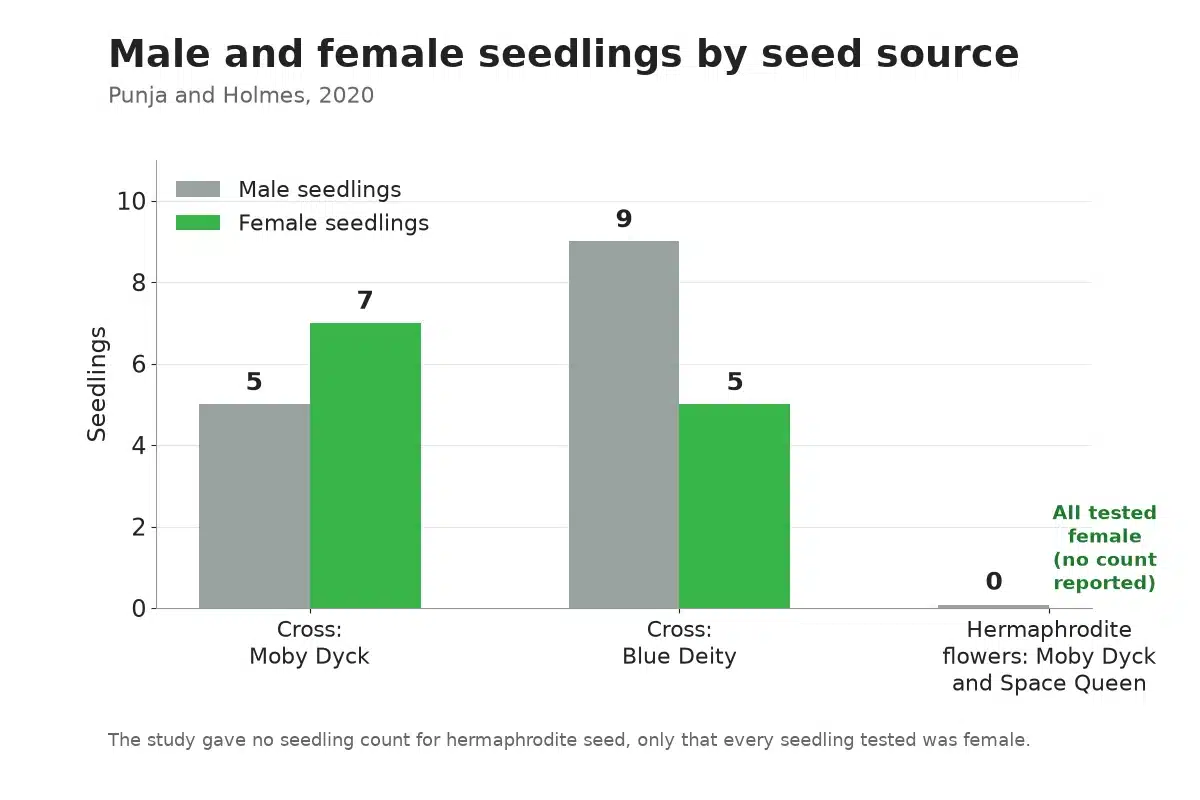
Punja and Holmes studied hermaphroditism in several marijuana strains. Anthers and pollen in hermaphrodite flowers looked like those of male flowers, and seeds from those flowers grew only genetically female plants. Seeds from a normal male and female cross gave mixed males and females.
| Seed source and strain | Male seedlings | Female seedlings |
|---|---|---|
| Male x female cross, Moby Dyck | 5 | 7 |
| Male x female cross, Blue Deity | 9 | 5 |
| Hermaphrodite flowers, Moby Dyck and Space Queen | 0 | All tested |
Source: Punja and Holmes, Frontiers in Plant Science, 2020 (PCR sex test, Figure 10).
Genetically female does not mean the plants will not turn hermaphrodite themselves. The study tested sex, not later flower behavior.
The crossed seed lots in that work gave a mix. Moby Dyck had 5 males and 7 females, and Blue Deity had 9 males and 5 females. Every seedling tested from the hermaphrodite flowers of Moby Dyck and Space Queen came up female.
What causes a plant to turn hermaphrodite?
The exact cause is not fully understood. Researchers link sex changes in cannabis to plant hormones such as ethylene and gibberellin, and growers often report stress, light leaks during the dark period and late harvests as triggers. Genetics also play a part.
The research review in the same paper lists a few reported triggers. Outdoors, short days and cool temperatures were reported to increase male flowers on female plants. Some plants formed hermaphrodite flowers after long dark periods early in growth or after changes to the light schedule during flowering, though the exact conditions were not described. Certain chemicals that block ethylene were also reported to push female plants toward male flowers.
What should you do if you find one?
- Check the whole plant closely, branch by branch.
- Pull a few single anthers early with tweezers, before they open.
- If many pollen sacs have formed, move the plant away from other plants.
- Fix stress: check dark-period light, heat and watering.
- Watch nearby plants for seeds. See how to tell if a female has been pollinated.
From week three of bloom, check flowering plants closely twice a week, inside buds and at branch joints, since early anthers are easy to miss.
How do you check for light leaks?
Light during the dark period is one of the triggers growers report most often, and it is easy to test.
- Go into the tent or room a few minutes after lights off.
- Close it up and wait until your eyes adjust to the dark.
- Look for light around zippers, vents, door edges and cable holes.
- Check for small lights on timers, power strips and fans.
- Cover each leak with tape or a dark cloth and check again the next night.
What should you check at each stage?
Vegetative growth. Hermaphrodite flowers are not common before flowering, but this is the time to fix the conditions linked to them. Make sure the dark period is fully dark and the room holds a steady temperature.
Weeks 1 to 3 of flowering. Look at branch joints for round sacs as well as pistils. A plant with both is worth watching closely.
Weeks 4 to 7 of flowering. This is when anthers showed up in research. Check the tops and the inside of the largest buds, where nanners hide among pistils.
Late flowering to harvest. Keep checking. Anthers seen in research stayed until harvest, and any that open late can still seed buds before you cut.
What are common mistakes with hermaphrodites?
- Checking only the outside of the plant. Anthers often sit deep inside buds or low on the stem.
- Shaking or moving the plant roughly. Open anthers can release pollen onto nearby buds.
- Leaving small light leaks. A dark period that is not fully dark is one of the most common grower-reported triggers.
- Assuming one check is enough. In research, anthers kept appearing from week 4 to week 7.
- Keeping seeds from the plant without thinking. Seeds from hermaphrodite flowers need extra caution, because the study confirmed female sex in the seedlings but did not test their later flowering.
How much damage can a few anthers do?
More than their size suggests. Research cited by Punja and Holmes estimates that each male flower can make as many as 350,000 pollen grains. Pollen from anthers inside a bud does not have to travel far, so the researchers judged that seed set within hermaphrodite flowers indoors is likely higher than in female flowers that depend on wind-carried pollen from a separate male.
That is why early removal matters. Pull single anthers while they are still closed and firm, drop them straight into a sealed bag, and wash your hands and tools before touching another plant.
How far can that pollen travel? Punja and Holmes judged that pollen from anthers in hermaphrodite flowers probably spreads only a few meters indoors or outdoors, while pollen from male plants grown outdoors can travel up to 3 to 5 km depending on wind. Their visual checks also found that male flowers made and released noticeably more pollen than hermaphrodite flowers. A few meters still covers a whole tent, so treat any open anther as a risk to every flowering plant in the same space.
That pollen is also alive. In lab tests, pollen from hermaphrodite anthers germinated and grew tubes within 72 to 96 hours, the first time viable hermaphrodite pollen had been shown in marijuana, according to the authors.
How do you remove anthers step by step?
- Work with the fan off so loose pollen does not drift.
- Use clean, fine-tipped tweezers.
- Grip each anther at its base and pull it straight out.
- Drop it into a small sealed bag right away.
- Recheck the same bud the next day, since new anthers often follow.
- Clean the tweezers and wash your hands before touching another plant.
If a plant keeps making new anthers after several rounds, it is usually better to move it out of the room than to keep picking.
Do hermaphrodites show up even in good conditions?
Yes. The plants in the Punja and Holmes study were grown to commercial standards. They spent 2 weeks in veg at 23 to 26 °C under 24 hours of light, then 6 to 7 weeks in a flowering room. Even so, 5 to 10 percent of plants grew anthers. That points to genetics as well as stress, and it is why checking plants matters even when the room is well run.
Can you use pollen from a hermaphrodite?
Some breeders do, to make seeds with only female genetics. It carries a risk of passing on the tendency, which is why most growers keep it apart from their main crop. For handling pollen carefully, see collecting and storing cannabis pollen.
Whatever you decide, keep that pollen well away from buds you plan to harvest. Open anthers can seed any flowering plant nearby, including the plant they grew on.
Sources
- Punja ZK, Holmes JE. Hermaphroditism in Marijuana (Cannabis sativa L.) Inflorescences: Impact on Floral Morphology, Seed Formation, Progeny Sex Ratios, and Genetic Variation. Frontiers in Plant Science. 2020;11:718. https://pmc.ncbi.nlm.nih.gov/articles/PMC7329997/
- Spitzer-Rimon B, Duchin S, Bernstein N, Kamenetsky R. Architecture and Florogenesis in Female Cannabis sativa Plants. Frontiers in Plant Science. 2019;10:350. https://pmc.ncbi.nlm.nih.gov/articles/PMC6454139/
FAQ
Can a hermaphrodite cannabis plant still be harvested?
Often it can. A plant with a few anthers can usually finish and be harvested. The main risk is seeds in the buds if pollen was released. Removing anthers early and keeping the plant away from other flowering plants limits the damage. Buds with a few seeds are still harvestable, though seeds take energy from flower growth.
Are nanners the same as male pollen sacs?
Nanners are single anthers that grow out of a female flower, while pollen sacs grow in clusters on male plants or in branch joints. Both can make pollen. Research found the anthers in hermaphrodite flowers looked similar to male flowers under the microscope, so both deserve the same caution.
Do hermaphrodite seeds grow all female plants?
In one study, seeds from hermaphrodite flowers grew only genetically female seedlings, while crossed seeds gave mixed males and females. That result came from a small number of strains. Female genetics do not guarantee the new plants will flower without anthers, so watch them closely as they bloom.
Can stress alone turn a plant hermaphrodite?
Stress is often reported as a trigger, and sex changes in cannabis are linked to plant hormones. Genetics matter too, because some plants stay female under the same conditions that make others grow anthers. Keeping dark periods fully dark and avoiding heat and drought stress lowers the chance.


