Cannabis Purple Stems: Everything You Need to Know

Purple stems on a cannabis plant catch the eye. Sometimes they are just pigment. Sometimes they travel with stress. The useful move is not to name one cause from a photo and dump a bottle on the pot. It is to read stem color plus leaves, growth rate, temperature, moisture, and pH together.
Treat purple stems as a diagnostic prompt, not an emergency label. Outcomes vary by cultivar and room. Kind Seed Co shares grow education here, not a remote diagnosis of your plant.
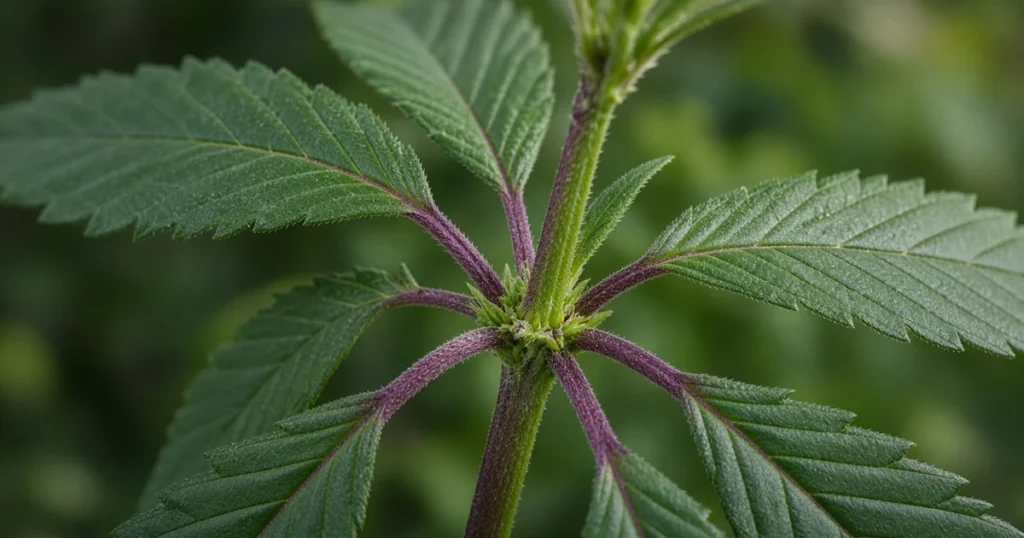
What “purple stems” actually describes

Growers use the phrase for a few different looks:
- Main stalk turning maroon, violet, or dusty purple
- Petioles (leaf stems) going pink or red while the stalk stays green
- Color only on the sun-facing or light-facing side
- Color that shows up after a cold night or a late-season outdoor swing
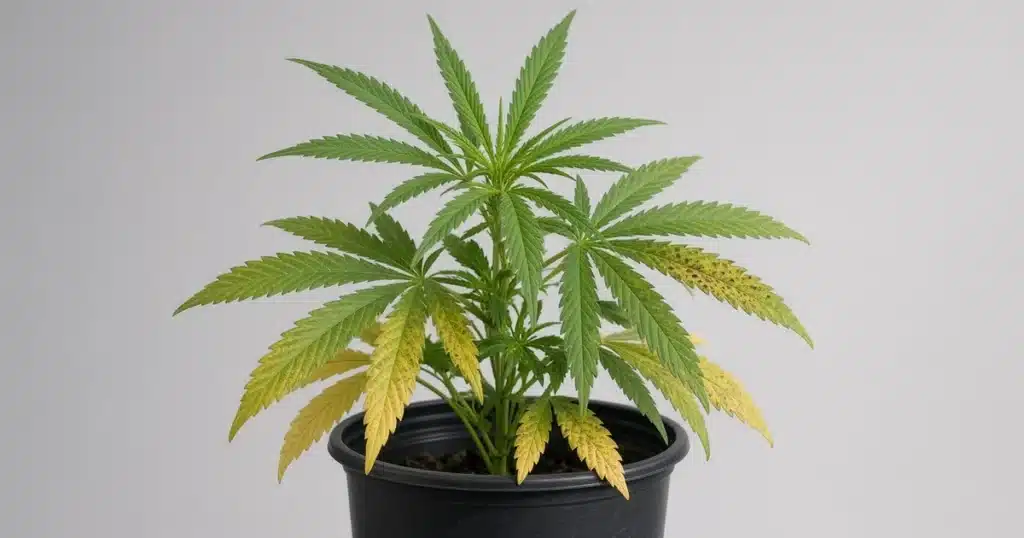
- Color that arrives with dull, twisted, or stalled new growth
Those are not one problem. Anthocyanin pigments can tint stems and petioles when genetics, temperature, or light favor them. Injury from ties or trellis can leave a red scrape that has nothing to do with nutrition. A plant that is still stacking healthy nodes is telling a different story than a plant that stopped.
Possibility list (not a ranked diagnosis)
Treat this as a checklist of common possibilities, not a flowchart that ends in one bottle.
| What you also see | Often discussed as… | First checks |
|---|---|---|
| Strong growth, healthy leaves | Genetics / pigment | Compare siblings, leave feed alone |
| Color after cold nights or a big day, night swing | Temperature response | Lights-off temp, root-zone chill |
| Slow growth, darker or dull leaves, odd pH | Uptake / nutrient stress | Runoff pH, feed strength, not a P bomb first |
| Heavy pot, droop, gnats, soggy mix | Overwatering / low root oxygen | Dry-back, drainage, pot size |
| Pink only where string rubs | Mechanical mark | Loosen ties, ignore as “deficiency” |
| Pale new tops plus stall | Broader stress or lockout | Environment and pH before extras |
Color alone almost never isolates a single cause. Two plants in the same tent can paint differently.
Genetics and pigment
Some cultivars express anthocyanins in stems even when the grow is ordinary. Colorful phenos do this more often late in flower or after nights cool down. If fan leaves look healthy, internodes keep coming, and the plant drinks on a normal rhythm, purple stems can be cosmetic.
Clues that lean genetic
- Sibling plants from the same pack show similar color
- New growth is the right size and shape for the stage
- No spreading necrosis or clawed, burnt margins
- The plant kept pace after the color appeared
If that is the picture, chasing a fertilizer “cure” is how growers create a second problem.
Temperature and the root zone
Cool nights are a classic reason stems take on purple or red tones. Outdoor autumn plants and indoor rooms with a hard lights-off drop see this often. Cold roots slow uptake even when nutrients are in the pot, which is why people then swear it was “phosphorus.”
What to note for a few days
- Lights-on versus lights-off temperature
- Whether fabric pots sit on a cold floor
- Whether color showed up right after an AC mishap or a cold snap
Mild cool nights are tolerable for many plants. Persistent cold that stalls water use or growth is worth easing, gradually, not with a sudden heat blast.
Nutrient stress without a fertilizer sermon
Forums often jump from purple stems to phosphorus. Phosphorus uptake can struggle when feed is too low for the stage, when pH is out of range, when roots are cold, or when salts have built up. Magnesium issues, general underfeeding, and lockout can confuse the same photo.
That is why purple stems are not proof of a phosphorus deficiency. Adding a bloom booster on day one can lock out other elements and still leave the real issue (wet roots, cold nights, wild pH) untouched.
A calmer order:
- Confirm the medium is not waterlogged.
- Measure feed and runoff pH (and EC if you already use it).
- Look at leaves and vigor, not stem paint alone.
- Correct environment and watering.
- Adjust nutrition in small steps if the plant still looks hungry.
Do not treat fertilizer as a cure-all for color.
Water, roots, and light
Constantly wet mix starves roots of oxygen. Droop, stall, and odd color often travel together. Lift the pot. If it stays heavy day after day, irrigation, not a micronutrient spray, is the first conversation.
Very intense light can tint petioles on some plants, especially when genetics already lean colorful. Heat stress, transplant shock, and physical damage can change appearance for a while. Watch whether growth continues cleanly after the event.
A calm walkthrough when you notice purple stems

- Vigor first. Is the plant still making nodes and holding turgor when the pot is correctly moist?
- Temperature log. Day and night for several cycles.
- Moisture. Weight and finger test beat a calendar.
- pH. Drift makes “deficiencies” appear when the bottle was not empty.
- Feed strength. Seedlings and early veg need less than a mid-flower plant.
- One change at a time. Wait before stacking three fixes.
- Genetics. One colorful, happy pheno in a pack is not a crisis.
Take faster action if purple stems arrive with spreading necrotic spots, a foul root-zone smell, limp plants that never recover after a proper dry-back, or a multi-day stall under otherwise decent light. Those patterns point at roots, pathogens, or serious lockout, the stem color is the headline, not the whole chart.
What not to do
- Do not diagnose from stem color alone
- Do not pour phosphorus or a “purple stem fix” as the first move
- Do not ignore cold, wet roots while chasing foliar sprays
- Do not cull a vigorous, colorful plant because a forum thumbnail looked scary
For seed types that suit the space you actually have, browse feminized seeds and autoflower seeds. Color expression still depends on the plant in front of you.
FAQ
Are purple cannabis stems always a deficiency?
No. Genetics and cool nights explain many healthy cases. Pair color with leaves, growth rate, moisture, and pH before you change the recipe.
Do purple stems mean the buds will be purple?
Not necessarily. Shared pigment potential can show up in both places, but stem color does not guarantee colorful flowers.
Should I add more bloom nutrients if stems turn purple in flower?
Only after you rule out cold, wet roots, and pH drift. Late-flower color is often genetic or temperature-related. Extra phosphorus is not a default cure.
Can seedlings show purple stems?
Yes. Young plants are extra sensitive to cold, overwatering, and strong feed. Check those first. A little color on an otherwise lively seedling is not an automatic emergency.
Do autoflowers follow the same rules?
Yes for causes. Autos just offer less calendar time to recover from a long overcorrection, so change one variable and watch closely.
Purple stems are a reason to observe, not a reason to panic-shop. Genetics, temperature, uptake issues, watering, light, and injury can all paint a stalk, often more than one at once. Correct the room and the wet/dry cycle first, verify pH, then adjust feed carefully. Keep a healthy colorful plant rather than “fixing” pigment that was never the problem.