
Cannabis Root Hairs: How Roots Drink and Feed
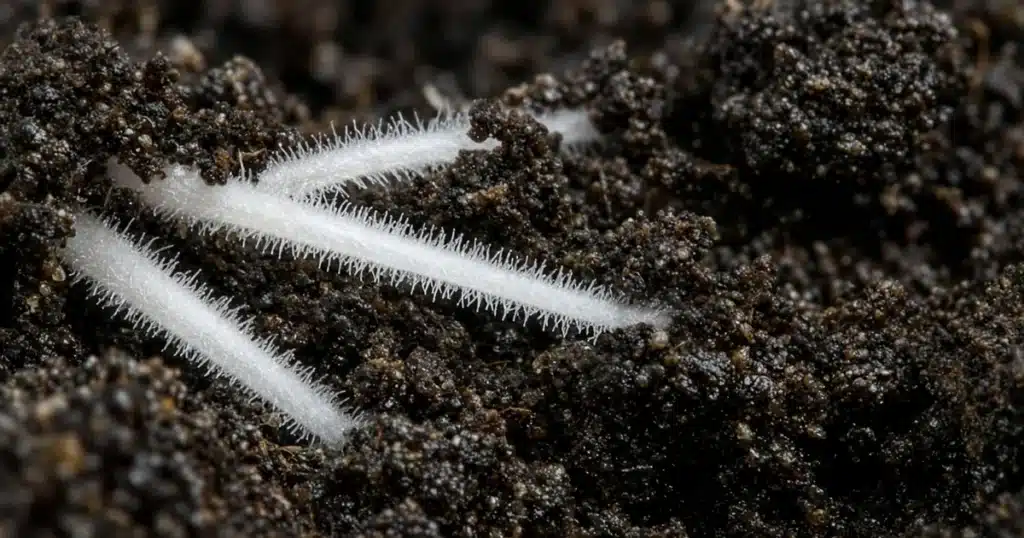
Quick answer: Root hairs are tiny outgrowths of the outer cells of a root, and they are where most water and nutrients enter a plant. Per NC State Extension, they form just behind the growing tip, live only a few days or weeks, and are constantly replaced as roots push into new soil. Older sections of root lose their hairs and stop absorbing water. For cannabis growers, the lesson is simple: the fresh, actively growing root tips do the feeding, so anything that keeps those tips growing in moist, airy mix helps the whole plant.
What Are Cannabis Root Hairs?
If you slide a young cannabis plant out of its pot, you may see a faint white fuzz on the newest roots. That fuzz is the root hairs. Each hair is a single cell of the root’s outer skin, the epidermis, stretched into a long, thin tube.
NC State’s Extension Gardener Handbook botany chapter describes the epidermis as the outermost layer of root cells, responsible for absorbing water and dissolved minerals. Root hairs grow out of those epidermal cells and multiply the surface area that touches the soil many times over.
They are easy to confuse with fine side roots, but they are much smaller and far more short lived. A side root is a whole new branch with its own tip. A root hair is just one cell that reaches out into the gaps between soil particles.
Root hairs also help anchor a young plant. By weaving through the gaps between particles of mix, they hold soil close to the root surface. That close contact is part of why water and nutrients move in so easily, and why a gap of air around a root slows uptake.
Where Do Root Hairs Grow on a Root?
Root hairs grow in the zone of maturation, a short band just behind the growing tip of each root. The tip itself has distinct zones lined up behind it. The Virginia Cooperative Extension Master Gardener training chapter on botany describes them in order. At the very end is the root cap, a layer of cells that wears away as the root pushes through soil and protects the growing point. Behind it is the zone of cell division, then the zone of elongation where cells grow longer, and then the zone of maturation where tissues finish forming and root hairs develop.
That order tells you a lot. Root hairs appear only on a short band of young root behind each tip. As the tip keeps moving forward, new hairs form ahead and the oldest ones behind them wither. NC State adds that older portions of a root have no root hairs and cannot absorb water.
In practice, a cannabis plant feeds from its newest roots. A plant whose roots stop growing also stops making fresh root hairs. Keeping roots active from the seedling stage through late flowering keeps the absorbing surface renewed.
How Do Root Hairs Form on Seedlings and Clones?
Root hairs show up very early in a cannabis plant’s life. Both the NC State and Virginia chapters describe the first root of a seedling producing root hairs along with its side roots. Within a few days of sprouting, a vigorous seedling root often looks fuzzy for exactly this reason, and that fuzz is the young plant’s first real drinking surface.
Clones follow a different path to the same place. A cutting has no roots at all, so it must form new ones from stem tissue. These are called adventitious roots. The Science of Plants chapter on hormones from Minnesota’s state university explains that auxin drives their formation. Once those new roots start to lengthen, root hairs appear behind their tips just as they would on a seedling.
The same Minnesota chapter lists ethylene, a gaseous plant hormone, among the signals that regulate root hair formation. You do not need to manage that hormone directly. Good drainage, steady moisture and gentle handling give roots what they need to keep producing fresh hairs.
Why Do Root Hairs Matter for Cannabis?
Root hairs matter because they do most of the absorbing. NC State calls them the main site where water and fertilizer get absorbed, and it says most of what a plant takes in passes through them. Virginia’s chapter agrees and places most absorption near the root tips, in the band that carries root hairs.
One tip in the same handbook is aimed at trees and shrubs. Watering right at the trunk does little good, because root hairs are most abundant out at the edge of the root system. The same idea fits a cannabis plant in a large bed or container. Spread water across the whole root zone, not just around the stem.
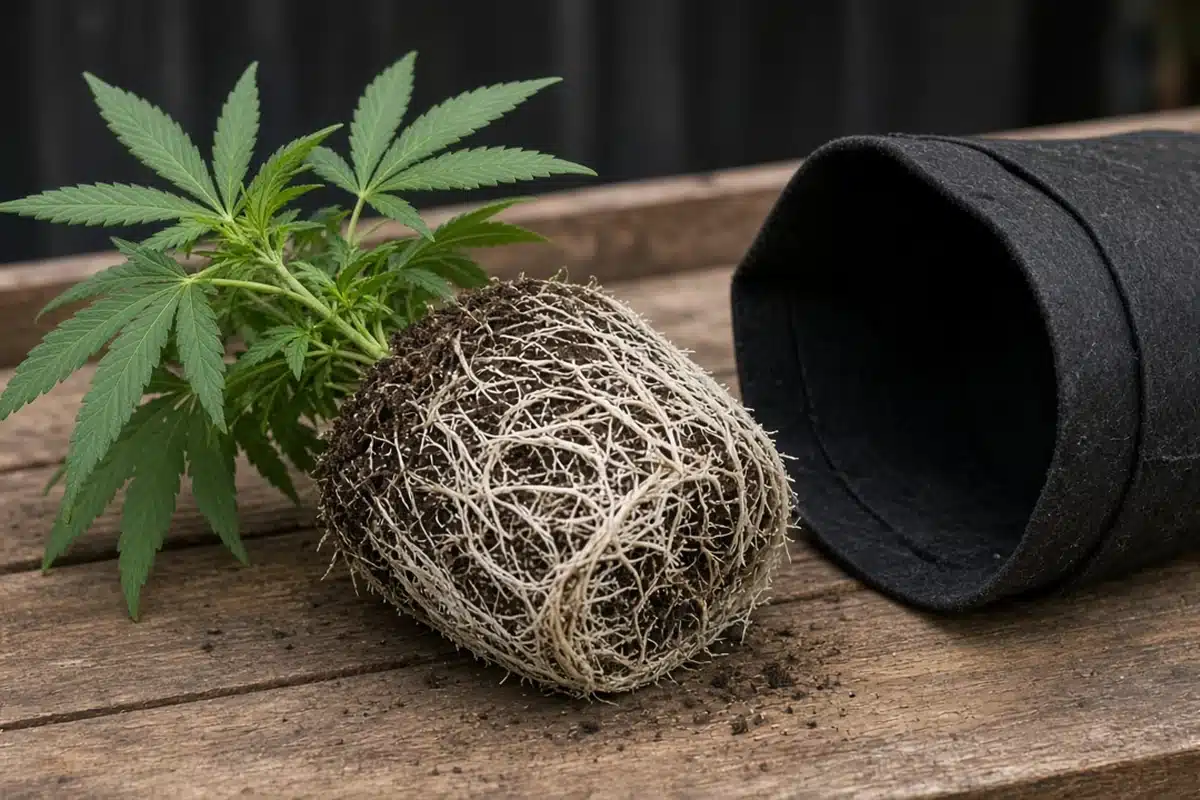
Containers change the picture a little. In a pot, roots quickly reach the walls and spread along them, so the outer layer of the root ball often holds a large share of active tips. That is worth remembering when you water, because a quick splash in the center may never reach the roots doing most of the work.
Our guide to why cannabis roots matter covers the wider root system, and the post on the cannabis root zone walks through moisture, air and temperature around the roots.
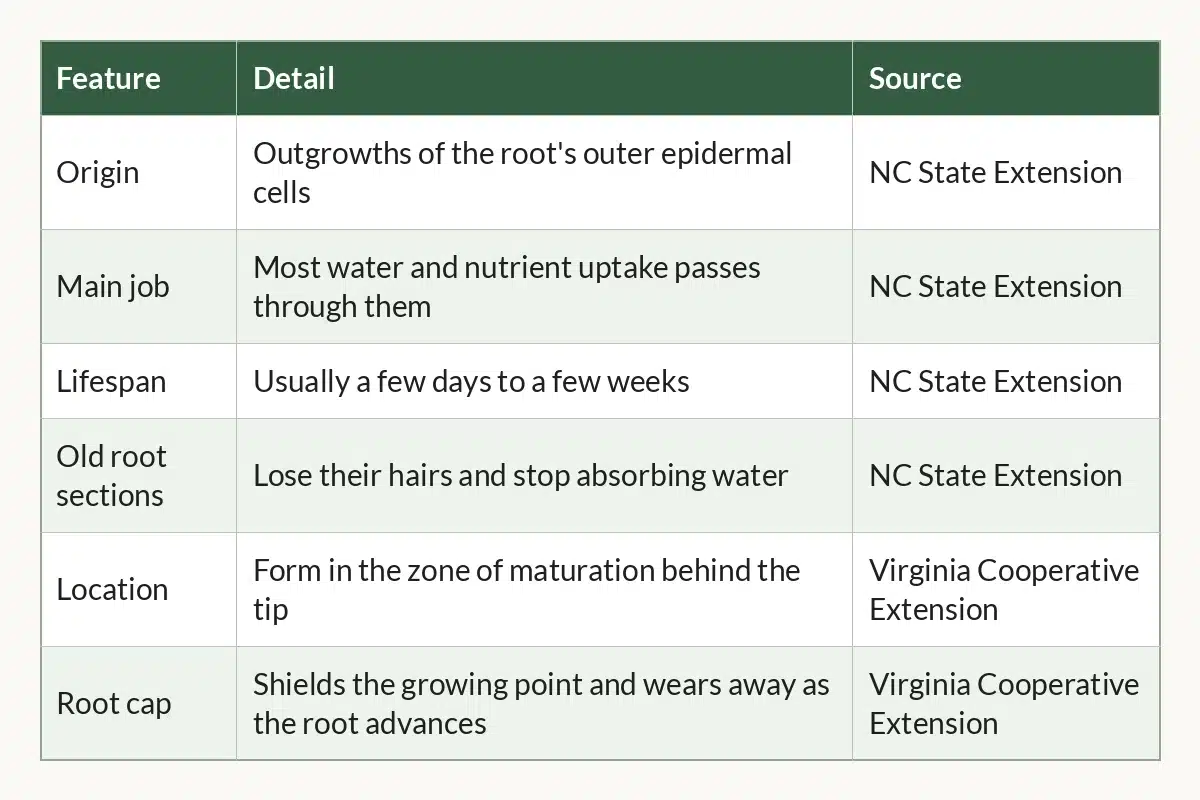
Cannabis Root Hairs at a Glance
| Feature | Detail | Source |
|---|---|---|
| Origin | Outgrowths of the root’s outer epidermal cells | NC State Extension |
| Main job | Most water and nutrient uptake passes through them | NC State Extension |
| Lifespan | Usually a few days to a few weeks | NC State Extension |
| Old root sections | Lose their hairs and stop absorbing water | NC State Extension |
| Location | Form in the zone of maturation behind the tip | Virginia Cooperative Extension |
| Root cap | Shields the growing point and wears away as the root advances | Virginia Cooperative Extension |
What Damages Root Hairs?
Root hairs are fragile. Because each one is a single thin cell, they tear easily and react quickly to poor conditions.
Too little air. The NC State handbook explains that roots grow best with a balance of moisture and air, and that a lack of soil oxygen limits growth and cuts water and nutrient uptake. It adds that soil that stays saturated or compacted can starve roots of oxygen. Overwatering cannabis in dense mix ranks among the fastest ways to lose fresh root hairs.
Compaction. The same chapter lists soil compaction as a limit on root growth. Tightly packed mix leaves little room for tips to advance and new hairs to form.
Rough handling. Root hairs sit on the outermost young roots, exactly the part most likely to tear when a root ball is pulled apart. That is why gentle transplanting, with the root ball intact, matters so much.
Drying out. A root zone that goes bone dry for long periods stresses the young tips. Fine hairs dry quickly once exposed to air.
How to Protect Cannabis Root Hairs
- Use an airy mix. Choose a growing medium with good drainage and plenty of pore space.
- Water, then let it dry back. NC State suggests letting soil become well moistened and then dry somewhat before watering again.
- Water the whole root zone. Spread water evenly so roots throughout the container get a share.
- Transplant gently. Move plants with the root ball intact and avoid shaking loose mix from the roots.
- Avoid packing the mix. Fill containers loosely and do not press down hard.
- Keep new tips coming. Steady moisture and mild temperatures keep fresh tips, and fresh hairs, forming all season.
- Keep the root zone moderate. Avoid extremes of heat and cold around containers.
Many growers also add beneficial fungi to the mix. Our article on what mycorrhizae are explains how these fungal partners work alongside roots.
Troubleshooting Root Hair Problems
Plant droops even though the mix is wet. Roots may lack air. Let the container dry back further and check drainage.
Brown, slimy roots with no fuzz. Roots have been waterlogged. Improve drainage and water less often.
Slow growth after transplant. Root hairs were likely torn. Keep conditions mild and steady while new tips grow.
Roots at the pot wall look bare. Older roots shed their hairs as the tips move on. Look for fresh white tips before you worry.
Dry pockets in the container. Water is channeling. Water slowly in several passes so the whole mix wets.
Sources
- NC State Extension, Extension Gardener Handbook, Chapter 3 Botany: https://content.ces.ncsu.edu/extension-gardener-handbook/3-botany
- Virginia Cooperative Extension, Master Gardener Handbook, Chapter 1 Botany: https://pressbooks.lib.vt.edu/emgtraining/chapter/1/
- University of Minnesota, The Science of Plants, 4.2 Plant Hormones: https://open.lib.umn.edu/horticulture/chapter/4-2-plant-hormones/
FAQ
What do root hairs look like on cannabis?
A fine white fuzz on the newest root tips, often easiest to see on seedlings and clones.
How long do root hairs live?
Most last only a few days to a few weeks before new ones replace them.
Do old cannabis roots absorb water?
Very little. Older root sections lose their hairs, so absorption happens mostly near the tips.
Can overwatering harm root hairs?
Yes. Waterlogged mix pushes out air, and roots need oxygen to keep growing new hairs.
Should I tease apart roots when transplanting cannabis?
Keep the root ball intact when you can, since root hairs tear easily.


