Cannabis Plant Hormones: What Each One Does
Quick answer: Cannabis, like every green plant, runs on five main groups of hormones: auxin, gibberellin, cytokinin, ethylene and abscisic acid. Oregon State Extension describes them as natural chemicals that cause large growth changes at very small concentrations. Auxin steers stems and roots, gibberellin lengthens stems, cytokinin drives cell division, ethylene handles ripening and aging, and abscisic acid helps the plant cope with dry conditions. Growers rarely add hormones. Instead, everyday choices like topping, bending and watering shift the balance the plant already makes.
What Are Plant Hormones?
A hormone is a signal molecule made in one part of a plant that changes growth somewhere else. The amounts involved are tiny. Oregon State’s Extension guide EM 9902 on hormones and growth regulators draws a clear line here: hormones are produced naturally by the plant, while plant growth regulators are substances people apply.
Each hormone group contains both natural forms and synthetic look alikes. The same guide notes that most groups have members of each kind, which is why the names on product labels can look so similar to the chemistry inside the plant.
Hormones rarely act alone. The Science of Plants, an open horticulture textbook published in Minnesota, stresses that a cell responds to the sum of many signals, shaped by its genetics, its physiology and its surroundings. Growers should keep that in mind. One change in the grow room can nudge several hormones at once.
Why should a grower care? Almost every training method works through these signals. Low stress training, supercropping and topping all change where auxin is made or how it travels. Knowing the basic roles helps you predict how a plant will answer a given cut or tie, instead of relying on guesswork.
What Does Auxin Do in Cannabis?
Auxin is the steering hormone. It is made mostly in the growing tips, then moves down through the stem and shapes the plant’s form. The Oregon guide lists its main effects as bending toward light, roots growing downward with gravity, dominance of the main shoot tip, flower formation, fruit set and the formation of new roots on cuttings.
For cannabis growers the most visible auxin effect is apical dominance, the hold a growing tip keeps on the buds below it. The point to take from it here is that auxin is a moving signal. Where it is made and which way it flows decide which buds wake up, which is why topping a cannabis plant reshapes the whole canopy.
Auxin is also why clones root. The Oregon publication lists the formation of new roots on cuttings among the jobs auxin does. The Minnesota text adds that some plants make enough natural auxin in the shoot to root without any help.
How Do Gibberellins and Cytokinins Shape Growth?
Gibberellins are the stem stretching hormones. The Minnesota chapter calls them primary regulators of stem elongation and seed sprouting, and notes there are over one hundred related molecules. They were first found by researchers studying a rice disease that made seedlings grow very tall with little grain.
Too much stretch in young cannabis is usually a light issue, not a gibberellin issue. Weak or distant lights make stems reach, and the fix is better light rather than anything added to the plant. So check the lights before blaming hormones for lanky growth.
Gibberellins have a quieter job as well. The NC State Extension Gardener Handbook botany chapter notes that they help a sprouting seed make the enzymes that break down its stored starches and proteins for the embryo. It adds that they can also stimulate flowering and increase leaf size in some plants.
Cytokinins push cell division, the process that makes new cells. They also work in a tug of war with auxin. In classic tissue culture research described in the Minnesota text, a high ratio of cytokinin to auxin produced shoots, while more auxin led to roots. Oregon State Extension adds that cytokinins are used to slow aging in plant tissue.
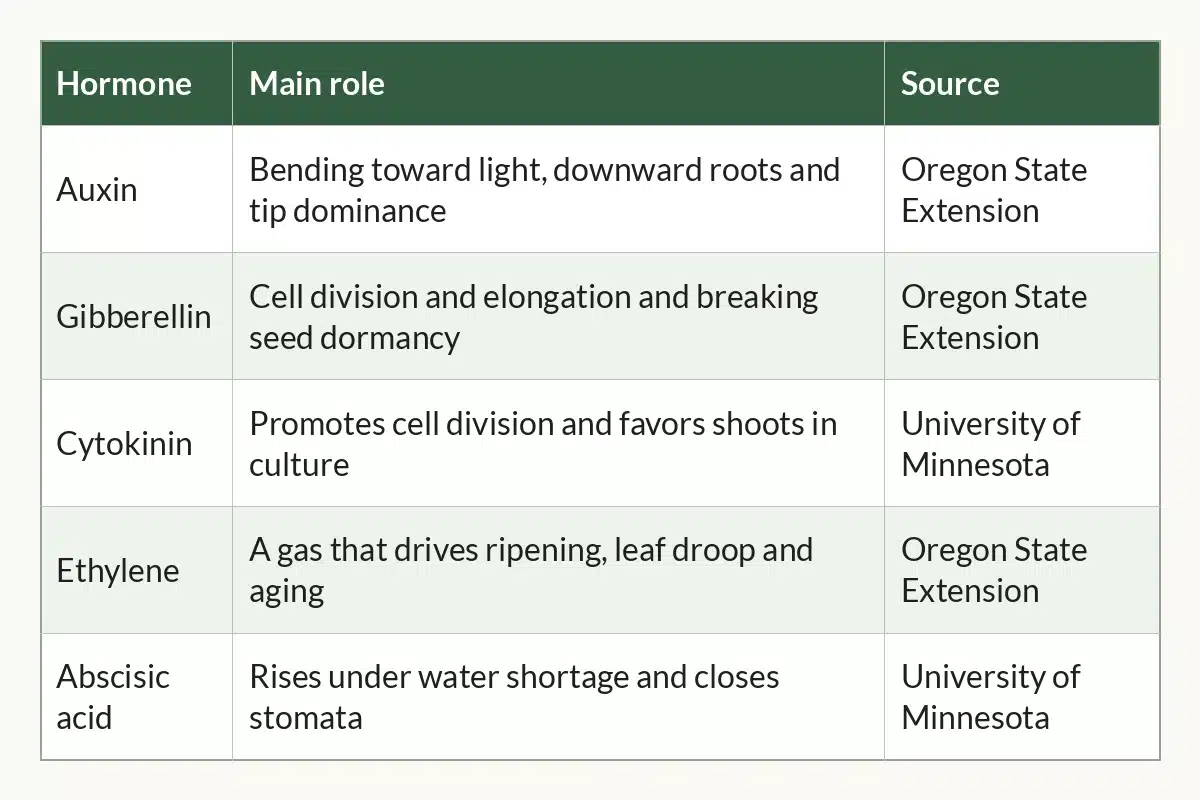
Cannabis Plant Hormones at a Glance
| Hormone | Main role | Source |
|---|---|---|
| Auxin | Bending toward light, downward roots and tip dominance | Oregon State Extension |
| Gibberellin | Cell division and elongation and breaking seed dormancy | Oregon State Extension |
| Cytokinin | Promotes cell division and favors shoots in culture | University of Minnesota |
| Ethylene | A gas that drives ripening, leaf droop and aging | Oregon State Extension |
| Abscisic acid | Rises under water shortage and closes stomata | University of Minnesota |
What Do Ethylene and Abscisic Acid Do?
Ethylene is the only hormone that exists as a gas. The Oregon guide says it brings on ripening, causes leaves to droop and drop, and speeds aging. Plants often raise ethylene output under stress, and levels climb near the end of a plant’s life. The Minnesota chapter adds that ethylene also regulates seedling growth and root hair formation, and it lists natural gas, propane and their combustion byproducts as sources of ethylene type gases. That is one reason growers keep fuel heaters well vented.
Ethylene matters at harvest time on many crops, though cannabis is grown for flowers rather than ripening fruit. Still, the same gas is part of the aging process in older leaves, which is one reason lower fan leaves yellow and drop as a plant matures.
Abscisic acid, or ABA, is the brake. Minnesota’s text explains that ABA levels rise as water becomes scarce and trigger stomata to close, which slows water loss through the leaves. Oregon State calls it a general growth inhibitor that encourages dormancy and the dropping of leaves, fruit and flowers.
ABA is part of the story when a cannabis plant wilts between waterings and then perks up. The plant closes its leaf pores to save water and opens them again once the roots can supply more.
Can Growers Influence Cannabis Hormones?
Yes, mostly through ordinary care rather than added products. Each of these common steps shifts hormone signals:
- Topping and pinching remove the auxin source at the tip and release side branches.
- Bending and tying stems changes how auxin flows, which spreads growth across more tops.
- Light direction moves auxin to the shaded side and bends the stem.
- Watering habits affect ABA and stomata, and steady moisture keeps growth even.
- Clean air around fuel heaters limits stray ethylene type gases.
Synthetic growth regulators exist as well. The Oregon guide lists growth retardants that stop stem elongation in selected ornamental crops such as chrysanthemums and poinsettias. That is ornamental crop research, not cannabis guidance. Before using any additive, read our guide on what to look for with PGR weed and follow the rules in your state.
Flowering is a separate topic shaped by night length. The guide to how cannabis plants measure time explains the light signals behind that switch.
Simple Steps to Work With Your Plant’s Hormones

- Decide on shape early. Top or bend in vegetative growth so the plant has time to respond.
- Train with gentle angles. Tie stems out slowly rather than snapping them flat.
- Keep light overhead. Even light keeps auxin balanced and stems straight.
- Water on a steady rhythm. Avoid long dry spells that keep stomata closed for days.
- Vent combustion heaters. Keep fuel heaters outside the grow space or well ventilated.
- Root cuttings with care. Use fresh, clean cuttings and warm, humid conditions for clones.
- Skip unknown additives. Natural hormones already do the work in a well run grow.
Troubleshooting Hormone Related Growth
Lower fan leaves yellow and drop late in the season. Ethylene and natural aging both play a part. Some loss low on the plant is normal as it matures.
Long, stretched stems. Often low light rather than a hormone problem. Improve light first.
Leaves drooping downward without wilting. Ethylene can cause downward leaf bending, so check for unvented heaters along with watering.
Plants wilt often between waterings. Water stress keeps ABA high. Adjust pot size and watering rhythm.
Clones slow to root. Auxin supply may be low or conditions poor. Take cuttings from vigorous mothers and keep humidity up.
Sources
- Oregon State University Extension, How Hormones and Growth Regulators Affect Your Plants (EM 9902): https://extension.oregonstate.edu/catalog/em-9902-how-hormones-growth-regulators-affect-your-plants
- University of Minnesota, The Science of Plants, 4.2 Plant Hormones: https://open.lib.umn.edu/horticulture/chapter/4-2-plant-hormones/
- NC State Extension, Extension Gardener Handbook, Chapter 3 Botany: https://content.ces.ncsu.edu/extension-gardener-handbook/3-botany
FAQ
How many types of plant hormones are there?
Five main groups: auxin, gibberellin, cytokinin, ethylene and abscisic acid.
Which hormone makes cannabis grow tall?
Gibberellin lengthens stems, and auxin from the tip keeps the main stem in the lead.
Can ethylene build up indoors?
It can near unvented fuel heaters, which give off ethylene type gases. Vent them well or keep them outside the space.
Do I need to add hormones to grow cannabis?
No. The plant makes its own, and training, light and watering steer them.
What hormone helps cannabis handle dry soil?
Abscisic acid. It rises when water is short and closes the leaf pores.