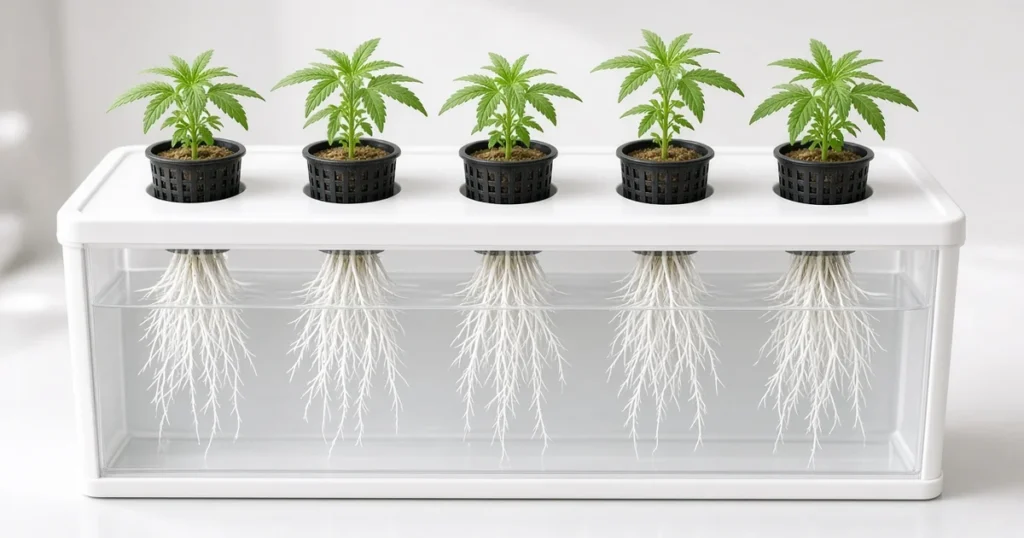
Clay Pebbles for Cannabis: Using Expanded Clay Media
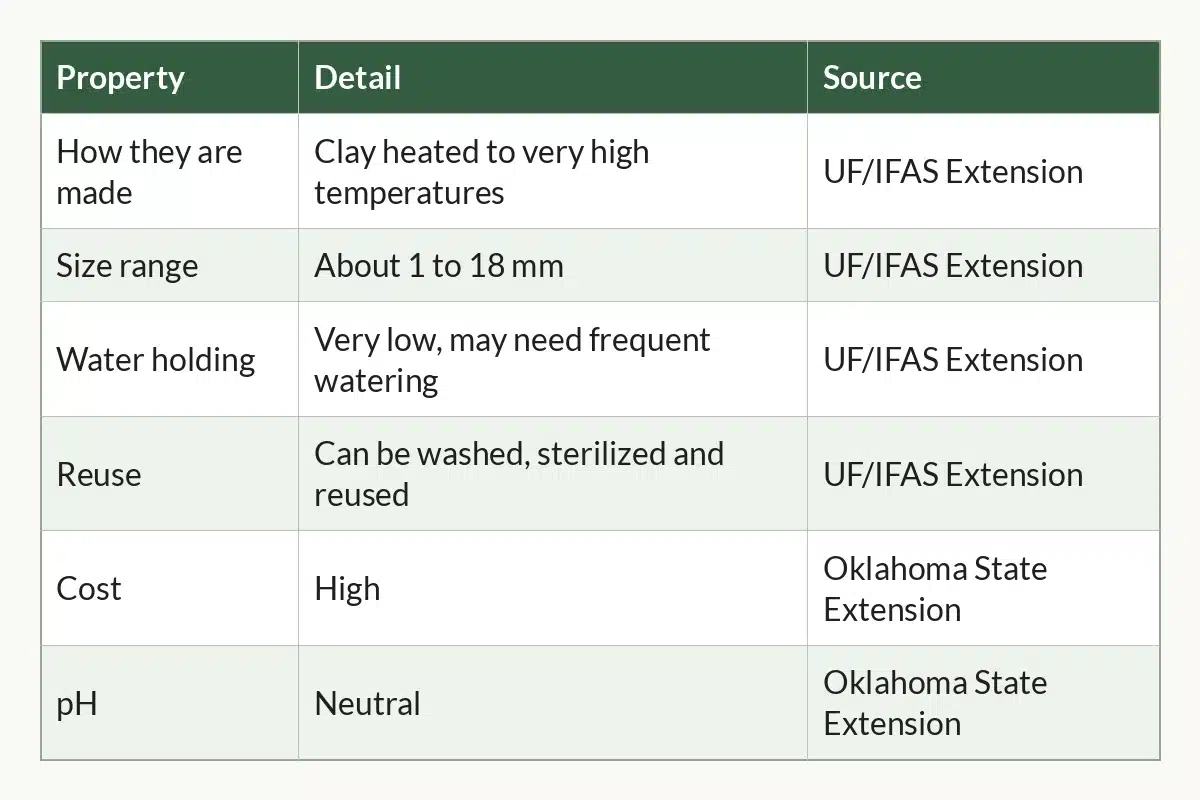
Quick answer: Clay pebbles, also sold as expanded clay aggregate or grow rocks, are small balls of clay heated in a kiln until they puff up and become porous. UF/IFAS Extension notes that they come in sizes from about 1 to 18 millimeters, hold very little water and can be washed, sterilized and reused. An Oklahoma State Extension chart rates them as reusable and pH neutral but high in cost. For cannabis, clay pebbles work best in hydroponic systems and as a coarse layer or additive in containers where roots need lots of air.
What Are Clay Pebbles?
Manufacturers make clay pebbles by heating dry clay in rotary kilns at very high temperatures. Gases released inside the clay expand it into round, lightweight pellets with a hard shell and a honeycomb of pores inside. The result is a sterile, inert medium that holds its shape for years.
Oklahoma State Extension explains the process in a comparison of soilless growing mediums. It describes the pellets as heavy enough to give plants secure support yet still lightweight. Their round shape and porosity help keep a good balance of oxygen and water so roots neither dry out nor drown. The fact sheet also lists clay pebbles among the most widely used media in aquaponics.
Purdue University Extension discusses the same material under the name light expanded clay aggregates in a bulletin on container substrate components. It notes that the clay type and firing temperature vary by product, which changes the final properties.
Clay pebbles add structure but no food, the amendment side of the split our hub page explains.
How Do Clay Pebbles Hold Water and Nutrients?
Clay pebbles hold far less water than soil or coco. The UF/IFAS publication on hydroponic growing media says expanded clay retains very little water, and growers may need to run watering cycles more often. That suits systems that flood and drain often or drip all the time.
Florida also notes that expanded clay has a high cation exchange capacity, meaning it can store nutrients and salts on its surfaces. That storage has an upside and a downside. Pebbles can buffer a bit of nutrient between feedings, but they can also accumulate salts over time and need rinsing between crops.
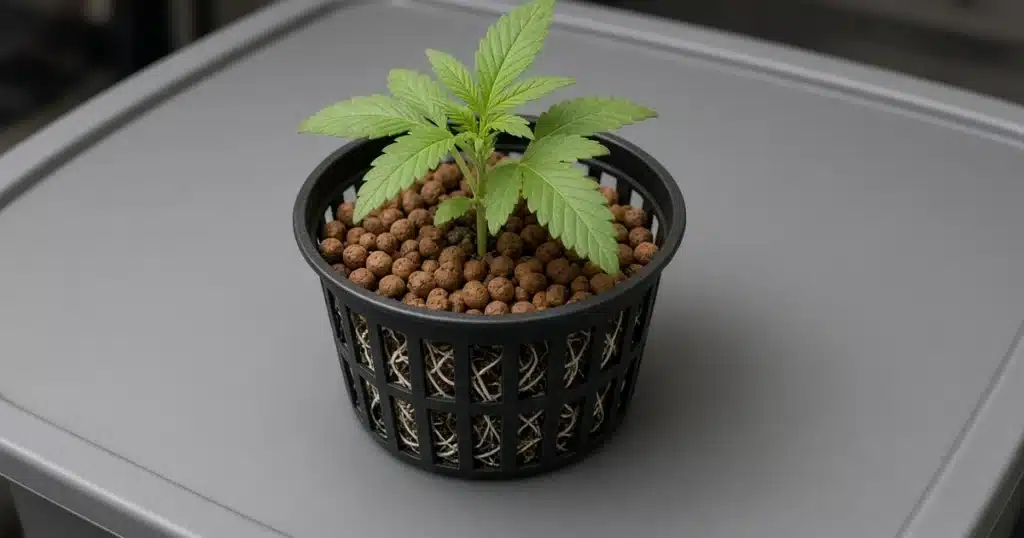
Pebbles are usually reddish brown on the outside and darker inside if you break one open. They feel surprisingly light for their size, and a full bag weighs far less than the same volume of gravel. Pebble size matters too. Florida says the right pebble size depends on how much aeration you need. Small pebbles hold a bit more moisture between them, while large ones create big air gaps.
Purdue adds a useful comparison with perlite. After watering, perlite often rises to the surface of a mix, while expanded clay stays put. Clay pebbles also do not break down over time, which can help stabilize mixes meant to last a long time. Purdue notes that their higher bulk density limits their use in some container mixes.
Clay Pebbles at a Glance
| Property | Detail | Source |
|---|---|---|
| How they are made | Clay heated to very high temperatures | UF/IFAS Extension |
| Size range | About 1 to 18 mm | UF/IFAS Extension |
| Water holding | Very low, may need frequent watering | UF/IFAS Extension |
| Reuse | Can be washed, sterilized and reused | UF/IFAS Extension |
| Cost | High | Oklahoma State Extension |
| pH | Neutral | Oklahoma State Extension |
Are Clay Pebbles Good for Cannabis?
Yes for hydroponic systems, but they hold too little water to be the main medium in a soil pot. In hydroponic systems such as ebb and flow tables, drip buckets and deep water culture net pots, clay pebbles provide support while letting nutrient solution and air reach the roots. Cannabis roots tend to spread fast in that open, airy space. Our overview of hydroponics in different mediums compares clay pebbles with rockwool, coco and other options.
In soil containers, pebbles are less useful as the main medium because they hold so little water. Mixed in at a small share, they open up a dense blend in a way similar to perlite, though they add more weight. Some growers also top dress pots with a thin layer of pebbles to reduce surface algae and fungus gnats by keeping the top dry.
Coco coir is a common partner. A mix of coco and pebbles balances water holding with air space. The coco coir grow medium guide describes how coco behaves on its own and in blends.
Watering habits need to change when pebbles go into a soil pot. A mix heavy in pebbles dries out in hot weather much faster than plain potting soil. Cost is the main drawback. Florida points out that the high price keeps expanded clay mostly in the hands of hobbyists, while large commercial growers choose cheaper media. Reusing them over several crops softens the blow.
For a porous stone that also works in soil pots, see lava rock for cannabis containers.
How Do Clay Pebbles Compare With Other Hydroponic Media?
Florida’s hydroponic guide offers useful contrasts. Rockwool, made by spinning heated rock into fibers, holds much more water and has a slightly basic pH that may need adjusting before use. It cannot be reused and does not biodegrade, which Florida describes as a major disposal issue. Clay pebbles avoid that waste because they last for many crops.
Coco coir is renewable and holds water well, but Florida cautions that both fine and chunky coco can clog recirculating systems. Pebbles do not shed particles that block pumps once their initial dust is rinsed away, and that helps explain their popularity in ebb and flow tables.
Sand is cheap but heavy and has little to no nutrient holding capacity. Pebbles are far lighter for the volume and easier to handle in raised trays.
For cannabis, the system usually makes the choice for you. Recirculating setups favor pebbles. Hand watered pots favor coco or a soil based mix. Many growers use both, starting clones in cubes and then setting the cubes into a bed of pebbles.
How Do You Clean and Reuse Clay Pebbles?
Florida lists expanded clay among reusable media along with sand, gravel and pumice. It warns that media can carry pathogens from earlier crops, so each planting should start with a clean system. The publication describes steam sterilization at temperatures above 180°F as one method.
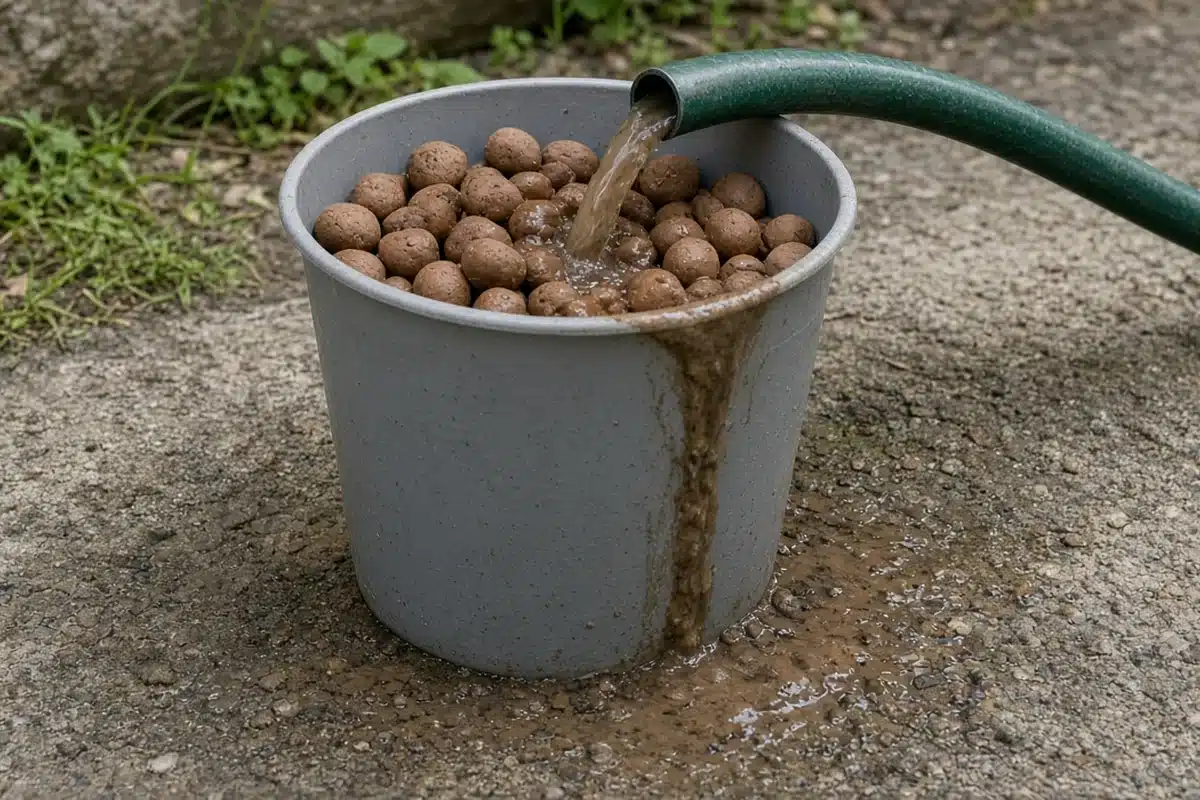
At home, cleaning usually starts with removing old roots and soaking the pebbles. Fine roots grow into the pores and around each ball, so a firm scrub in a bucket or a few passes through a screen helps loosen them before rinsing. Rinse until the water runs clear, then sterilize by steaming or another method suited to your setup. Dry them fully before storage.
Regular care of the whole system matters too. Our walkthrough on caring for your hydroponic system covers cleaning schedules, reservoir checks and other routine tasks.
How to Use Clay Pebbles for Cannabis
- Pick a size. Medium pebbles around 8 to 16 millimeters suit most net pots and buckets.
- Rinse before first use. New pebbles carry clay dust that clouds water and can clog pumps.
- Soak overnight. Presoaking lets the pores fill with water so pebbles do not float.
- Check pH of the soak water. Make sure the pebbles are not shifting pH before planting.
- Fill pots or trays. Set seedlings or rooted clones so their root zone sits within the pebbles.
- Water often. Run flood or drip cycles more frequently than you would water soil.
- Rinse and sterilize between crops. Remove old roots and clean the pebbles before reuse.
Troubleshooting Clay Pebble Problems
Water turns cloudy. Dust remains from manufacturing. Rinse more until the water runs clear.
Plants wilt between cycles. Pebbles dry quickly. Increase watering frequency or add a more water retentive medium.
White crust forms on pebbles. Salts are building up. Flush with plain water and lower feed strength.
Pebbles float out of pots. Dry pebbles are buoyant. Presoak them and add a heavier top layer if needed.
Roots look brown and slimy. The system may not be clean. Sterilize pebbles and check water temperature and oxygen.
Sources
- University of Florida IFAS Extension, Common Media Used in Hydroponics (EP623): https://ask.ifas.ufl.edu/publication/EP623
- Oklahoma State University Extension, Soilless Growing Mediums: https://extension.okstate.edu/fact-sheets/soilless-growing-mediums
- Purdue University Extension, Evaluating Container Substrates and Their Components (HO 255 W): https://www.extension.purdue.edu/extmedia/ho/ho-255-w.pdf
FAQ
Can I grow cannabis in clay pebbles alone?
Yes, in a hydroponic system that delivers nutrients and water often. In a plain pot, they dry out too quickly.
Do clay pebbles change pH?
Oklahoma State lists them as neutral. Rinse new pebbles and check soak water to be sure.
How many times can I reuse clay pebbles?
Many times, as long as you clean and sterilize them between crops.
Are clay pebbles better than perlite?
They last longer and do not float, but they are heavier and cost more.
Do clay pebbles hold nutrients?
Florida notes they have high cation exchange capacity, so they can store some nutrients and salts.