Soil Amendment vs Fertilizer: What Each One Does in a Cannabis Garden
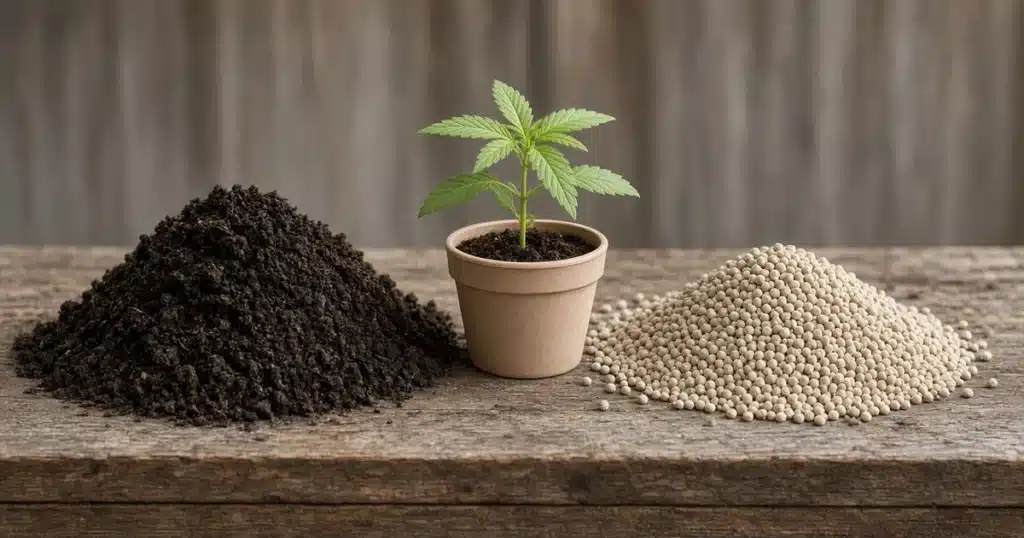
Quick answer: A soil amendment changes the physical condition of soil, such as drainage, water holding, aeration and structure. A fertilizer supplies nutrients that plants take up directly. CSU Extension defines an amendment as any material added to improve the physical properties of soil, and a UC Master Gardener group on the Central Coast describes a fertilizer as material that affects growth directly by adding nutrients. Some products do both. Composted manure, for example, conditions soil and also feeds plants. For cannabis, amendments build the foundation and fertilizers fill nutrient gaps.
What Is a Soil Amendment?
An amendment works on the soil itself rather than on the plant. In a Colorado State fact sheet on choosing an amendment, CSU Extension explains that the goal is a better environment for roots. On clay soils, amendments can improve aggregation, porosity, drainage and rooting depth. Sandy soils gain the ability to hold more water and nutrients.
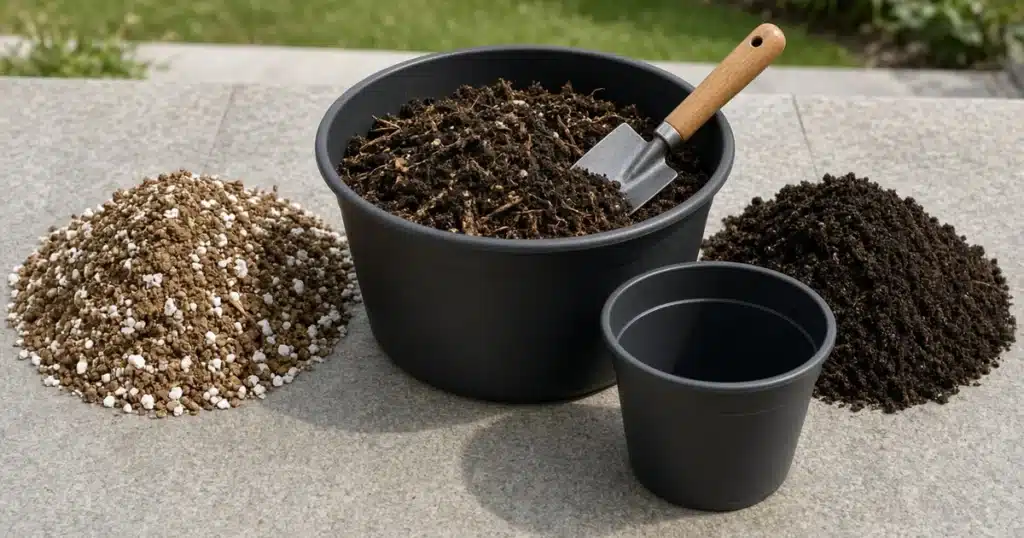
Common amendments include compost, aged or composted manure, peat moss, coir, worm castings and composted wood products. Mineral options such as perlite, pumice and gypsum also fall into this group when they are added mainly for structure.
Colorado State stresses that an amendment needs to be thoroughly mixed into the soil. Material simply buried or laid on top works less well and can even interfere with water and air movement. That separates amending from mulching, where material stays on the surface.
What Is a Fertilizer?
A fertilizer is defined by what it adds. The UC Master Gardener page on fertilizers and amendments describes it as material that directly affects plant growth through added nutrients.
Fertilizers can be organic, like feather meal or bone meal, or mineral, like ammonium sulfate or sulfate of potash. Most list three numbers for nitrogen, phosphate and potash.
Colorado State adds a legal angle in a page on understanding fertilizers. By law, a product sold as fertilizer must carry uniform labeling that states minimum nutrient percentages. Our fertilizer label guide breaks down those three numbers and the fine print.
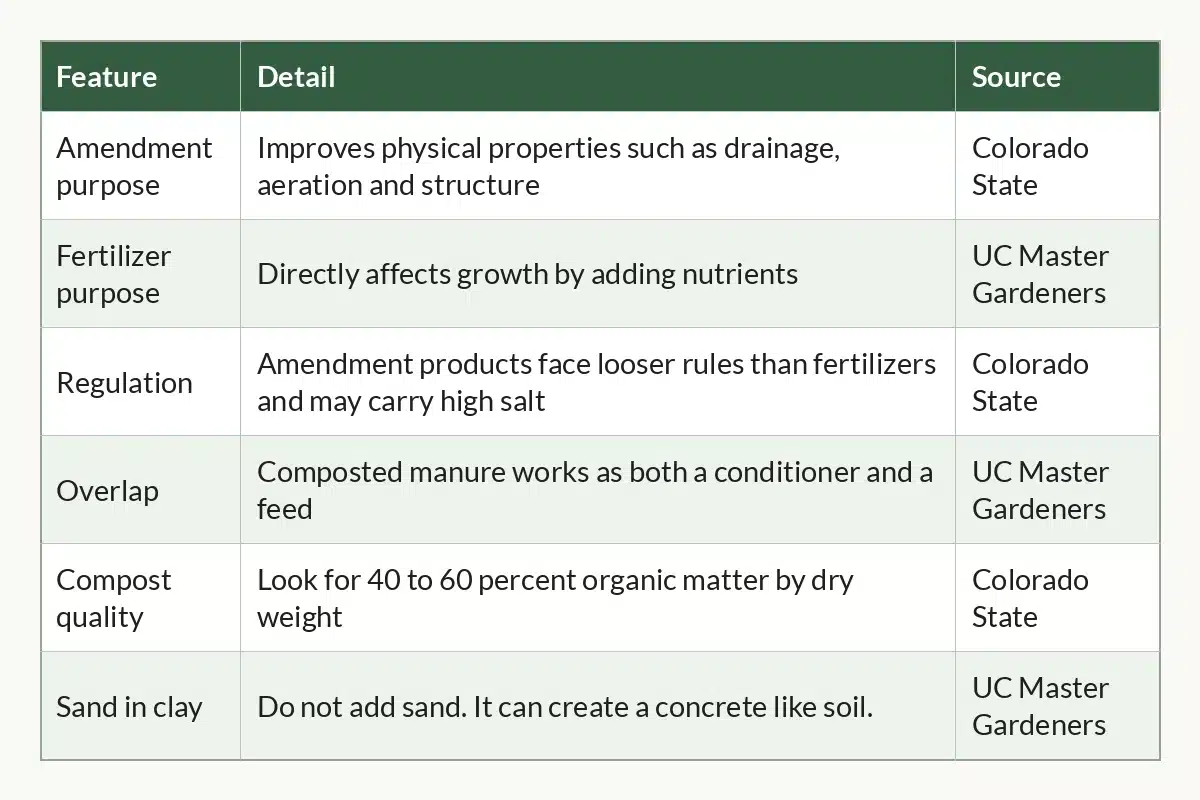
Amendments vs Fertilizers at a Glance
| Feature | Detail | Source |
|---|---|---|
| Amendment purpose | Improves physical properties such as drainage, aeration and structure | Colorado State |
| Fertilizer purpose | Directly affects growth by adding nutrients | UC Master Gardeners |
| Regulation | Amendment products face looser rules than fertilizers and may carry high salt | Colorado State |
| Overlap | Composted manure works as both a conditioner and a feed | UC Master Gardeners |
| Compost quality | Look for 40 to 60 percent organic matter by dry weight | Colorado State |
| Sand in clay | Do not add sand. It can create a concrete like soil. | UC Master Gardeners |
Where Do Amendments and Fertilizers Overlap?
The line between the two is not always sharp. The UC page names composted manure as one material that conditions soil and feeds plants at once. Colorado State adds that many organic amendments contain plant nutrients and behave like slow release fertilizers.
Worm castings show this well. Colorado State notes that castings hold water soluble nutrients that are released over several months. UC lists them as a soil conditioner that loosens soil and improves aeration. Both descriptions hold up.
Compost sits in the same middle ground. Colorado State calls it the gold standard of organic amendments yet it also says compost is not legally a fertilizer despite the plant available nutrients it carries.
In practice, the difference comes down to concentration. A true fertilizer delivers a known, useful amount of nutrients per pound. An amendment usually adds only small amounts, so it rarely replaces feeding for a hungry crop like cannabis.
Are Organic and Mineral Amendments Different?
Colorado State splits amendments into two groups. Organic amendments come from living material and raise soil organic matter. Over time they improve aeration, water infiltration and the ability of soil to hold water and nutrients. They also feed the bacteria, fungi and small creatures that keep soil active.
Mineral amendments, such as gravel, sand or expanded rock, are used more for special situations like cactus beds or heavily trafficked ground. Colorado State notes that research on mixing gravel into beds is mixed, and in many cases it makes drainage worse rather than better. In containers, porous minerals such as perlite and pumice behave differently because the whole mix is designed around them.
Not every organic material makes a good amendment. Fresh sawdust and wood chips pull nitrogen from the soil as microbes break them down, which can leave plants yellow for months. Colorado State suggests composting wood products first. Peat raises a different issue. It holds water well, but Colorado State notes it cannot be harvested sustainably and points to coir as a renewable alternative.
Is Mulch an Amendment?
Not while it stays on top. Colorado State draws a clear line between the two. Mulch stays on the surface to slow evaporation, limit weeds and moderate soil temperature. An amendment is mixed through the soil to change its structure.
The same material can play both roles. Straw or shredded leaves start as mulch on a cannabis bed, then get worked in as amendments once they break down. Thinking of the two roles separately helps you decide whether a material belongs on the surface or in the mix.
Why Do Cannabis Growers Need Both?
Cannabis grows fast and uses a lot of nitrogen, potassium and other nutrients across a season. It also needs loose, well aerated soil that drains freely yet holds enough moisture.
Amendments take care of the second job, making the soil a better home for roots. Fertilizers handle the first job by supplying nutrients at the rate the plant demands.
According to Colorado State, organic matter gives up its nitrogen slowly, which means compost seldom stands in well for fertilizer when a crop draws heavily on nitrogen. Its nitrogen table drops the routine rate as soil organic matter rises, reaching zero at 5 percent or more.
Many organic growers build a rich base mix of compost, aeration and organic meals, then add little else. Our recipe for how to make super soil shows that blend of amendments and slow fertilizers in one batch. For a broader look at fertilizer types, read our breakdown of organic and mineral feeding approaches.
How Do You Choose the Right Product?
Start with a soil test and a clear goal. Colorado State says amendment decisions should follow site conditions and test results rather than a universal recipe.
- Heavy clay that stays wet. Add compost or other organic amendments. UC advises against sand in clay soil.
- Sandy soil that dries out fast. Add well decomposed compost or aged manure to hold more water.
- Pale, slow growth with good structure. The soil likely needs fertilizer rather than more amendment.
- High pH. Peat lowers pH slowly according to UC, while a soil test guides any further adjustment.
Watch salts with both product types. Colorado State warns that manure and biosolid products are often very high in salts, and UC notes that California soils already run salty due to low rainfall.
How to Use Amendments and Fertilizers Together
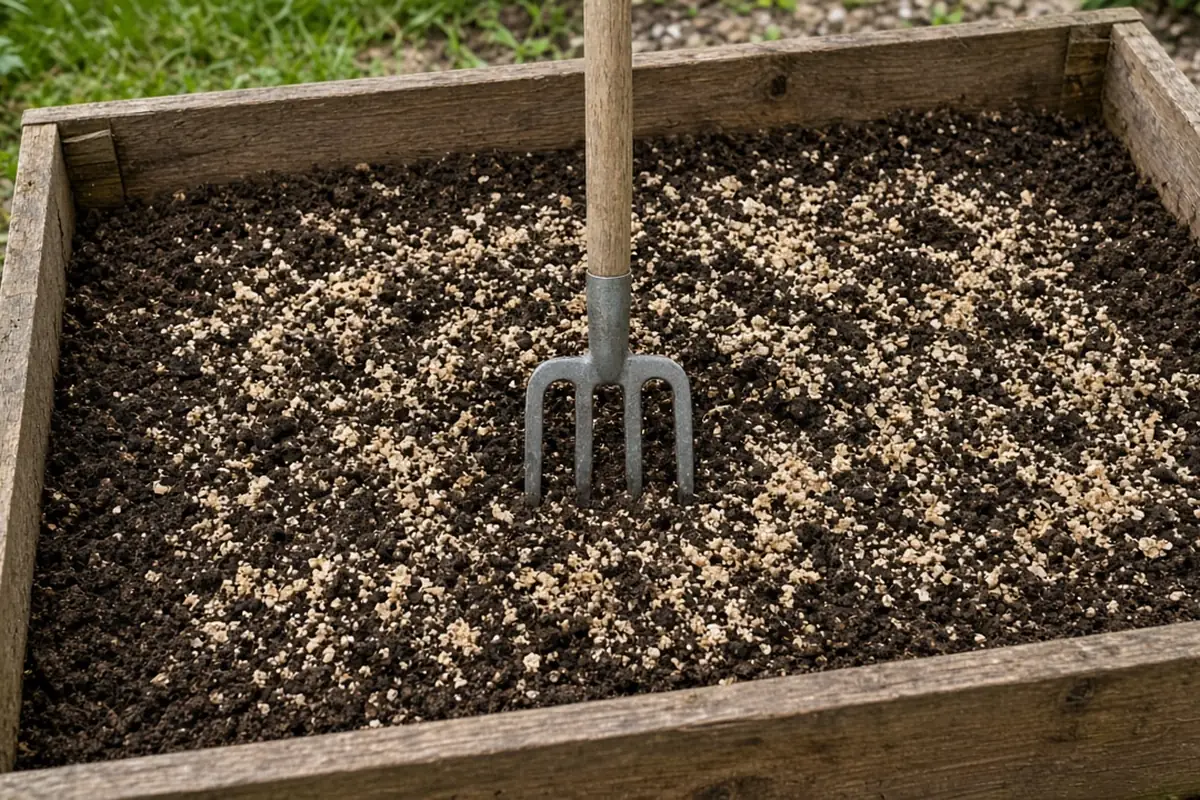
- Test the soil. Check pH, organic matter and nutrient levels.
- Fix structure first. Mix compost or other amendments thoroughly into the bed or potting soil.
- Check compost quality. Choose a product near 40 to 60 percent organic matter.
- Add a base fertilizer. Blend in slow organic meals or a measured mineral feed according to the test.
- Water and let it settle. Give a new mix time to stabilize before planting.
- Feed during the grow. Add fertilizer as plants show demand, rather than more amendment.
- Rebuild each season. Add a thin compost layer annually, about a quarter inch in existing gardens per Colorado State.
Troubleshooting Common Mix Ups
Lots of compost, still pale plants. Compost adds little nitrogen. Add a fertilizer.
Plenty of fertilizer, roots stay wet. Nutrients cannot fix poor drainage. Add an aerating amendment.
Leaf edges browning after a manure product. Salts may be high. Water deeply to move them down and choose plant based compost next time.
Soil feels like concrete. Sand was likely mixed into clay. Add compost to rebuild structure.
Fresh wood chips mixed in, plants yellowing. Wood ties up nitrogen as it decomposes. Add nitrogen fertilizer or use composted wood products next time.
Sources
- Colorado State University Extension, Choosing a Soil Amendment: https://extension.colostate.edu/resource/choosing-a-soil-amendment/
- UC Master Gardeners of San Luis Obispo County, Fertilizers and Amendments: https://ucanr.edu/site/uc-master-gardeners-san-luis-obispo-county/fertilizers-and-amendments
- Colorado State University Extension, Understanding Fertilizers: https://extension.colostate.edu/resource/understanding-fertilizers/
FAQ
Is compost a fertilizer or an amendment?
Mostly an amendment. It adds some nutrients, though the law does not class it as fertilizer.
Can an amendment replace fertilizer for cannabis?
Rarely. Amendments usually add too few nutrients for a fast growing crop.
Are worm castings an amendment or a fertilizer?
Both. They improve soil structure and release nutrients slowly over several months.
Should I add amendments every year?
Many gardens benefit from a light annual layer of compost, guided by a soil test.
Why are amendments sometimes salty?
Rules for amendments are looser than for fertilizers. Manure based products often carry extra salt.