Soybean Meal for Cannabis: A Plant Based Nitrogen Feed
Quick answer: Soybean meal is ground soybean left over after oil extraction, sold mainly as animal feed and also used as an organic fertilizer. CSU Extension in Colorado lists it at a typical analysis of 7 2 1 with a release time of one to four months. UNH Extension rates its release as medium and suggests it for a supply that lasts the season. For cannabis, soybean meal is a solid vegetarian nitrogen source worked into beds or potting soil well ahead of planting. Fresh meal can slow seed sprouting, so give it time to start breaking down first.
What Is Soybean Meal?
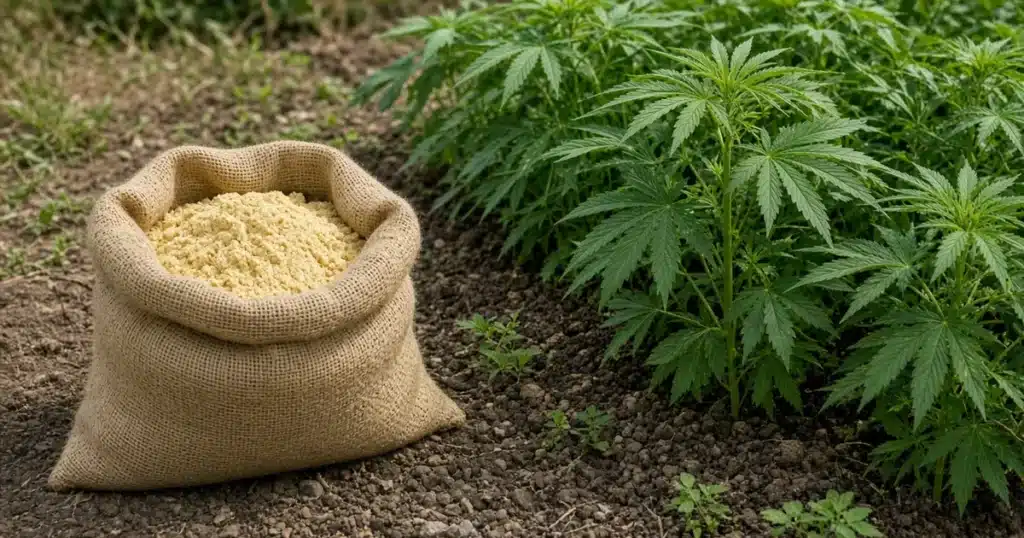
Soybeans are pressed or solvent extracted to remove their oil. The protein rich flakes or pellets that remain are ground into meal. Most of it ends up in livestock and poultry feed, which is why feed stores often stock it in large bags for less than garden centers charge.
A Colorado State page on organic fertilizers describes soybean meal as used primarily for animal feed and available bagged at many feed stores. It lists high nitrogen and easy availability as advantages. As a downside, it notes that almost half of conventionally grown soy is genetically modified, which matters to some organic growers.
The meal is pale yellow to light tan and smells faintly nutty, a bit like dry beans. Pellets break apart once wet. Soybean meal is entirely plant based. Growers who prefer not to use animal byproducts such as blood, bone or feather meal often choose it, along with alfalfa and cottonseed meal.
Soybean meal works as a fertilizer rather than a soil conditioner, a split our guide to amendments and fertilizers explains.
How Much Nitrogen Does Soybean Meal Supply?
Most charts place soybean meal near 7 percent nitrogen. Colorado State gives 7 2 1. The New Hampshire Extension fertilizer chart lists 7 percent nitrogen and 2 percent phosphorus. A fertilizer table from Iowa State gives 7 percent nitrogen with small amounts of phosphate and about 2.3 percent potash. The San Luis Obispo County Master Gardeners list 7 1 2.
Those small differences come from the soybean variety, processing and how much oil remains. All agree that nitrogen is the headline nutrient. Phosphorus and potassium are present, yet their levels are too low to meet the heavy needs of a flowering cannabis plant.
Price also favors soybean meal. Because it is a bulk livestock feed, a large bag often costs much less per pound of nitrogen than specialty garden fertilizers, which makes it popular with growers who fill many beds. Compared with other organic meals, soybean sits in the middle. Feather meal and blood meal carry more nitrogen, while alfalfa and compost carry less. Its middling strength makes soybean meal forgiving. A small overdose is less likely to cause trouble than with the richest meals.
Nitrogen drives the leafy, green growth of the vegetative stage. Our article on the role of nitrogen in cannabis describes the signs of too little and too much.
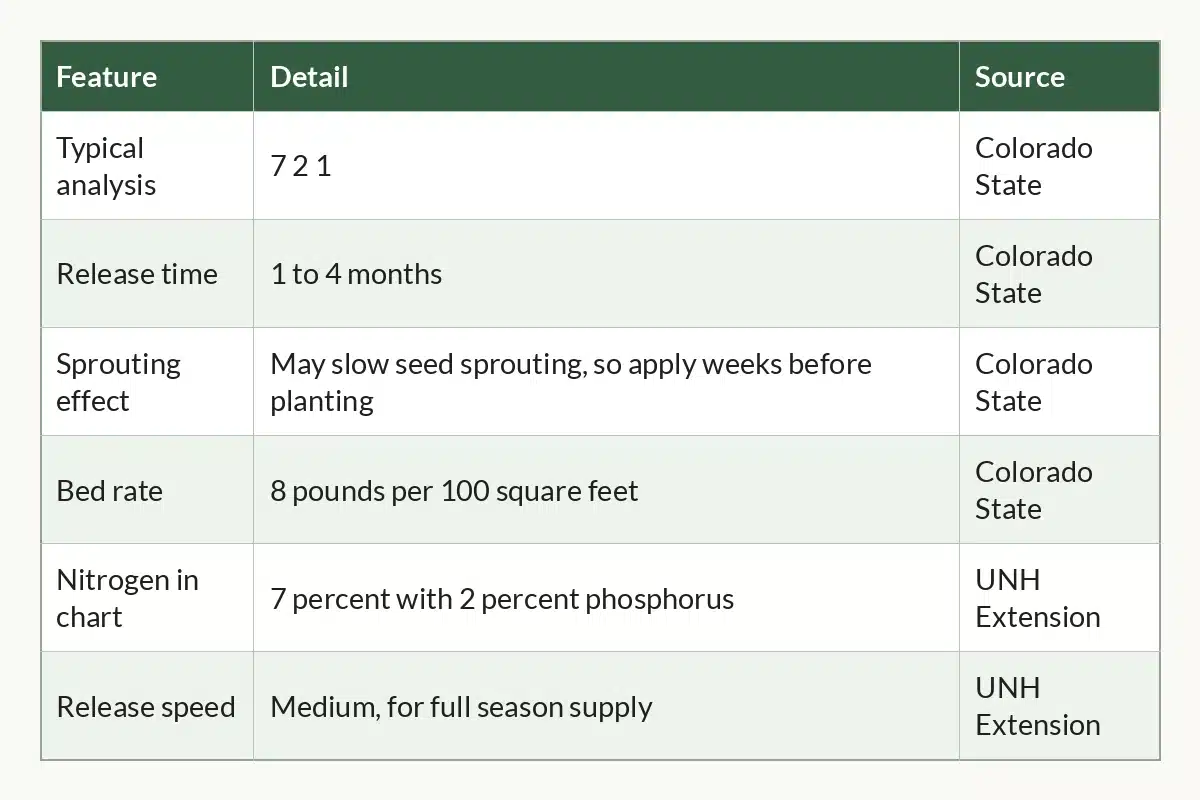
Soybean Meal at a Glance
| Feature | Detail | Source |
|---|---|---|
| Typical analysis | 7 2 1 | Colorado State |
| Release time | 1 to 4 months | Colorado State |
| Sprouting effect | May slow seed sprouting, so apply weeks before planting | Colorado State |
| Bed rate | 8 pounds per 100 square feet | Colorado State |
| Nitrogen in chart | 7 percent with 2 percent phosphorus | UNH Extension |
| Release speed | Medium, for full season supply | UNH Extension |
How Fast Does Soybean Meal Feed Cannabis?
Colorado State lists a release time of one to four months. New Hampshire calls it medium release, which its footnote defines as nutrients becoming available over a few months. Soil microbes break down the protein and convert its nitrogen into forms roots can absorb. That work speeds up in warm, moist soil and slows when soil is cold or dry.
For cannabis, that timeline fits the vegetative stage neatly. Meal mixed in before transplant starts feeding as roots spread and keeps supplying nitrogen for several weeks. By the time flowers form, much of it is spent, which suits a plant that needs less nitrogen later.
Indoor growers can expect a faster start than outdoor growers in spring, simply because a warm room keeps microbes active from day one. Outdoors, cold soil in April or May can delay the first noticeable feeding by roughly two weeks. Do not count on soybean meal for a fast fix. A pale plant that needs nitrogen this week will respond more quickly to a soluble feed. The slow release fertilizer guide shows ways to combine slow base feeds with faster supplements.
Why Apply Soybean Meal Before Planting?
Colorado State warns that soybean meal may inhibit seed sprouting and should be applied several weeks before planting. UC Master Gardeners give the same caution, noting that it can slow sprouting if applied at the time of planting. Neither source explains the cause in detail, but the practical advice is the same from both.
For cannabis grown from seed, the better approach is to mix soybean meal into beds or potting soil two to four weeks before sowing. If you start seeds in a separate seedling mix and transplant later, the main container can hold soybean meal with less concern. Transplants with established roots handle a freshly amended mix far better than seeds do.
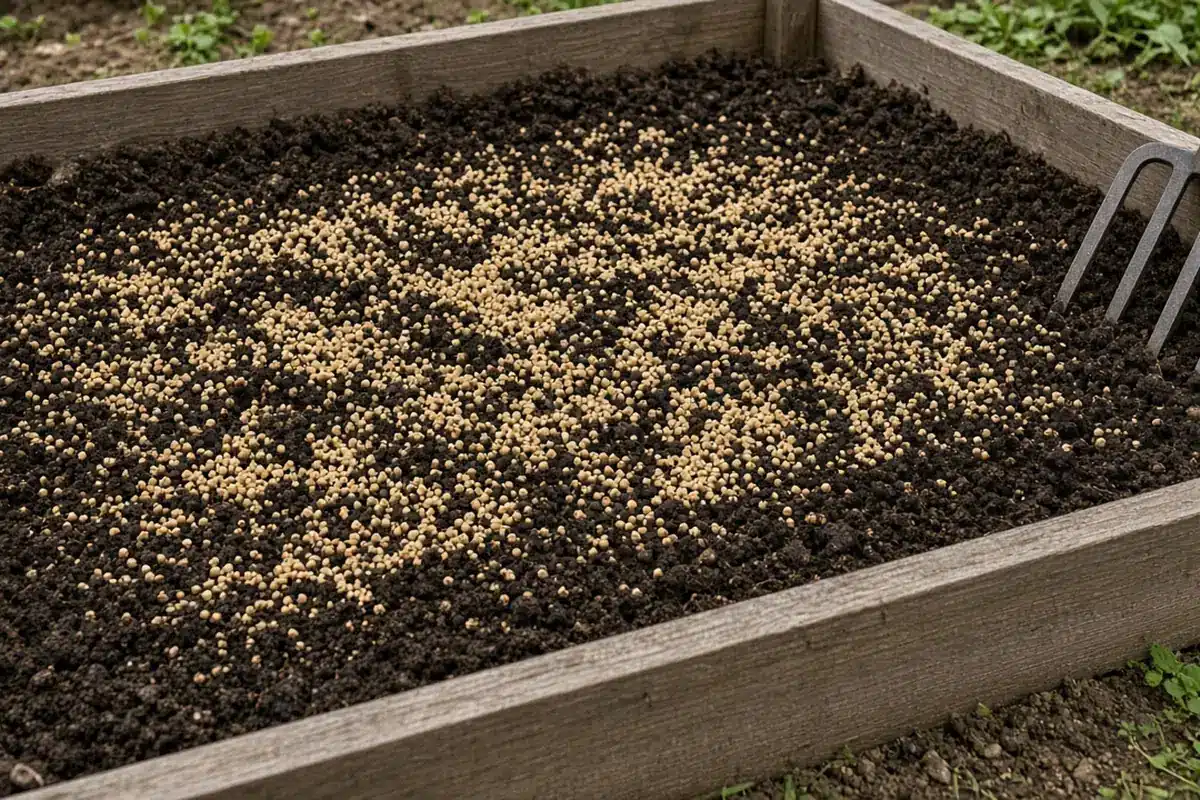
The same advice applies outdoors, where beds are often prepared weeks ahead anyway. Work soybean meal into beds in early spring, water it in and let the soil sit before planting out. Warm weather gets the first stage of breakdown moving sooner.
How Much Soybean Meal Should You Use?
Colorado State suggests 8 pounds per 100 square feet for beds. Iowa State ties rates to fertility, suggesting 50 pounds per thousand square feet for low fertility soil, 25 for medium and 10 where fertility is adequate. The Maine soil lab nutrient sheet calls for about 285 pounds per acre to supply 20 pounds of nitrogen, or roughly 7 pounds per thousand square feet.
These figures differ because each source answers a slightly different question. Colorado gives a general bed rate, Iowa adjusts for existing fertility and Maine targets a set amount of nitrogen. None was written for cannabis, so read them as a starting range. Container growers in particular should begin at the low end, since a pot holds only a small volume of soil and excess nitrogen has nowhere to go. A soil test tells you which range fits your ground. For containers, start with a small handful mixed through a large pot and adjust based on leaf color.
If you are weighing plant based meals against mineral feeds, our comparison of organic vs synthetic fertilizer for cannabis lays out the tradeoffs.
How to Use Soybean Meal on Cannabis
- Test the soil. Confirm nitrogen is needed and check pH.
- Measure a rate. Use a published rate as a guide and scale down for pots.
- Mix it in early. Blend the meal into beds or potting soil two to four weeks before planting.
- Water and wait. Moisten the soil and let microbes begin breaking down the meal.
- Keep seeds separate. Start seeds in plain mix and transplant into amended soil.
- Top dress in midseason if needed. Scratch a little meal into the surface around established plants and water well.
- Stop before flowering. Avoid new doses once buds begin forming.
Troubleshooting Soybean Meal Problems
Seeds sprouted poorly. The meal was too fresh at sowing. Wait longer or start seeds in a separate mix.
White mold on the soil surface. Meal left on top can grow mold in humid conditions. Mix it in and let the surface dry between waterings.
Plants still pale after several weeks. Cold or dry soil slows release. Warm the root zone and keep moisture even.
Animals dig in the bed. The smell can attract pets and wildlife. Bury the meal and cover with mulch.
Leaves very dark and lush in flower. Too much nitrogen remains. Skip further doses and let the plant use up the supply.
Sources
- Colorado State University Extension, Organic Fertilizers: https://extension.colostate.edu/resource/organic-fertilizers/
- University of New Hampshire Extension, Organic and Natural Fertilizers for the Home Ground and Garden: https://extension.unh.edu/sites/default/files/migrated_unmanaged_files/Resource003737_Rep5330.pdf
- Iowa State University Extension and Outreach, Selecting and Using Organic Fertilizers: https://yardandgarden.extension.iastate.edu/how-to/selecting-and-using-organic-fertilizers
- UC Master Gardeners of San Luis Obispo County, Fertilizers and Amendments: https://ucanr.edu/site/uc-master-gardeners-san-luis-obispo-county/fertilizers-and-amendments
- University of Maine, Maine Soil Testing Service, Commercial Organic Nutrient Recommendations: https://umaine.edu/soiltestinglab/wp-content/uploads/sites/227/2016/07/ORGNUT.pdf
FAQ
Is soybean meal good for cannabis?
Yes, as a moderate, plant based nitrogen source mixed in before planting.
How long does soybean meal take to work?
Colorado State lists one to four months, with release speeding up in warm, moist soil.
Can soybean meal stop seeds from sprouting?
It can slow sprouting if applied right at planting. Mix it in several weeks ahead.
Where can I buy soybean meal?
Feed stores often sell it in large bags. Garden centers carry smaller amounts.
Does soybean meal add phosphorus and potassium?
Only small amounts, so pair it with other sources once the plant flowers.