Neoprene Cloning Collars: How to Use Them
The short answer
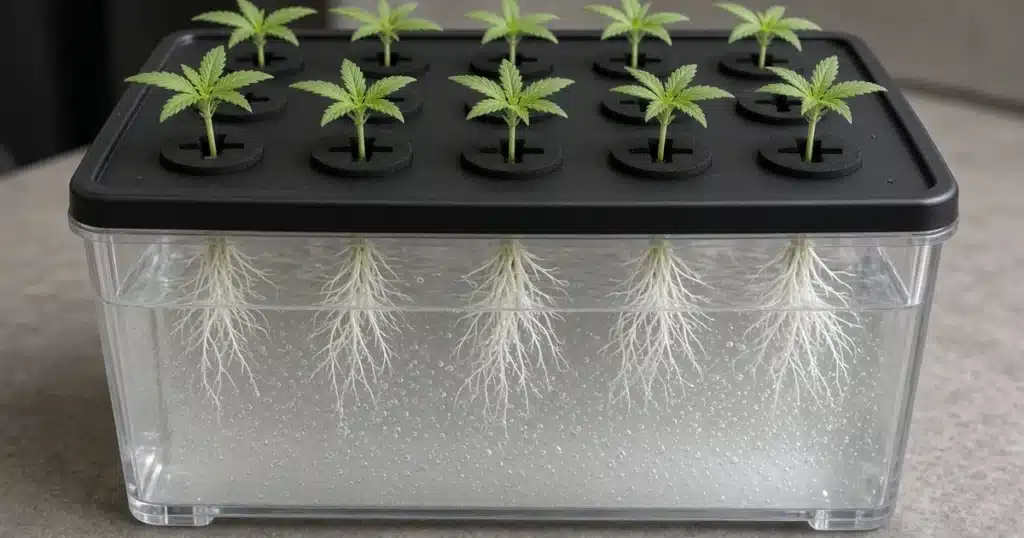
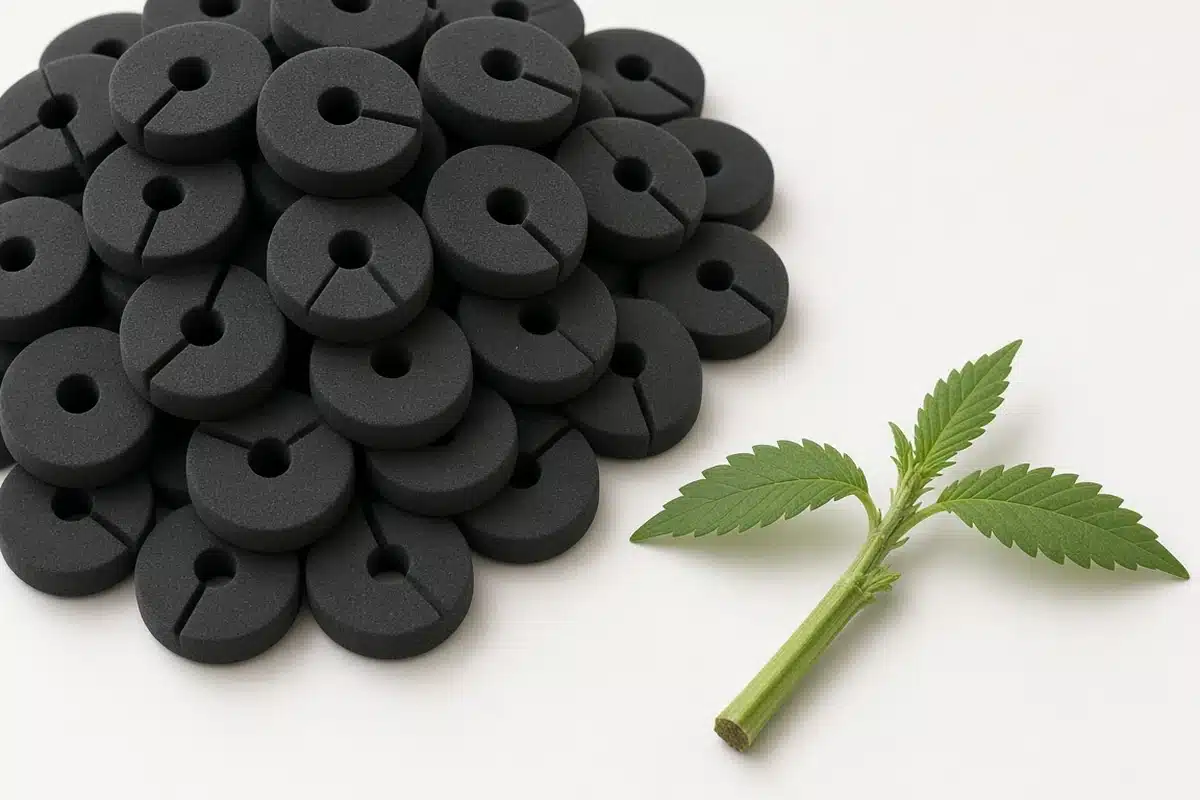
Cloning collars are small neoprene discs with a slit to the center. They hold a cutting upright in a cloner lid or net cup. The stem sits below in water or mist and the leaves stay above in the air.
To use one, open the slit, slide the stem in so a few inches hang below, and press the collar into the lid hole. Keep the grip snug but not crushing. Clean and dry collars between rounds so they stay soft and free of algae.
What cloning collars do
A cutting has no roots. It cannot hold itself up. In soil or plugs, the medium does that job. In a water or aeroponic cloner, there is no medium. The collar takes its place.
A good collar does three things. It keeps the stem upright and the leaves above the moisture. It also blocks light from the water below. Less light in the water means less algae.
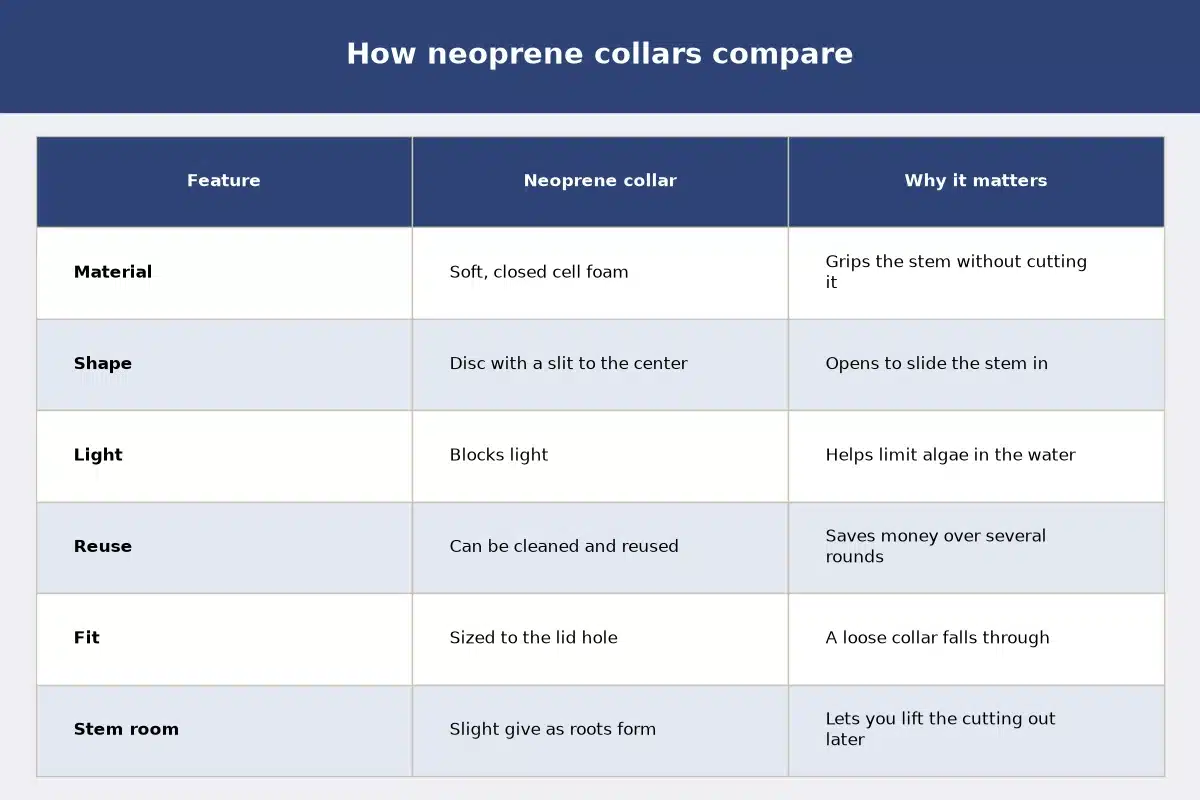
How neoprene collars compare
| Feature | Neoprene collar | Why it matters |
|---|---|---|
| Material | Soft, closed cell foam | Grips the stem without cutting it |
| Shape | Disc with a slit to the center | Opens to slide the stem in |
| Light | Blocks light | Helps limit algae in the water |
| Reuse | Can be cleaned and reused | Saves money over several rounds |
| Fit | Sized to the lid hole | A loose collar falls through |
| Stem room | Slight give as roots form | Lets you lift the cutting out later |
Source: How to Propagate Houseplants by Stem Tip Cuttings, Iowa State University Extension and Outreach, hydrated cuttings, humidity and water care.
Why cuttings need care
Iowa State University Extension notes in its stem cutting guide that you should start with well hydrated plants and that high humidity is essential while cuttings form roots. It also advises changing the water once or twice a week and keeping the new roots covered when cuttings sit in water.
The University of Georgia Extension notes in its guide on starting plants from cuttings that soft shoots lose water quickly once cut. It adds that badly wilted softwood cuttings are unlikely to root. A collar does not fix wilting. But a steady upright cutting with its leaves clear of the water is easier to keep hydrated.
Choosing the right size
Collars come in sizes that match common lid and net cup holes. Measure the hole in your cloner lid and buy collars a touch larger so they press in snugly. The slit should close around a typical stem without a big gap.
- A collar that is too small falls through the hole.
- A collar that is too large will not seat flat.
- A slit that is too tight can pinch thin stems.
How to use cloning collars
- Clean and rinse the collars and cloner before you take cuttings.
- Take cuttings from a well watered mother plant.
- Trim the stem and remove the lower leaves so a few inches of bare stem remain.
- Open the collar slit and slide the stem in from the side.
- Set the collar so the bare stem hangs below and the leaves sit well above.
- Press the collar into the lid hole until it sits flat.
- Check that the stem tip reaches the water or mist.
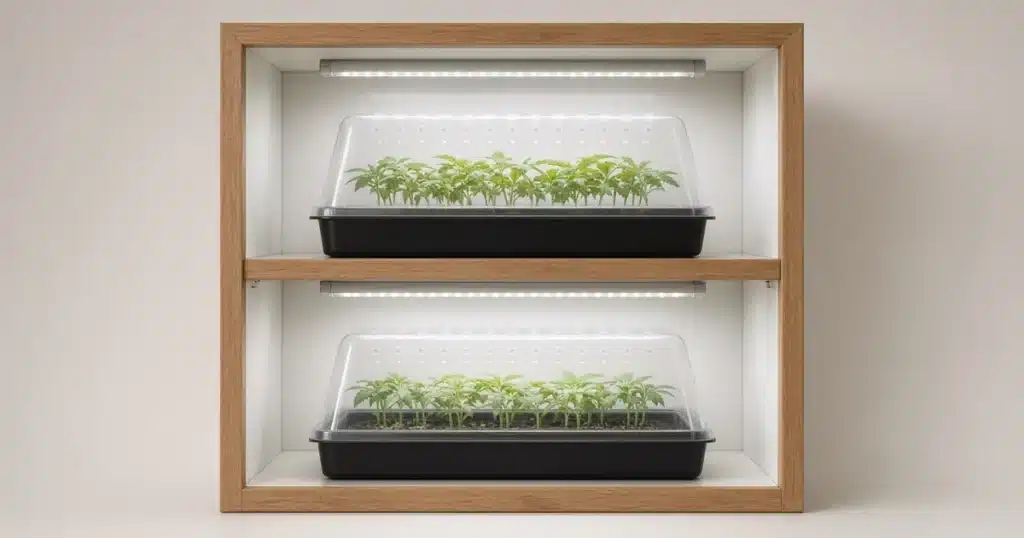
- Cover the cloner or place it in a humid space.
Our guide on how to make cannabis clones covers taking cuttings in more detail.
Setting the stem depth
The stem should reach the water or mist. The leaves should not touch it. In a water cloner, a few inches of stem below the collar is common. In an aeroponic cloner, the stem needs to sit in the spray. Before you press the collar in, slide the stem up or down in the slit to adjust.
Keep humidity high
Collars hold cuttings but do not keep them humid. Use a dome or a humid box around the cloner. Our guide to making a cannabis clone box shows a simple way to build one.
Check on cuttings without damage
To look at the stem, lift the collar and cutting together. Do not pull the stem through the collar. As roots form, they can catch on the slit. Open the slit gently to free the cutting when you move it to a pot.
Moving rooted cuttings out
Once roots are long enough to plant, lift out the collar and cutting as one. Open the slit wide and ease the stem out. Pot the cutting right away and keep it humid for a few days while it adjusts. Rinse the collar once the cutting is out.
Cleaning and storing collars
Algae and microbes can ride on collars from one round to the next. Clean them between uses.
- Rinse off debris and roots.
- Soak in warm water with a mild cleaner and scrub with a soft brush.
- Rinse well so no cleaner remains.
- Let them dry fully in open air before storing.
Our guide to cleaning a grow tent covers cleaning the space around your cloner too. Replace collars that tear, harden or lose their grip.
Collars in different systems
Water cloners
In a simple water cloner, cuttings sit in still or bubbling water. The stem stays at a fixed depth in the collar. Change the water once or twice a week, as Iowa State advises for cuttings kept in water, and top it up so the stems stay covered.
Aeroponic cloners
In a spray cloner, a pump mists the stems from below. While the spray hits the bare stem, the collar keeps the cutting steady. Check that sprayers are clear and that each stem sits in the mist, not above it.
Net cups and rafts
Collars also fit net cups and floating rafts. A collar in a net cup holds a young plant upright until roots fill the cup. On a raft, roots hang in the water and the collar keeps leaves dry.
Collars versus other inserts
Some growers use foam plugs or cubes instead of collars. Plugs hold moisture around the stem, while collars leave the stem open to water or mist. Collars are easy to clean and reuse. Plugs are usually used once. Pick the insert that fits your system and your cleaning routine.
Common mistakes
- Pushing the stem through the slit and tearing it.
- Setting the leaves too close to the water.
- Using collars that are too small for the lid.
- Reusing dirty collars without cleaning them.
- Leaving the cloner uncovered in dry air.
Troubleshooting
- Collars fall through the holes. Buy a larger size.
- Cuttings lean or tip over. Slide the stem deeper and seat the collar flat.
- Algae grows in the water. Check that every hole has a collar and block light from the cloner.
- Stems look pinched. Use a collar with a looser slit or trim the slit slightly.
- Roots tangle in the collar. Open the slit wide before you lift the cutting out.
- Collars smell sour. Clean them well and let them dry fully.
Final thoughts
Neoprene cloning collars are a small part with a big job. They hold cuttings upright, keep leaves clear of the water and block light from the reservoir. Size them to your lid, set the stem depth with care and clean them between rounds. Kind Seed Co has more propagation guides for home growers.
Sources
- Iowa State University Extension and Outreach, How to Propagate Houseplants by Stem Tip Cuttings
- University of Georgia Extension, Starting Plants From Cuttings for the Home Gardener
FAQ
What are cloning collars?
Small neoprene discs with a slit that hold cuttings upright in a cloner lid or net cup.
How deep should the stem sit below the collar?
Deep enough to reach the water or mist, with the leaves well above it.
Can I reuse cloning collars?
Yes. Clean, rinse and dry them fully between rounds, and replace any that tear or harden.
Why does algae grow in my cloner?
Light reaches the water, so make sure every hole has a collar and the cloner is covered.
How do I remove a rooted cutting from a collar?
Lift the collar and cutting together, open the slit wide and ease the stem out.