
Compost Tea for Cannabis: What the Evidence Says
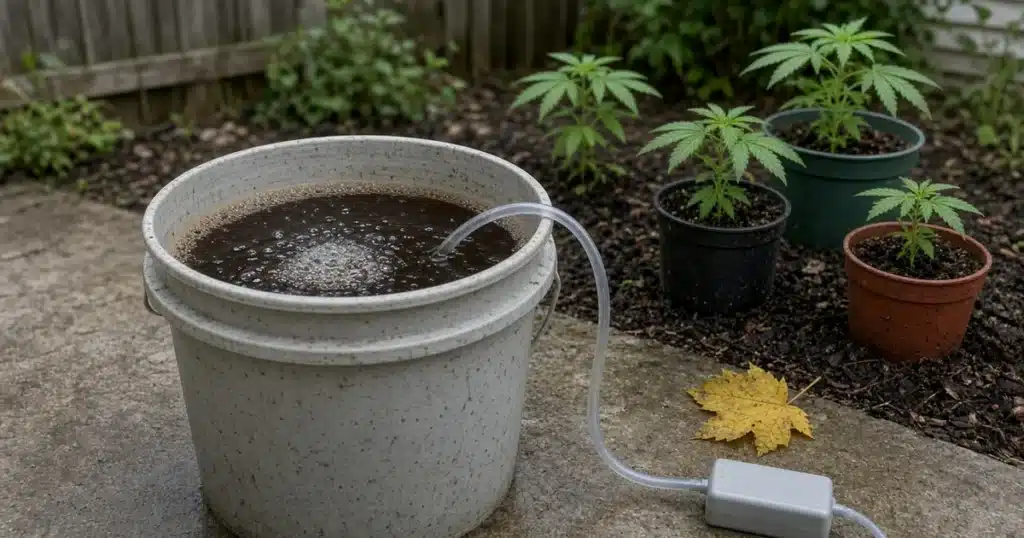
Compost tea is a liquid made by steeping compost in water, with or without air pumped through it, and some growers apply it to cannabis as a spray or drench. Washington State University reviews find few controlled studies behind its disease claims, and one WSU trial on cherry trees in Washington saw little difference from water sprays.
What Is Compost Tea?
WSU Puyallup describes compost tea as a liquid extract made by diluting compost with water. The idea is that bacteria, fungi and other parts of the tea act as biological controls on leaves, either by competing with pathogens or by producing compounds that slow them (WSU fact sheet). WSU also says few controlled, replicable studies support those claims. Some growers pair tea with a super soil or a living soil setup.
How Is Aerated Compost Tea Different From Extract?
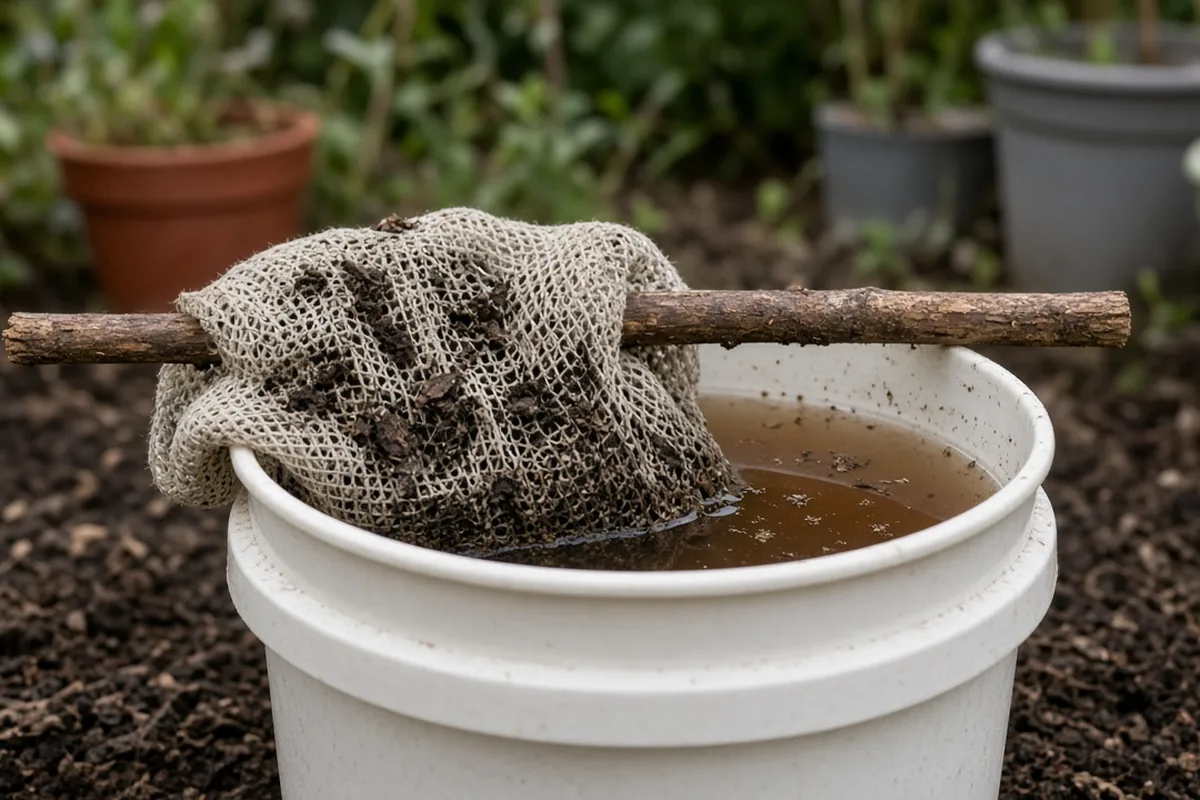
The SF Environment literature review describes two methods. Non-aerated compost tea is brewed passively with occasional stirring, with an average brewing period of 14 days. Aerated compost tea uses a pump to add oxygen and brews in 12 hours to 3 days, often with nutrient or microbial additives (SF Environment). The SF Environment review warns that molasses or other simple sugars can promote human pathogens such as Salmonella and E. coli when the compost carries residual levels. WSU’s review found only two published, controlled studies of aerated tea, and neither showed good disease control (WSU revisited).
WSU compost tea trial on cherry trees (Washington)
Source: WSU Puyallup compost tea fact sheet. Trial at the Washington Park Arboretum on cherry blossom brown rot, not a cannabis study.
| Item | Detail | Source |
|---|---|---|
| Trees | 32 trees of 8 cultivars | WSU fact sheet |
| Treatments | Compost tea spray vs water spray | WSU fact sheet |
| Spray timing | Popcorn, full bloom and petal drop | WSU fact sheet |
| Result | Little difference in brown rot between the two. Some cultivars did worse with tea | WSU fact sheet |
Why compost tea results vary
Source: WSU Puyallup compost tea fact sheet, criteria that must be defined before a benefit can be credited to a tea.
| Variable | Question WSU asks | Source |
|---|---|---|
| Compost | Age, source and organic material | WSU fact sheet |
| Brewing | Aerobic vs fermented | WSU fact sheet |
| Chemistry | pH, nitrogen and other properties | WSU fact sheet |
| Application | Mode, frequency and timing | WSU fact sheet |
| Target | Which pathogen | WSU fact sheet |
Does Compost Tea Prevent Plant Disease?
The evidence is inconsistent. WSU says differences in compost age, ingredients, brewing and application make claims hard to test and often lead to conflicting results (WSU fact sheet). In a WSU trial on 32 cherry trees of eight cultivars in Washington, compost tea sprays gave little difference in brown rot from water sprays, and some cultivars did worse (WSU fact sheet). That is a cherry result, not a cannabis study. For leaf disease basics, see our powdery mildew guide.
Is Compost Better Than Compost Tea?
For soil disease, the record is stronger for compost itself. WSU’s literature search found 18 articles on disease suppression by composts, and it says compost used as mulch has documented abilities to suppress soilborne disease organisms. Its bottom line is that composted mulch has documented disease suppression, while aerated teas have no scientifically documented effect as pathogen suppressors (WSU revisited).
Sources
None of the sources below tests compost tea on cannabis or hemp. Their findings are reported as results for the crops and settings they studied.
- WSU Puyallup: Compost Tea, Miracle Cure or Marketing Gimmick? (PDF)
- WSU Puyallup: The Myth of Compost Tea Revisited (PDF)
- SF Environment: Compost Tea Literature Review (PDF)
Kind Seed Co summarized extension and literature reviews in this compost tea overview, for general growing information.
FAQ
How long do you brew compost tea?
It depends on the method. The SF Environment review gives an average of 14 days for non-aerated tea, with 8 to 16 days reported for disease work. Aerated tea brews in 12 hours to 3 days, and makers report 18 hours to 3 days. Some propose 18 to 24 hours as the time of peak microbial activity.
Can compost tea carry harmful bacteria?
It can. The SF Environment review says compost tea supplemented with molasses or other simple sugars tends to promote the growth of human pathogens such as Salmonella and E. coli when residual levels are present in the compost source. It advises adding nutrients with extreme caution during brewing.
Does compost tea add nutrients?
Yes. WSU says compost teas add nitrogen, potassium and other minerals all at once, unlike compost mulch, which releases nutrients slowly. WSU adds that these nutrients are unlikely to be fully absorbed by plants and may run off, which is why it warns about nutrient loading when teas are used as fertilizer.
Can compost tea cause water pollution?
WSU says overuse and runoff of compost teas could conceivably contribute to water pollution, and six articles in its review raised concerns about nitrogen and phosphorus release. WSU's bottom line also notes that composted mulch has documented disease suppression, so it is the better studied use of compost.


