
Insecticidal Soap for Cannabis: How It Works
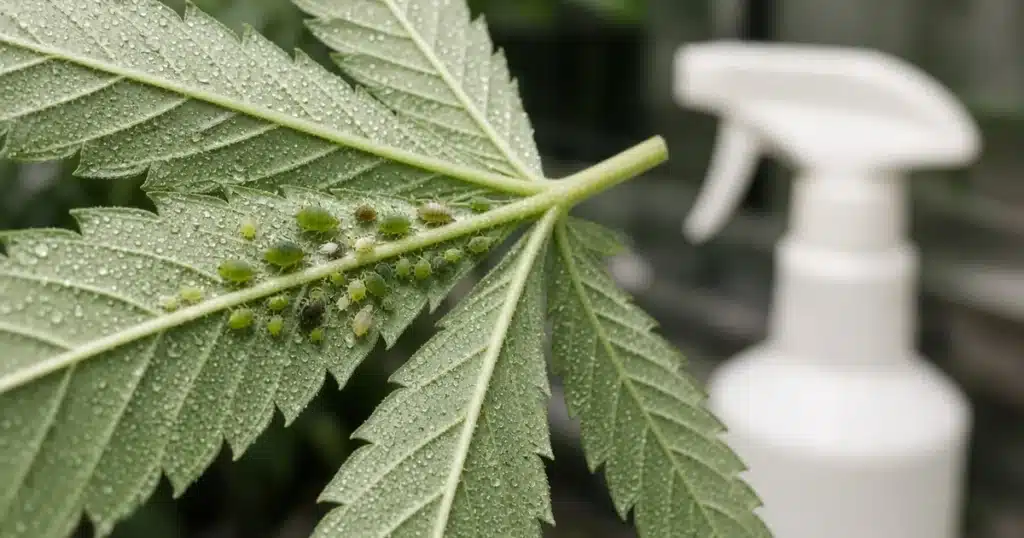
Insecticidal soap is a spray of potassium salts of fatty acids that kills small, soft-bodied cannabis pests such as aphids and spider mites on contact by disrupting their cell membranes. It must wet the pest and leaves no residual effect, so Colorado State suggests repeat sprays every four to seven days, after testing for leaf injury.
What Is Insecticidal Soap?
Colorado State University describes modern insecticidal soaps as potassium salts of fatty acids, and says the first product containing soap salts was registered in 1947 (Colorado State). NPIC adds that these salts are made by adding potassium hydroxide to fatty acids from animal fats and plant oils such as palm, coconut and olive (NPIC). Soap is one of several options in our natural pest repellents roundup.
How Does Insecticidal Soap Kill Pests?
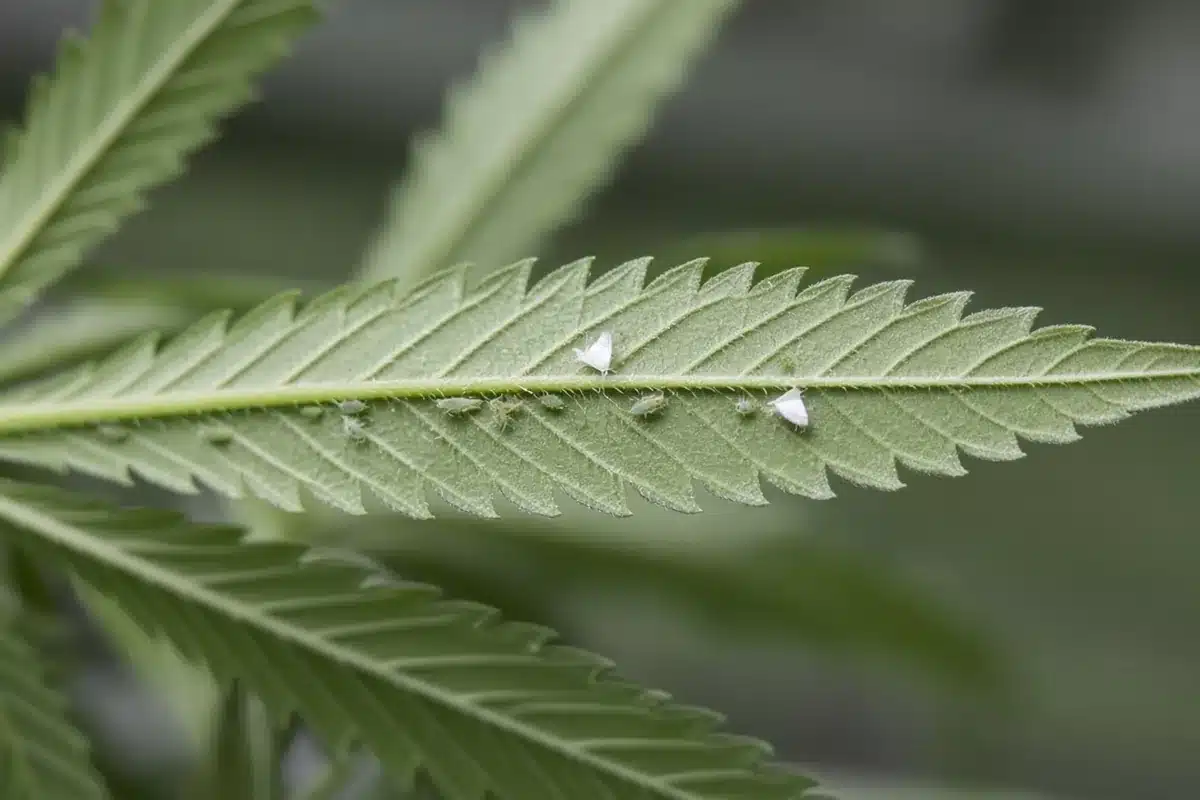
The fatty acids penetrate the insect’s body covering and disrupt cell membranes, so the insect leaks cell contents and dies from dehydration (NPIC). Colorado State says soaps act strictly on contact with no residual effect, so sprays must thoroughly cover the pests, usually on leaf undersides. Insects that cannot be fully wetted, such as aphids inside curled leaves, will not be controlled (Colorado State).
Which pests insecticidal soap affects
Source: Colorado State University Extension, Insect Control: Insecticidal Soaps (general garden guidance, not a cannabis study).
| Group | Examples | Effect | Source |
|---|---|---|---|
| Small, soft-bodied arthropods | Aphids, young scales, whiteflies, psyllids, mealybugs, mites | Susceptible. Beneficial and pest mites both affected | Colorado State |
| Larger insects | Caterpillars, sawflies, beetle larvae | Generally immune | Colorado State |
| Large adult flying insects | Lady beetles, bees | Generally not affected. Larvae may be susceptible | Colorado State |
| Repeat interval | Spider mites, scale crawlers | Every four to seven days | Colorado State |
Which Pests Does Insecticidal Soap Control?
Colorado State lists small, soft-bodied arthropods such as aphids, young scales, whiteflies, psyllids, mealybugs and mites, and notes that both beneficial and pest mites are affected. Larger insects such as caterpillars, sawflies and beetle larvae are generally immune (Colorado State). For mites, see our spider mites guide. Soap sprays do not reach pests in the soil, such as root aphids.
How Often Should Soap Be Sprayed, and Can It Injure Plants?
Because soap has a short residual action, Colorado State says repeat sprays may be needed every four to seven days for pests such as spider mites. It also warns that certain plants are sensitive and may be injured, that leaf damage can build up with repeated sprays, and that you should test a small area a day or two before treating widely (Colorado State). NPIC notes hairy leaves can hold soap longer and burn (NPIC). Check the product label and local rules.
Sources
Some sources below studied hemp or other crops, or give general garden guidance, rather than studying drug-type cannabis. Their findings are reported as results for those crops or settings.
- Colorado State University Extension: Insect Control, Insecticidal Soaps
- NPIC: Potassium Salts of Fatty Acids, General Fact Sheet (PDF)
For this soap spray page, Kind Seed Co stayed with extension pesticide sources and general growing information.
FAQ
Is dish soap the same as insecticidal soap?
No. Colorado State says insecticidal soaps are designed to kill insects, tested for efficacy, selected to limit plant injury and labeled as pesticides. Dish soaps contain powerful detergents that can injure plants, damage soil and contaminate waterways, and homemade soap remedies are not recommended for insect control.
Does insecticidal soap affect beneficial insects?
Some. Colorado State says both beneficial and pest mites are affected by soap sprays. Large adult flying insects with stronger exoskeletons, such as lady beetles and bees, are generally not affected, but their larval stages may be susceptible. NPIC also notes immature, flightless stages are more vulnerable.
Why test soap on a few leaves first?
Colorado State says certain plants are sensitive to insecticidal soap sprays and may be injured. It advises testing on a small area a day or two before treating a larger area, and limiting the number of sprays, because leaf damage can build up with repeated exposure. Check the product label and local rules.
Why does soap need to touch the pest?
Insecticidal soap works only on contact and leaves no residual effect, according to Colorado State. Sprays must be applied directly to the insects and cover them thoroughly, which usually means spraying leaf undersides. Pests that cannot be fully wetted, such as aphids inside curled leaves, will not be controlled.


