
Deer and Cannabis: How to Keep Deer Out of Your Garden
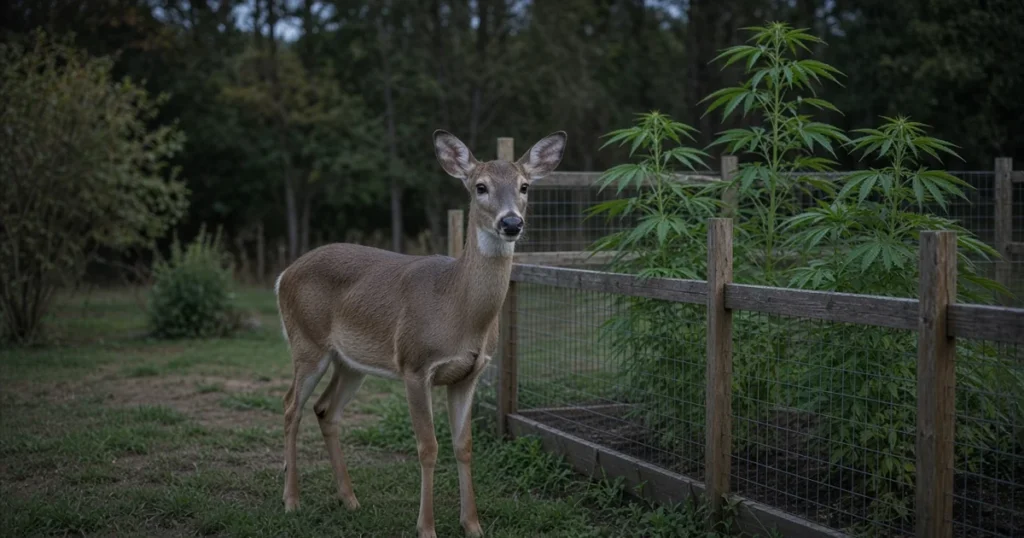
Quick answer: Deer do browse outdoor cannabis, especially tender seedlings and fresh tips in spring. The only reliable long term fix is exclusion. Iowa State University says a passive fence must be at least 8 feet tall and reach all the way to the ground. For a few plants, sturdy wire cages set well away from the foliage are a cheaper option.
Do Deer Eat Cannabis Plants?
Yes. Deer are browsers, and a soft, well watered cannabis plant sitting in an open yard is an easy meal. Damage is worst on small plants because a single night of feeding can remove most of the leaf area and the growing tip. Larger plants usually survive a visit, but they lose vigor and can be set back by weeks.
Iowa State University notes that plants are most at risk when new growth first emerges in spring. That lines up with the outdoor cannabis calendar, since most growers set out transplants right when deer are hungry and natural forage is still thin. Read our guide on when to plant cannabis seeds outdoors to plan that window.
How Do You Know Deer Are the Problem?
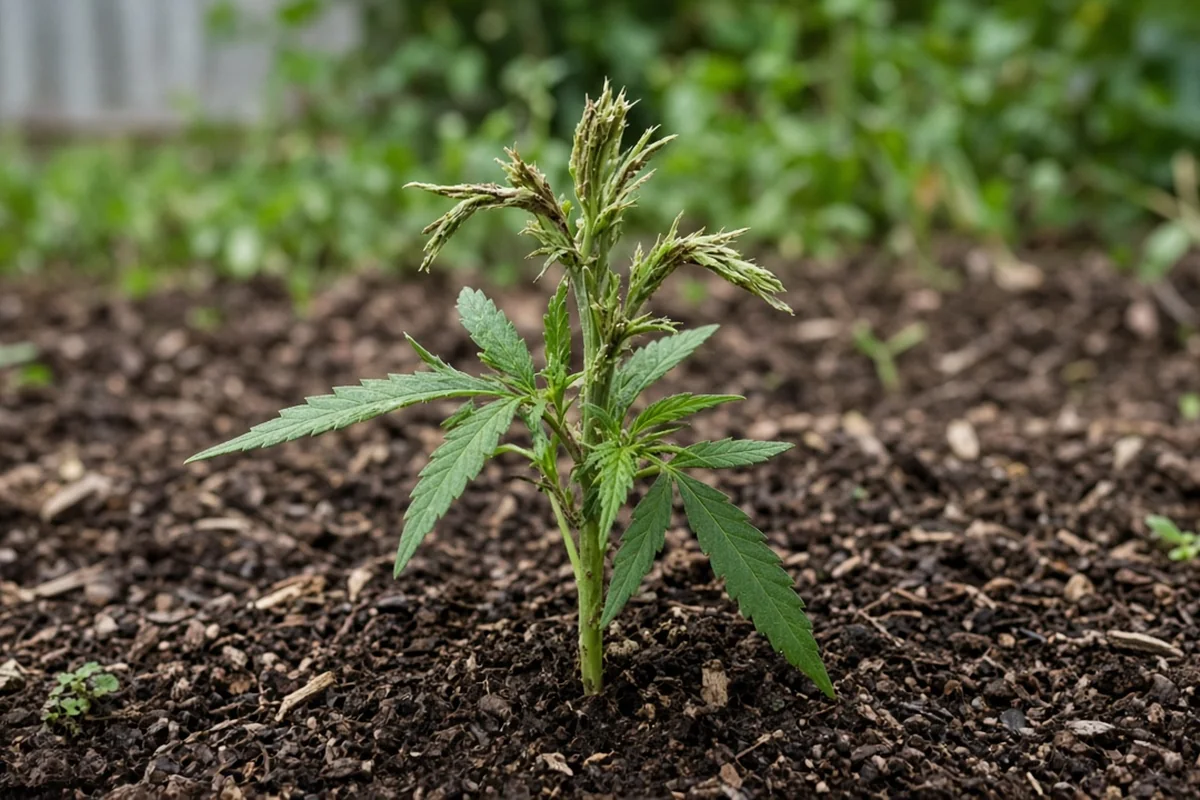
Deer have no upper front teeth, so they tear plant tissue rather than clip it. Look for these signs:
- Ragged, torn ends on stems and leaves, often at 2 to 5 feet off the ground
- Split hoof prints in soft soil near the bed
- Piles of small dark pellets along paths
- Damage that appears overnight with no insects in sight
Rabbits leave a clean, angled cut low to the ground instead. If the bites look neat and sit under about 2 feet, see our page on rabbits and cannabis.
How Tall Should a Deer Fence Be?
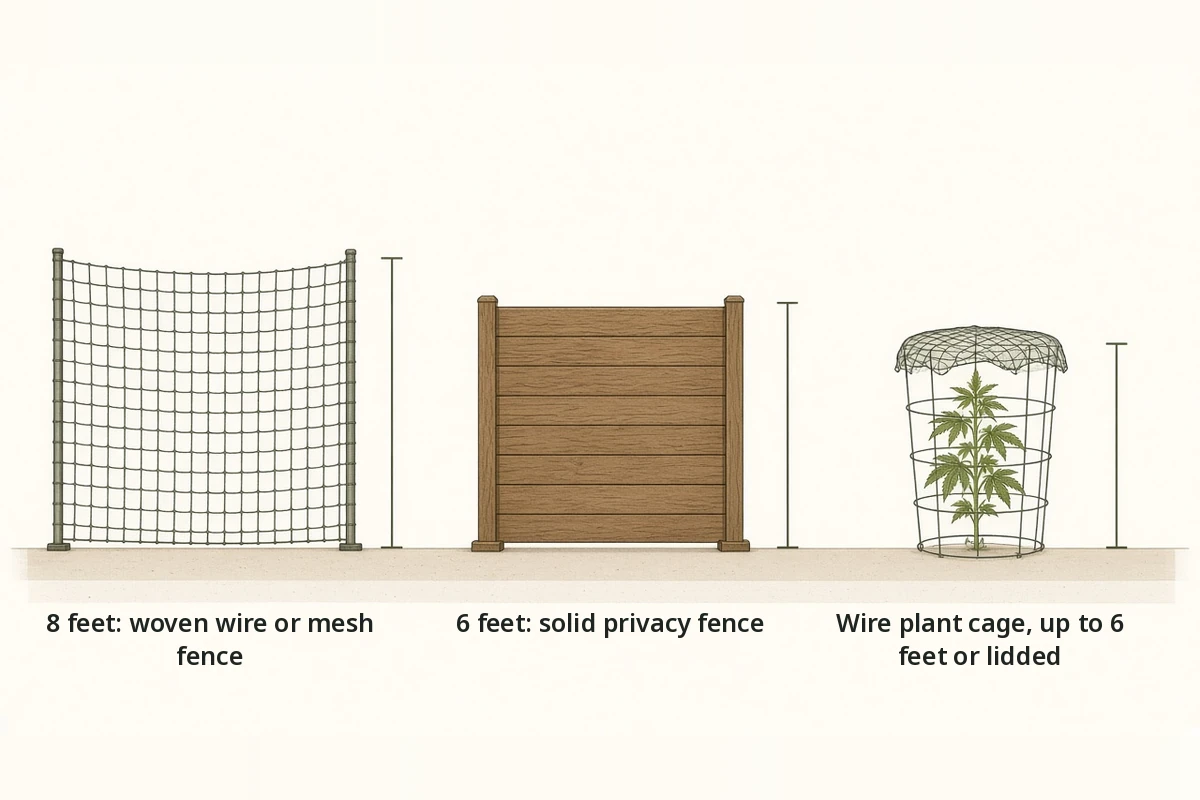
Plan on 8 feet for an open garden. Iowa State University says passive fences must be at least that tall to keep deer from leaping over and must extend to the ground so deer cannot duck under. The UC Statewide IPM Program agrees, calling a sturdy fence of 7 to 8 feet the best way to keep deer out, and it adds that a fence on a steep slope may need even more height.
There are a few useful exceptions. Iowa State notes that a solid 6 foot privacy fence is rarely jumped because deer cannot see a safe place to land. A very small pen, under about 10 by 10 feet, with a 6 foot fence is also rarely hurdled because deer do not see enough room inside.
| Setup | Typical height | When it fits |
|---|---|---|
| Woven wire or mesh perimeter | 8 feet | Open yards with steady deer traffic |
| Solid privacy fence | 6 feet | Backyards where deer cannot see in |
| Small enclosed pen | 6 feet | Beds under about 10 by 10 feet |
| Single plant cage | Up to 6 feet or lidded | One to five plants |
How to Build a Deer Fence Around Cannabis
- Measure the bed and add at least 3 feet of walking room on every side so you can tend plants without brushing the mesh.
- Pick your material. Iowa State lists woven wire as one of the most common and reliable choices, with plastic netting as a lower cost option that is easier to damage.
- Set sturdy posts at each corner and along the run. UC IPM advises pinning the mesh tight to the soil wherever the ground dips between posts.
- Hang the mesh so the bottom edge touches the soil. Pin it down with landscape staples or bury a few inches of it.
- Install a gate as tall as the fence. UC IPM stresses that gates must match fence height and stay closed.
- Walk the line weekly and patch gaps, sagging spots or bent bottom edges right away.
Already have a shorter fence? UC IPM says you can usually make it deer proof by adding another 3 to 4 feet of height, using smooth wire or mesh, as long as the lower part is solid and sits tight to the ground.
How to Cage Individual Cannabis Plants
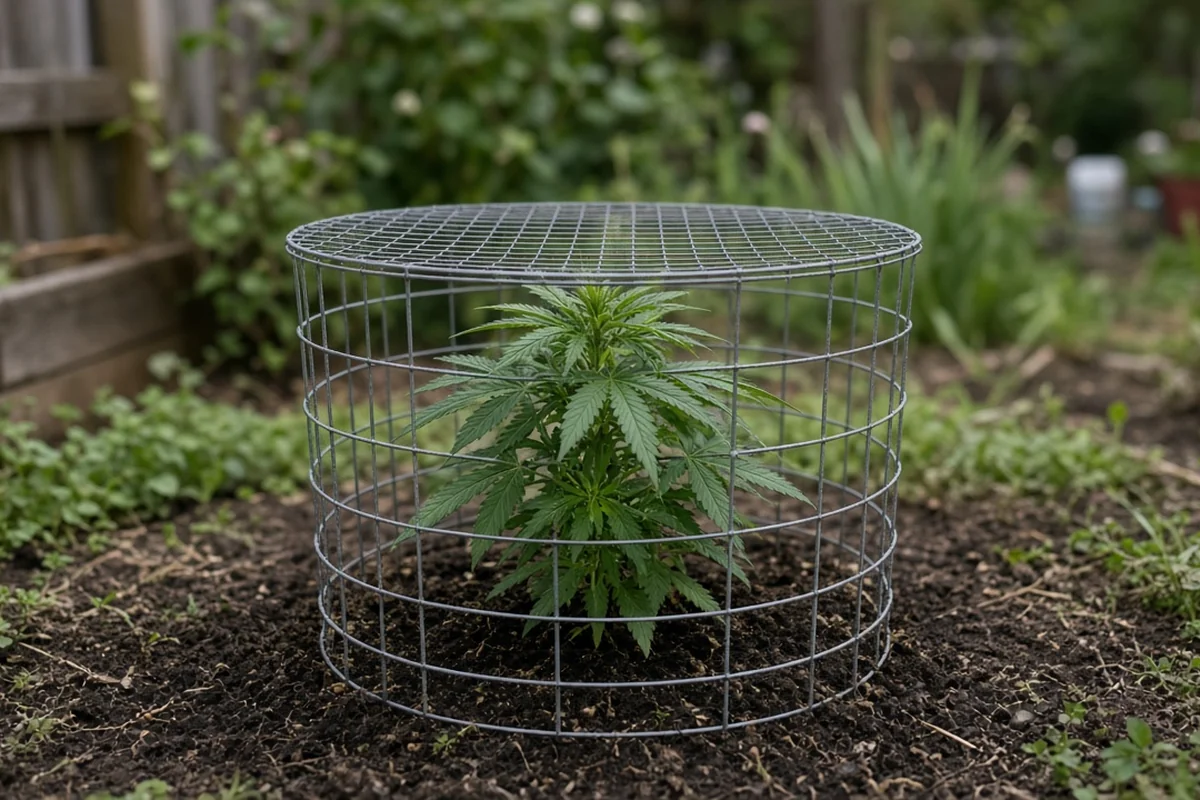
Cages make sense for a balcony sized patch or a handful of plants in a back corner. Iowa State recommends cylinders of fencing at least 6 feet tall, or shorter cylinders with a lid, around favorite plants.
- Cut a length of welded wire or concrete reinforcing mesh long enough to form a ring at least 3 feet across.
- Close the ring with wire ties and stand it over the plant.
- Drive two stakes through the mesh and into the soil so wind and deer cannot tip it.
- Add a lid of netting if the cage is shorter than the plant will grow.
- Keep foliage well back from the wire. Iowa State warns that a deer tongue can reach through mesh that sits too close to the leaves.
A cage also doubles as a support ring later in the season. Our guide to plant cages for cannabis covers sizing for full grown plants.
Do Deer Repellents Work on Cannabis?
Repellents can help for short stretches, but they are not a long term answer. Many contain egg solids or hot sauce, and they must be reapplied after rain and as new growth appears. Deer also get used to a smell over time. Because cannabis flowers are harvested and used, never spray any repellent on buds, and read every label for edible crop use before applying it near the garden. A physical barrier avoids all of those concerns.
Scare devices such as motion sprinklers or lights may buy a few days or weeks. Rotating them and pairing them with fencing works better than relying on one gadget.
Troubleshooting Deer Damage
Deer still get in after the fence goes up. Check the bottom edge first. UC IPM notes deer will crawl under a fence that is not fitted tight to the ground. Look for dug spots, loose stakes and gaps near posts.
A deer jumped the fence. On a slope, the downhill side can act like a lower fence. Raise that side. UC IPM says fences on sloping ground may need to be 10 or 11 feet high.
Plants inside a cage were bitten. The foliage has grown into the mesh. Widen the ring or add a second, larger ring outside the first.
Bites are low and clean. That is likely rabbits, not deer. Add a band of 1 inch chicken wire around the base of the fence.
Damage happened with no tracks at all. Check for birds on seedlings or caterpillars on the leaves before blaming deer.
Will a Damaged Plant Recover?
Usually, if the main stem and some side branches remain. Cannabis pushes new shoots from the nodes below a bite. Give the plant steady water and avoid heavy feeding until new leaves appear. A plant that lost its top may come back bushier, a bit like a plant that was topped on purpose. Seedlings eaten down to the cotyledons rarely recover well, so replacing them is often faster.
Sources
- Iowa State University Extension and Outreach, Yard and Garden, How to Protect Gardens from Deer: https://yardandgarden.extension.iastate.edu/how-to/how-protect-gardens-deer
- UC Statewide IPM Program, University of California, Deer, Home and Landscape: https://ipm.ucanr.edu/home-and-landscape/deer/
FAQ
Will deer eat cannabis buds?
They can. Deer favor soft new growth and may nibble flowers, though leaves and tips are the usual target. Keeping a fence up through harvest protects the whole season.
Is a 6 foot fence enough to keep deer out?
Sometimes. Iowa State says a solid 6 foot privacy fence or a small pen under about 10 by 10 feet is rarely jumped. For open mesh around a larger garden, aim for 8 feet.
Can I use an electric fence for deer?
UC IPM reports that standard electric fences have not proven very effective for deer. If you try one, check local rules and keep children and pets in mind.
How far should a cage sit from the plant?
Leave several inches of space between leaves and the wire so a deer cannot pull foliage through the mesh. Widen the cage as the plant grows.
When do deer cause the most damage?
Spring and early summer are the riskiest stretch, when new growth emerges and wild forage is limited. Have your barrier ready before you transplant.


