
Do Rabbits Eat Cannabis? How To Protect Your Plants
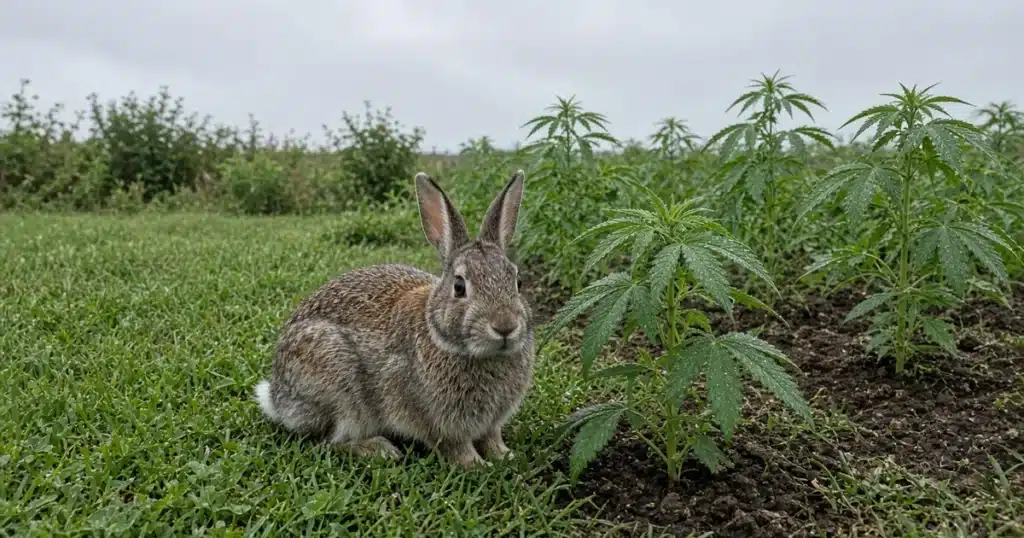
Quick answer: Yes, rabbits eat cannabis, mostly tender seedlings and the lower leaves of young plants. Their damage shows as clean, angled cuts with round droppings nearby. A wire-mesh fence with openings no larger than 1 inch, at least 2 feet tall above ground, with the bottom buried and a few inches bent outward to slow digging, is the most reliable way to keep them out.
Do Rabbits Eat Cannabis Plants?
Yes. Rabbits feed on succulent green vegetation. Young cannabis leaves and soft stems sit right in that preferred zone near the ground. Most damage shows on seedlings and the lowest leaves of young plants rather than on tall, woody stems.
Open gardens beside brush, ditches or vacant lots see more pressure because daytime cover sits within a short travel lane of soft irrigated growth. Site choice and fencing work together.
Night cameras are optional. Fresh pellets and 45 degree cuts tell the story without one. Focus energy on exclusion instead of watching the animals feed.
How to Tell Rabbit Damage From Deer and Groundhog Damage
| Animal | Cut style | Typical height | Other clues |
|---|---|---|---|
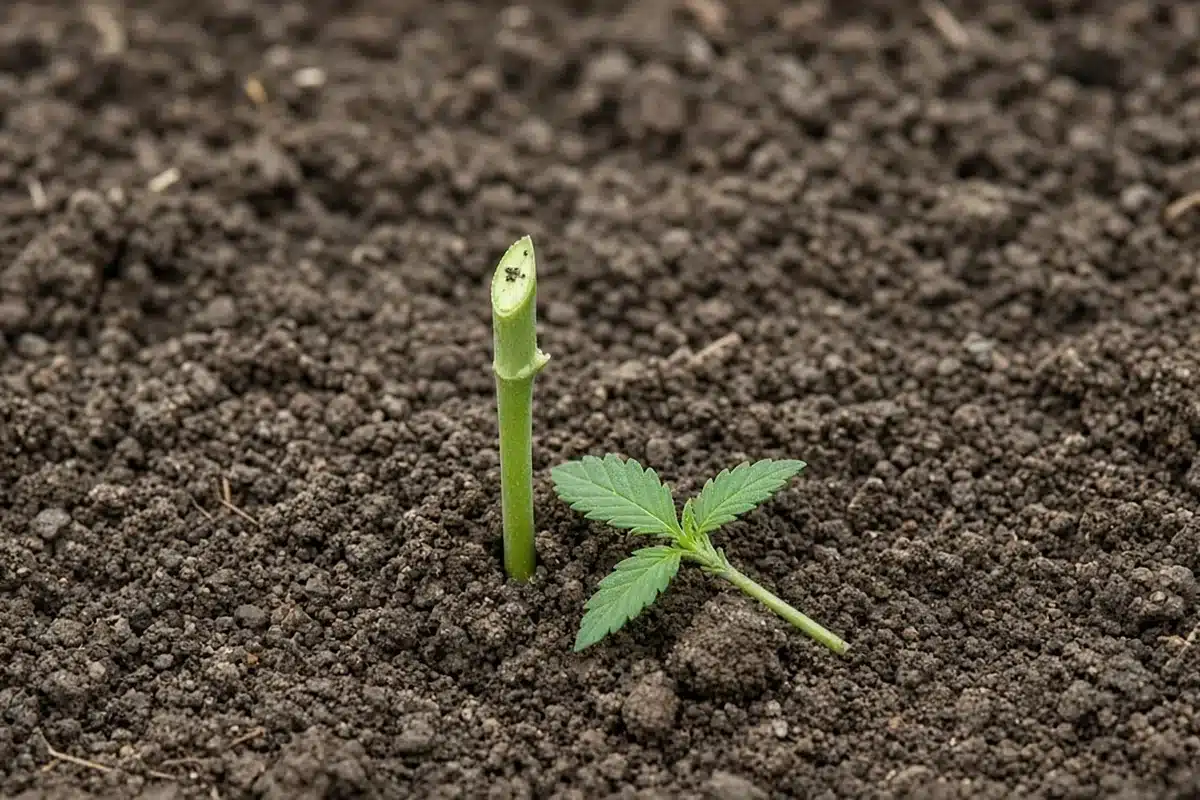
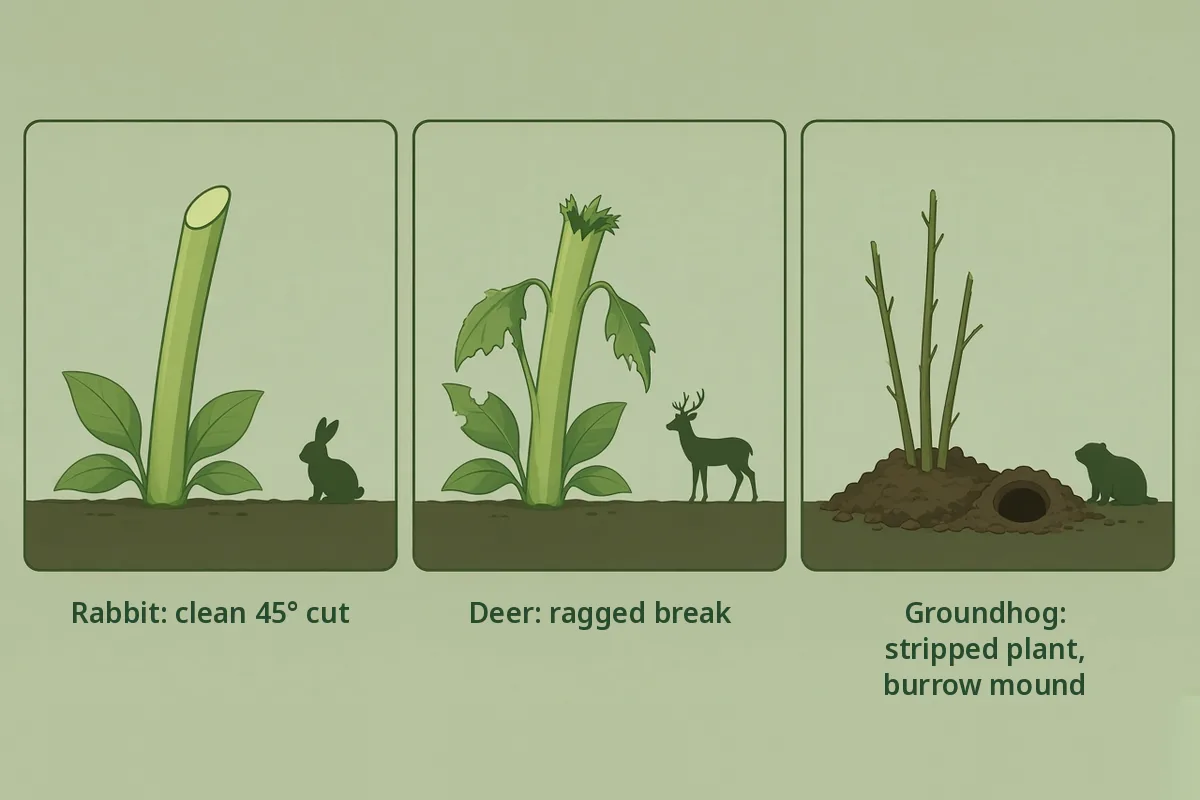
| Rabbit | Clean diagonal cut about 45 degrees | Near the ground, usually under about 2 feet | Round droppings nearby |
| Deer | Ragged, twisted break | Often above rabbit reach | No upper front teeth, so they tear |
| Groundhog | Heavy feeding that can strip whole plants | Low to mid plant | A large mound of dug soil at the burrow entrance |
UC IPM notes that rabbits use their incisors to make a characteristic diagonal 45 degree cut when clipping twigs or soft stems. Deer leave a ragged break because they twist and pull.
For deer and other garden pests, read about protecting marijuana plants from pests and bugs.
Penn State Extension notes that groundhog burrows show a large mound of excavated earth at the main entrance, and that a home garden can lose an entire tomato patch to them.
Round droppings scattered near the bed are a clear rabbit sign. Jackrabbit pellets can reach about half an inch across. Cottontail pellets are closer to a quarter inch.
Walk the bed at first light. Fresh cuts and pellets show where the night feeding happened. Mark those spots before you build panels so the fence covers the real travel lines.
Snow changes the height story. Rabbits standing on crusted snow can reach higher than the usual two-foot zone. In snow country, raise panels before winter storms, not after.
Irrigation tubing near the ground can be clipped too. Lift drip lines or sleeve them where rabbits travel.
When Rabbits Do the Most Damage
Feeding often begins in the evening and continues through the night into early morning. UC IPM notes that most rabbit damage is close to the ground, so seedlings and fresh transplants, which sit entirely in that zone, need protection first.
After a transplant day, soft stems are at their most tempting. Have cylinders or a finished panel ready before plants go in the ground, not after the first clipped seedling appears.
Drought next door pushes rabbits into irrigated gardens. A green cannabis row is a beacon when the ditch bank has gone brown.
Breeding seasons vary by region. In mild winters, pressure can last more months than a short northern spring.
Keep Rabbits Out With Low Mesh Fencing
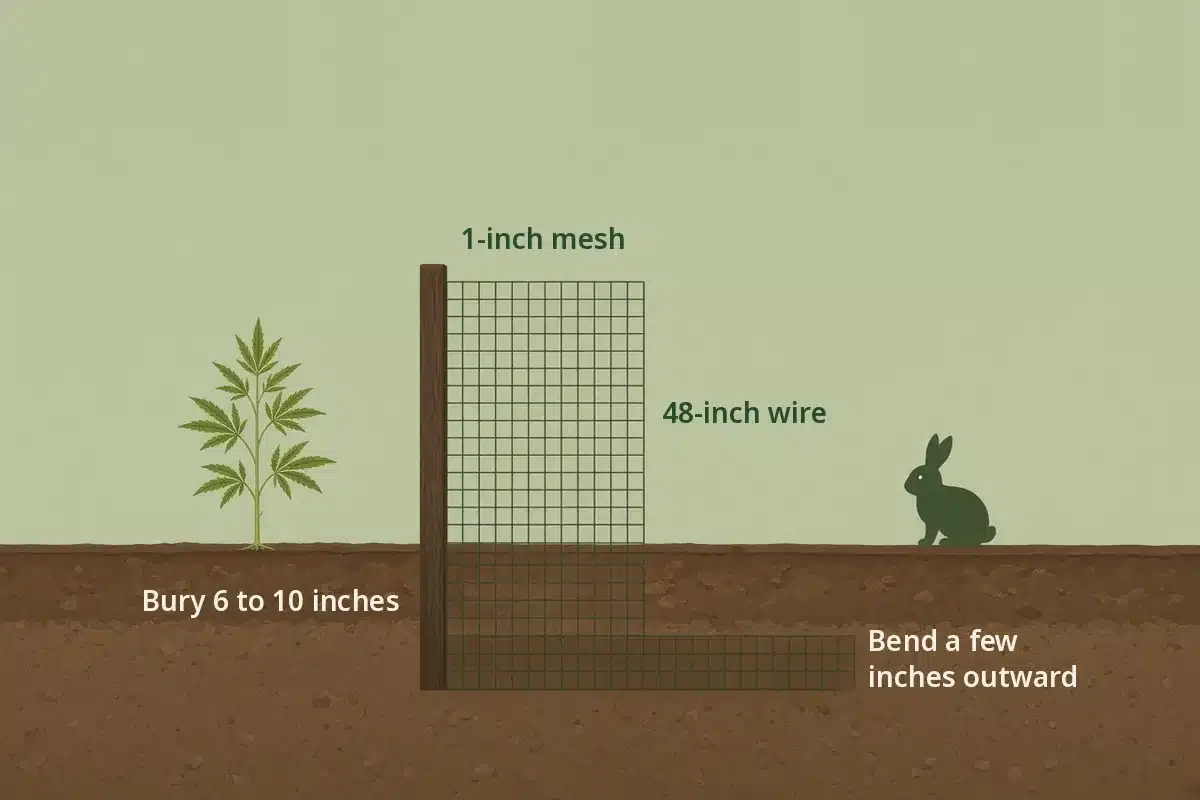
A fence is the most long-term, effective way to protect plantings from rabbit damage, UC IPM says. Use wire with mesh no larger than 1 inch so young rabbits cannot slip through. UC IPM recommends 48-inch-tall wire with the bottom buried at least 6 to 10 inches. Bend a few inches of the bottom outward into an L-shaped footer to slow digging.
Cottontails and brush rabbits will not jump a 2-foot fence. Jackrabbits ordinarily will not jump a 2-foot fence unless chased or frightened. Raising the above-ground height toward 3 feet helps where jackrabbits are common. Use tight-fitting gates with sills, and keep gates closed.
Inspect the bottom edge after rain and after dogs dig. A small gap under a gate sill undoes a whole panel. Stake the footer until the soil settles, then check again mid-season.
Panels you can move are fine for annual rows. Permanent posts help if the garden stays in one place for years. Either way, the mesh size and buried edge are what stop the animal.
Keep gates closed day and night, because UC IPM notes rabbits can be active at any hour, and a rabbit that gets inside a fence may not find its way out.
In snow country, plan a taller above-ground face before winter so drifts do not create a ramp over a short panel.
Wire Cages for Single Plants and Pots
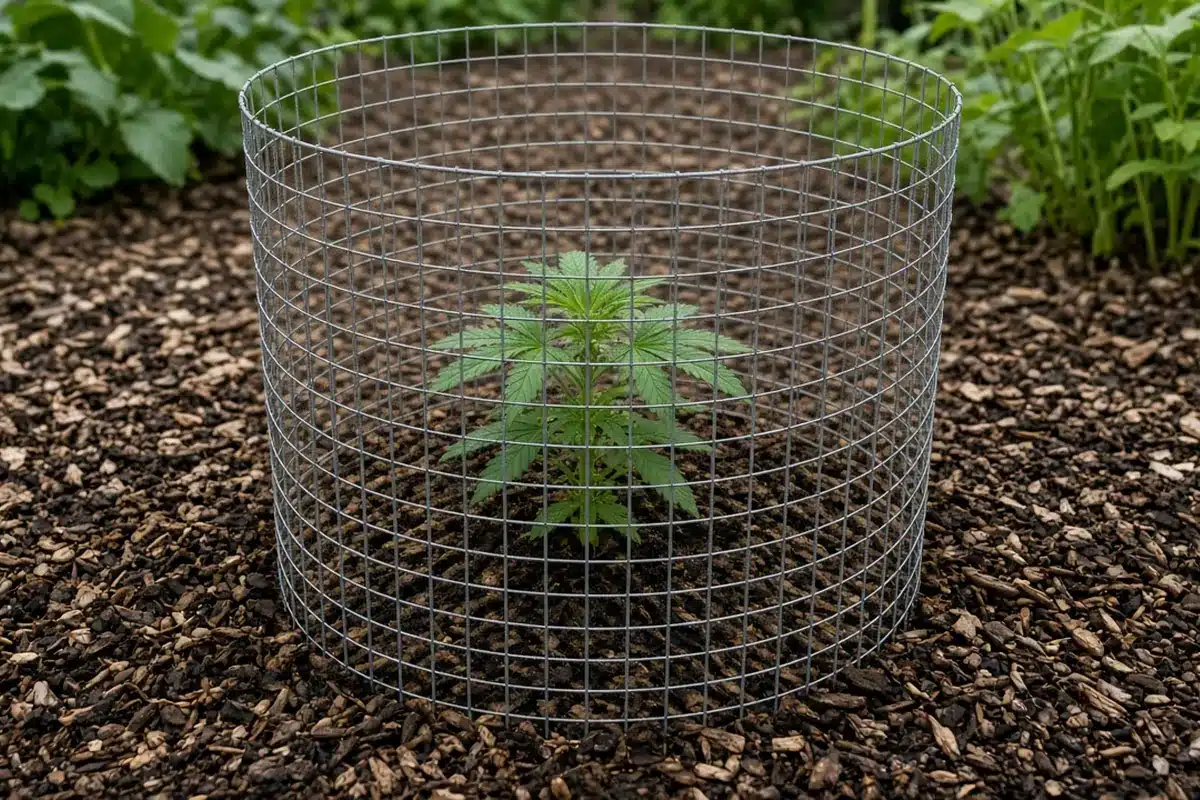
For a few plants, cylinders of 1-inch mesh about 18 to 24 inches tall work well. UC IPM describes cutting poultry netting into strips, forming cylinders around young trunks or plants, burying the bottom 2 to 3 inches and bracing the mesh away from the stem so rabbits cannot press through and feed.
The same cylinder idea protects a patio pot when the bottom sits flush on the hard surface.
Brace cylinders so wind does not lean mesh onto soft stems. Leave a finger of space between wire and stem all the way around.
Remove cages only when plants are tall enough that lower leaves are no longer the main meal. Keep fence panels for the row either way.
Clear Hiding Spots Near the Garden
Cottontails and brush rabbits use brush piles, brambles, stone heaps and other dense cover. Removing that cover nearby makes the garden less inviting, UC IPM notes. Vegetation along fence rows and ditch banks matters too. Jackrabbits can travel farther from cover, so fencing still matters even after cleanup.
Stack firewood and lumber on rails so the ground under the pile stays open and less inviting. Close gaps under sheds with mesh where rabbits have been resting.
Cleanup helps neighbors too. A cleared shared fence line cuts travel cover for several yards at once.
Sources
FAQ
Do Rabbits Eat Cannabis Plants?
Yes. Rabbits prefer succulent green growth, and young cannabis fits that pattern. Most feeding is close to the ground on seedlings and lower leaves. Mature woody stems are less attractive than soft new growth, so tall plants take less damage than fresh transplants.
Do Rabbits Eat Cannabis Seedlings?
Often. Seedlings and fresh transplants are the stage most at risk because the whole plant sits in the rabbit feeding zone near the ground. Protect rows before the plants put on height.
What Does Rabbit Damage Look Like on Cannabis?
UC IPM describes a characteristic diagonal 45 degree cut from rabbit incisors. Deer leave a ragged, twisted break. Round droppings near the bed are another rabbit clue. Damage is usually low on the plant.
How High Should a Rabbit Fence Be?
UC IPM recommends 48-inch-tall wire with mesh no larger than 1 inch and the bottom buried at least 6 to 10 inches. Bend a few inches outward to slow digging. Cottontails and brush rabbits will not jump a 2-foot fence. Where jackrabbits are common, raise the above-ground height toward 3 feet.


