
Gophers in Cannabis Gardens: Signs, Trapping and Wire Baskets
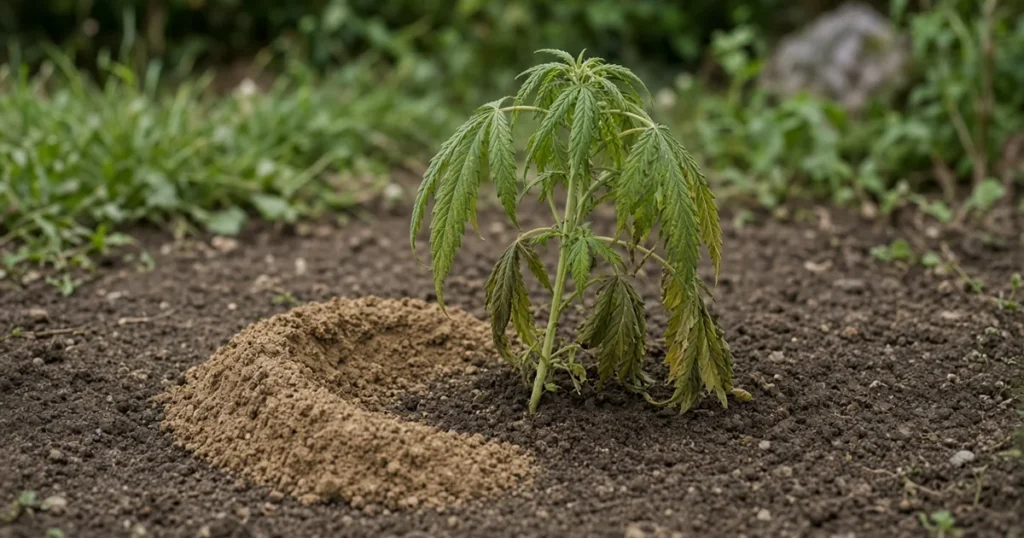
Quick answer: Pocket gophers chew cannabis roots underground, so a healthy plant can wilt or even get pulled into the soil overnight. The UC Statewide IPM Program recommends two tools that work together: traps set in pairs inside an active tunnel, and underground wire mesh under beds or around root balls. Repellent plants and vibrating stakes have not held up in research.
Do Gophers Eat Cannabis?
Yes. Gophers feed on roots, bulbs and stems of a wide range of plants, and cannabis is no exception. UC IPM warns that one gopher working alone can wreck a garden quickly, and it can chew through drip lines as well. Damage is often hidden until the plant suddenly droops in full sun even though the soil is moist.
Gophers are different from moles. Moles eat insects and worms and push up volcano shaped ridges, while gophers eat plants. If you see raised ridges and no root damage, read our page on moles in cannabis gardens instead.
How Can You Tell a Gopher Is Present?
Look for fresh soil mounds shaped like a fan or crescent. Each mound has a plugged hole off to one side, toward the flat edge of the fan. Other signs include:
- A plant that wilts quickly and does not perk up after watering
- A plant that wobbles and lifts out with no roots attached
- Leaves or small plants pulled down into a hole
- Chewed drip tubing just below the surface
Fresh mounds are dark and moist. Old mounds are dry, crusted and often weedy. The UC IPM guide stresses that traps belong only in tunnels marked by fresh mounds.
How to Trap a Gopher Near Cannabis
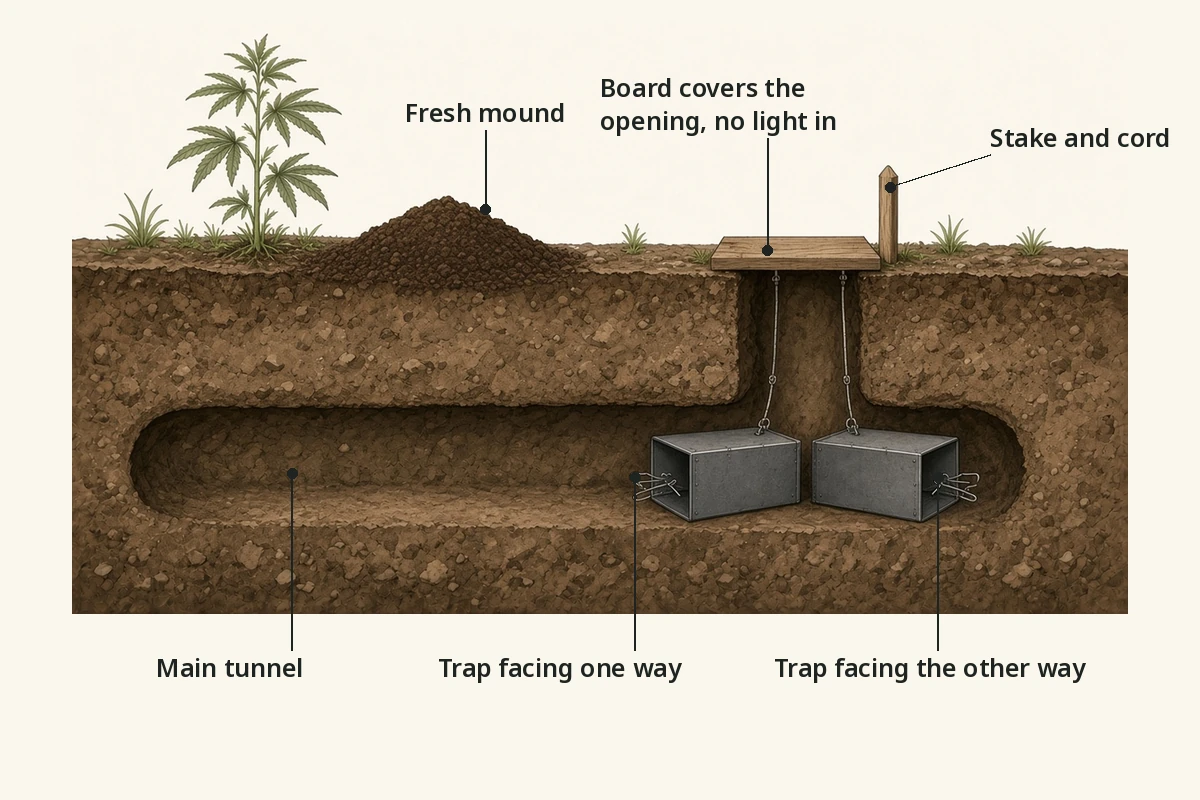
- Find the newest mound. Fresh soil means the tunnel under it is active.
- Probe for the main tunnel. Push a metal probe or long screwdriver into the soil a short distance from the plugged side of the mound. You will feel it drop a couple of inches when it hits the tunnel.
- Open the tunnel with a trowel or small shovel just wide enough to set traps.
- Set two traps facing opposite directions. UC IPM advises setting traps in pairs facing each other, since you do not know which way the gopher will come.
- Tie each trap to a stake with a wire or cord so it cannot be dragged off.
- Cover the opening with a board, sod or burlap and soil. UC IPM says light should not get in.
- Check traps at least daily. If nothing happens after a day or two, move them to a fresher mound.
- Keep trapping until no new mounds form.
Gopher traps do not need bait. New Mexico State University notes that trapping avoids the poisoning risks tied to some rodenticides and can be used in organic gardens. That matters in a cannabis bed where flowers will be harvested.
Which Gopher Traps Work Best?
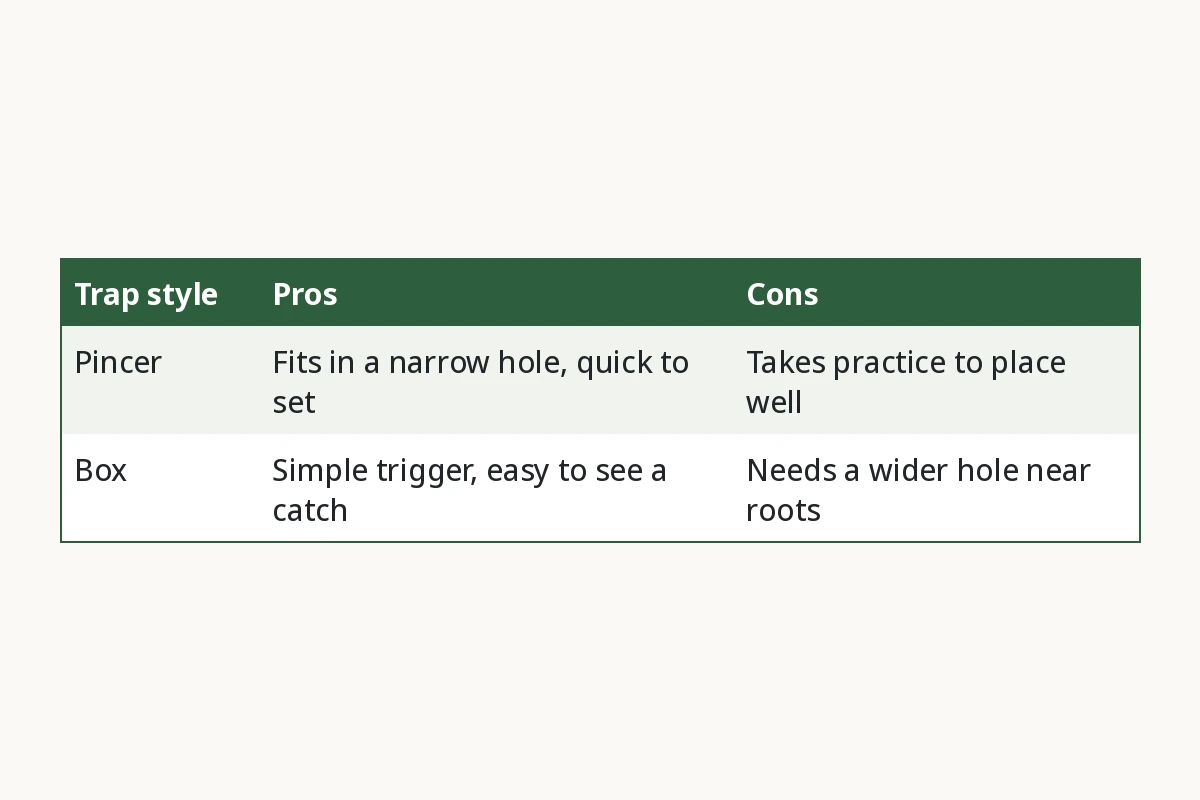
UC IPM describes two main styles. Pincer traps have two prongs that snap shut when the gopher pushes a flat pan. Box traps use a choker loop inside a small box. Box traps can be easier for beginners, but they need more digging to fit in the tunnel. Many experienced trappers prefer pincer traps.
| Trap style | Pros | Cons |
|---|---|---|
| Pincer | Fits in a narrow hole, quick to set | Takes practice to place well |
| Box | Simple trigger, easy to see a catch | Needs a wider hole near roots |
How to Protect Cannabis Roots With Wire

Exclusion does not reduce the gopher population, but it shields the roots you care about most.
- For a raised bed, lay hardware cloth or 3/4 inch poultry wire across the bottom before you fill it. UC IPM recommends this step before planting.
- Run the mesh up the full inside walls and staple it so there are no gaps at the corners.
- For in ground plants, form a wire basket large enough for the root system to grow. Choose a basket with room for the roots to keep growing, as UC IPM advises.
- Leave the top rim of the basket an inch or two above the soil line so gophers cannot climb over.
- Check baskets each season. Galvanized mesh can rust through after a few years in wet soil.
Our guide to raised beds for cannabis covers bed sizing, and the page on the importance of cannabis roots explains why root space matters.
What Does Not Work Against Gophers?
UC IPM lists several popular remedies that fall short:
- No repellents sold today reliably protect plants from gophers.
- Gopher purge, castor bean and garlic have not been shown to repel them.
- Vibrating stakes, ultrasonic devices and pinwheels were not effective in trials.
- Smoke and gas cartridges often fail because gophers seal off their burrows quickly.
- Owl boxes are unlikely to lower numbers enough to stop plant damage.
Toxic baits exist, but UC IPM notes they can pose risks to pets, children and wildlife in backyard settings.
Troubleshooting Gopher Problems
Traps sit for days with no catch. The tunnel may be old or you may be in a side branch. Probe again closer to the freshest mound and look for the main run.
The gopher filled the trap with soil. Light or air is getting in. Seal the opening more tightly.
Plants inside a basket still wilt. Check whether roots have grown past the rim or through a rusted spot. Also rule out overwatering, which causes a similar droop.
New mounds keep coming from one side of the yard. A neighbor’s field or lot may be the source. Set a line of traps along that edge as a buffer. New Mexico State University describes perimeter trapping that cut gopher entry into fields by more than 75 percent.
Drip line keeps leaking. Bury tubing in a shallow trench lined with wire, or run it on the surface where you can see damage.
Fresh mounds appear in the lawn but cannabis looks fine. The gopher may be feeding on grass roots for now. UC IPM stresses that early detection matters, so trap that tunnel system before it reaches your beds rather than waiting for a plant to wilt.
A trap was sprung but empty. The pan may have been set too lightly or soil fell in as you placed it. Clear loose soil from the tunnel floor and reset the trap so it sits level in the run.
When Is the Best Time to Trap Gophers?
Trap whenever fresh mounds appear. UC IPM says mound building peaks in winter and spring where soil is not irrigated, while in watered gardens gophers can dig year round. Start before you transplant so the bed is clear when roots go in. Acting fast after a fresh mound appears also improves your odds, since gophers revisit feeding tunnels often.
Sources
- UC Statewide IPM Program, University of California, Pocket Gophers, Home and Landscape: https://ipm.ucanr.edu/home-and-landscape/pocket-gophers/
- New Mexico State University Cooperative Extension Service, L 117, How to Trap Pocket Gophers: https://pubs.nmsu.edu/_l/L117/index.html
FAQ
Can a gopher kill a cannabis plant?
Yes. A gopher can chew through the main root or pull a young plant underground. Larger plants may survive partial root loss but often stay stunted.
Do I need bait in a gopher trap?
No. UC IPM notes gopher traps do not need food bait. The gopher triggers the trap as it moves through the tunnel.
Will fabric pots stop gophers?
Not reliably. Gophers can chew through fabric. A wire basket under or around the pot, or a raised stand, works better.
Is poison bait safe in a cannabis garden?
UC IPM cautions that baits can harm pets, children and wildlife. Trapping and wire mesh avoid that risk and leave nothing on the plants.
How deep should a gopher basket go?
Deep enough to hold the full root ball through the season, with the rim just above the soil.
Do owl boxes keep gophers away?
UC IPM says owls do eat gophers, but a nest box is unlikely to lower their numbers enough to stop plant damage. See it as a perk for local wildlife rather than a control plan.


