Running a Grow Tent in a Bedroom: Noise, Light and Air

The short answer
Putting a grow tent in bedroom space works if you plan for four things: the footprint, light leaks, the humidity the plants add to the room and a daily routine that fits your nights. The easiest start is a small tent in a corner.
The biggest surprises are usually light and moisture, not size. Lights that run overnight can glow through seams, and plants release water that ends up in your room. Each issue below comes with steps to handle it.
Is a bedroom a good place for a tent
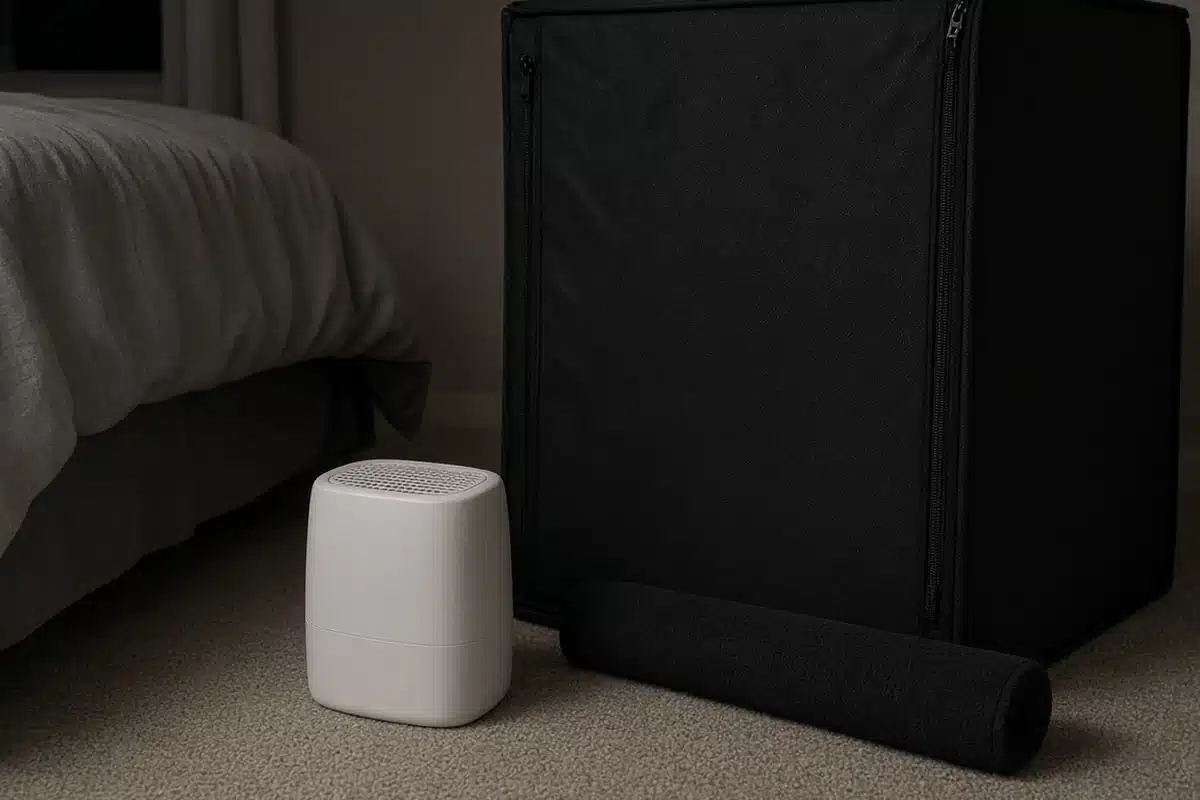
A bedroom has real advantages. It is heated and cooled with the rest of the house, it has outlets and it keeps the grow close so you notice problems early. Many growers in apartments have no other choice.
The catch is that you share the space. You live with whatever the tent does. Light, warmth, moisture, smell and the sound of a fan all reach you. Most of those stay small with a little planning.
If you have another room to choose from, compare them first with our guide to setting up a grow tent, which covers sizing and placement.
Footprint: how much room you really need
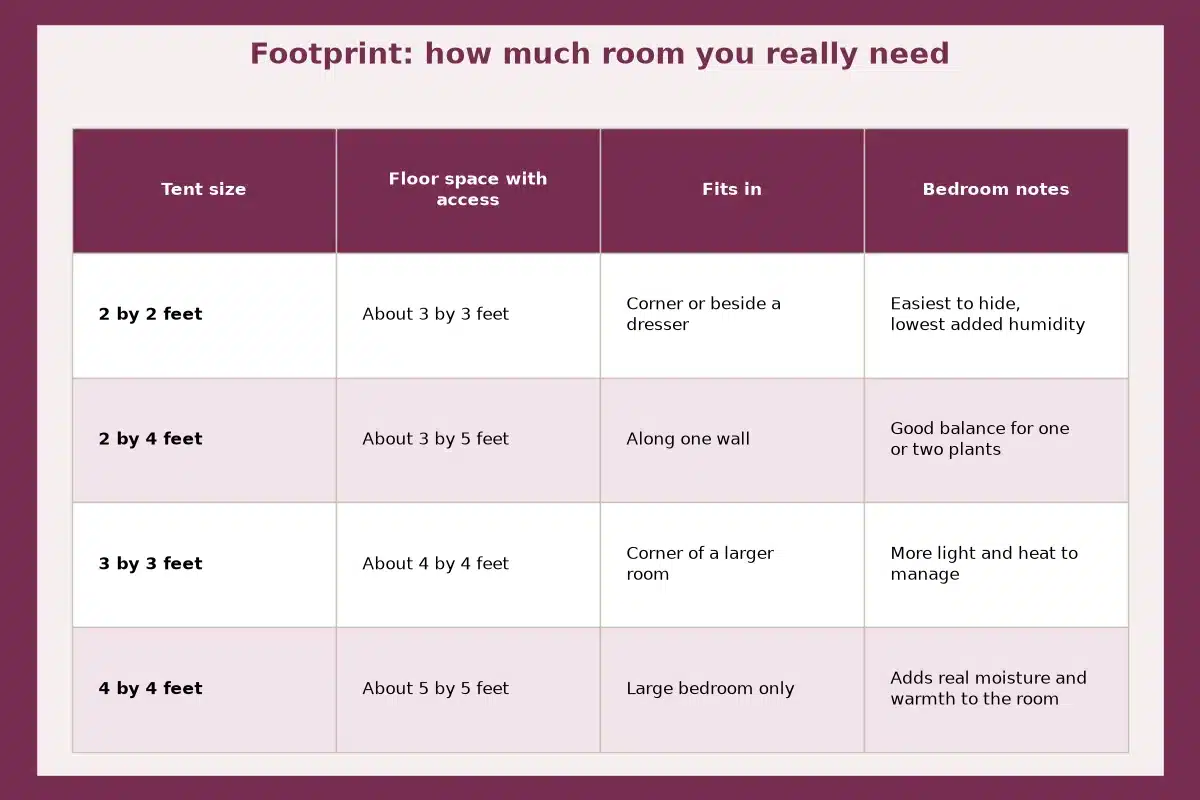
The tent size on the box is only part of the space it takes. Leave room to open the doors, reach inside and move pots.
Plan for at least a foot on the door side and a few inches on the other sides for airflow. Ducting and a filter often hang on top or on the back, so check ceiling height and wall space too.
| Tent size | Floor space with access | Fits in | Bedroom notes |
|---|---|---|---|
| 2 by 2 feet | About 3 by 3 feet | Corner or beside a dresser | Easiest to hide, lowest added humidity |
| 2 by 4 feet | About 3 by 5 feet | Along one wall | Good balance for one or two plants |
| 3 by 3 feet | About 4 by 4 feet | Corner of a larger room | More light and heat to manage |
| 4 by 4 feet | About 5 by 5 feet | Large bedroom only | Adds real moisture and warmth to the room |
Source: A Brief Guide to Mold, Moisture and Your Home, US Environmental Protection Agency, room humidity limits behind the bedroom notes column. Floor space figures are general layout guidance.
Light leaks at night
Many growers run their lights at night to keep the tent cooler and to save on power. In a bedroom, that can mean a tent that glows through every seam during the hours you want the room dark and quiet.
Good tents are lined and light tight, but light still escapes at zippers, vent ports and around duct openings. Check yours in a dark room with the tent light on. Mark every glow and cover it with tape, a sock over the vent port or a fabric flap.
Room light can also get in during the dark period. Iowa State University notes in How to Set Up Supplemental Lights for Indoor Plants that room lamps and street lights can pollute the dark period for plants that need it to flower. A bedside lamp or phone screen shining into an open tent is enough to cause trouble. Keep the tent zipped during its dark hours.
Humidity spill: where the water goes
Plants take up water through the roots and release most of it from their leaves. In a tent, that water leaves with the exhaust fan. If the exhaust vents into your bedroom, the moisture goes into the air you breathe all night.
The EPA guide cited under the table says to keep indoor humidity below 60 percent, ideally between 30 and 50 percent. It also lists condensation on windows, walls or pipes as a sign the air is too damp. A bedroom with a tent can cross that line, especially in winter when windows are cold.
Ways to keep room humidity in check:
- Put a cheap humidity meter in the bedroom, not just in the tent.
- Vent the exhaust out a window or into a hall where it can spread.
- Run a small dehumidifier in the room during flowering.
- Water at the start of the light period so leaves dry during the day.
- Wipe any water off windows each morning and look for damp corners behind furniture.
Our guide on relative humidity control for cannabis explains how temperature and moisture inside the tent work together.
Sound at night
Fans and pumps make sound, and a quiet room makes it easy to notice. The good news is that most of it can be reduced with mounting, speed control and placement.
Set the tent on a rug or foam mat, hang fans from straps instead of bolting them to a frame and turn fan speed down at night if temperatures allow. Our guide to grow tent noise reduction covers the details.
Smell
Flowering plants smell, and bedrooms share air with closets, clothes and bedding. A carbon filter on the exhaust is the standard fix. Keep the tent under slight negative pressure so air is pulled in through gaps rather than pushed out.
Keep clothes and linens out of the exhaust path. Fabric picks up smell quickly.
Heat
Lights and fans add heat to the room. In summer that can make a small bedroom uncomfortable. Running lights at night helps, since nights are cooler, but it brings back the light leak issue.
Watch the room temperature for the first week and adjust the schedule, the fan speed or the light power if the room runs warm.
Build a routine you can live with
A set daily routine makes a bedroom grow much easier. That keeps the plants healthy and keeps you from opening the tent at the wrong time.
- Choose a light schedule that puts the dark period while you are awake and the room is lit, or overnight with the tent fully sealed.
- Do all watering and checks at the start of the light period.
- Check the room humidity meter each morning and empty the dehumidifier if you use one.
- Look over leaves and soil once a day for pests or mold.
- Wipe spills right away, since carpet under a tent stays damp for days.
- Clean the tent floor and trays once a week.
Protect the floor
Carpet and wood floors do not like water. Put a waterproof tray or a sheet of vinyl under the tent before you set it up. Use saucers under every pot and check under them weekly.
Troubleshooting
You see light around the tent at night. A seam, zipper or vent is letting light escape. Find it in a dark room and cover it with tape or fabric.
Windows are wet every morning. Room humidity is too high. Vent the exhaust out of the room or add a dehumidifier.
The room smells during flowering. The carbon filter is missing, worn out or bypassed. Seal the duct joints. Replace the filter if it is old.
The bedroom is too warm. Lights and fans are adding heat. Run lights at night, lower the light power or improve the exhaust path.
You hear a rattle or hum. A fan or duct is touching a hard surface. Hang it from straps and add a soft pad under the tent.
There is a musty smell behind the tent. Air is not moving behind it and moisture is collecting. Pull the tent out a few inches and look for mold on the wall or floor.
Making it work
A bedroom tent is a common setup, and it can be a good one. The key is to think of the room as part of the grow, not just the tent. Keep light in, keep moisture out and set a routine that respects your nights. At Kind Seed Co, we suggest starting small in a bedroom and sizing up only once the room handles the first grow well.
Sources
- US Environmental Protection Agency, A Brief Guide to Mold, Moisture and Your Home
- Iowa State University Extension and Outreach, How to Set Up Supplemental Lights for Indoor Plants
FAQ
Is it okay to have a grow tent in my bedroom?
It can work well if you plan for light leaks, room humidity, smell and a routine that fits your nights.
What size grow tent fits in a bedroom?
A 2 by 2 or 2 by 4 foot tent fits most bedrooms. Leave about a foot of space on the door side.
Will a grow tent make my bedroom humid?
It can. Plants release water that the exhaust carries into the room, so vent it out or run a dehumidifier.
What humidity should my bedroom stay at?
The EPA suggests keeping indoor humidity below 60 percent, ideally between 30 and 50 percent.
Can I stay in the room overnight with the grow light on?
Yes, if the tent is light tight. Check zippers and vent ports in a dark room and cover any leaks.