Insulating a Grow Tent or Grow Room
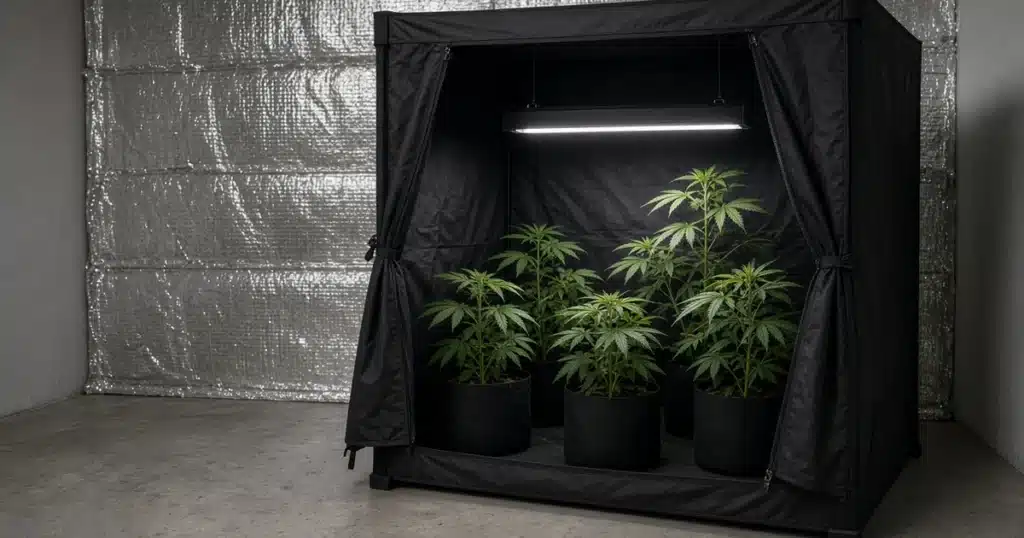
Quick answer: Insulation helps a grow tent or grow room hold heat when the surrounding space is cold, so heaters run less and nights stay steadier. Start by sealing air leaks, since Extension greenhouse guides count air leakage among the four ways buildings lose heat. Then add insulation to the room walls, or around the outside of the tent, using materials with low flammability. UMass Extension reports that foil faced bubble insulation adds both reflection and trapped air, and that reflective foil works best when it stays clean with an air space in front of it.
Why Insulate a Grow Tent or Grow Room?
To slow down heat loss in a cold space. A tent in a heated home rarely needs it. A tent in an unheated basement, garage or shed can lose heat quickly at lights off. Insulation keeps more of the warmth from the lights inside, so the night drop is smaller and any heater works less.
The UMass Extension fact sheet on insulating greenhouse sidewalls and endwalls shows how large the gap can be. By its count, a greenhouse wall with two layers of glazing sheds over twenty times the heat of an insulated wall in a home. A standard 6 inch insulated house wall rates about R 30, while a double layer greenhouse wall is about R 1.5. A thin tent wall is unlikely to do much better.
Our grow room climate targets show the temperature ranges you are trying to hold, which tells you how much insulation is worth adding.
How Does a Grow Space Lose Heat?
Four ways. The Reducing Greenhouse Energy Consumption overview from University of Wisconsin Extension, hosted by Farm Energy, names conduction, convection, infiltration and radiation. It says all four pathways exist in every building regardless of type or size.
Conduction is heat moving straight through walls and floors. Convection is warm air rising and giving up heat to cooler surfaces before it sinks again. Infiltration is air leaking in and out through small openings, which in a tent means zipper gaps, vent ports and duct seams. Radiation is heat traveling directly from warm surfaces to cooler ones. UMass adds that as much as 35 percent of greenhouse heat loss can come from radiation.
Each one needs a different fix. Sealing stops infiltration. Insulation slows conduction. Reflective surfaces cut radiation.
Wisconsin Extension also explains how convection works inside a heated space. Warm air rises to the roof, loses heat to the covering and sinks back toward the floor as cooler, heavier air until something warms it again. In a tent, the warmest layer sits near the light and the coolest near the floor, which is why floor insulation and air circulation both matter.
The UMass fact sheet adds that the thin film of still air on a wall surface acts as insulation too. How well it works depends on the surface and the speed of the air moving past it. UMass found the air layer on the inside of greenhouse glazing nearly four times as effective as the outside layer exposed to a 15 mph wind. A tent standing in a drafty room loses some of that benefit, so blocking drafts helps before any material goes up.
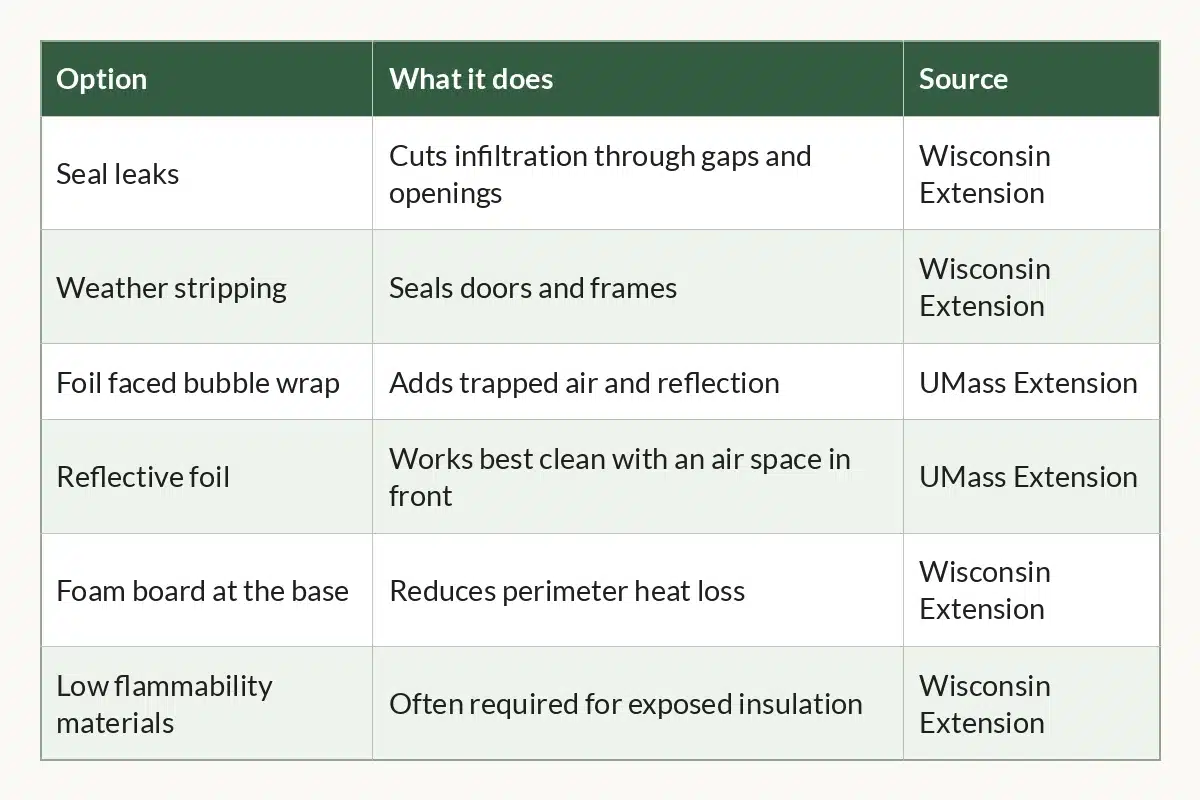
Insulation Options at a Glance
| Option | What it does | Source |
|---|---|---|
| Seal leaks | Cuts infiltration through gaps and openings | Wisconsin Extension |
| Weather stripping | Seals doors and frames | Wisconsin Extension |
| Foil faced bubble wrap | Adds trapped air and reflection | UMass Extension |
| Reflective foil | Works best clean with an air space in front | UMass Extension |
| Foam board at the base | Reduces perimeter heat loss | Wisconsin Extension |
| Low flammability materials | Often required for exposed insulation | Wisconsin Extension |
Where Should You Start Insulating?
With air leaks. Wisconsin Extension suggests adding or replacing weather stripping around doors and installing doorsills where needed. It adds that roll up doors leak badly at their edges and are hard to seal, and that plastic film over a door you never use is the most effective fix. Inside a home, the targets are the room door, windows and any unused vents.
For a tent, keep zippers fully closed, cover unused ports and seal duct connections. A tent that leaks warm air at every seam loses heat no matter how much insulation surrounds it.
Next comes the floor. Wisconsin Extension recommends perimeter insulation in new greenhouses, often a 1 or 2 inch foam board running at least 24 inches deep around the edge. For a grow tent on concrete, a rigid foam board under the tent floor does a similar job by breaking contact with the cold slab.
Which Materials Work for Grow Tent Insulation?
Reflective foil, foil faced bubble insulation and rigid foam board all work, depending on the space. UMass lists aluminum foil and aluminized polyester plastic as low cost options. A better choice, it says, is double bubble insulation with foil faces, which adds insulation through the air trapped in the bubbles. Most insulation, it explains, relies on pockets of still air locked inside foam or fibers.
Reflective foil needs the right setup. UMass notes that aluminum reflects heat well but works best when the surface stays bright and free of dust and dirt, with an air space in front of it. It reports a 40°F drop in knee wall temperature after adding aluminum building paper behind heat pipes in one greenhouse.
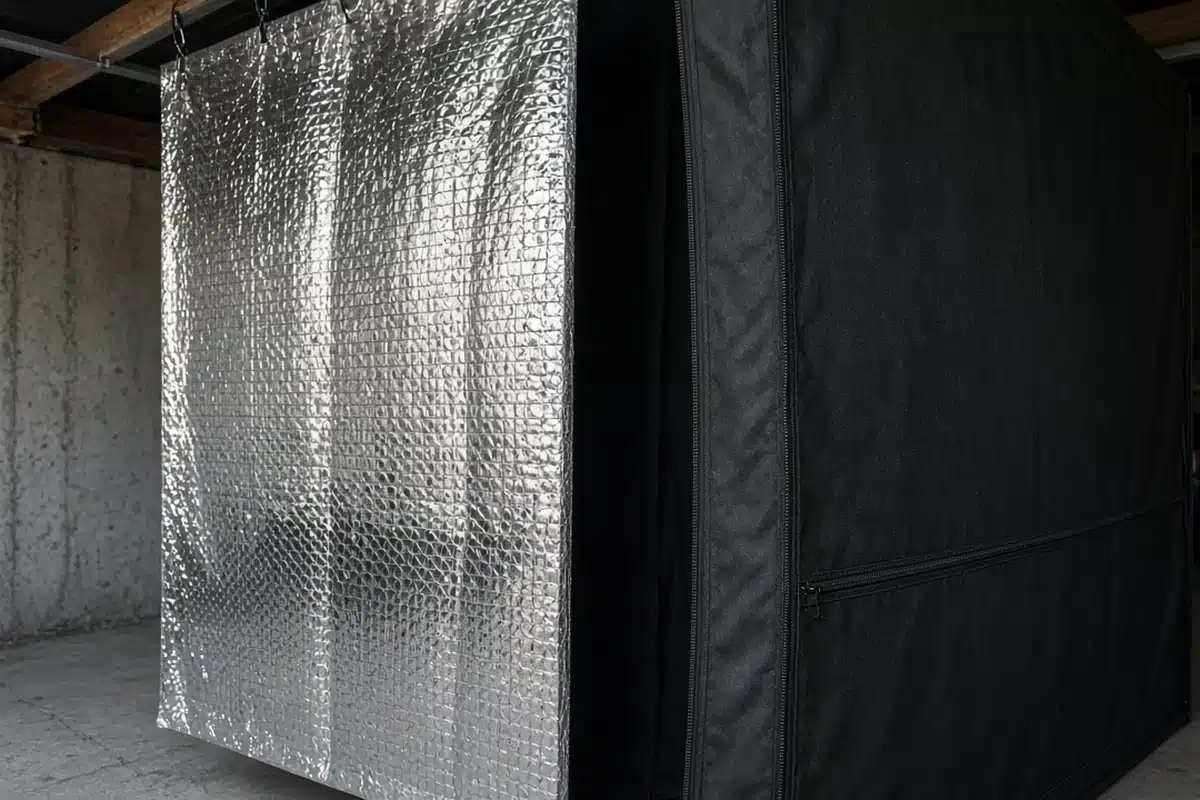
In a dedicated room, rigid foam board or fiberglass batts in the walls give the most lasting result. For a tent inside a cold room, foil faced bubble insulation hung around the outside of the tent, with a small gap, adds reflection and trapped air without blocking vents.
Is Insulation a Fire Risk?
It can be, so choose materials carefully. Wisconsin Extension notes that many insurance companies insist that glazing and exposed insulation be made from materials with low flammability. That is a useful standard for any grow space with lights, heaters and electrical gear.
Keep insulation away from heaters, lights and drivers. Do not wrap cords or power strips in it, since trapped heat around electrical connections adds risk. Leave intake and exhaust openings clear so the fans can still move air. Check the setup again after any change, since a new layer can easily shift and cover a port.
How Do You Insulate a Grow Room Step by Step?
- Measure the night drop first. Log temperatures overnight so you know how much heat you are losing.
- Seal air leaks. Use weather stripping and doorsills, as Wisconsin Extension suggests.
- Cover unused doors and windows. Wisconsin calls plastic film over unused doors the best way to seal them.
- Insulate the floor. Rigid foam under the tent breaks contact with cold concrete.
- Add wall insulation. Foil faced bubble insulation or foam board works for most rooms.
- Leave an air gap in front of reflective foil. UMass says foil works best with an air space and a clean surface.
- Use low flammability materials. Many insurers require it for exposed insulation, Wisconsin notes.
- Keep vents clear. Insulation should never block intake or exhaust.
If you are building a grow room from scratch, our guide to building a detached garage or shed grow room covers walls, power and ventilation. For seedlings in a cold space, seedling heat mats warm the root zone directly.
Troubleshooting Grow Tent Insulation
The tent still gets cold at night. Check for air leaks at zippers, ports and the floor. Infiltration can undo the benefit of insulation.
The tent overheats with lights on. Insulation holds heat in both directions. Increase exhaust during the light period.
Foil insulation does not seem to help much. UMass says it works best clean and with an air gap. Move it slightly away from the wall.
Condensation appears on the room walls. Warm, humid air may be reaching cold surfaces. Seal the room and run a dehumidifier.
The floor stays cold. Add rigid foam under the tent, as with perimeter insulation in greenhouses.
Sources
- UMass Extension, Insulating Sidewalls and Endwalls Has a Short Payback: https://www.umass.edu/agriculture-food-environment/greenhouse-floriculture/fact-sheets/insulating-sidewalls-endwalls-has-short-payback
- University of Wisconsin Extension via Farm Energy, Reducing Greenhouse Energy Consumption: An Overview (A3907-01): https://farm-energy.extension.org/wp-content/uploads/2019/04/2.-A3907-01.pdf
FAQ
Does a grow tent need insulation?
Only in cold spaces. A tent in a heated room rarely needs it, while one in a cold basement or shed often benefits.
Which insulation suits a grow tent best?
UMass describes foil faced double bubble insulation as a better choice than plain foil because it adds trapped air.
Should insulation go inside or outside the tent?
Outside, around the tent walls, so it does not block vents or crowd lights and plants.
Is reflective foil enough on its own?
UMass says foil needs an air space in front and a clean surface to work well. Bubble insulation adds more.
Can insulation start a fire?
Choose materials with low flammability, as many insurers require, and keep them away from heaters, lights and cords.