
Hydroponic Anubias: Roots in Water With Leaves Held Above
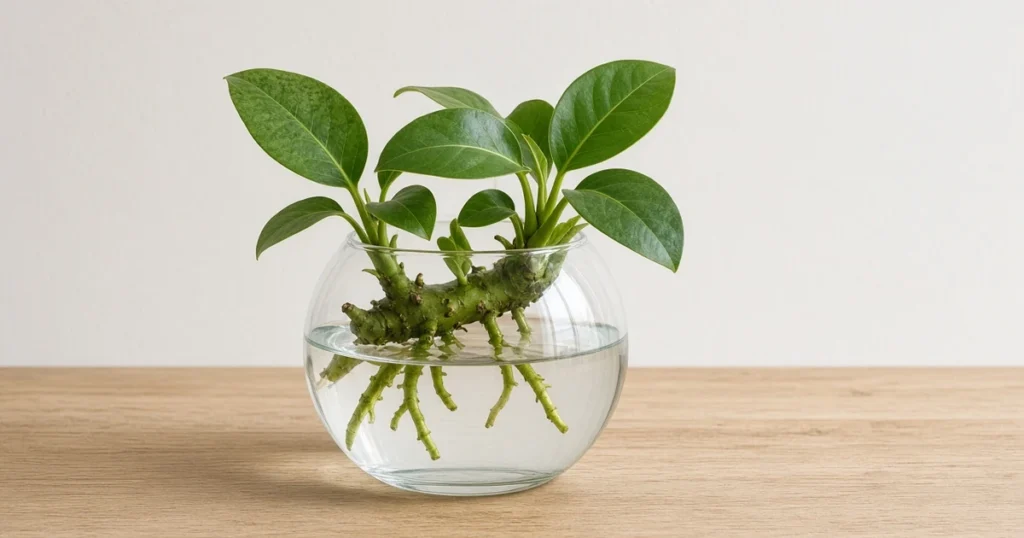
A hydroponic anubias is grown with its roots plus rhizome in a jar of water while its leaves rise into the air. None of the sources below names anubias, so the notes here stay with what Extension pages say about aquatic plants of this kind.
The short answer
UF/IFAS Extension notes emergent plants root under water but hold most of their leaves above it. Some can grow fully in or fully out of water. For hydroponic anubias, sit the rhizome low in a jar, give the leaves air plus divide clumps when they crowd the jar.
What does emersed growing mean?
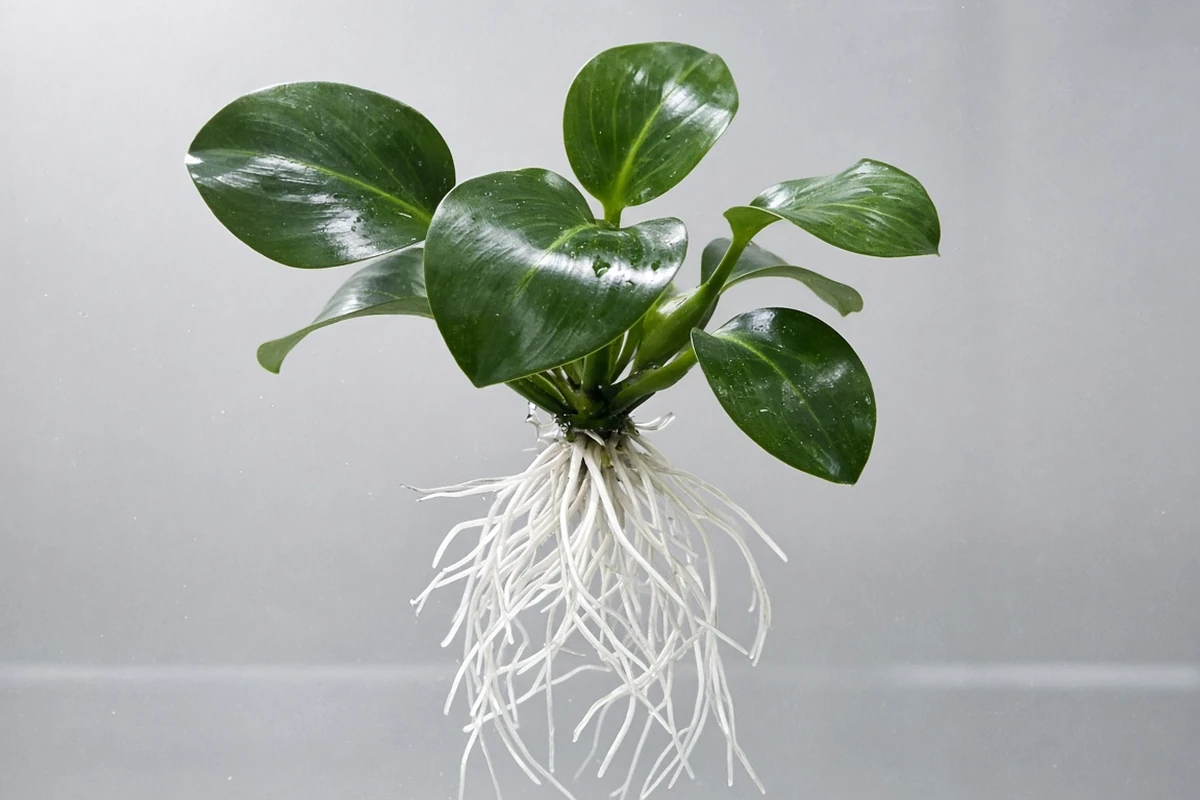
UF/IFAS Extension sorts aquatic plants into four groups. Submersed plants grow entirely under water. Emergent plants root in the substrate under water and grow most of their leaves plus flowers above it. Floating leaved plants plus floating plants spread leaves on the surface.
UF/IFAS notes some emergent plants are amphibious. They can grow entirely out of water or submerged. Hobbyists call growth with leaves in the air emersed growth.
How deep should anubias sit in a jar?
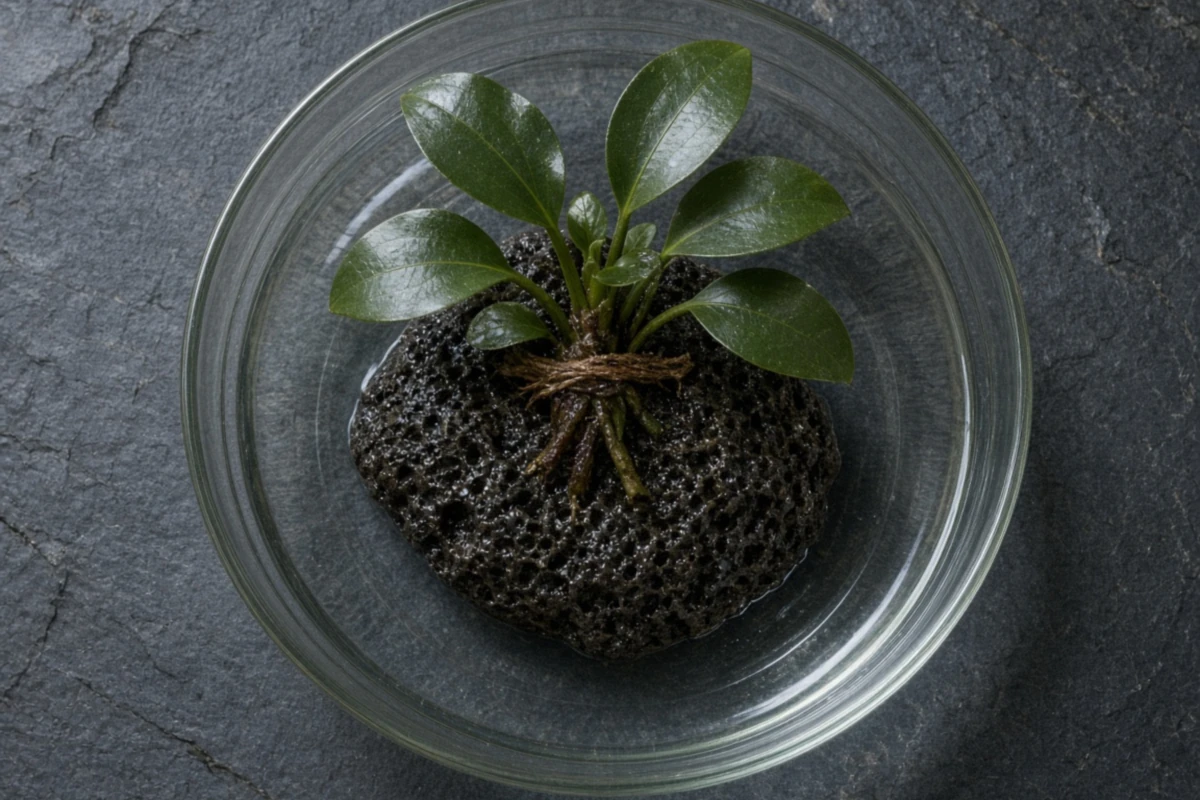
No source gives a depth for anubias. Colorado State University Extension notes most marginal plants do well with 1 to 4 inches of water over the crown. Rocks set around a plant stop it shifting before it roots in.
NC State Extension describes a rhizome as a stem growing sideways near the surface. Leafy stems grow from one end plus roots from the other. Set the rhizome so the roots reach the water while the leaves sit above the rim.
| Item | What to do | Source |
|---|---|---|
| Group | Emergent, leaves above water | UF/IFAS |
| Water over crown | 1 to 4 inches for marginals | Colorado State |
| Rhizome | Roots below, leaves above | NC State |
| Algae | Low nutrient water | UF/IFAS |
| New plants | Divide clumps | UF/IFAS |
Source: UF/IFAS Extension, Colorado State University Extension plus NC State Extension.
How do you divide anubias?
UF/IFAS Extension notes most aquatic plant producers divide groups of plants into smaller groups when they grow too large. Clumps with many plants can be split from the parent. Daughter plants that form along runners can be clipped plus moved to new pots or tanks.
NC State Extension notes a rhizome serves both as food storage plus as a means of propagation. Each cut piece needs roots plus leaves.
NC State Extension notes on floating wetlands that roots growing down into water give a large surface where microbes gather. Clean water aids those roots.
How to: step by step
- Rinse the plant plus remove any pot or wool.
- Find the rhizome at the base of the leaves.
- Set it so the roots hang in the water.
- Hold the leaves above the jar rim.
- Place a few stones around the rhizome.
- Divide the clump when it fills the jar.
Troubleshooting
Green film on the glass: extra nutrients. UF/IFAS notes high nutrients cause algae to bloom. Use low nutrient water.
Plant drifts in the jar: loose rhizome. Colorado State notes rocks around a plant hold it until it roots in.
Crowded jar: oversized clump. Divide it as UF/IFAS describes.
For more on root media see hydroponic in different mediums plus caring for your hydroponic system. Read aquarium water for cannabis. Kind Seed Co also stocks cannabis seeds.
Sources
- Freshwater ornamental aquatic plant production in Florida (FA251), UF/IFAS Extension
- Water gardens: planting aquatic plants (PlantTalk 1026), Colorado State University Extension
- Extension Gardener Handbook, chapter 3: botany, NC State Extension
- Installation and maintenance of floating treatment wetlands, NC State Extension
FAQ
Can anubias grow with leaves out of water?
UF/IFAS Extension notes emergent plants grow most of their leaves plus flowers above the water while rooted below it. Some emergent plants are amphibious plus can grow fully out of water or fully under it. No source here covers anubias by name.
What are the four types of aquatic plants?
UF/IFAS Extension sorts aquatic plants into submersed, emergent, floating leaved plus floating groups. Submersed plants live fully under water. Emergent plants hold leaves above the water. Floating leaved plants are rooted with leaves on the surface while floating plants drift freely.
Why does algae grow in an anubias jar?
UF/IFAS Extension notes high nutrient levels cause algae to bloom in the water plus on plant surfaces. Algae blocks light plus takes up nutrients that plants would use. It advises low nutrient water plus avoiding overfertilization.
Should anubias get fertilizer?
UF/IFAS Extension notes some species need fertilizer added to the water while others manage on trace nutrients in the source water. It adds that too much fertilizer feeds algae. No source gives a rate for anubias, so add little plus watch for algae.
What water suits an anubias jar?
UF/IFAS Extension notes municipal water has chemicals added that may hinder aquatic plant growth. So the source of the water matters.



