
How to Sharpen Garden Tools: Pruners, Shovels and Hoes
A dull tool makes every garden job harder. Shovels skid off the soil, hoes bounce over weeds and pruners crush stems instead of slicing them. University of Florida IFAS Extension notes that sharp tools let you work faster, and that a clean cut on a plant closes more quickly than a ragged one. The good news is that sharpening most garden tools takes only a file, a vise and a little patience. Covered here: the safety gear and supplies you need, the angles to follow and step by step methods for shovels, hoes and pruners.
Why sharp tools matter in the garden
For outdoor growers, the tools that need sharpening most are the ones that get the heaviest use. A spade turns beds in spring, a hoe keeps paths clear in summer and pruners trim branches all season. When these edges dull, you push harder and tire faster. With pruners, a dull blade can tear plant tissue. University of Florida IFAS Extension points out that clean cuts close more quickly, which is good for the plant as well as for your hands.
Signs a tool needs sharpening
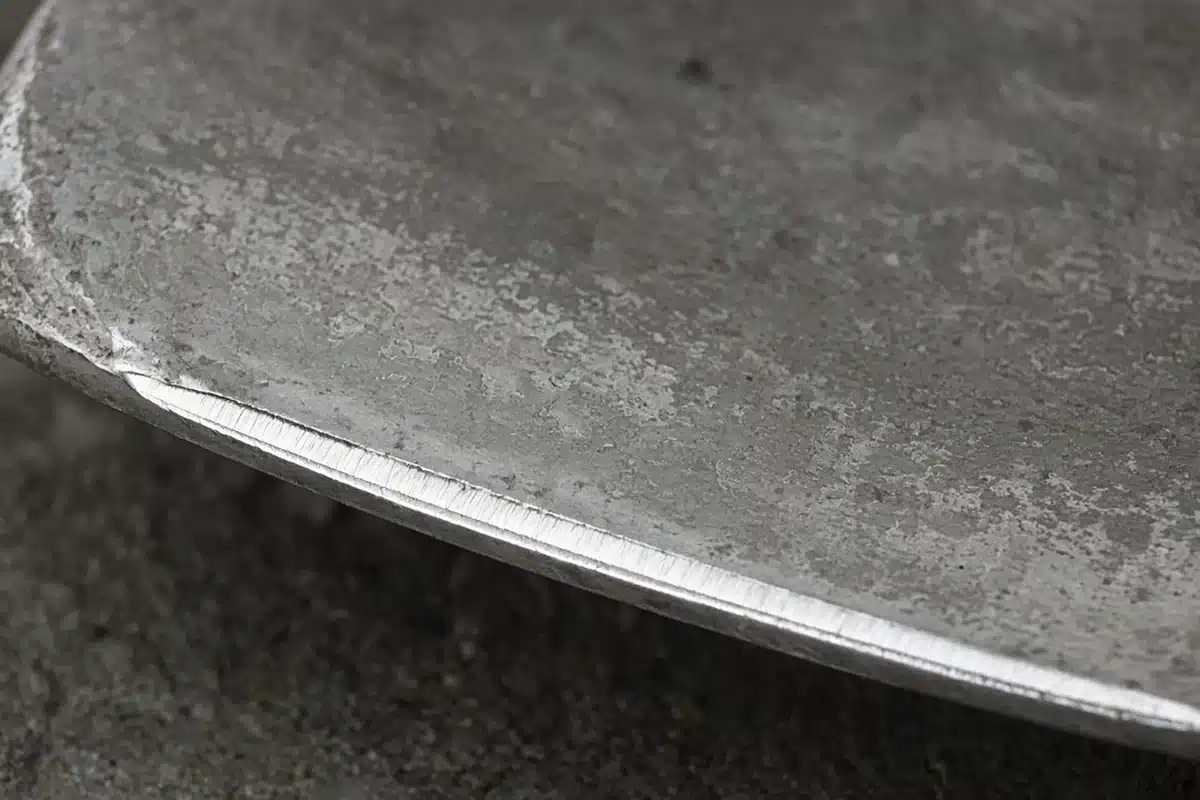
You do not need a calendar to know when a tool is due. Watch how it behaves in use. A shovel that bounces off firm soil instead of biting in, a hoe that slides over weeds without cutting them and pruners that leave flattened or torn stems are all asking for attention. Look at the edge in good light as well. A sharp edge reflects very little light, while a dull edge shows a bright, rounded line along its length. Nicks, dents and flat spots are also easy to spot this way.
Many home growers sharpen digging tools at the end of the season and pruners before the busiest part of summer, but any time a tool stops cutting cleanly is the right time.
Start with clean tools
Sharpening works best on clean metal. University of Wisconsin-Madison Extension recommends cleaning tools after each use by rinsing them and wiping them with a cloth or brush, and using soapy water to remove sap. For rust, UW-Madison suggests coarse steel wool or a pumice stone, and notes that sandpaper can leave scratches in the metal.
If a tool has been used on diseased plants, UW-Madison Extension suggests disinfesting it for at least thirty seconds, preferably with 70% alcohol, though a 10% bleach solution also works. Let the tool dry before you sharpen it.
Safety gear and supplies
Filing metal throws off small particles and puts your hands close to an edge that keeps getting sharper. Both sources list protective gear first:
- Safety glasses or protective eyewear.
- Sturdy gloves. UW-Madison Extension specifically suggests leather gloves.
- A bench vise to hold the tool steady.
University of Florida IFAS Extension lists these sharpening supplies:
- Steel wool or a wire brush for cleaning.
- A flat mill file, eight to ten inches long. UW-Madison Extension suggests a ten-inch mill file.
- A round or half-round file for curved edges.
- Sharpening stones for fine work.
- Sandpaper for removing burrs.
- Light oil to protect metal when you are done.
Find the right angle
Every edge has an angle, called the bevel. The most important rule from both sources is to keep the angle the tool already has. UW-Madison Extension explains why. An edge filed too blunt will not cut well, and an edge filed too sharp will wear down quickly or chip.
When you need a starting point, University of Florida IFAS Extension gives these general angles:
- Pruners: follow the original factory bevel.
- Shovels: about 45 degrees.
- Hoes used for heavy chopping: about 45 degrees.
- General purpose hoes: about 30 to 35 degrees.
- Hoes for fine weeding: about 20 to 30 degrees.
UW-Madison Extension adds that many shovels and hoes are made of stamped metal with a blunt edge. For these tools, it suggests creating a new edge at about 30 degrees, and notes that the filed edge ends up about twice as wide as the metal is thick.
How to use a file
A mill file has a direction. UW-Madison Extension explains that a mill file cuts only on the forward stroke. Dragging it back across the metal dulls the file and does nothing for the edge.
- Hold the file with both hands, one on the handle and one on the tip.
- Push the file away from your body with smooth, steady strokes.
- Lift the file on the return stroke.
- Keep the angle the same on every stroke.
UW-Madison Extension also notes that filing into the edge gives a sharper result but carries more risk of cutting yourself, so wear gloves and go slowly if you choose that method.
How to sharpen a shovel or hoe, step by step
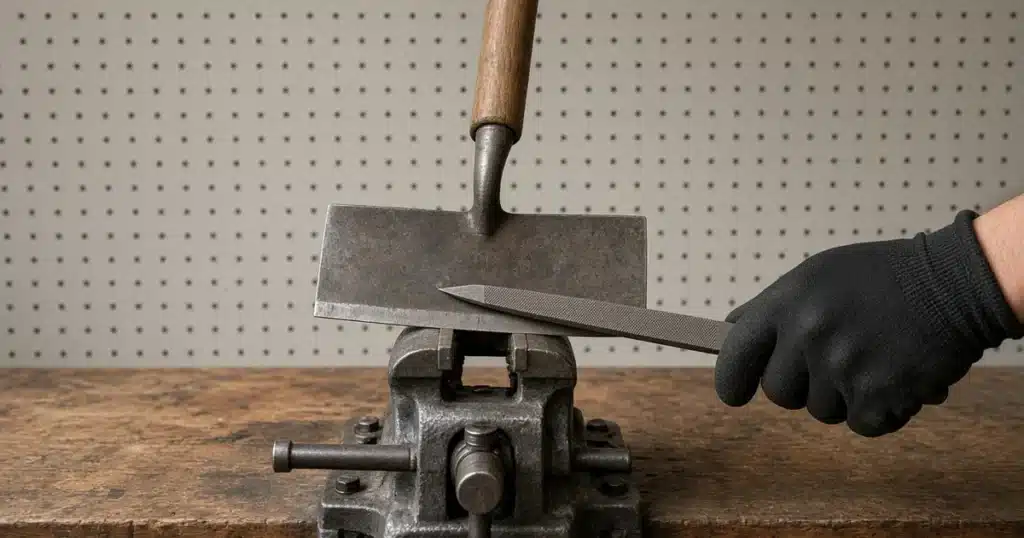
Shovels, spades and hoes are the easiest tools to sharpen because their edges are long and simple:
- Clean the blade and remove any rust.
- Clamp the tool firmly in a vise with the edge facing up or out.
- Find the existing bevel. If there is none, plan for about 30 degrees, as UW-Madison Extension suggests for blunt stamped blades.
- Set the file on the bevel at the correct angle.
- File in one direction only, pushing away from your body.
- University of Florida IFAS Extension suggests filing until a clean, bright line of steel shows along the full edge.
- Work evenly from one end of the edge to the other so the edge stays straight.
- Turn the tool over and remove the burr, the thin curl of metal that forms on the back of the edge. University of Florida IFAS Extension suggests 300-grit sandpaper for this.
- Wipe the blade with a light coat of oil.
A shovel does not need to be razor sharp. A clean, even edge is enough to slice into soil and roots.
How to sharpen pruners
Pruners take more care because the blades are small and work together. Start by checking which kind you have.
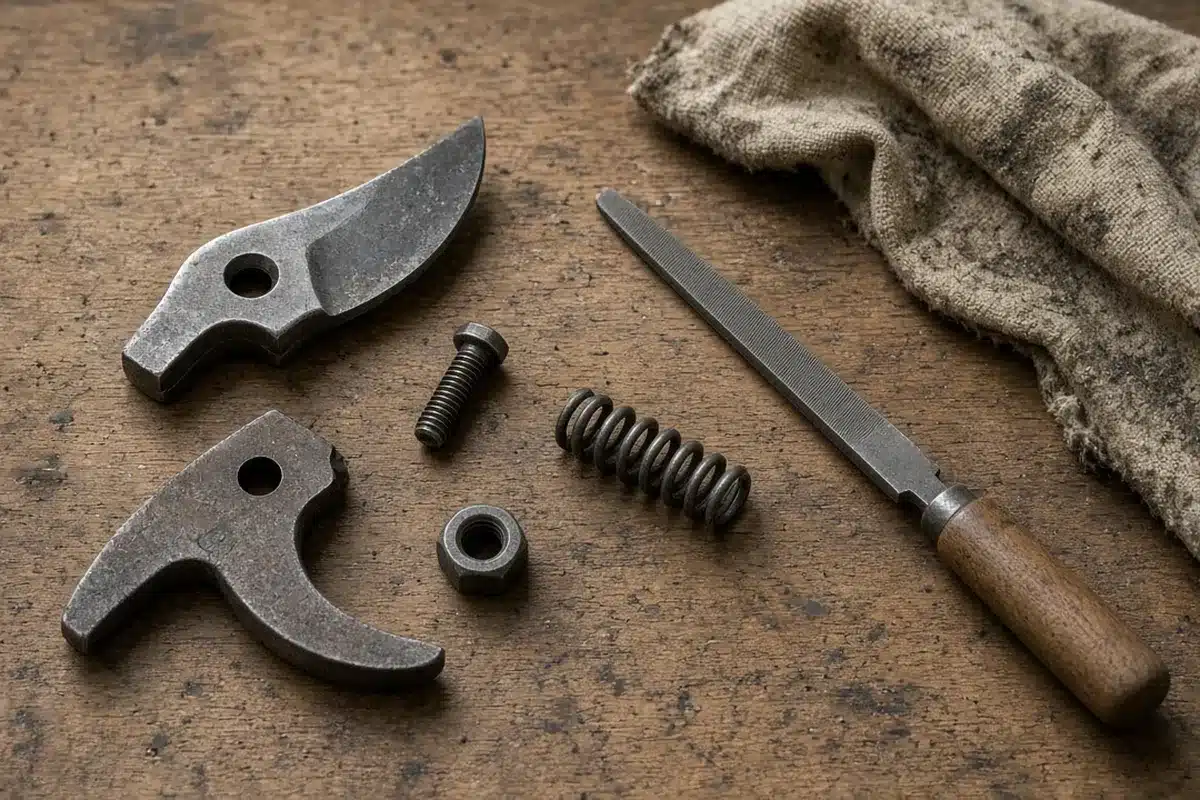
Bypass pruners have two blades that slide past each other like scissors. UW-Madison Extension says that if both blades have edges, both should be sharpened. University of Florida IFAS Extension describes this method:
- Loosen the pivot bolt and separate the blades.
- Clamp the cutting blade in a vise.
- File along the factory bevel in one direction until the edge is clean.
- For the curved blunt blade, use a round file and keep the edge flat at 90 degrees.
- Remove the burr with fine sandpaper.
- Put the pruners back together, oil the pivot and test the cut.
Anvil pruners have one blade that closes against a flat surface. UW-Madison Extension says to sharpen only the blade, and to use a small file to remove nicks.
Pruning saws are a different case. UW-Madison Extension notes that saws are usually replaced instead of sharpened.
Protect the edge after sharpening
A fresh edge rusts quickly if left wet. University of Florida IFAS Extension and UW-Madison Extension both recommend oiling metal surfaces after sharpening. Store sharpened tools dry and away from other metal tools so the edges do not knock against each other. To decide which tools deserve a fresh edge, check what Kind Seed Co says in cannabis growing tools and the short set of harvesting tools every home grower needs.
Troubleshooting
The edge still feels dull after filing. The angle may have changed between strokes. Go back to the original bevel and keep the file at the same angle every stroke.
The edge chips or dulls quickly. It may have been filed too thin. UW-Madison Extension warns that an edge filed too sharp wears quickly. Use a slightly blunter angle.
The file seems to skate over the metal. The file may be worn, or you may be dragging it on the return stroke. Lift it on the return and replace a worn file.
Pruners crush stems instead of cutting. The blades may need sharpening, or the pivot may be loose. Sharpen the cutting blade and tighten the pivot bolt.
A rough curl forms on the back of the edge. That is the burr. Remove it with fine sandpaper.
The tool moves while you file. Clamp it tighter in the vise before you continue.
Sources
- University of Florida IFAS Extension, Gardening Solutions. Sharpening Your Tools. https://gardeningsolutions.ifas.ufl.edu/care/tools-and-equipment/sharpening-your-tools/
- University of Wisconsin-Madison Extension. Maintaining Lawn and Garden Tools. https://hort.extension.wisc.edu/articles/maintaining-lawn-and-garden-tools/
FAQ
What angle should I sharpen a shovel or hoe?
University of Florida IFAS Extension suggests about 45 degrees for shovels and heavy chopping hoes, 30 to 35 degrees for general purpose hoes and 20 to 30 degrees for fine weeding hoes. Whenever possible, follow the angle the tool already has, as both extension sources recommend.
Can I sharpen garden tools without a grinder?
Yes. Both University of Florida and UW-Madison Extension describe sharpening with a hand file. Clamp the tool in a vise, push a flat mill file away from your body in one direction and keep the angle steady. Then remove the burr with fine sandpaper and oil the metal.
Do I sharpen both blades on bypass pruners?
UW-Madison Extension says that if both blades have edges, both should be sharpened. University of Florida IFAS Extension suggests filing the cutting blade along its factory bevel and keeping the blunt blade's curved edge flat at 90 degrees with a round file. Anvil pruners need only the blade sharpened.
How often should I sharpen garden tools?
There is no fixed schedule. Sharpen when a tool starts to drag, skid or crush instead of cut. Many gardeners sharpen once a season, often in fall or late winter. Keeping tools clean and oiled after each use, as UW-Madison Extension recommends, helps edges last longer between sharpenings.


