
How to Store Garden Tools for Winter After Your Grow
Once the outdoor season wraps up and the last plants are down, it is tempting to toss the tools in a corner and forget them until spring. A little work now saves money and frustration later. Iowa State University Extension notes that proper care of garden tools prolongs their lifetime, prevents costly repairs and improves their performance. University of Vermont Extension recommends cleaning, inspecting and repairing tools before you put them away. Each step is here, from scrubbing off soil to storing hoses, carts and battery tools so they are ready when the next season starts.
Why winter tool care matters
Soil left on metal holds moisture against it, which leads to rust. Sap and plant residue harden and make blades sticky. Wooden handles dry out and crack when they sit untreated through a cold, dry winter. Hoses left full of water can be damaged when temperatures drop. None of this happens overnight, but by spring a neglected tool can be dull, rusty or broken.
Fall is also a practical time for repairs. University of Vermont Extension points out that if you plan to have tools professionally sharpened, wait times are usually shorter in fall than in spring, when everyone else is getting ready for the season.
What you need
Most of the supplies are already in a typical garden shed or kitchen:
- A hose or bucket of water.
- A stiff brush, and a wire brush or stiff putty knife for caked soil.
- Warm water and dish soap for sap.
- Steel wool or sandpaper for rust spots.
- Clean rags or towels for drying.
- Mineral oil or another light oil for metal.
- Linseed oil and fine sandpaper for wooden handles.
- Gloves to protect your hands.
How to clean garden tools, step by step
Work through your tools one at a time:
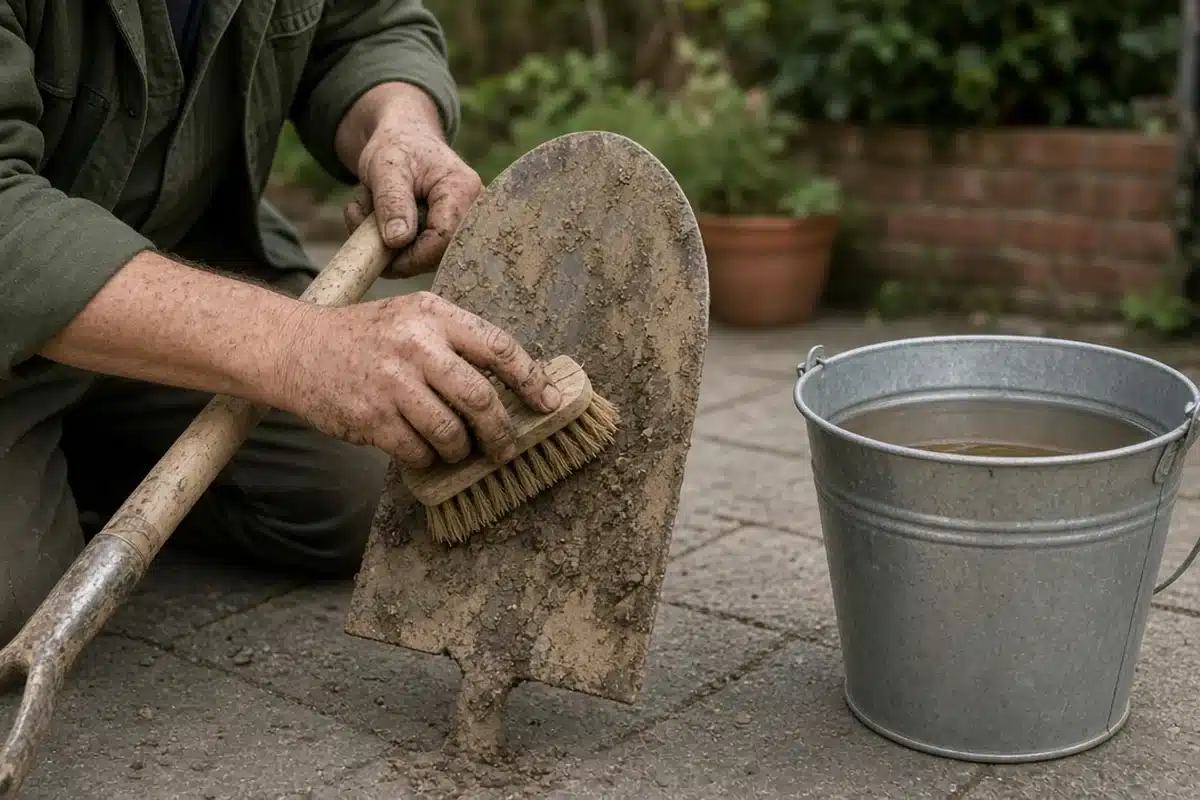
- Knock off loose soil. Iowa State Extension suggests a wire brush or stiff putty knife for caked-on soil on shovels, spades, hoes and rakes.
- Rinse the tools. University of Vermont Extension recommends spraying them down with water and using a stiff brush for dried soil. Iowa State Extension suggests a strong stream of water.
- Remove sap and residue. University of Vermont Extension notes that warm water with dish soap removes sap from blades, which matters for pruners and snips used through the season.
- Treat rust. Use steel wool or sandpaper to rub away rust spots, as University of Vermont Extension suggests.
- Dry everything thoroughly. Water left on metal leads straight back to rust.
- Oil the metal. University of Vermont Extension suggests wiping metal parts with mineral oil, and Iowa State Extension recommends wiping metal surfaces with an oily rag. A light coat is enough.
If you used pruners or snips on plants that showed disease during the season, give the blades a disinfecting wipe before storage as well.
Caring for wooden handles
Wooden handles need attention too. University of Vermont Extension recommends sanding rough handles and treating them with oil. Iowa State Extension suggests sanding rough handles and then wiping them with linseed oil to prevent drying and cracking. Take care with the rags afterward. Washington State University Extension advises letting all oil rags dry in the open air to avoid the risk of combustion.
Sand along the grain until splinters and rough patches are smooth. Wipe off the dust, rub in a thin coat of oil with a rag and let it soak in. Wipe away any extra so the handle is not sticky. Smooth, oiled handles are kinder on your hands next season and less likely to split.
Inspect and repair
Cleaning is a good time to look closely at each tool. University of Vermont Extension suggests checking for:
- Bent blades.
- Loose screws and bolts.
- Cracked or splintered handles.
- Dull edges that need sharpening.
Tighten what you can and set aside anything that needs a replacement part. Iowa State Extension lists sharpening hoes, shovels and spades as part of winter tool care, because a sharp edge makes digging and weeding easier. Pruners and other bladed tools may need it too.
University of Vermont Extension also suggests keeping an inventory list as you go. Note what you have, what needs repair and what needs replacing. That list makes spring shopping easier and helps you avoid buying a second copy of a tool you already own.
Hoses and watering gear
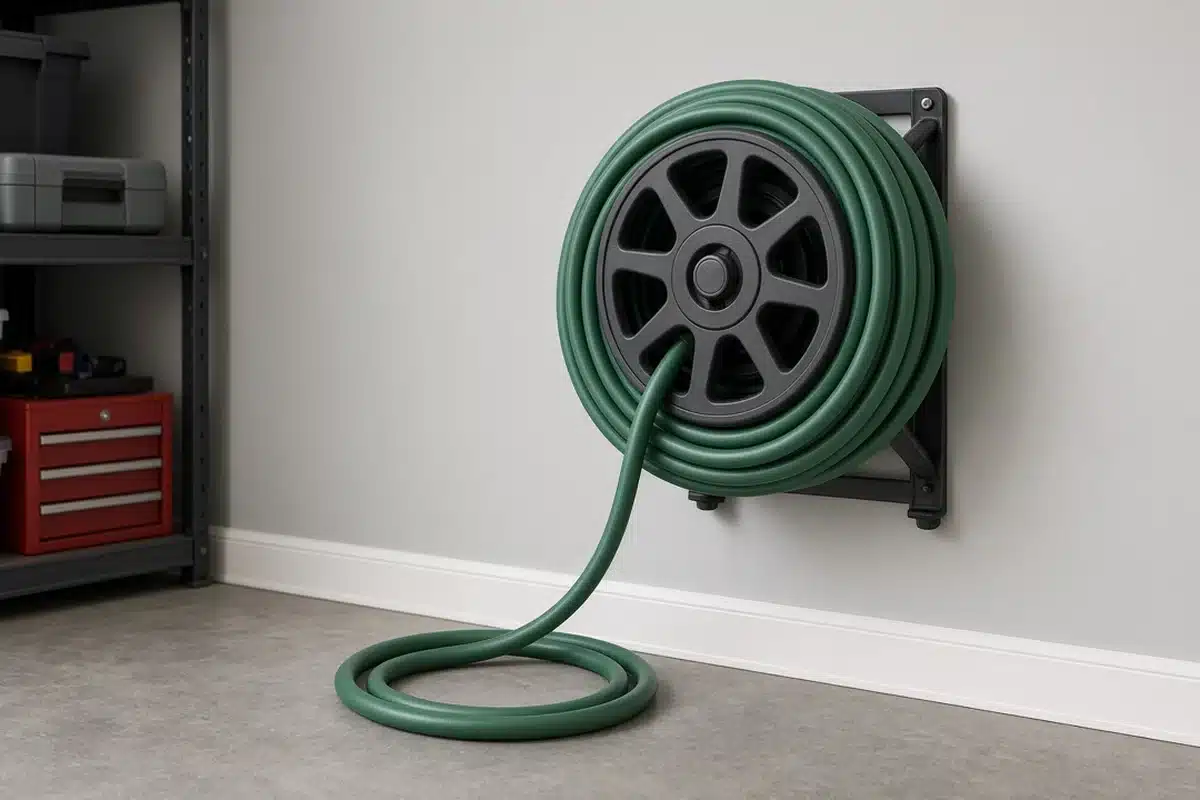
Hoses need special care before cold weather. Iowa State Extension advises draining water from garden hoses and bringing them inside, and using reels or coiling hoses flat to prevent kinking. University of Vermont Extension adds that you should clean hoses, check them for leaks, drain them and coil them on a rack or flat surface.
Walk each hose out straight before you drain it. Leaks are easier to find when the hose is under pressure, so run water through it first and mark any spots that drip. Then disconnect it, lift one end and walk toward the other to push water out. Coil it loosely so it does not kink while stored.
Soaker hoses, drip lines and watering cans also benefit from being drained and stored out of the sun.
Carts, wheelbarrows and sprayers
Larger equipment needs its own attention. Iowa State Extension recommends cleaning wheelbarrows and garden carts, touching up chipped paint to keep exposed steel from rusting and greasing the wheels to prevent squeaking.
Sprayers need careful cleaning. Iowa State Extension says sprayers should be thoroughly washed and rinsed, and it notes that most pesticide labels recommend triple rinsing. This includes every part of the sprayer, from the tank to the nozzles. It suggests tipping or hanging the sprayer upside down so it drains and dries completely. Iowa State Extension also notes that garden chemicals should be stored where the temperature stays above 40°F to prevent freezing, which can cause containers to break and leak. Check the label of anything you keep for its own storage directions.
Make a fall tool routine
It helps to treat tool care as part of closing down the garden instead of a separate chore. Set aside one dry afternoon after the last harvest, lay every tool out in one place and work through the same order each year: clean, dry, oil, inspect and store. Doing it the same way every fall means nothing gets skipped, and your inventory list stays current from one season to the next.
Battery and powered tools
For powered tools, University of Vermont Extension recommends following the manufacturer’s instructions for winter storage. It also suggests storing batteries and chargers together indoors, away from freezing temperatures, and making a note of where everything is stored. That last tip sounds small, but it saves a lot of searching in spring.
Where to store tools
A good storage spot keeps tools dry and organized. University of Vermont Extension recommends dry, organized storage, and Iowa State Extension suggests hanging or storing tools in a dry location.
A few simple habits make storage work:
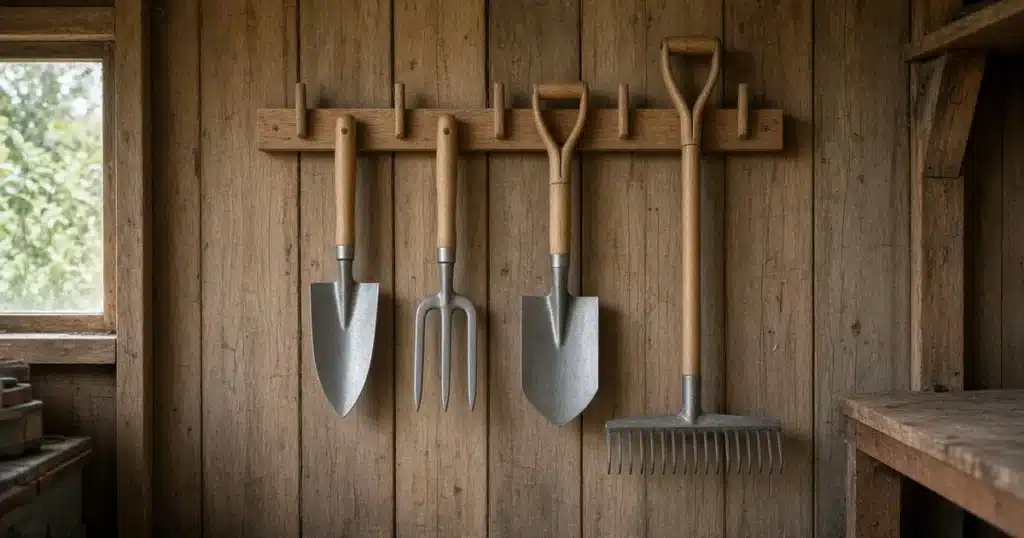
- Hang long-handled tools on a wall rack so their blades stay off a damp floor.
- Keep small hand tools together in a bin or on a pegboard.
- Store hoses on a reel or flat surface, not hanging from a single nail.
- Keep sprayers and chemicals separate from food and away from children and pets.
- Keep batteries indoors, away from freezing.
Wondering which tools are worth keeping on hand? Kind Seed Co has an overview of cannabis growing tools, plus a list of harvesting tools every home grower needs.
Troubleshooting
Rust came back after cleaning. The metal was probably not fully dry before storage. Rub the rust off again, dry the tool completely and add a light coat of oil.
Pruners are sticky. Sap may still be on the blades. Wash them with warm, soapy water, dry them and oil the pivot lightly.
A wooden handle feels rough or splintery. Sand it along the grain and rub in a thin coat of linseed oil.
The hose is cracked in spring. It may have held water or been left outside. Drain hoses fully and store them inside next year.
Wheelbarrow wheels squeak. Grease the wheels and touch up any chipped paint.
You cannot find a battery or charger in spring. Store them together indoors and note their location, as University of Vermont Extension suggests.
Sources
- University of Vermont Extension. Smart Garden Tool Storage. https://www.uvm.edu/extension/news/smart-garden-tool-storage
- Washington State University Extension. Tool Maintenance. https://wpcdn.web.wsu.edu/extension/uploads/sites/57/2024/11/Tool-Maintenance.pdf
- Iowa State University Extension and Outreach. Winter Garden Tasks. https://yardandgarden.extension.iastate.edu/how-to/winter-garden-tasks
FAQ
How do I clean garden tools before winter?
Knock off caked soil with a wire brush or putty knife, then rinse with water and scrub with a stiff brush. University of Vermont Extension suggests warm soapy water for sap and steel wool or sandpaper for rust. Dry everything thoroughly, then wipe metal parts with a light coat of oil.
What oil should I use on garden tools?
University of Vermont Extension suggests wiping metal parts with mineral oil, and Iowa State Extension recommends an oily rag on metal surfaces. For wooden handles, Iowa State Extension suggests sanding rough spots and wiping with linseed oil to prevent drying and cracking. A thin coat is enough on both.
How should I store garden hoses for winter?
Drain them and bring them inside. Iowa State Extension recommends using a reel or coiling hoses flat to prevent kinking. University of Vermont Extension adds that you should clean hoses and check for leaks first. Run water through each one, mark any drips, then drain and coil it loosely.
Where should I store garden tools over winter?
Somewhere dry and organized. Both University of Vermont and Iowa State Extension recommend dry storage. Hang long-handled tools off the floor, keep hand tools together and store batteries and chargers indoors away from freezing. Keep sprayers and chemicals away from food, children and pets.


