
Hardening Off Cannabis Seedlings: A Step-by-Step Schedule
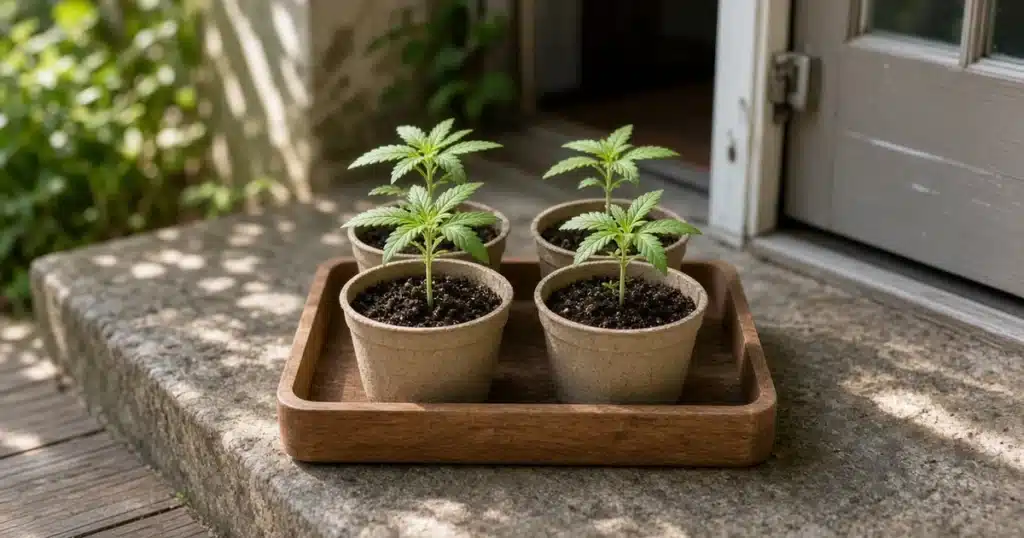
Quick answer: Hardening off cannabis seedlings means moving them outdoors a little at a time over 1 to 2 weeks before you plant them out. Start in a shaded, sheltered spot for an hour or two, add more sun each day and bring them in at night. Keep them inside on windy days or when it is below 45°F, and only leave them out overnight near the end when nights stay above 50°F.
What Is Hardening Off?
University of Maryland Extension describes hardening as exposing transplants gradually to outdoor conditions. It encourages a change from soft, succulent growth to firmer, harder growth, so young plants can handle the conditions they will face once they are planted outside.
Cannabis seedlings started indoors are used to steady, gentle conditions. South Dakota State University Extension says that once plants leave their ideal growing conditions, they have no protection against wind, possible subfreezing temperatures, direct sun and fluctuating moisture. Exposing them slowly is what lets them thrive outdoors.
What Changes Inside the Seedling
SDSU Extension says hardening slows the growth rate, mostly by reducing water and lowering the air temperature. That sets off several changes:
- The cuticle thickens. This protective leaf surface helps prevent water loss on hot, windy and sunny days.
- Carbohydrates build up. They become reserves for new root growth after planting.
- Tissues hold less freezable water. SDSU says properly hardened plants gain greater cold tolerance.
What Happens If You Skip It
University of Vermont Extension warns that without hardening off, tender young plants would likely become scorched, shocked and bowed to the ground by conditions they never met indoors.
When to Start Hardening Off Cannabis Seedlings
University of Maryland Extension says to begin hardening transplants 1 to 2 weeks before setting them out in the garden. SDSU Extension plans for 7 to 14 days, and UVM Extension says you can speed up the process but should spend at least one week hardening off. Count back from your planting day, and try to start on a mild, calm day.
Hardening Off Schedule at a Glance
| Stage | Where the seedlings sit | Time outside |
|---|---|---|
| Days 1 to 3 | Shaded, sheltered spot out of the wind | An hour or two (UVM), up to three or four hours at the warmest time of day (SDSU) |
| Days 4 to 7 | Gradually more direct sun | A little more sun and time outside each day (UMD, SDSU) |
| Days 8 to 12 | Mostly full sun | Most of the day, still indoors at night |
| Last 1 to 2 days | Outdoors day and night | 24 hours if nights look favorable (SDSU), above 50°F (UMD) |
The stage days are a guide for a 2 week plan. Shorten them for a 1 week plan, as UVM allows.
How to Harden Off Cannabis Seedlings
- Pick a shaded, protected spot. University of Maryland Extension says the easiest way is to place transplants outside in a shaded, protected spot on warm days.
- Keep the first visit short. UVM Extension says the first exposure should be brief, only an hour or two.
- Bring them in every evening. SDSU Extension says to always bring plants indoors each evening during the process.
- Add more sun each day. University of Maryland says to increase the amount of sunlight the transplants get each day.
- Skip cold, windy and stormy days. SDSU says to keep plants inside if daytime temperatures are expected below 45°F or if strong winds or rains are coming.
- Water less, but never let them wilt. University of Maryland says to reduce how often you water to slow growth, but not to let plants wilt.
- Leave them out overnight only at the end. By the last one to two days, SDSU says plants should stay outdoors for 24 hours if nighttime temperatures look favorable.
- Plant out on a cloudy day. UVM Extension says the best time for planting out is right before a period of rainy or overcast weather. Before you plant cannabis outdoors, check your state’s home grow law.
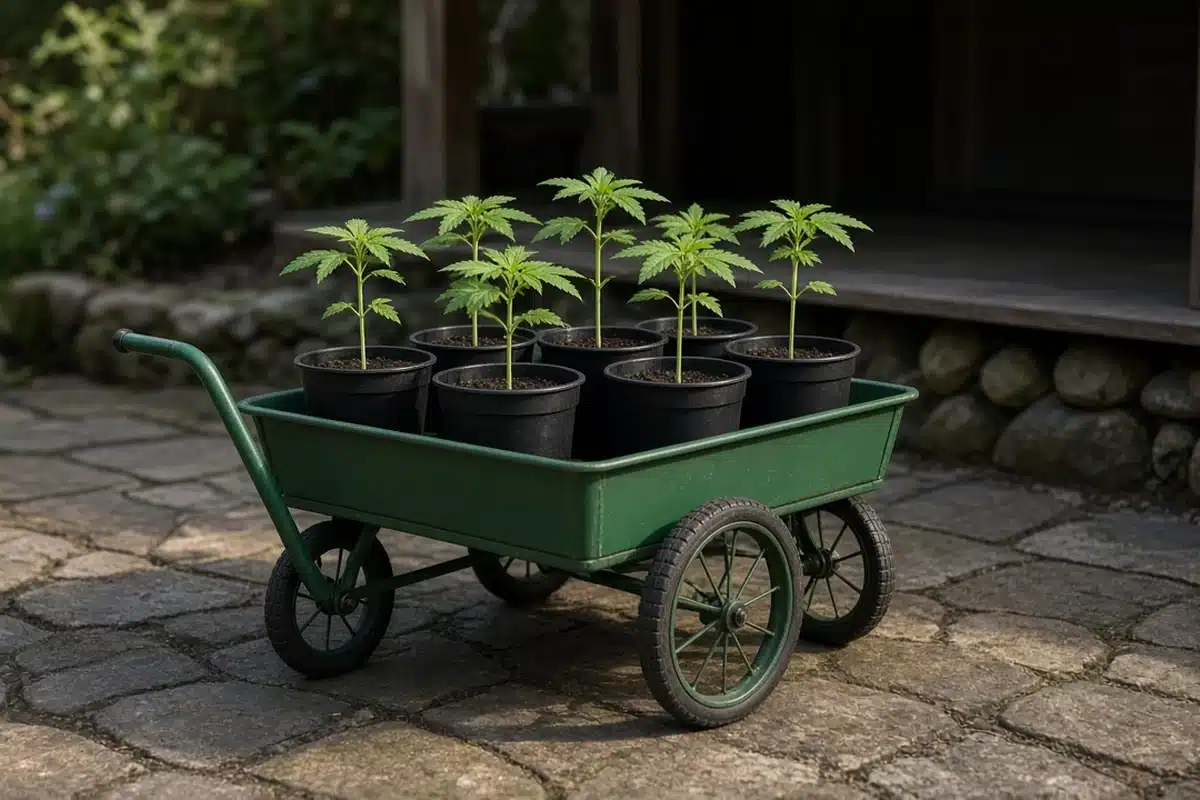
A garden cart or wagon makes the daily trips easier when you have many seedlings, as SDSU suggests. If you want a sheltered halfway point, University of Maryland says a cold frame provides an excellent setting for hardening off, and our guide to cold frames for cannabis seedlings covers that option.
Temperature, Wind and Rain Limits
University of Maryland Extension says not to put tender seedlings outdoors on windy days or when temperatures are below 45°F. It adds that warm season crops such as cucumbers and melons may be left outside overnight if the temperature will not fall below 50°F. Cannabis is a warm season plant, so use 45°F as the daytime floor and 50°F as the overnight floor.
University of Maryland also notes that even cold hardy plants will be hurt by freezing temperatures before they are hardened. Leaves that get battered on a breezy day are covered in our guide to cannabis wind burn.
Watering and Feeding While Hardening Off
SDSU Extension says to reduce how often you water without letting the seedlings wilt. Slower growth is a normal part of how the tissues toughen.
For feeding, SDSU says that if plants look healthy, you should avoid fertilizing during hardening. If a plant looks short of a nutrient, it should get an appropriate dose. After planting, SDSU says plants should be watered thoroughly, and a dilute starter fertilizer solution may be used.
Signs a Seedling Needs to Slow Down
UVM Extension says to go slowly in the beginning. If the plants protest by wilting or flopping over, take them back inside until the following day, then carry on with the schedule.
Do not park seedlings somewhere dark between sessions. SDSU Extension warns that transplants should not be stored in unlit garages for long periods, since they may stretch or yellow from lack of sunlight.
University of Maryland also cautions that hardening is meant to slow growth, and that carrying it to the extreme of stopping growth can do real damage to some crops.
Troubleshooting
Leaves look pale or scorched after a sunny session. The seedlings got too much sun too soon. Move them back to shade for a day and add sun more slowly, as UVM advises when plants protest.
Seedlings droop after a breezy afternoon. Bring them in and wait for a calm day. University of Maryland says to keep tender seedlings in on windy days.
Seedlings sat out on a cold night. Check the forecast before leaving them out. University of Maryland says warm season crops should stay out overnight only when it will not fall below 50°F.
Seedlings stretch or yellow between sessions. They may be sitting somewhere too dark. SDSU says unlit garages can cause stretching and yellowing.
A plant wilts after planting out. UVM Extension says wilting soon after planting is often a sign of transplant shock rather than a lack of water. See our guide to cannabis transplant shock, and for the planting steps themselves, read transplanting marijuana plants.
Frequently Asked Questions
How long does it take to harden off cannabis seedlings?
Plan on 1 to 2 weeks. University of Maryland Extension says to begin 1 to 2 weeks before setting plants out, South Dakota State University suggests 7 to 14 days, and University of Vermont Extension says to spend at least one week even if you need to speed things up.
Can seedlings stay outside overnight while hardening off?
Not at first. SDSU Extension says to bring plants in each evening and leave them out for 24 hours only in the last one to two days, if nights look favorable. University of Maryland Extension says warm season crops may stay out overnight if the temperature will not fall below 50°F.
Should you water less during hardening off?
Yes, a little. University of Maryland Extension advises reducing the frequency of watering to slow plant growth, but not letting plants wilt. Slower growth is part of how seedlings toughen. If a seedling wilts or flops over, take it back inside until the following day, as University of Vermont Extension suggests.
Should you change feeding while hardening off cannabis seedlings?
Usually not. South Dakota State University Extension advises against fertilizing during hardening if plants look healthy. If a seedling looks short of a nutrient, give it an appropriate dose. After planting, the same guide says you may use a dilute starter fertilizer solution when watering plants in.
Do greenhouse or indoor cannabis seedlings need hardening off?
Yes. SDSU Extension says plants taken from their ideal growing conditions have no protection outdoors against wind, cold, direct sun and changing moisture. Seedlings raised indoors or under cover have been sheltered from all of these, so follow the same gradual schedule, starting in a shaded, sheltered spot.
Sources
- South Dakota State University Extension, Harden Your Transplants Prior to Planting Your Garden: https://extension.sdstate.edu/harden-your-transplants-prior-planting-your-garden
- University of Maryland Extension, Hardening Off Vegetable Seedlings for the Home Garden: https://extension.umd.edu/resource/hardening-vegetable-seedlings-home-garden
- University of Vermont Extension, Hardening Off Transplants (PDF): https://www.uvm.edu/d10-files/documents/2026-04/HardeningOffTransplants_factsheet.pdf


