Leafhoppers On Cannabis: How To Spot Them And What They Do
Quick answer: Leafhoppers on cannabis are small, wedge shaped insects that walk sideways and jump or fly when disturbed. Most cause little harm. Colorado State University found that none of the leafhoppers in its Colorado cannabis field surveys caused significant feeding damage. The two that matter are the potato leafhopper, which causes hopperburn in the eastern US, and the beet leafhopper, which spreads beet curly top virus.
What Leafhoppers Look Like
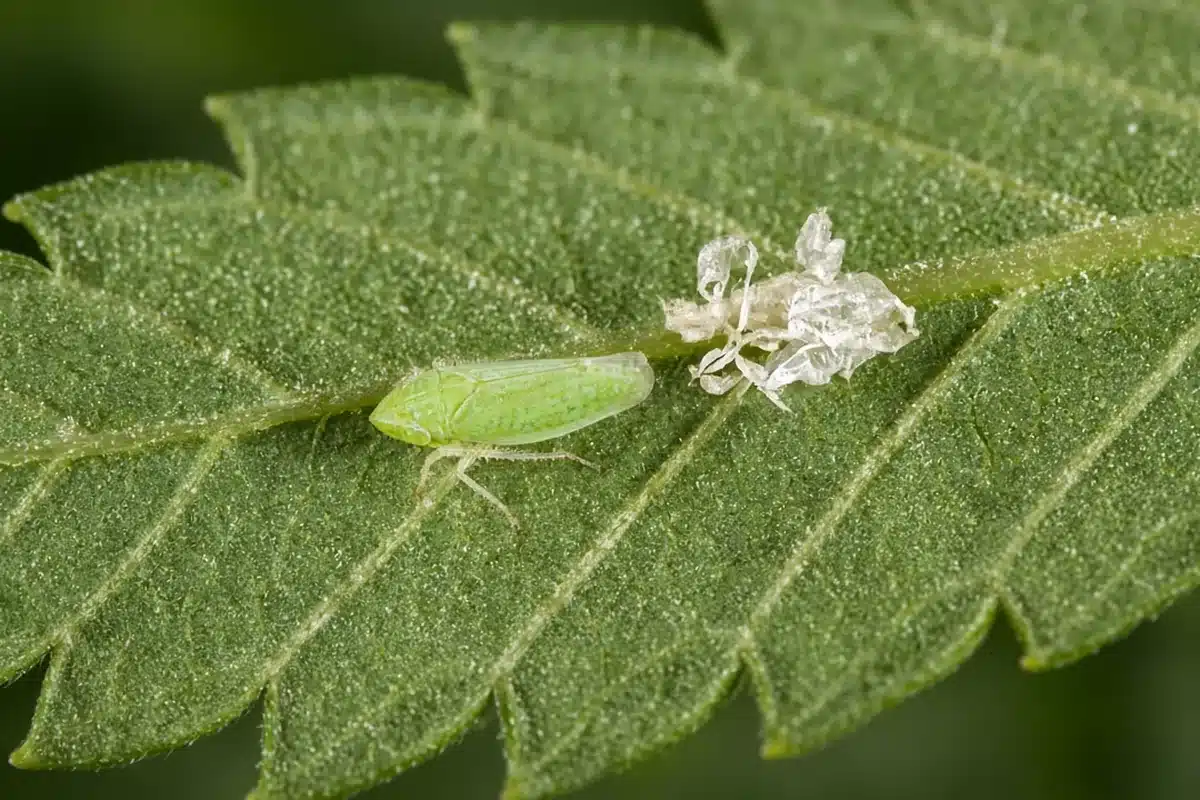
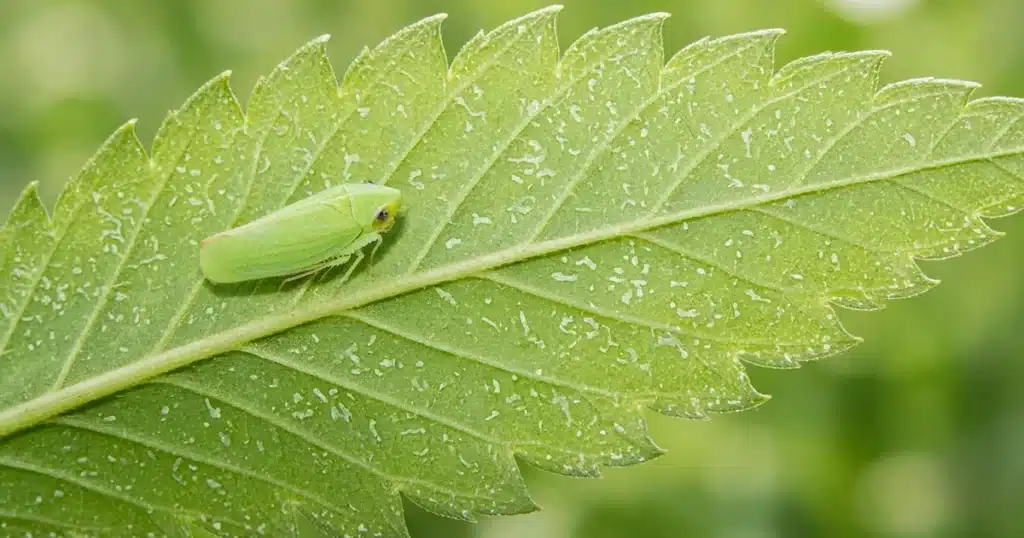
The UC Statewide IPM Program describes adult leafhoppers as long compared with their width, wedge shaped and commonly less than 1/4 inch long. They have one or more long rows of small spines along the hind legs. Leafhoppers walk rapidly sideways or jump when disturbed. Adults, nymphs and the pale cast skins that nymphs leave behind are usually found on the underside of leaves or on green shoots.
Utah State University Extension describes the potato leafhopper as wedge shaped, light green and widest at the head, with clear wings and large white eyes. Nymphs are smaller and have no wings, and both stages can run forward, backward or sideways.
Do Leafhoppers Damage Cannabis?
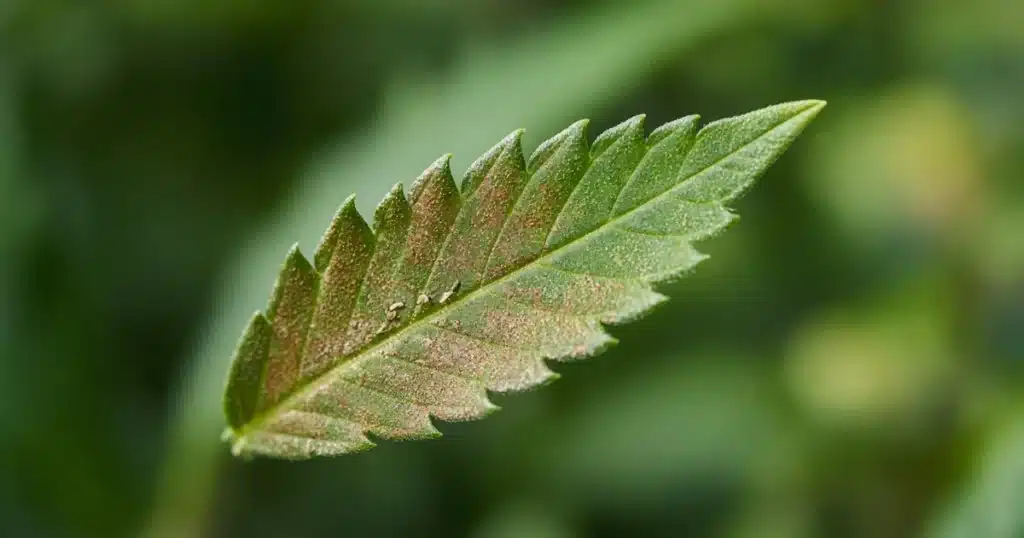
Usually only a little. Colorado State University says adults of about half a dozen leafhopper species have been collected on cannabis crops in Colorado, and most appear to be transient visitors that develop on other plants. Most feed on fluids in the phloem with insignificant effects on growth and no visible symptoms. A few cause small, light flecks called stippling where they feed.
Utah State University says light stippling and white flecks on leaves are of little consequence to overall plant health, and that the potato leafhopper has not caused enough damage in Utah cannabis fields to warrant control.
Leafhopper Damage: Stippling and Hopperburn
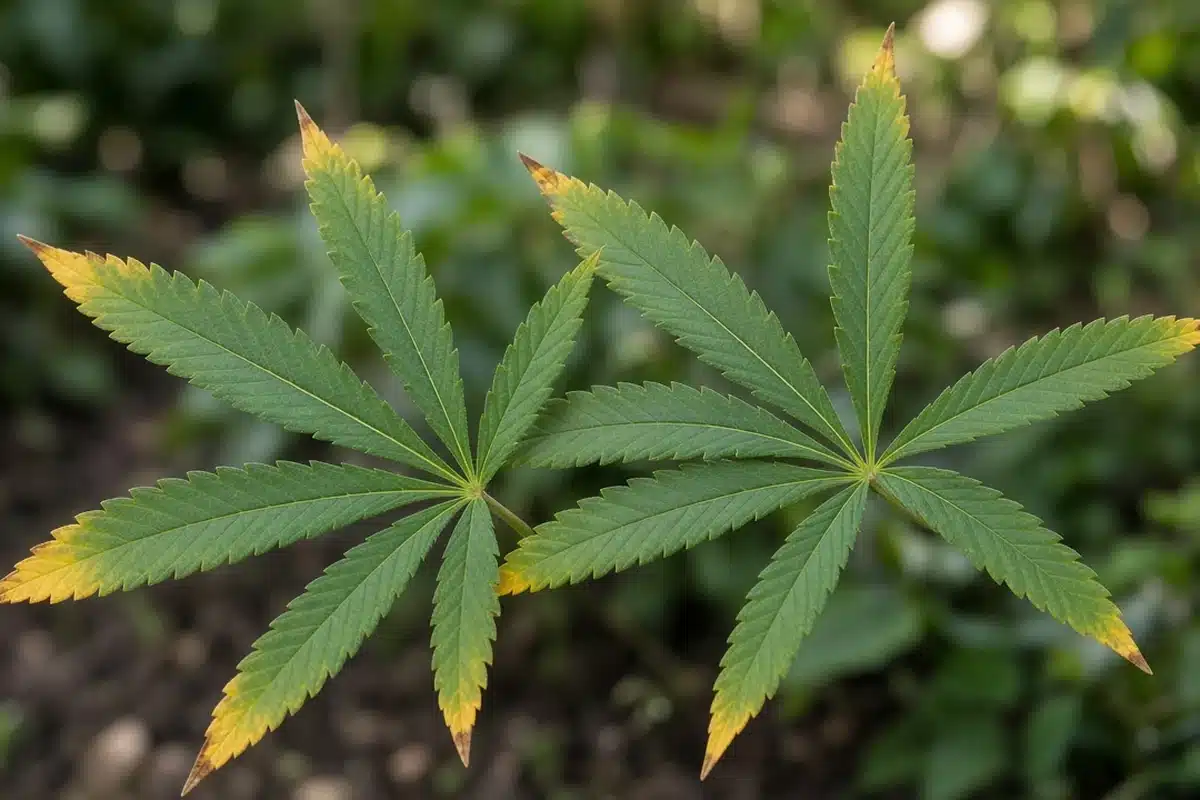
Leafhopper damage on cannabis comes in two main forms. Stippling is a pattern of tiny white flecks on the leaf surface. Hopperburn is the more serious of the two. Utah State University says that with heavy feeding, leaves may show scorching, or browning, at the feeding sites, and it advises watching for scorched leaf margins, curling leaves and stippling starting in June.
Colorado State University says hopperburn from the potato leafhopper has been seen in areas east of Colorado, although the damage it does to cannabis crops is unknown. It says the situation is different in the eastern United States, where the potato leafhopper is present.
The Beet Leafhopper and Curly Top Virus
The beet leafhopper is the one leafhopper that can cause serious harm, and it does so indirectly. Colorado State University says it is rarely found in its Colorado surveys but can transmit beet curly top virus. Its separate beet leafhopper page says young plants are the most susceptible and that the feeding itself does not significantly injure the plant.
Colorado State University describes infected young plants with light green color and yellowing of new growth, then mottling, curling and twisting of new leaves, stunting and a shortened stem between leaves. Utah State University suggests sending plants with yellow mosaic patterns on their leaves to a plant pest diagnostic lab for testing, so contact your local Extension office if you see these signs.
What to Do When You Find Leafhoppers on Cannabis
- Confirm the ID. Look for a wedge shaped body, a sideways walk and pale cast skins under the leaves, as UC IPM describes.
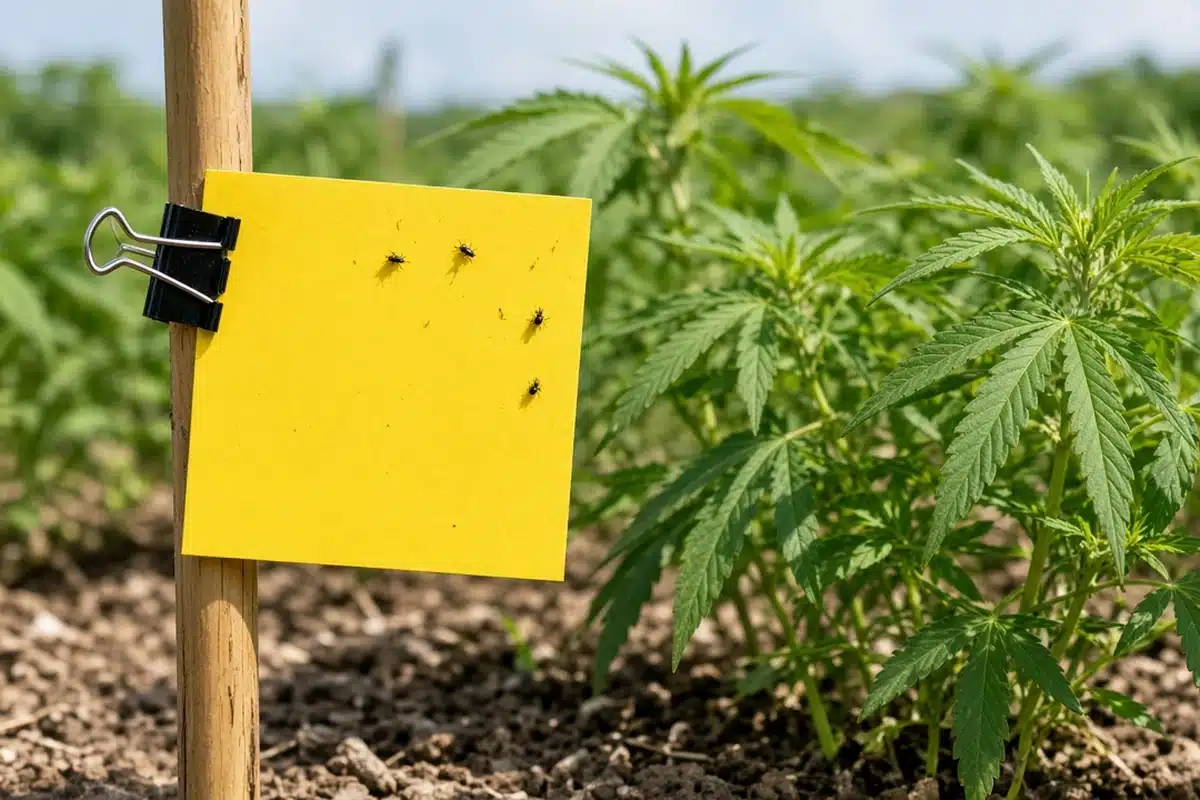
- Count nymphs and adults. Tap a few branches over a white sheet or card and count what lands. Many adults with few nymphs usually means transient visitors.
- Check for damage. Note whether you see light stippling, scorched leaf margins or the yellowing and twisting of curly top.
- Clear weed hosts. Utah State University says weeds can harbor leafhoppers, and UC IPM says removing weed hosts can reduce the numbers that move into gardens.
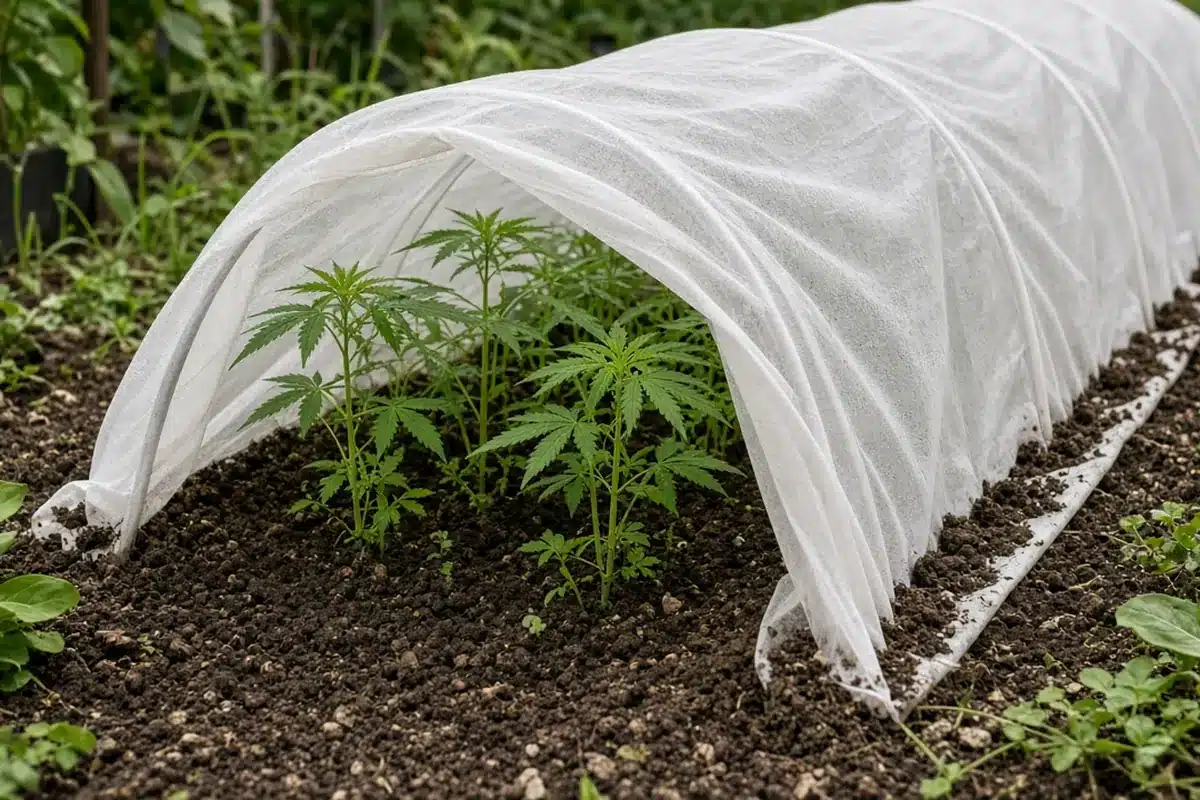
- Cover young outdoor plants. Colorado State University says a physical barrier over seedlings can help protect against beet leafhoppers, since young plants are the most susceptible. Before you plant cannabis outdoors, check your state’s home grow law.
- Spray nymphs only when numbers are high. UC IPM says that if nymphs are abundant early in the season, thorough sprays of horticultural oil, insecticidal soap or neem oil on green shoots and leaf undersides can provide some control. This is general garden guidance, not a cannabis trial. Follow the product label, and check that any pesticide is allowed for cannabis in your state.
Our guide to insecticidal soap for cannabis explains how soap sprays work and how to test them on a few leaves first.
Natural Enemies of Leafhoppers
UC IPM lists many natural enemies of leafhoppers, including assassin bugs, lacewings, damsel bugs, lady beetles, minute pirate bugs and spiders, and says some leafhopper species are attacked by parasitic wasps. Avoiding broad sprays helps keep these predators working in the garden. Our guide to beneficial insects for cannabis covers which ones to look for.
Troubleshooting
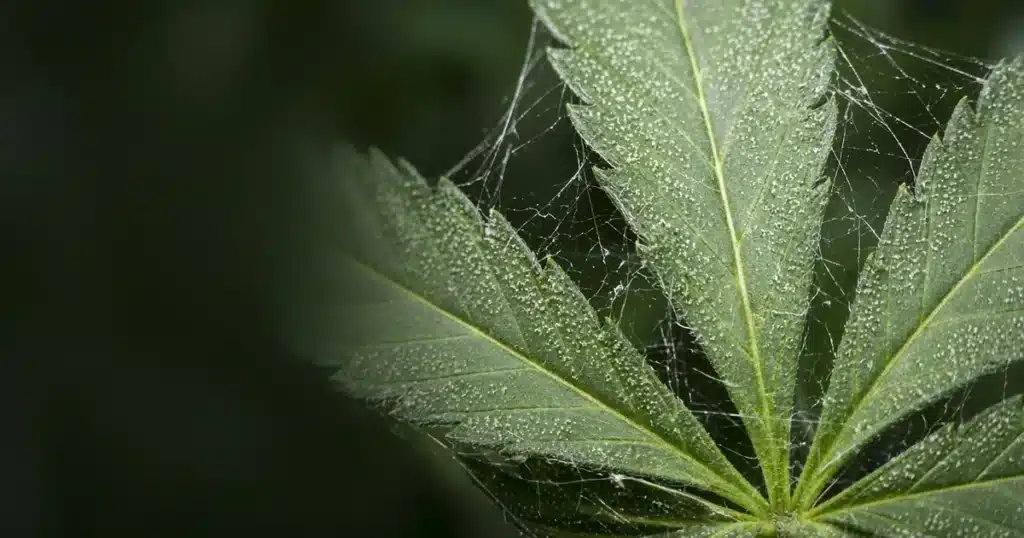
You see stippling but no leafhoppers. Other small pests leave similar flecks. Check leaf undersides with a hand lens for webbing and tiny mites, and compare with our guide to spider mites. Silvery streaks with black specks point to thrips on cannabis.
Leaf margins turn brown and curl. That matches the hopperburn signs Utah State University describes, with scorching at feeding sites, scorched leaf margins and curling leaves. It is linked to the potato leafhopper, which Colorado State University reports east of Colorado.
Young plants are twisted, stunted and yellow. Think curly top virus, carried by the beet leafhopper. Contact your local Extension office for testing and keep young plants covered next season.
There are many adults but no damage. Colorado State University says most leafhoppers on cannabis crops are transient. Keep watching, but no action is usually needed.
Numbers keep rising on weedy edges. Clear the weeds nearby, since Utah State University says weeds can harbor leafhoppers.
Frequently Asked Questions
Do leafhoppers damage cannabis plants?
Most do very little. Colorado State University found that none of the leafhoppers in its Colorado cannabis field surveys caused significant feeding damage, and Utah State University says light stippling is of little consequence. The exceptions are hopperburn from the potato leafhopper and beet curly top virus spread by the beet leafhopper.
What is hopperburn on cannabis?
Hopperburn is scorching of the leaf at feeding sites caused by heavy potato leafhopper feeding. Utah State University says leaves may brown at the margins and curl. Colorado State University reports hopperburn east of Colorado and says the damage it does to cannabis crops is still unknown. Light stippling alone is not hopperburn.
How do you identify leafhoppers on cannabis?
Look for small, wedge shaped insects, usually under 1/4 inch long, that walk sideways and jump when disturbed. UC IPM says adults, nymphs and pale cast skins usually sit on the underside of leaves or on green shoots. Rows of small spines along the hind legs confirm a leafhopper.
Where do leafhoppers hide on cannabis?
Under the leaves and on green shoots. UC IPM says adults, nymphs and their pale cast skins are generally found on the underside of leaves. Many leafhoppers also rest on nearby weeds, which Utah State University says can harbor them, so check weedy edges around the garden too.
Do you need to get rid of leafhoppers on cannabis?
Usually not. Utah State University says light stippling is of little consequence, and Colorado State University says most leafhoppers on cannabis crops are transient. Act when nymphs are abundant early, when hopperburn appears or when curly top is a local risk, starting with weed control and covers on young plants.
Sources
- Colorado State University, Leafhoppers fact sheet (PDF, 2020 revision): https://webdoc.agsci.colostate.edu/hempinsects/PDFs/Leafhoppers%20Revision%202020.pdf
- Colorado State University Agricultural Biology, Beet leafhopper and beet curly top virus: https://agsci.colostate.edu/agbio/ipm-pests/beet-leafhopper-beet-curly-top-virus/
- Utah State University Extension, Potato Leafhopper: https://extension.usu.edu/planthealth/ipm/notes_ag/hemp-potato-leafhopper
- Utah State University Extension, Curly Top Virus: https://extension.usu.edu/planthealth/ipm/notes_ag/hemp-curly-top-virus
- UC Statewide IPM Program, Pest Notes: Leafhoppers: https://ipm.ucanr.edu/home-and-landscape/leafhoppers/